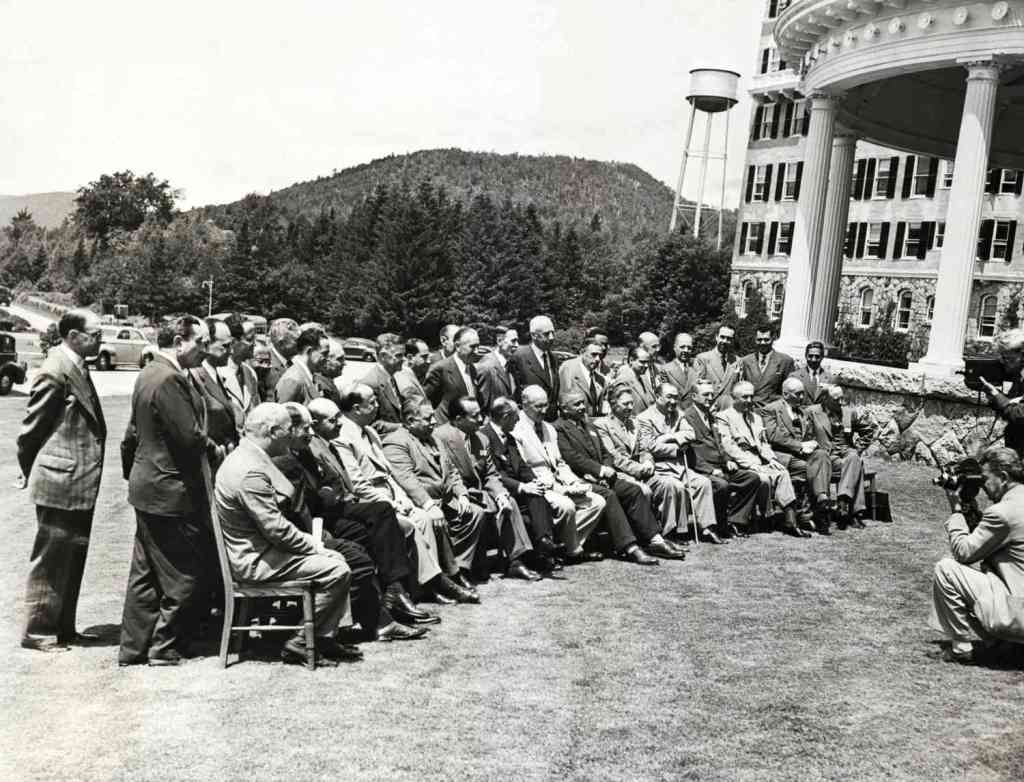
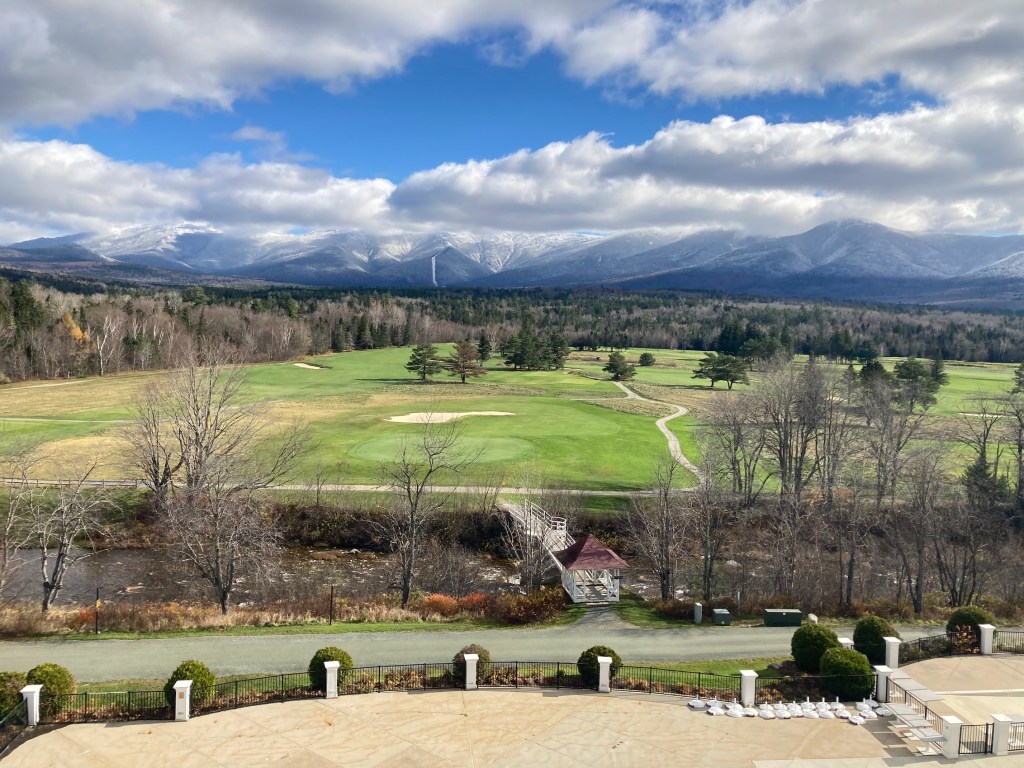
This week I was in Bretton Woods, New Hampshire. The Mount Washington Resort there is lovely on its own terms as a grand old hotel surrounded by mountains, but it is better known (at least among economists) as the site of the 1944 conference that gave us the International Monetary Fund, the World Bank, and the postwar international monetary system.

This got me thinking about what other destinations should top the list of sites for economics tourism. Adam Smith’s house in Scotland has to be on there. In the US I’ve been trying to visit all 12 Federal Reserve banks; they tend to have nice architecture as well as a Money Museum. You can stay at Milton and Rose Friedman’s cabin in Vermont, Capitaf. I’d like to go to Singapore for many reasons, but one is that they seem to listen to economists more than any other country; I’m not sure what places to visit within Singapore that best reflect that, though.
The places I’ve listed so far are somewhat inward looking to the economics profession; you could get a much bigger list by looking outward to the economy itself, doing “economic tourism” rather than “economics tourism”. Visit a port, a mine, or a factory (like Adam Smith visiting a pin factory and getting ideas for the Wealth of Nations); visit a stock exchange or a bazaar. Visit whatever country currently has the fastest economic growth, or the worst inflation.
Those are my ideas, but I’d love to hear yours: what are the best places for econ tourism?
 Economist Writing Every Day
Fun for you! Great pictures. I’ll take this chance to highlight an article I wrote about visiting ports and mines and such to be “economics tourism.” Basically how to teach a travel course: https://economics-finance.org/jefe/issues/JEFE-Vol-16-Num-1-Winter-2017.pdf
LikeLiked by 1 person
Great idea… running it through study abroad lets you get around the typical scheduling requirements that make full-day-or-longer longer trips tough in a regular course? We’d have have plenty of places to visit around here, the birthplace of the US industrial revolution
LikeLike
Lots in here
https://www.ucl.ac.uk/~uctp100/Walks/EconWalks.htm
LikeLiked by 1 person
Does not mention the Broad Street pump so that’s a shame.
John Snow demonstrated that that pump (now a replica) was spreading cholera in 1855. (Before, people thought that cholera was spread by “bad air.”) Snow pioneered diff-in-diff to show the connection.
LikeLiked by 1 person
Great point. Diff-in-diff is one of the most popular empirical methods in economics now, I think its in a majority of my papers
LikeLike
The Philipps Machine in London’s Natural History Museum. Also Bloomsbury, to soak up the vibes of Keynes and friends.
LikeLiked by 1 person
I’ve seen the Philipps machine, should have mentioned that. Your comment together with the previous one one Econ Walks suggest London is a top destination.
LikeLike
Under the canopy on the hotel rooftop in Palermo where Alfred Marshall hit upon the notion of elasticity with which, Mrs Marshall reported, he was “high delighted.”
LikeLiked by 1 person