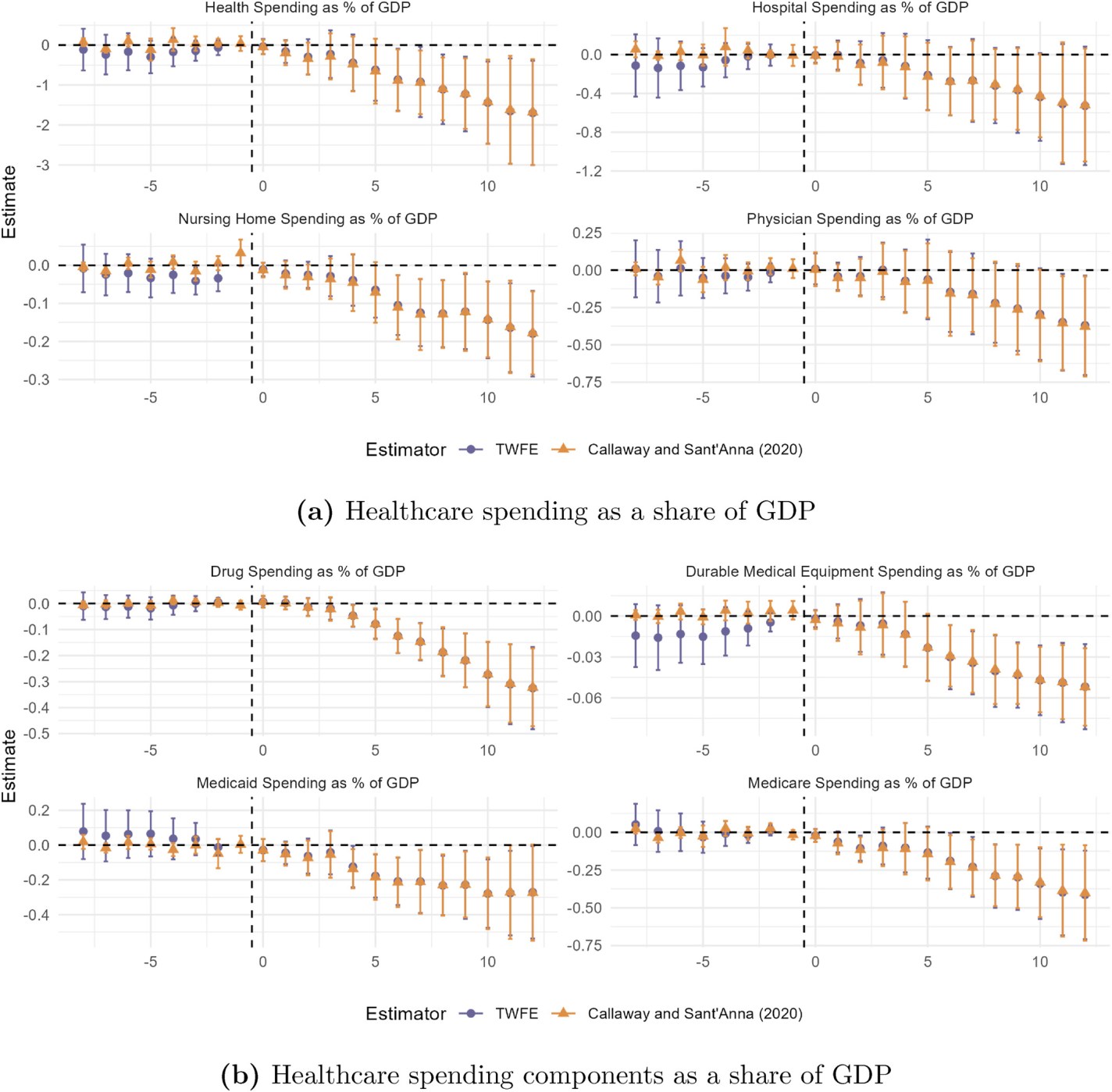
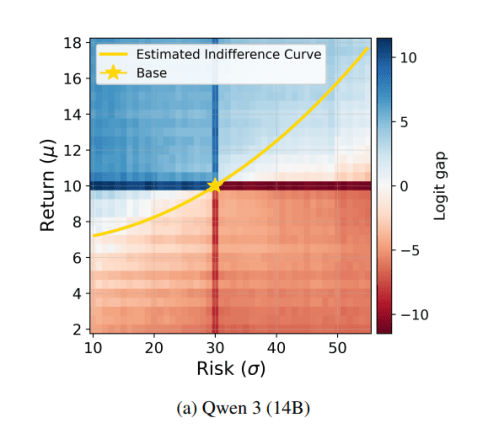
We’ve been cited in top newspapers, such as The Financial Times, before, but this might be a first. Our blog has been cited in Demography, a top-ranked journal in the field of demographics and population studies.
The internet is fun sometimes, and that is why we are here (almost) every day. Jeremy’s work is mostly about wealth, and this paper is mostly about income:
I was able to download the PDF directly from the journal website linked above, so it must be open-access. Instead of trying to restate all of their finding here, I’ll just quote:
At ages 36–40, Millennials’ mean net worth was about $95,000 higher than that of Generation X. Their home equity was $30,000 higher and nonhousing wealth was about $65,000 higher. Thus, although homeownership among Millennials has declined, home values have increased enough among those who own homes to increase mean home equity, while their nonhousing wealth has grown as well. Our findings of generational increases in wealth echo those previously found by Horpedahl (2021, 2024).
If you are already struggling to meet your deadlines for referee reports you owe to editors, should you take the time? If you don’t have time to indulge your curiosity about the 18th century and dead thinkers, right in the middle of the semester, should you look at it now or maybe browse it over the summer?
I think it’s worth going straight to the last chapter right now.
“Chapter 4: Why Marginalism Will Dwindle, and What Will Replace It?“
It was written for you and released quickly for this moment. Tyler does not personally have to worry about his job, but you might.
You might face mental resistance to reading this chapter, because you don’t want to hear the message. If that’s you, then it’s especially useful to read this chapter. He’s not correct about everything. Develop your counter argument, to go forth and save marginalism. You can only do that if you understand and name the threats. This is more about methods/professions and less about ideology than you might think from the title.
Here are some quotes that stood out to me
The ties of empirical work in economics to economic theory are evolving, and in particular the explicit ties to intuitive microeconomic reasoning, and marginalist thinking, are being cut. In much of traditional econometrics, the emphasis is on testing pre-existing models…
in machine learning, we let the algorithm build the “theory” for us, noting it may have tens of millions of variables and thus not count as a theory…
So much for prediction, what about hypothesis generation? Well, there is a new approach to that too, using machine learning.
A lot of economists do not regularly describe what they actually do for work. Yes, we are saving the world by writing papers, but what exactly do you do? Do you generate hypotheses? Is that what you are teaching your students to do?
It’s not fun to think of how the econ profession might need to reposition, but we owe it to students. Who better to work on this than tenured professors?
I think the case for undergraduates students to major in economics is strong. I also think the case for doing 4 years of college is strong for students who want to learn.
If economics is “more interesting” than hard science, then it might serve to scoop up good thinkers at the undergraduate level and get them doing something more technical than what they would end up doing in a humanities program. When I graduated from college, the fact that most econ student had accidentally learned to code was a benefit to them.
College graduate humans ought to be able to read and pass the Turing Test if they are going to be effective complements to AI.
Let me plug Mike as well for thinking about what research econs do in 2026: The actual AI problem in academic economics “Oh, what shall all the candlemakers do now that the sun has risen?” made me laugh.
Common sense and Bayes’ Rule agree: extraordinary claims require extraordinary evidence
Trust more when papers publicly share their data and code
Trust higher-ranked journals more up to the level of top subfields (e.g. Journal of Health Economics, Journal of Labor Economics), but top general-interest journals can be prone to relaxing standards for sensationalist or ideologically favored claims (e.g. The Lancet, PNAS, Science/Nature when covering social science)
More recent is better for empirical papers, data and methods have tended to improve with time
Overall effects are more trustworthy than interaction or subgroup effects, the latter two are easier to p-hack and necessarily have lower statistical power
Trust large experiments most, then quasi-experiments, then small experiments, then traditional regression (add some controls and hope for the best)
The real effect size is half what the paper claims
That last is inspired by a special issue of Nature out today on the replicability of social science research. An exception to rule #4, this is an excellent project I will write more about soon.
In 2014 India required banks to offer no-cost accounts. This led hundreds of millions of people to open bank accounts for the first time, and more than doubled the number of Indian women who had a bank account:
This increased households’ collective ability to save and borrow, but didn’t shift decision-making power towards women despite the larger change for them. That is the finding of a paper by Tarana Chauhan, a Brown University postdoc who is currently on the job market. The paper is a well-executed example of a difference-in-difference analysis of observational data- that is, carefully examining data that other people generated to examine events that help establish causality. But the validity of difference-in-difference strategies in separating correlation from causation can always be questioned, and always is in economics seminars.
So Dr. Chauhan, this time with coauthors Berber Kramer, Patrick Ward and Subhransu Pattnaik, followed up by directly running an experiment. They got a company to offer subsidized loans to hundreds of randomly selected Indian farmers, then surveyed the farmers to see if they behaved differently than a control group that didn’t get loans. The loans carried a 14% interest rate, which seems high to Americans but was apparently 10pp lower than the other options available in India. They wanted to know whether farmers would use the loans to improve farm productivity, and whether this would have any differential effects on women.
The first stage of the experiment worked: households took the loans and got more engaged with the financial system.
Some used the money for smartphones:
But for the most part they seem not to have spent the money on farming- they didn’t buy significantly more land, seeds, fertilizer, or farm equipment. They did spend more on “non-farm business equipment” and “large consumer durables”. Despite not producing more food themselves, they reported higher food security. Income stayed flat, but women were able to shift some time away from work and toward leisure:
I find these results surprising given how poor the households receiving the loans are. They earn the equivalent of about $1,000/yr, putting them around the global “extreme poverty” line. At that income level I’d think they would value additional income highly relative to leisure, and yet when they get the loan, work time goes down and leisure time increases. Could it really be the case that they’ve already hit their income target, and are on the backward bending part of the labor supply curve? Some other possibilities are that they don’t expect that investing in farming would increase yields enough to be worthwhile, or that they worry any increased income would be taken away through explicit or implicit taxes. But the households generally seem better off as a result of the loan.
The other surprise- enough of the loans were paid back that the lenders made a profit despite the research pushing the interest rate below-market.
No, according to a new paper from the University of Georgia’s Michael Kotrous.
Many people expected it to, partly by thinking about the jobs that could benefit from faster internet, and partly by looking at the experience of Chattanooga, Tennessee. Chattanooga was the first major city to get gigabit-speed broadband, and they did see a huge improvement in the labor market right afterwards:
But as the graph shows, the introduction of broadband there coincides with the end of the nationwide Great Recession. Was the boom in jobs after 2009 because of the broadband, or would it have happened anyway as party of the recovery from recession? A synthetic control strategy shows that Chattanooga’s recovery was pretty typical for cities like it, so the broadband angle probably didn’t do much:
This might seem like a historical curiosity about one city, but the federal government is currently trying to spend $42 billion to expand broadband to more places, partly motivated by the idea of bringing jobs. I thought the Broadband Equity Access and Deployment Program‘s big problem is how slow it is- Congress created with the Infrastructure Investment and Jobs Act of 2021, but money didn’t start getting sent out until late 2025, and it could be many more years before it leads to any useable broadband. Even then it now seems unlikely to bring jobs, though there could be other benefits.
This paper’s author Michael Kotrous is currently on the economics job market. As his former professor and coauthor, I recommend hiring him if your school gets the chance.
Last July I wrote here about “Humanity’s Last Exam”:
When every frontier AI model can pass your tests, how do you figure out which model is best? You write a harder test.
That was the idea behind Humanity’s Last Exam, an effort by Scale AI and the Center for AI Safety to develop a large database of PhD-level questions that the best AI models still get wrong.
One the one hand, it makes sense that the core author groups at the Center for AI Safety and Scale AI didn’t keep every coauthor in the loop, given that there were hundreds of us. On the other hand, I’m part of a different academic mega-project that currently is keeping hundreds of coauthors in the loop as it works its way through Nature. On the third, invisible hand, I’m never going to complain if any of my coauthors gets something of ours published in Nature when I’d assumed it would remain a permanent working paper.
What do we do when it can answer all the questions we already know the answer to? We start asking it questions we don’t know the answer to. How do you cure cancer? What is the answer to life, the universe, and everything? When will Jesus return, and how long until a million people are convinced he’s returned as an AI? Where is Ayatollah Khamenei right now?
Venezuela held an election this week; President Maduro says he won, while the opposition and independent observers say he lost. Disputed elections like this are fairly common across the world, but where Venezuela really stands out is not how people vote at the ballot box- it is how they vote with their feet.
Reuters notes that “A Maduro win could spur more migration from Venezuela, once the continent’s wealthiest country, which in recent years has seen a third of its population leave.”
This makes Venezuela the largestrefugee crisis in the history of the Americas, and depending on how you count the partition of India, perhaps the largest refugee crisis in human history that was not triggered by an invasion or civil war.
Instead, it has been triggered by the Maduro regime choosing terrible policies that have needlessly and dramatically impoverished the country
Plus some foreshadowing:
I hope that the Venezuelan government will soon come to represent the will of its people. I’m not sure how that is likely to happen, though I guess positive change is mostly likely to come from Venezuelans themselves (perhaps with help from Colombia and Brazil); when the US tries to play a bigger role we often make things worse. But what has happened in Venezuela for the past 10 years is clearly much worse than the “normal” bad economic policies and even democratic backsliding that we see elsewhere.
Here’s an update on the chart I shared then, showing that the diaspora has continued to swell:
I hope that Venezuela will soon become the sort of country people don’t want to flee. I don’t necessarily expect that it will, but it’s not now a crazy hope:
This quote from the introduction explains the title:
… in the early 2000s… the Motion Picture Association of America (MPAA) released an anti-piracy trailer shown before films that argued: (1) “You wouldn’t steal a car,” (2) pirating movies constitutes “stealing,” and (3) piracy is a crime. The very need for this campaign, and the ridicule it attracted, signals persistent disagreement over whether digital copying constitutes a moral violation.
The main idea:
In contemporary economies, “idea goods” comprise a substantial share of value. Our paper examines how norms evolve when individuals evaluate harm after the taking of nonrivalous resources such as digital files.
We report experimental evidence on moral evaluations of unauthorized appropriation, contingent on whether the good is rivalrous or nonrivalrous. In a virtual environment, participants produce and exchange two types of resources: nonrivalrous “discs,” replicable at zero marginal cost, and rivalrous “seeds,” which entail positive marginal cost and cannot be simultaneously possessed or consumed by multiple individuals. Certain treatments allow unauthorized taking, which permits observation of whether participants classify such actions as moral transgressions.
Participants consistently label the taking of rivalrous goods as “stealing,” whereas they do not apply the same term to the taking of nonrivalrous goods.
To test the moral intuition for taking ideas, we create an environment where people can take from each other and we study their freeform chat. The people in the game each control a round avatar in a virtual environment, as you can see in this screenshot below.
In the experiment, “seeds” represent a rivalrous resource, meaning they operate like most physical goods. If the playerin the picture (Almond) takes a seed from the Blue player, then Blue will be deprived of the seed, functionally the equivalent of one’s car being stolen.
Thus, it is natural for the players to call the taking of seeds “stealing,” Our research question is whether similar claims will emerge after the taking of non-rivalrous goods that we call “discs.”
The following quote from our paper indicates that the subjects do not label or conceptualize the taking of digital goods (discs) as “stealing.”
Participants discuss discs often enough to reveal how they conceptualize the resource. In many instances, they articulate the positive-sum logic of zero-marginal-cost copying. For example, … farmer Almond reasons, “ok so disks cant be stolen so everyone take copies,” explicitly rejecting the application of “stolen” to discs.
Participants never instruct one another to stop taking disc copies, yet they frequently urge others to stop taking seeds. The objection targets the taking away of rivalrous goods, not the act of copying per se. As farmer Almond explains in noSeedPR2, “cuz if u give a disc u still keep it,” emphasizing that artists can replicate discs at zero marginal cost.
We encourage you to read the manuscript if you are interested in the details of how we set up the environment. The conclusion is that it is not intuitive for people to view piracy as a crime.
This has implications for how the modern information economy will be structured. Consider “the subscription economy.” Increasingly, consumers pay recurring fees for ongoing access to products/services (like Netflix, Adobe software) instead of one-time purchases. Gen Z has been complaining on TikTok that they feel trapped with so many recurring payments and lack a sense of ownership.
In a recent interview on a talk show called The Stream, I speculated that part of the reason companies are moving to the subscription model is that they do not trust consumers with “ownership” of digital goods. People will share copies of songs and software, if given the opportunity, to the point where creators cannot monetize their work by selling the full rights to digital goods anymore.
A feature of our experimental design is that creators of discs get credit as the author of their creation even when it is being passed around without their explicit permission. Future work could explore what would happen if that were altered.
Our episode began with some clips from TikTok of young people expressing anger over feeling trapped in “the subscription economy.” Watch our show at the link above to see.
The subscription economy is a business model shift where consumers pay recurring fees for ongoing access to products/services (like Netflix, SaaS) instead of one-time purchases, focusing on “access over ownership” for predictable revenue. Gen Z feels upset that they are getting charged for subscriptions, some of which they simply forgot to cancel. They have nostalgia for the days of toting a zipper case of CDs onto the yellow school bus in 2004.
My commentary starts around minute 5:30 in the show. The first thing I point out is that, by and large, we have more entertainment available to us at a lower price than people did in that bygone era of mostly cable TV and physical discs. (This is a bit like the point I made on The Stream in March 2025 about how fast fashion represents more stuff for consumers at lower prices, which is good.)
In the episode, we discussed how people can still buy CDs today. Sanya Dosani made the point that, “there’s a place for buying and a place for renting.” Everyone should be aware of how cheap DVDs, books, and CDs are at rummage sales in the United States in 2025. You can get a music album for 50 cents. Some youths have (re)discovered that DVD players are cheaper than a year of streaming subscription costs.
Around minute 17, I got to bring up my research about intellectual property, digital goods, and morality.
We find that people do not feel bad about taking the digital goods, or “pirating.” We even find that, in a controlled experiment with no previous context for what we might call intellectual property protection, the creators of these digital goods do not call such taking stealing either. It seems to be understood that folks will take and share if they can.
The proposed reason for artificially restricting the taking and resale of intellectual property is that creators need a way to profit from providing a public good. (Intellectual property rights in the U.S. Constitution are covered by Article I, Section 8.)
I said in the interview, “If you were able to just give a song to all of your friends, you probably would, and then that artist might not be able to make songs the next year.”
Thus, I suggested, “The subscription economy is a reaction to the fact that most people don’t view it as wrong to take things they can take and not necessarily pay for them. Companies had to find a new way to be able to make money and stay in business.”
I’ll clarify that I have not done quantitative research to prove that subscription models emerged causally because of pirating. I’m speculating. Another side to this is that people simply want to stream and companies are providing exactly what people want (despite the complaints circulating on TikTok). People reminisce about the “golden days” of early Netflix, but most people forget that the company was losing money at that time. Media production and distribution companies have to make money to stay in business.
At the end, the host asked me, “… what does it mean for who we are as humans, more of an existential question, where we are going with this age?”
That’s a deeper question than you might expect for a conversation about CD-ROMs. However, people do care about having some tangible form of art about them. Think of the ancients buried alongside beads and dolls. Netflix will never be the only thing that people want. As for Gen Z being upset about convenient Spotify, “what does it mean for who we are” has got to be part of it.
As an aside, furthermore, I’ll say here on the blog that Gen Z is by some measures the most entertained generation in history. For spiritual, not financial, reasons, I encourage them to cancel their subscriptions, take out their AirPods, and feel the silence and dread for a week.
The Little Book of Common Sense Investing: “John Bogle, the founder of Vanguard, wrote a short book in 2006 that explains his investment philosophy. I can sum it up at much less than book length: the best investment advice for almost everyone is to buy and hold a diversified, low-fee fund that tracks an index like the S&P 500.”
The Little Book that Beats the Market: “Greenblatt offers his own twist on value investing that emphasizes just two value metrics- earnings yield (basically P/E) and return on capital (return on assets). The idea is to blend them, finding the cheapest of the high-quality companies…. Greenblatt’s Little Book is a quick and easy way to learn a bit about value investing, but I think Bogle’s Little Book has the better advice.”
When Genius Failed: “Myron Scholes was on top of the world in 1997, having won the Nobel Prize in economics that year for his work in financial economics, work that he had applied in the real world in a wildly successful hedge fund, Long Term Capital Management. But just one year later, LTCM was saved from collapse only by a last-minute bailout that wiped out his equity (along with that of the other partners of the fund) and cast doubt on the value of his academic work…. The story is well-told, and the lessons are timeless”
The Art of Spending Money: “Its main point is that people tend to be happier spending money on things they value for their own sake- rather than things they buy to impress others, or piling up money as a yardstick to measure themselves against others (this is repeated with many variations). Overall it is well-written at the level of sentences and paragraphs with well-chosen stories and quotes, but I’m not sure what it all adds up to.”
Non-fiction I didn’t previously mention here:
The Napoleonic Wars: A Global History, Alexander Mikaberidze: Aims to educate us about the surprisingly major effects of the Napoleonic Wars outside of Europe. Succeeds wildly; I also learned a lot about the main European theatre. Hadn’t realized how poor British Russian relations were in this era, since they defeat Napoleon together in the end. But they were heading for war early on until a czar was assassinated, then actually went to war in the middle over Sweden and trade. Outside Europe, Britain briefly took Buenos Aires and Montevideo, and accidentally (?) captured Iceland, along with all the French and Dutch overseas colonies.
Talent: How to Identify Energizers, Creatives, and Winners Around the World, Tyler Cowen and Dan Gross: A business book that works best for someone who hires a lot. How to attract and retain diverse candidates, including but not limited to the most-discussed types of diversity. Tyler says that when he lived in Germany people often thought he was Turkish, and one told him to ‘get out of here, you Turk’.
Almost Human: The Astonishing Tale of Homo Naledi and the Discovery That Changed Our Human Story, Lee Berger and John Hawks: The story of how the authors excavated a cave in South Africa that held many remains from a previously unknown type of early human. Good storytelling, good explanations of what we know about early humans from other discoveries, and surprisingly frank discussions of the academic politics behind getting paleontology research funded.
The Ends of the World, Peter Brannen: The book explains Earth’s 5 previous mass extinctions and the geology / science behind how we found out what we know about them. Written explicitly about what all this means for current global warming; see my full review on that here.
Annals of the Former World, John McPhee: New Yorker writer follows geologists from New York to San Fransisco to learn about the land in between. Published as a series of 4 books (Basin and Range, In Suspect Terrain, Rising from the Plains, Assembling California), each one focusing on a different geologist and region. McPhee is known as an excellent stylist but the books are also quite substantive, I feel like I learned a lot.
Fiction
The Works of Dashiell Hammet: My friend Dashiell mentioned that this is who he was named after, and that Red Harvest was a good book of his to start with. He was right, and it lead me to read many others: The Thin Man (you may have heard of Hammet because of the movies adapted from this and The Maltese Falcon), Best Cases of the Continental Op, Honest Gain: Dicey Cases of the Continental Op. Almost every story has a twist more interesting than “the murderer isn’t who you suspected”.
Tress of the Emerald Sea, Brandon Sanderson. Sanderson is one of the most prolific authors of our time, so where do you start with him? He suggests “Mistborn or Tress of the Emerald Sea, depending if they want something more heisty and actiony or something more whimsical.”
The Frugal Wizard’s Handbook for Surviving Medieval England, Brandon Sanderson: Sanderson doing his best impression of Terry Pratchett rewriting Mark Twain’s Connecticut Yankee in King Arthur’s Court, with shades of Scott Meyer’s Off to Be the Wizard.
Janissaries, Jerry Pournelle: What if instead of going to a more primitive world alone, you got sent there with an army?
The Narrow Road Between Desires, Patrick Rothfuss: Enough of an expansion of The Lightning Tree to be worth reading, but at this point anything Rothfuss does other than finally finish Doors of Stone can’t help but be disappointing.
Beguilement, Lois McMaster Bujold: Her Sci Fi works are great so I looked forward to her take on the Fantasy genre, but this turns out to be her take on the Romance genre.
Meta
This year I realized that Hoopla has a lot of books that Libby doesn’t, it is worth checking both apps for a book if you have access to libraries that offer both