Experimental Banking Reveals the Value of Leisure

In 2014 India required banks to offer no-cost accounts. This led hundreds of millions of people to open bank accounts for the first time, and more than doubled the number of Indian women who had a bank account:
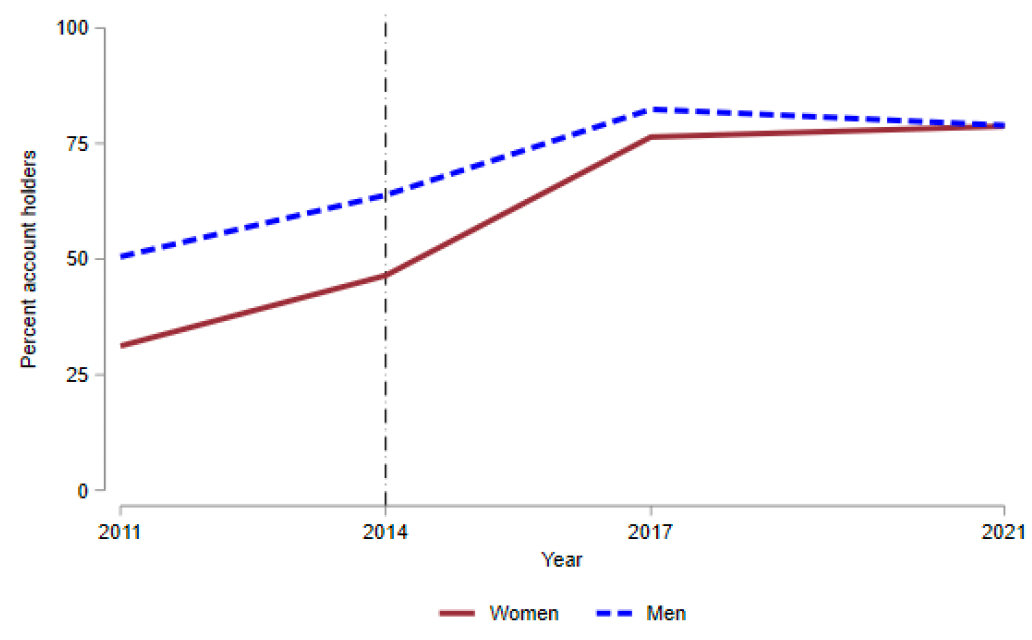
This increased households’ collective ability to save and borrow, but didn’t shift decision-making power towards women despite the larger change for them. That is the finding of a paper by Tarana Chauhan, a Brown University postdoc who is currently on the job market. The paper is a well-executed example of a difference-in-difference analysis of observational data- that is, carefully examining data that other people generated to examine events that help establish causality. But the validity of difference-in-difference strategies in separating correlation from causation can always be questioned, and always is in economics seminars.

So Dr. Chauhan, this time with coauthors Berber KramerPatrick Ward and Subhransu Pattnaik, followed up by directly running an experiment. They got a company to offer subsidized loans to hundreds of randomly selected Indian farmers, then surveyed the farmers to see if they behaved differently than a control group that didn’t get loans. The loans carried a 14% interest rate, which seems high to Americans but was apparently 10pp lower than the other options available in India. They wanted to know whether farmers would use the loans to improve farm productivity, and whether this would have any differential effects on women.

The first stage of the experiment worked: households took the loans and got more engaged with the financial system.
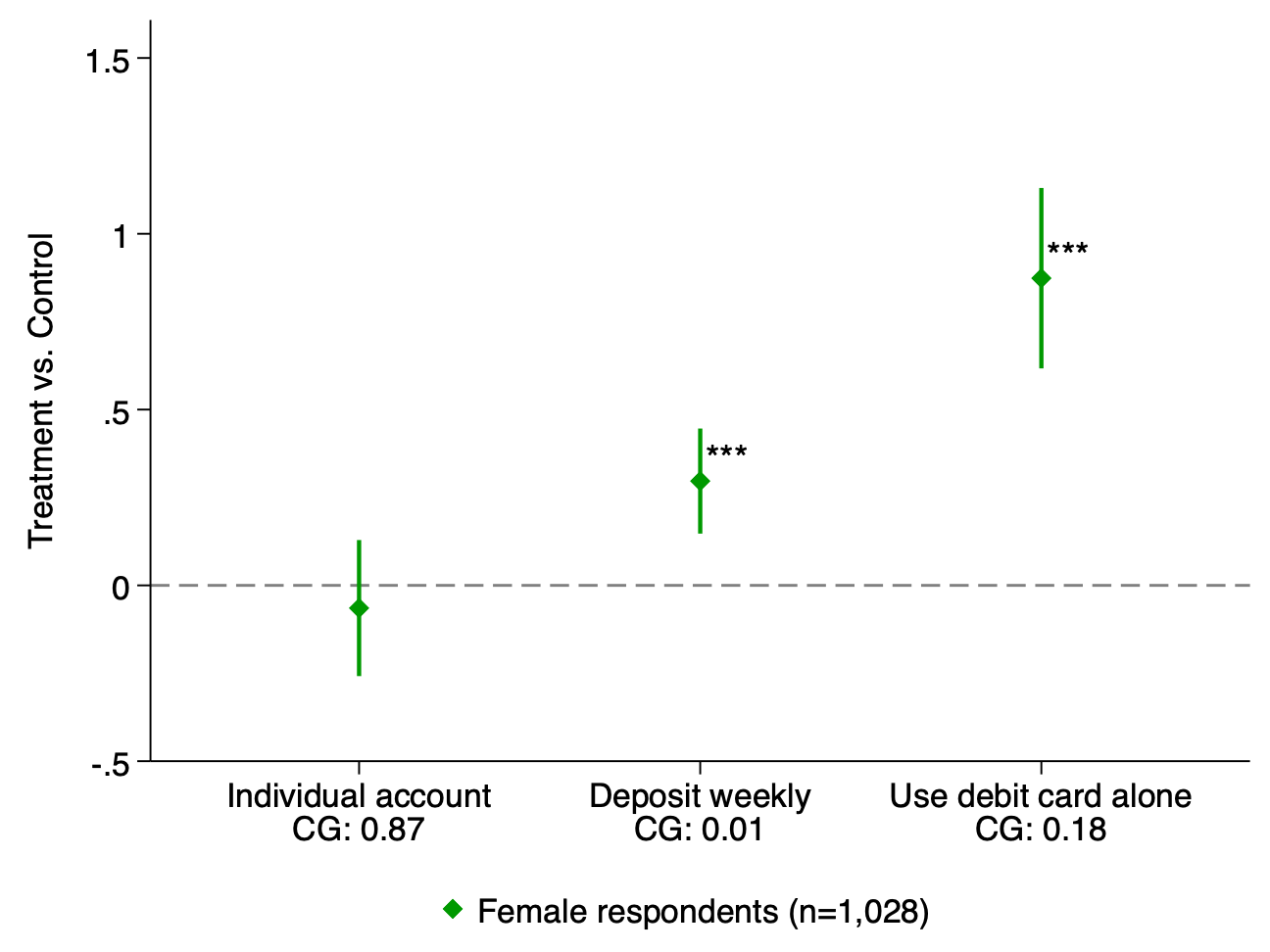
Some used the money for smartphones:
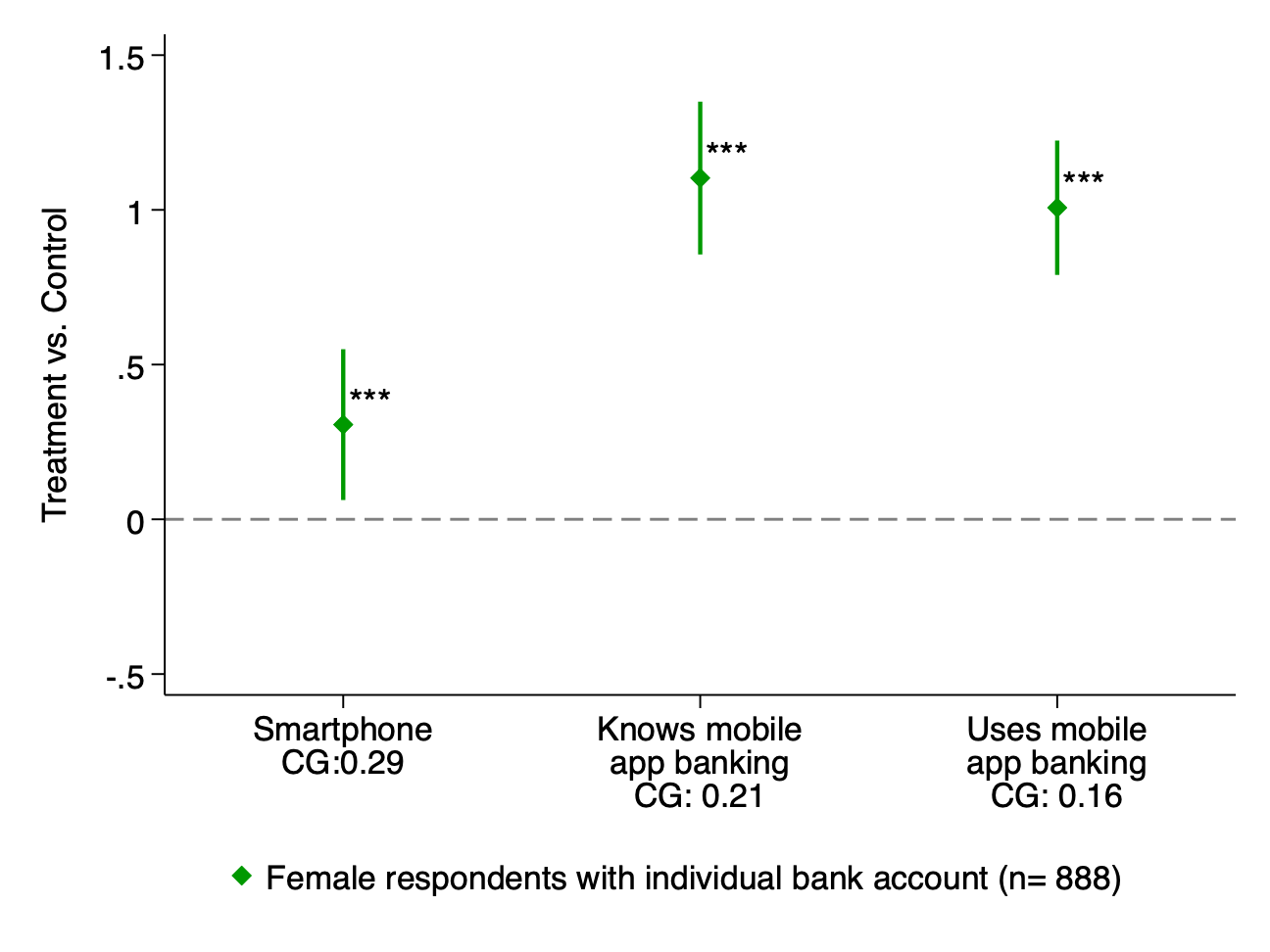
But for the most part they seem not to have spent the money on farming- they didn’t buy significantly more land, seeds, fertilizer, or farm equipment. They did spend more on “non-farm business equipment” and “large consumer durables”. Despite not producing more food themselves, they reported higher food security. Income stayed flat, but women were able to shift some time away from work and toward leisure:
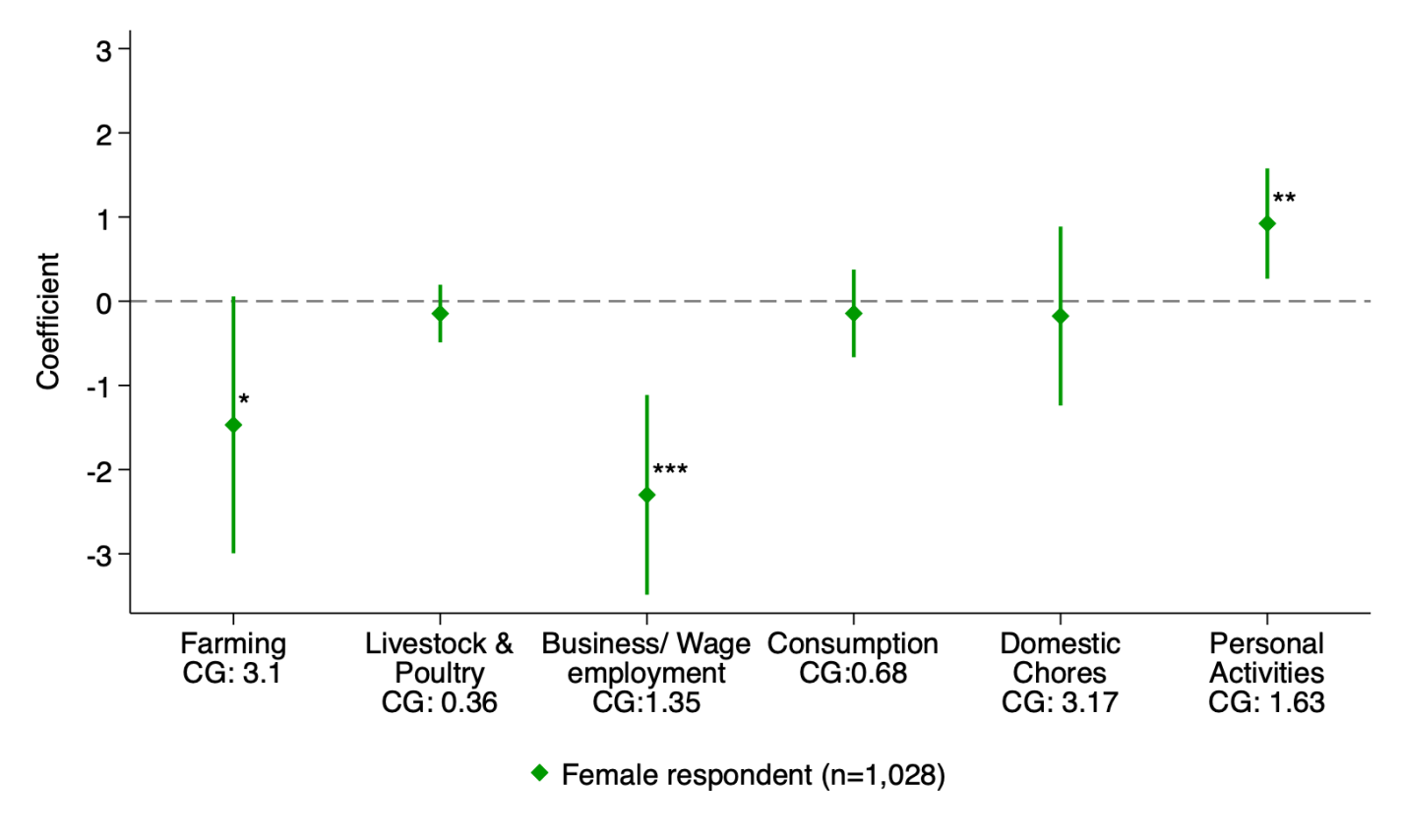
I find these results surprising given how poor the households receiving the loans are. They earn the equivalent of about $1,000/yr, putting them around the global “extreme poverty” line. At that income level I’d think they would value additional income highly relative to leisure, and yet when they get the loan, work time goes down and leisure time increases. Could it really be the case that they’ve already hit their income target, and are on the backward bending part of the labor supply curve? Some other possibilities are that they don’t expect that investing in farming would increase yields enough to be worthwhile, or that they worry any increased income would be taken away through explicit or implicit taxes. But the households generally seem better off as a result of the loan.

The other surprise- enough of the loans were paid back that the lenders made a profit despite the research pushing the interest rate below-market.

Hospital Merger Update

The panel on the proposed merger of Rhode Islands two largest hospital systems I mentioned last week happened yesterday, I’ll post some reactions here, there was a lot I didn’t get to say since my section only had 45 minutes split across 4 panelists and Senator Whitehouse naturally got more of the time.

The Lifespan and Care New England CEOs trying to merge their systems opened with what to me seemed like their weakest argument, a general appeal to togetherness. They said that if the Patriots offense and defense had to be kept as separate teams, they wouldn’t be very good. To me the right metaphor is that if you merged all the NFL teams into one super team, they wouldn’t try very hard.

To their credit though, overall the hospital CEOs and President Paxson of Brown University were surprisingly honest about the risks, basically acknowledging that hospital mergers are often just a way to gain market power at everyone else’s expense, but arguing that for various reasons this one is different. They seem to realize that if you define the relevant market area as the state of Rhode Island (as e.g. the Dartmouth Atlas does in their “Hospital Referral Regions”) then the merged entity would have a nearly 80% market share and be challenged by the FTC as an obvious monopoly. So they argue that the relevant market should include Boston and much of Connecticut. They argue that it won’t just be an excuse to raise prices because they are non-profits and the state has rate regulations.

They identified two potential true efficiencies, integrating the electronic medical records of the two systems and being able to easily conduct research across both systems (both systems have many employees who are faculty at Brown Med School, including my wife). In a reasonable world these efficiencies could be gained without merging, though I suspect HIPAA prevents this, meaning one of its many perverse unintended consequences would be incentivizing mergers.

Their biggest admission against interest was that “the primary benefit [of the merger] comes from scale” and that “scale matters for purchasing supplies and staffing”. To me this implies “don’t worry, we won’t use our monopoly power against consumers, we’ll just use it against suppliers and staff”. But the FTC just repealed their consumer welfare standard, and so I think these statements could come back to haunt the merging parties.

Lifespan / CNE Merger Economics

The largest hospital system in Rhode Island, Lifespan, is trying to merge with the second-largest hospital system in Rhode Island, Care New England. Next Wednesday I’ll be on a panel discussing the proposed merger, following a panel with the Presidents of the three institutions involved (Lifespan, CNE, and Brown University). I’ll summarize my thoughts here.

Basic economics tells us that if a company with 50% market share buys a company with 25% market share in the same industry, they have strong market power and are likely to use this monopoly position to raise prices.

The real world is often more complicated, especially when it comes to health care, but in this case I think basic economics holds up well. A wealth of empirical evidence, including studies of previous hospital mergers, suggest that reduced hospital competition leads to higher prices without bringing commensurate benefits in quality or efficiency.

I think the Federal Trade Commission will almost certainly challenge the merger, and that they will likely succeed in doing so. The FTC merger guidelines more or less demand it, and current FTC leadership if anything seems to want to be more aggressive than required on antitrust. To me the biggest question is whether they will try to stop the merger entirely, or whether they would allow it to proceed subject to conditions (e.g. spin off one or two hospitals to remain independent)- I’ll be watching with interest and letting you know how it goes.