This Simpsons episode has forever colored my gut response to placebos:
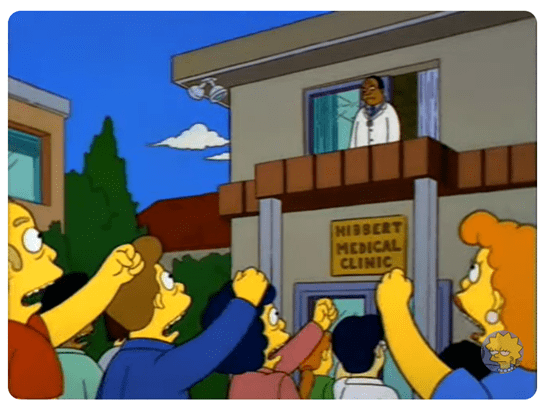
Crowd: We need a cure! We need a cure!
Dr. Hibbert: Ho ho ho. Why, the only cure is bedrest. Anything I give you would be a placebo.
Woman: [frantic] Where do we get these placebos?
Man: (points at truck) Maybe, there’s some in this truck!
(Crowd knocks over truck and a box of killer bees from it break out and attack the crowd.

No, but seriously – the placebo effect is real and important. If you take some pill which you believe might be efficacious (whether it is a sugar pill, or just some regular medication that happens to have no real biological, mechanistic relevance to your condition), voila, the symptoms (especially pain) may abate. This is nothing to sneer at – if you or a loved one is suffering serious pain, any relief is desperately welcome.
I think part of it has to do with our expectations of the pill itself, and part with the healing effect of another human being (doctor/nurse) expressing empathy and caring as he/she carefully dispenses the sugar pills. Studies show that loving interactions with other people can help release endogenous opioids in the anterior cingulate cortex, which really do soothe pain. When a mother comforts her child who just fell down, or a friend listens sympathetically about your recent disappointment, there is actual brain chemistry going on.
In a placebo/drug trial, “people are exposed to an environment and procedures geared toward improving one’s health…You must visit a clinic at certain times and be examined by medical professionals. You undergo procedures or receive special medication. All this can profoundly impact how the body perceives symptoms because you feel both consciously and unconsciously that you are getting the attention and care needed to heal.”
Since I don’t think I can improve on it, here is an excerpt from an essay I prompted from Claude, asking about where placebos do and don’t work, and proposed mechanisms:
~ ~ ~ ~ ~ ~ ~ ~ ~ ~ ~~ ~ ~ ~ ~~ ~ ~ ~~ ~~ ~ ~ ~ ~ ~ ~ ~ ~
Where the Placebo Effect Appears
The placebo effect is most robustly documented in pain management. In landmark work by Levine, Gordon, and Fields (1978), patients who received a placebo after dental surgery experienced significant pain relief — relief that was partially reversed by naloxone, an opioid antagonist. This demonstrated that placebos could trigger the release of the body’s own endogenous opioids (endorphins), producing measurable analgesia through a real biochemical pathway.
Beyond pain, placebos have demonstrated consistent effects in:
- Depression: Meta-analyses, including the influential work of Kirsch et al. (2008, PLoS Medicine), found that a substantial portion of antidepressant response in clinical trials was attributable to placebo, particularly in mild-to-moderate depression.
- Parkinson’s disease: De la Fuente-Fernández et al. (2001, Science) used neuroimaging to show that placebo administration triggered genuine dopamine release in the striatum of Parkinson’s patients — a stunning demonstration of expectation-driven neurochemistry.
- Irritable Bowel Syndrome (IBS): A 2010 study by Kaptchuk et al. (PLOS ONE) found that open-label placebos — patients told they were receiving sugar pills — still produced significant symptom reduction in IBS, suggesting conditioning effects persist even without deception.
- Anxiety and asthma: Both show moderate, well-replicated placebo responses, particularly when tied to elaborate therapeutic rituals.
Where Placebos Fall Short
The placebo effect is not universal. It is largely absent or clinically negligible in:
- Objective tumor biology: While patients may report feeling better, placebos do not shrink tumors, alter cancer markers, or extend survival in oncology trials.
- Bacterial infections: No degree of expectation reduces bacterial load or alters antibiotic sensitivity.
- Type 1 diabetes: Endogenous insulin production is not restored by belief.
- Bone fracture healing: Structural tissue repair proceeds independently of psychological state.
- Vision and hearing loss caused by structural damage: Nerve regeneration does not respond to suggestion.
The distinction broadly tracks a line between subjective, brain-mediated symptoms and structural or infectious disease. The nervous system can modulate what it controls; it cannot manufacture what biology has lost.
Proposed Mechanisms of Action
Several non-mutually exclusive mechanisms have been proposed:
1. Expectation and Predictive Processing
The leading cognitive account holds that the brain is a prediction machine. When a patient expects relief, the brain updates its internal model accordingly, and downstream perceptual and autonomic systems adjust to match the prediction. Tor Wager’s neuroimaging studies (Science, 2004) showed that placebo analgesia correlated with reduced activation in pain-processing regions (anterior cingulate, insula), consistent with top-down suppression of pain signals.
2. Endogenous Opioid and Dopamine Release
As noted above, placebo responses involve genuine neurotransmitter release. Opioid pathways mediate placebo analgesia; dopaminergic pathways mediate motor and mood improvements in Parkinson’s and depression. These are pharmacologically real events, not metaphors.
3. Classical Conditioning
Repeated pairing of a treatment context with active medication can produce conditioned responses where the context alone triggers the effect — even in the absence of the drug. This mechanism may explain why open-label placebos still work (Kaptchuk et al., 2010) and why placebo responses are stronger in patients with prior treatment experience.
4. Therapeutic Relationship and Meaning
The quality of the patient-clinician relationship independently predicts outcomes. Warmth, attentiveness, and ritual amplify placebo responses. This “meaning response,” as medical anthropologist Daniel Moerman (2002) termed it, suggests that healing is partly a social and symbolic act.
References
- Levine, J.D., Gordon, N.C., & Fields, H.L. (1978). The mechanism of placebo analgesia. The Lancet, 312(8091), 654–657.
- Kirsch, I., et al. (2008). Initial severity and antidepressant benefits: A meta-analysis of data submitted to the Food and Drug Administration. PLoS Medicine, 5(2), e45.
- De la Fuente-Fernández, R., et al. (2001). Expectation and dopamine release: Mechanism of the placebo effect in Parkinson’s disease. Science, 293(5532), 1164–1166.
- Kaptchuk, T.J., et al. (2010). Placebos without deception: A randomized controlled trial in irritable bowel syndrome. PLOS ONE, 5(12), e15591.
- Wager, T.D., et al. (2004). Placebo-induced changes in fMRI in the anticipation and experience of pain. Science, 303(5661), 1162–1167.
- Moerman, D.E. (2002). Meaning, Medicine and the ‘Placebo Effect’. Cambridge University Press.

