I just got the new Robinhood Gold credit card after 4 months on their waitlist. It offers 3% cash back on everything- except travel, which is an even better 5%. This seems to be a much better deal than the typical credit card (which offers ~0-1% back in cash or equivalents), and even better than the previous best alternative I know of (the Citi Double Cash, which pays 2% back). So, is there a catch?

As far as I can tell, there are two, but one is minor and the other is avoidable.
The minor catch is that while they advertise the Gold Card as having no annual fee, you need to be a Robinhood Gold member to get it. Robinhood Gold has a $50/year fee, though it comes with other benefits, and getting the extra 1%+ back on the credit card will itself pay for the fee assuming you spend at least $5k/yr on the card.
The potentially major catch, and the reason I assume Robinhood is offering such a good deal, is that they want to entice you to open a brokerage account and to make bad decisions with that account that make them money. Much like a casino that offers you free drinks and cheap hotel rooms in the hope that you will choose to gamble and end up losing way more than the cost of the “complimentary” things they gave you. This is a major risk, but if you know what to avoid you can still come out ahead. The last time my friends dragged me to a casino I got handed plenty of free drinks despite the fact that I never gambled. Similarly, Robinhood might nudge its users to lose money in ways large (options) and small (overtrading with market orders).
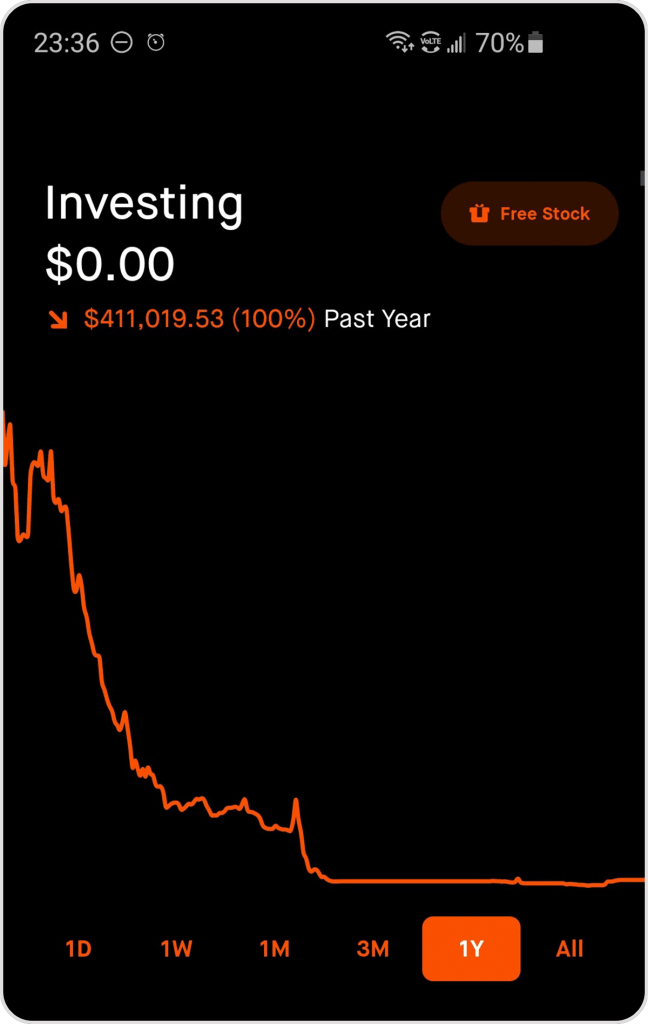
But while Robinhood’s interface might suggest these bad choices, it absolutely does not require them. You can simply choose not to enable options trading, not to over-trade (and to turn off price alerts that nudge you to do so), and to use limit orders instead of the default market orders when buying stocks. In fact, you could avoid using Robinhood to buy stocks altogether, and simply use their brokerage account as a way to earn 5% interest while using it to pay off your credit card (though on the other hand, Robinhood could benefit people if it nudges them to do stock investing at all instead of keeping everything in a checking account).
The fact that Robinhood Gold brokerage accounts pay 5% interest on uninvested cash is its other big advantage. You can find savings accounts elsewhere paying 5% or a bit more, but many won’t maintain that rate, and they have transaction limits. Robinhood also pays a 1% bonus on cash transferred in if you keep it there.
Someone moving to the Robinhood ecosystem from a bad setup (paying with cash, or debit cards, or credit cards with no rewards that are paid off from a checking account that earns 0%) could in theory increase their real spending power by 8%+. Even someone in a more common situation (has a 1% rewards card but most of their spending is on things like mortgages that aren’t credit-card-eligible, pays the credit card from a 0% interest checking account but sweeps excess cash to a high-yield savings account paying 4%) could still increase their total spending power 1-3%. Not huge, but a big deal for something that can be set up for less than a days work.
This is now the best single-account setup I know of- assuming you can stay out of their casino. Churning through different accounts can get you a better return, but it is also a lot more work and has its own risks. If you want to up your returns some without the fees or risk of the Robinhood ecosystem, then something like the Citi Double Cash paid from a high-yield (4%+) savings account is probably the way to go.
Disclaimer: I might be wrong about this but if so I am honestly wrong; this post is not sponsored and I’m not even using referral links when I easily could. Still, do your own research and let me know if I’ve missed anything
Update: Robinhood CEO Vlad Tenev did an interview on Invest Like the Best this week where, reading between the lines, he confirms both the positive and negative things I say here. They make most of their money overall on options and active traders; 3% cash back exceeds the interchange fees they get from merchants, but they expect the card to be profitable because some users will carry a balance (and pay interest) and because it will push people to sign up for Gold (so pay fees and perhaps trade more). He notes that there is another card that offers 3% cash back, but it is only available to those with at least $2 million managed by Fidelity.
 Economist Writing Every Day
I don’t think that limit orders vs market orders make any difference at all for retail folks who use Robinhood (assuming they trade in say stocks that are in the S&P500 or similarly liquid).
There are two cases when entering a limit order:
(A) Your limit order gets filled by the wholesaler/market maker that Robinhood works with, and never hits the exchange. That’s good, but it’s also basically equivalent to what would happen to a market order.
(B) Your limit order doesn’t get filled and hits the book of the exchange. Now it’s sitting there and you essentially wrote a put option (assuming you are buying, otherwise a call option, if you are selling) without collecting any premium.
As a Robinhood customer, you want to avoid hitting the exchanges: the market maker is going to make you a better offer, because they know that Robinhood retail orders ain’t toxic, because there’s no adverse selection. If you hit the exchange, the market maker can’t discriminate in your favour anymore.
LikeLike
P.S. Of course, you are absolutely right that you shouldn’t overtrade. In fact, as a retail investor you should probably avoid any active trading at all. Just buy and hold your index fund, and sell when you need the money. (At most, you might want to rebalance your portfolio once a year or so, but I think Vanguard even makes index funds that do that for you automatically, anyway.)
LikeLike