I recently spent a week in Norway with my family. Highly recommended overall. While we were mostly able to get around the country by train, we needed to rent a car to get to a small, remote village where my great grandfather came from, and where I still have relatives. Prior to the drilling of several massive car tunnels in the 1980s and 1990s, Fjaerland was only accessible by boat.

And if you are renting a car in Norway today, it’s highly likely you will be renting an electric car (unless you specifically ask for a gas-powered car, as the older German couple in front of me at the rental counter did). The vast majority of new cars sold in Norway (over 90%) are electric, and since most rentals are new cars, that’s what they have.
Norway has made the biggest push in the world through public policy to encourage EV adoption, both for buying cars and for building up a charging infrastructure. In this post I will primarily focus on the consumer experience of renting an EV, though the public policy surrounding it is worth a discussion too.
So how was the experience?
In brief, it was very good. For starters, we rented an Audi Q6 E-Tron, which has a range of over 500 km when fully charged. When we visited almost 3 years ago, we were tempted to rent an EV, but worried about range anxiety. Would there really be chargers along the route to this remote village of 300 people? Last time we went with a hybrid vehicle. But after seeing the charging infrastructure a few years ago, we were ready to give it a try (yes, the tiny hotel we stayed at did have charging ports!).
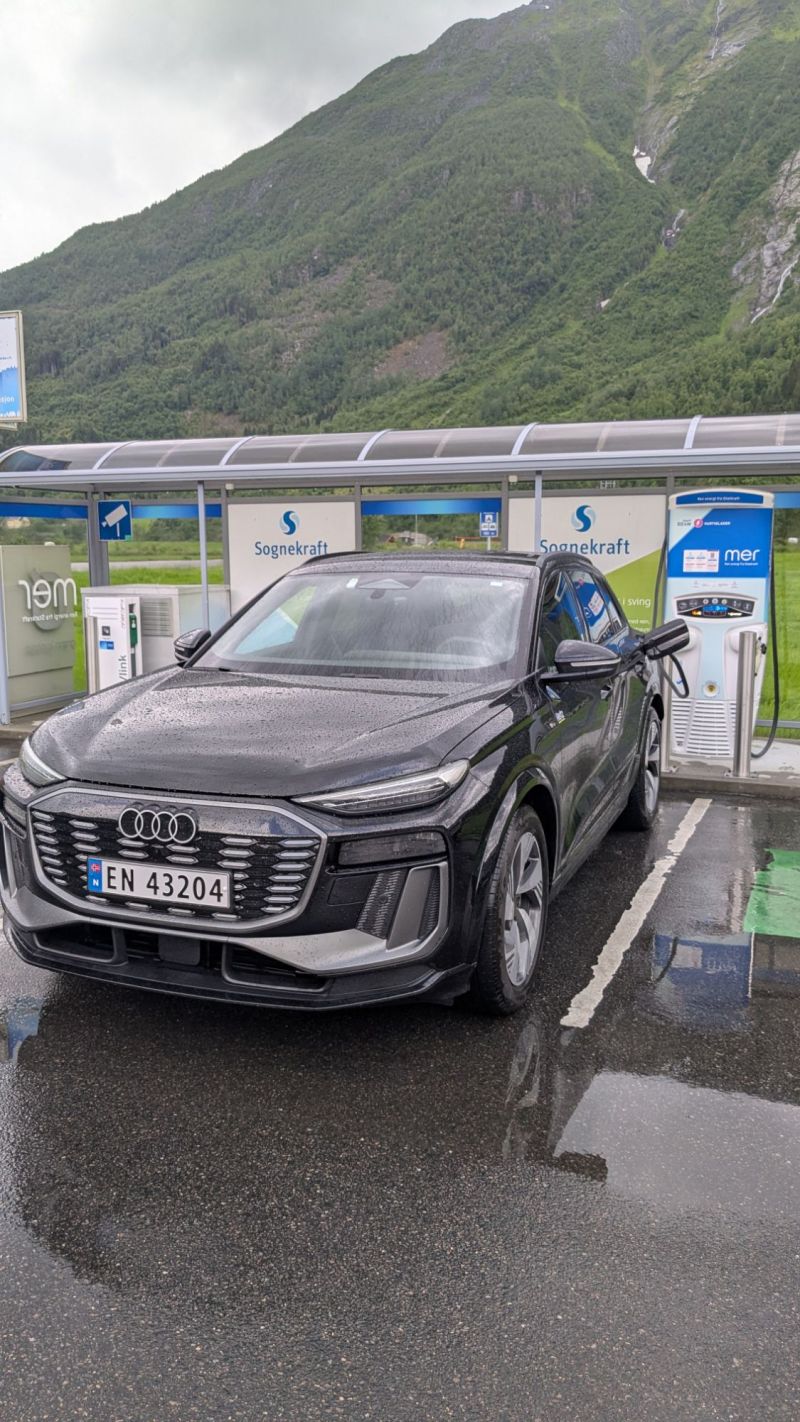
Chargers for EVs are everywhere. Here’s one charging location we used, at the Norwegian Glacier Museum. It only put out 50 kWh of power, so not considered a super fast charger, but it was fast enough to restore almost half of the battery in the time we spent at the museum.
This location only had 4 chargers, and two were very slow speeds (it would take over 8 hours for a full charge), but it was generally available for use when we needed it. But it was also an exception. At another hotel we stayed at in a larger town (Flå), there was a massive bank of Tesla chargers. I couldn’t even count them all.
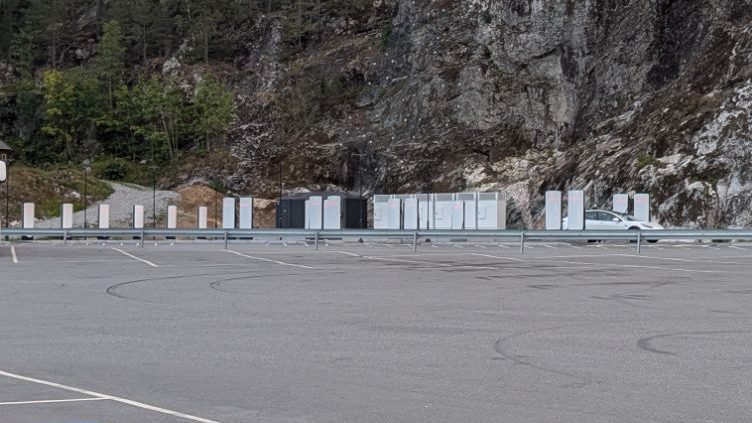
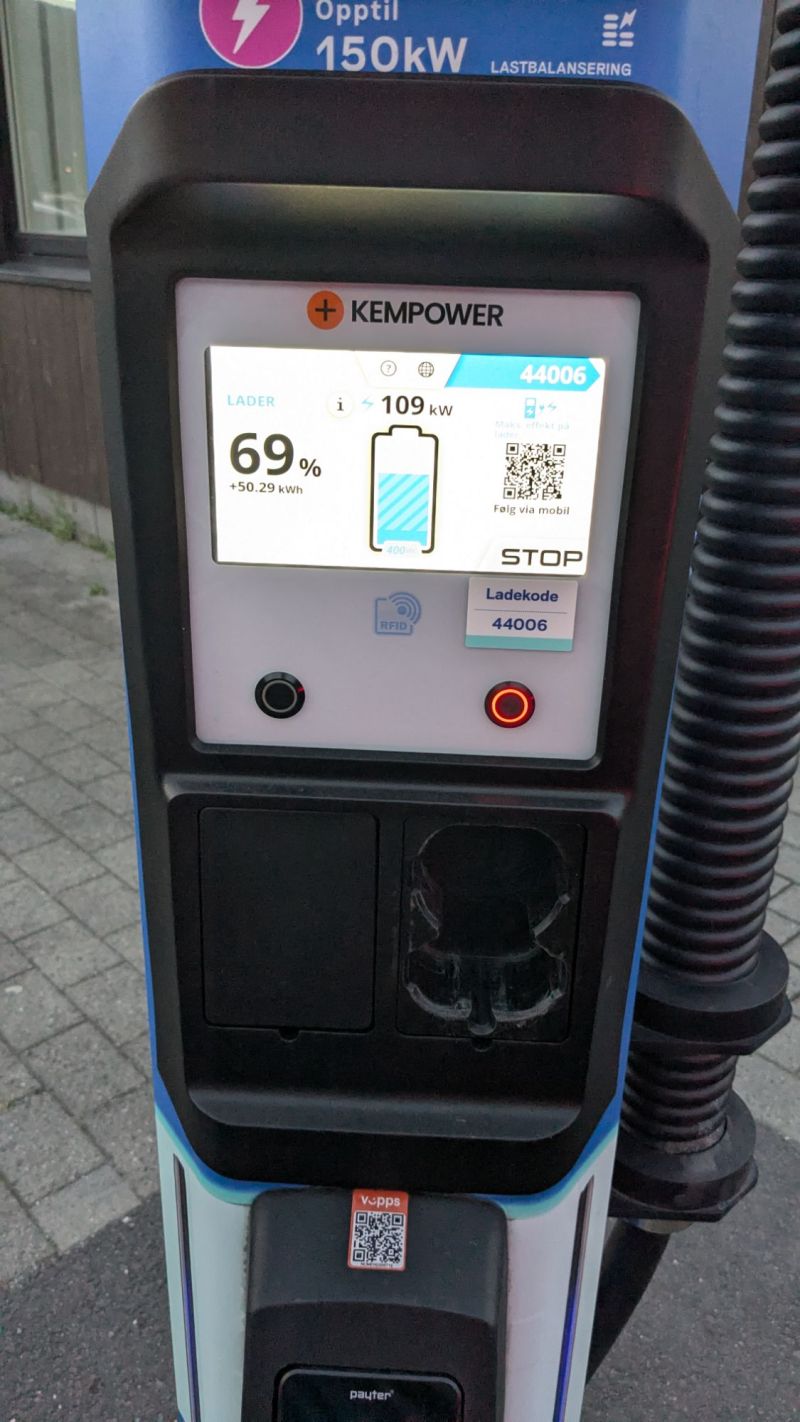
But we hadn’t rented a Tesla. No worries! They also had 8 non-Tesla high-speed chargers, rated at 150 kWh. We never quite hit that speed, but it was charging at well over 100 kWh, which juiced us up to over 90% from about 15% in about 45 minutes (the charging speed slows down once you pass 80%, to protect the battery). We didn’t necessarily need that fast of a charge, since we could have left it plugged in all night, but it was nice to get it done before going to bed.
So charging was quite convenient. What about price? Everywhere we charged it was between 50 and 60 cents (US equivalent) per kWh to charge. This is definitely higher, at least twice as high, than anything I have seen in the US (we have a plug-in hybrid at home, so I occasionally charge on road trips and try to check prices). This was a little surprising, given that average electricity costs in Norway are similar to the US. But keep in mind also that gasoline in Norway is also quite expensive — around $8 per gallon — so Norwegians are accustomed to paying a lot for fuel.
When it comes to electricity, it’s also worth pointing out that Norway gets a significant amount of its electricity from hydroelectric power: over 80%. Norway is well known as a large producer of oil, but they are mostly selling this oil on global markets. And much of that hydroelectric power comes from small-scale power plants on the many rivers that rush down the mountains around the fjords.
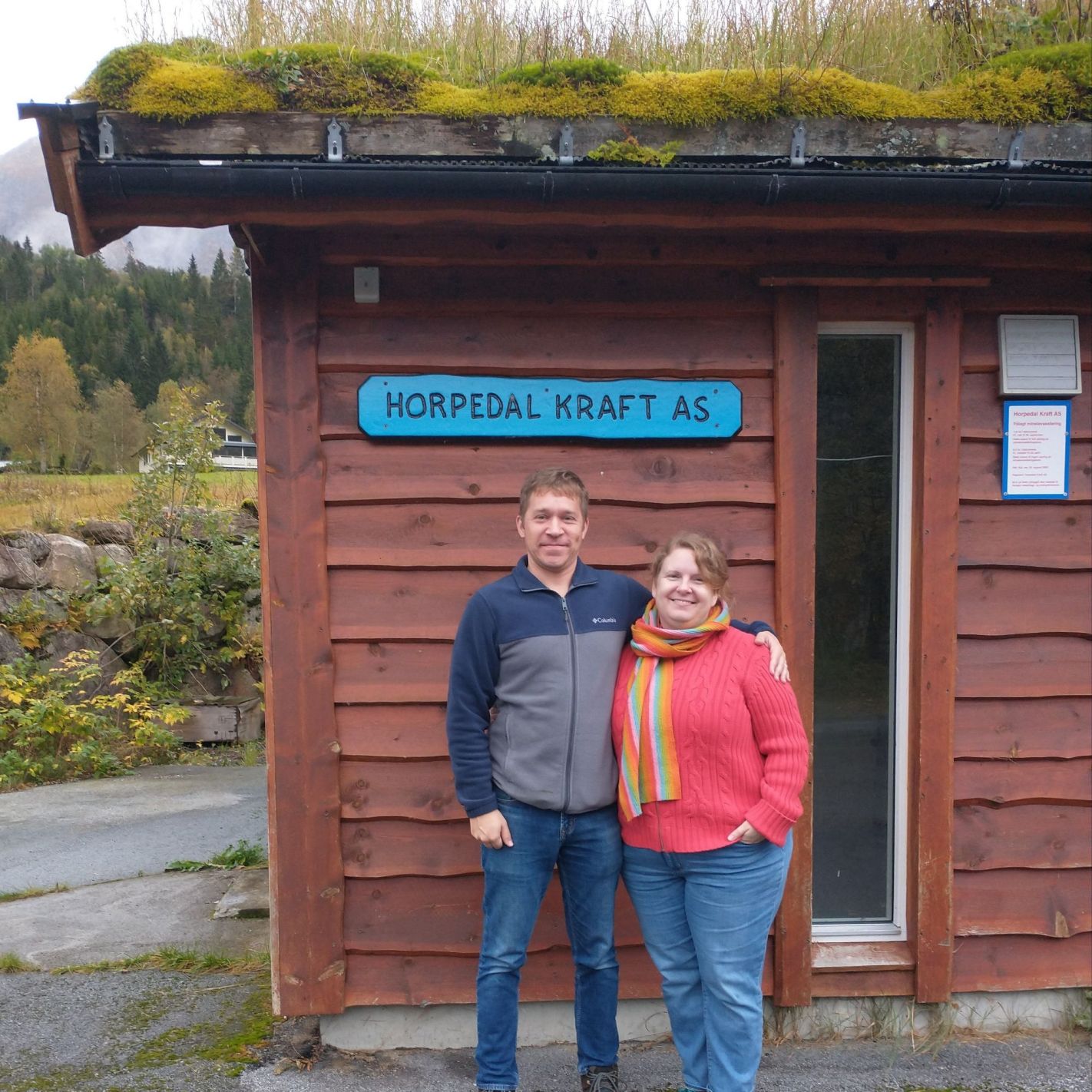
We saw one example of a small hydro plant — the Horpedal Kraft — that one of my relatives operates. He tells me it generates enough power for about 700 homes.
The Norwegians are very concerned about climate change and the impact on the glaciers, some of which they can see from their homes. But the normal seasonal melting is also the source of some of their power that allows them to use non-fossil fuels to power their homes — and now their cars too. Their biggest concern is that the glaciers will continue to shrink, as they seem to have done as far back as we have photographic evidence.

 Economist Writing Every Day