Macron calls for a snap election, the gears of political bargaining begin turning after Marine le Pen wins the first round and the threat of a nationalist government becomes very real,a center-left coalition emerges, and et voila a surprisingly strategic median voter snatches victory from the jaws of xenophobic cruelty.
BREAKING FAR RIGHT REJECTED in France after tactical voting between Left-Green Alliance in 1st place and Macron’s party in 2nd place
Can such things happen in the US system? Yes and no. The US is neither a parliamentary system nor do we have a two-stage majority-rule electoral rule, but the same bargaining occurs beyond closed doors, yielding new and sometimes surprising coalitions. The political bargaining behind candidates, however, is beholden to the primary system, so it’s not always clear when bargaining plays out and what actually transpires. For example, as the prospects of President Biden winning re-election over former President Trump, there is increasing speculative expectation of an alternative Democratic candidate despite the party already nominating the President.
The process happening as we speak is a messy process, absent explicit institutional rules and, in the case of the Democratic candidate, a player with veto power, both effectively and literally. The gravity of the median voter is far weaker when the rules, or in this case the absence of specific rules, lead to large transaction costs and, in turn, enormous uncertainty. Whether the US median voter will hold in November’s election is unclear. All we can do for the moment is doff our caps to French voters, their (in my opinion superior) voting rules, and the political operators who bargained the country out of a potentially disastrous new administration.
As maybe the least libertarian economist on this blog roll, its interesting that the timing of today’s Supreme Court Decision falls on my watch. The best thing to read is probably Sotamayor’s dissent which lays it out plainly: the President is, by today’s ruling, clear to use their power with almost complete immunity from criminal prosecution. It feels like hyperbole, but this is really dark stuff. The kind of thing I didn’t think I would ever see in my lifetime. I know many are framing this in terms of Trump and his current slate of legal cases, but those costs are comparatively trivial relative to the costs going forward.
Justice Sotomayor's dissent is one of the most terrified and terrifying pieces of judicial writing I've ever encountered—she lists the criminal acts that presidents can now take with immunity and says "the president is now a king above the law." https://t.co/ovLYlcsF4spic.twitter.com/6mx4nP0SHE
How did we get here? It’s tempting to trace back a conspiratorial timeline, but I think the answer is far more banal. It only takes the appointment of a few incompetent careerists to undermine the collective wisdom of a nine person voting body and here we are:
Derek Thompson has been writing about the “exporting of despair” from the US, both in terms of the news and social media. His thoughts are always worth reading. Here’s mine.
If you want to be terrified of stepping outside your front door, the surest method is to simply watch the local news every day. Your experienced life will become overweighted towards tragedy, born of both bad luck and malign intent, and soon your distorted personal data set will yield the logical conclusion that the only viable strategy is to isolate and insulate yourself from the outside world. One man’s agoraphobia is another man’s purest sanity.
The root of this tragically distorted information set held by our dedicated local news consumer is the old adage “if it bleeds it leads.” If you are programming the local news, you know the best way to grab and hold viewers’ attention is a “Lucy and Ethel at the chocolate factory” conveyor belt of tragedy and violence, preferably both. This logic has extended to the “rivalry” based news model, where tragedy and violence is coupled with blame, specifically blame for either the “other side” or just “others” who are pointedly not “us”. That’s a model of news bias. Let’s bring it back to despair.
Social media means that we are all, to varying degrees, local news. In the “local news programming” portion of our minds that are trying gain and retain attention, we know that if it bleeds it leads. The catch, of course, being that bleeding is both costly and unstainable. With all due respect to the cast of Jackass, most of us don’t have the ability to consistently manifest attention with our own steady physical destruction. What we can do, however, is be sad.
Professing despair is a manner in which we can garner attention for the metaphorical trainwreck or dumpster fire that is our lives. Good news, or even just positive vibes, feels like bragging. It’s the “Live Laugh Love” wall art of public status updays. It’s cringe. You scroll through cringy good vibes. You comment-prayer hands-heart emoji states of despair.
I have a lot of theories about how despair goes viral in English speaking places. I’ll just share this tidbit, from an analysis of 170 years of American news coverage.
We really are living in an era of negativity-poisoned discourse that is (*empirically*) historically unique. pic.twitter.com/zyP4dZFmCu
People respond to incentives, so when you receive greater love and approbation the more grisled your public emotional state, the more you lead with what’s bleeding. Climate change fears, rage over Gaza, abortion, Trump, Biden, student loans, etc. You don’t talk about these things, however. You talk about how they make you feel. And how they make you feel seems to get worse and worse. Perhaps because you feel worse, but I suspect what is more likely is that the professed negativity of your emotional state has to compete for attention with the negativity of everyone else’s emotional state. You are in a race to the emotional bottom, a status competition where everyone is competing to be the worst off.
So here we are, with millions of local news channels, all trying to lead with the very worst news. Ask any actor and they’ll tell you they take their performances home with them. There is an emotional residue to any professed state, doubly so when there is considerable truth underneath it. An actor playing a cancer patient will take home that anxiety and despair, but at the end of the day they don’t actually have cancer. The route to emotional recovery is direct and observable. Fears over climate change or student loan payments, on the other hand, are based in something very real. Elevating your public despairing over them is going to create an emotional state that is far trickier to undo in the rest of your life. You’ve added fuel to real, rather than artificial, emotional fire. I think many people are finding that the anxiety they’ve pantomimed for humor and sympathy becomes very real over time.
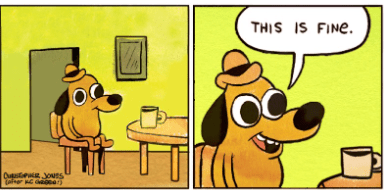
TL;DR: What if it is actually fine? We used to just enjoy our coffee, but it seems like more and more are dumping gasoline on our floors because nobody reacted to story on instagram before we added the fire.
I don’t have an answer, research to reference, or really even ideas regarding the optimal amount of time off. All I know is that I took 5 days off – actually off, with no work to speak of other unless you count reading short stories on a couch as work – and I feel much better. Not that I felt bad before, it wouldn’t even be that noticeable save that working is easier now. Focusing is easier, following through is easier. Enjoying the work is the easier. I never stopped caring, but I had become easier to distract.
Five days isn’t a lot. I didn’t go off the grid for a month. I didn’t try on a new identity in a foreign country. I ate granola with my wife at top of a beautiful mountain, so maybe that counts as eating, praying, and loving. I liked my job before and I still like it now, but sometimes you can end up too deep and caring a little too much, particularly about the bureaucratic details and status-oriented outcomes.
I am firmly team vacation, but with the caveat that your vacation actually be a vacation. Something stimulating and relaxing at the same time. The kind of thing where you are excited to get out of bed to do stuff but also free to do nothing for long languid periods of time, preferably with the hot or cold beverage of your choice.
As for the question presented at the outset, I still don’t know what the optimal length of time is. My closest approximation is a period of time long enough that don’t remember what you were working on the day that you left but not so long that the discontinuity becomes a source of stress and anxiety.
Or maybe its a schedule – 3 days every 2 months, 1 week every year, 1 month every 3 years, 3 months every decade. I’d love to say there is no rule, that you’ll know what you need when you need it, but I didn’t. I might schedule rereading this post every 6 months though.
At the same time, renewables and nuclear power accounted for roughly half of US electricity in March.
Good morning with good news: Renewables and nuclear power generated 49.4% of USA's electricity in March! RE alone produced 29.85%, with wind and solar at 21.2%.
USA nears its first month in many generations, when fossil fuels will provide less than 50% of its power for a month! pic.twitter.com/uGQ2JDiiSH
— John Raymond Hanger (@johnrhanger) May 29, 2024
If you were wondering why Saudi Arabia is trying to get into the sports business, this is why. They have almost single-handedly held the line on OPEC’s export restrictions, but the strain has become too great. After posting a fiscal deficit for 9 of the last 10 years, Saudi Arabia will spread the burden a little wider, which means accepting a lower price that will, in turn, likely generate (much needed) greater total revenue. The world is moving to a new equilibrium.
Jingi Qui, Tan Chen, Alain Cohn, and Alvin Roth ran a cool field experiment asking the question: does it matter if a prominent economist quote tweets your job market paper? Well, it turns out, yes, it does:
I’m not going to call anyone out, but there was definitely some significant pearl clutching about young careers, IRB, and did the job candidates in the control group give permission to not be retweeted by a prominent economist. I do not care about any of that. I’ll go on the record and say that a) I believe those concerns to be silly and b) if you don’t think they are silly, for your own mental health don’t start digging into how medical science is advanced at the stage of human trials.
What I do care about is the results and what they mean. All publicity is good publicity, doubly so when it implies a famous person has vouched for your paper. It’s the vouching that intrigues me because it’s so weak. It’s a retweeting. It should help you get out of a pile and into a slightly smaller pile. In a job market with a 500-1000 applicants for most positions and only 10-20 first interview slots that lead to 4-7 flyouts, the effect should be trivial. Twenty-five percent additional flyouts is not trivial. If anything it’s catastropic.
“Catastropic” is hyperbole, but this is a blog and that is the currency we deal in.
Twenty-five percent more flyouts are, to me, further evidence of the true source of most of the pathologies of academic economics: we’re overcommitted. We don’t have time to do things like reading papers. This is especially problematic for hiring committees tasked with sorted through 500 to 1000 applicants, each of whom has written a job paper. Careful, dear reader, because you might not like how far this logic can take you.
Why do journal reviews feel so capricious and random? Because the referees don’t have time to read anything or they won’t have time to work on their own submissions. Why does the NBER essentially operate as a club whose principal membership mechanism whether you are a student of a current member at a top 10 school? Because what else are they going to do, read 2000 applicant CVs every year? Why does a three-three teaching load feel utterly damning to those trying to start a research career? Because they marginal cost of additional teaching for someone without any research assistance leaves them a simple choice: no sleep or no research. Do I even have to get into the costs of having children early in careers?
So yeah, if I’m on a hiring committee and someone famous retweets your job market paper, I might just skim it there and then on my computer screen (it’s low marginal cost). It’s there in front of me, so I’ll probably more than read the abstract, I’ll skim the tables and figures too. And that’s all it takes. I’ve got a mandate to come up with a list of 10 candidates I think we should consider interviewing. Who am I to disagree with Famous Economist X when a moment’s humility will put me 10% closer to meeting my obligation?
I’m not saying we’re not star-f…..I’m not saying we’re not status seekers, it’s just that the obsession with status in academia is inframarginal in this context. What’s driving these results is stressed-out folks whose own imposter syndrome makes them incredibly vulnerable to any sort of low-cost information i.e. advertising that offers a new and easy way to economize on their time.
That’s it, that’s the post. I don’t have time to come up with a clever ending.
I was watching the most recent episode of Welcome to Wrexam and was horrified to see another athlete with the wisdom to start planning for their future only for their time and money to be guided into a high risk, low payoff investment.
Stop!
If you are a professional athlete, actor, musician- if you are anyone in a career whose dollar rewards are front-loaded within careers that are short and hard to forecast – please, in the name of Shaquille O’Neal and all that is holy, do not take the money that needs to be the foundation of your family’s financial wellbeing and throw it into endeavors that are more likely to melt it down than grow and prosper.
Ok, Mr Know It All Economist, What should I do with myself and my money?
Great question, let’s start with what you shouldn’t do.
Don’t invest your money in anything cool. Your peak income earning years are likely behind you. You can’t afford to be paid in cool. Everything balances out in the wash. If something is cool to invest in (art, music, memorabilia, fashion, film, etc) then it pays out that much less monetarily.
Don’t invest your time or money in anything that priortizes the economic outcomes of everyone but you. You’re heavily specialized, which means you may have managers, agents, publicists, etc. You’re a gravy train for others and that train is going to slow down one day. Your job is to ensure your future, not theirs.
Don’t insist on maintaining the same economic trajectory. Trying to match or beat your peak athletic earnings is going lead you to taking on too much risk. Look for skills and opportunities that accessible that offer a career you can imagine doing for 20 years. Leverage your connections, skills, public awareness, and interests.
Try to tame your instincts towards overconfidence. You were in the top 0.01% of the population for your previous athletic endeavor. You are highly unlikely to be at the same level of elite excellence at your next profession. Look for something you are likely to be good at. Good can and may turn into great, but don’t assume it from the start.
Ok, but what does that add up to? What should I actually do?
Fine, here you go.
Invest most of your money in S&P 500 index funds.
Buy a house in a place you want to live long term. However much house you think you should buy, get 25% less.
Look for a job. Don’t overconcern yourself with the salary, focus on skill acquisition. If need by, take an internship or two.
If there is a field you want to work in, yes, even a cool one, and someone gives you an opportunity to work and learn, by all means go for it. But if they ask you for money, run away as fast as you can.
Take risks with your time and your feelings (it’s been a long time since you were bad at something!), not with your money.
It’s ok to make less money and in less exciting ways. Ninety-nine percent of people can’t be wrong.
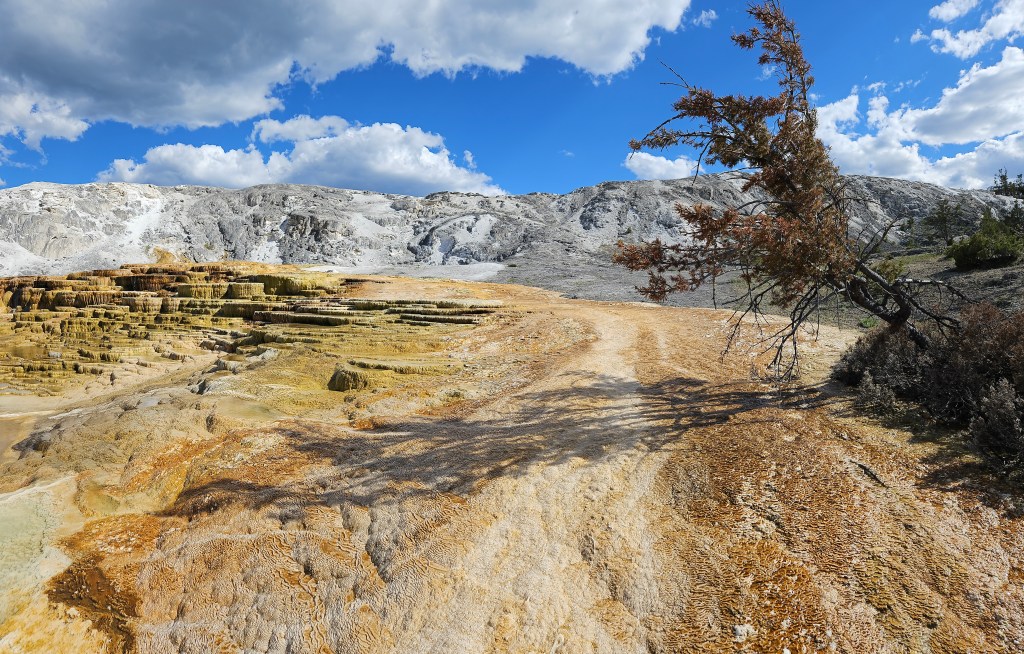
I’m going to be in Montana later this summer and I’d like to solicit our readers for travel suggestions. Three days in Helena, two and a half in Bozeman. I will have a car, but Glacier and Yellowstone National Parks are likely going to be too difficult to squeeze in given the brevity. Where should I go? Should food be a consideration beyond basic caloric needs? I know 5 days is shockingly brief for big sky country, but that’s why I’m coming to you!
I just back from the Society of Labor Economics Meetings in Portland. A couple thoughts in no particular order
Conferences are about both luxuriating and reinvesting in our geographically dispersed social networks. Everything else is a secondary. Its not just that I like seeing these people who speak our language and share our jokes, I genuinely miss them when it’s been too long.
Post sessions are fantastic for applied work. I enjoyed multiple 2 to 4 person discussions with an actively engaged author who had a perfect prop to lean on. Great stuff.
If you’re going to give a keynote, don’t try to impress people, try to educate them on something you specialize it. We all miss being students. Give us a crash course to distract us from the hotel catering.
Portland, and the Pacific Northwest in general, is just beautiful. Go to the Japanese Gardens next time you are there.




 Economist Writing Every Day