The title is excellent, given that the author Brad Jacobs did in fact make a few billion dollars.
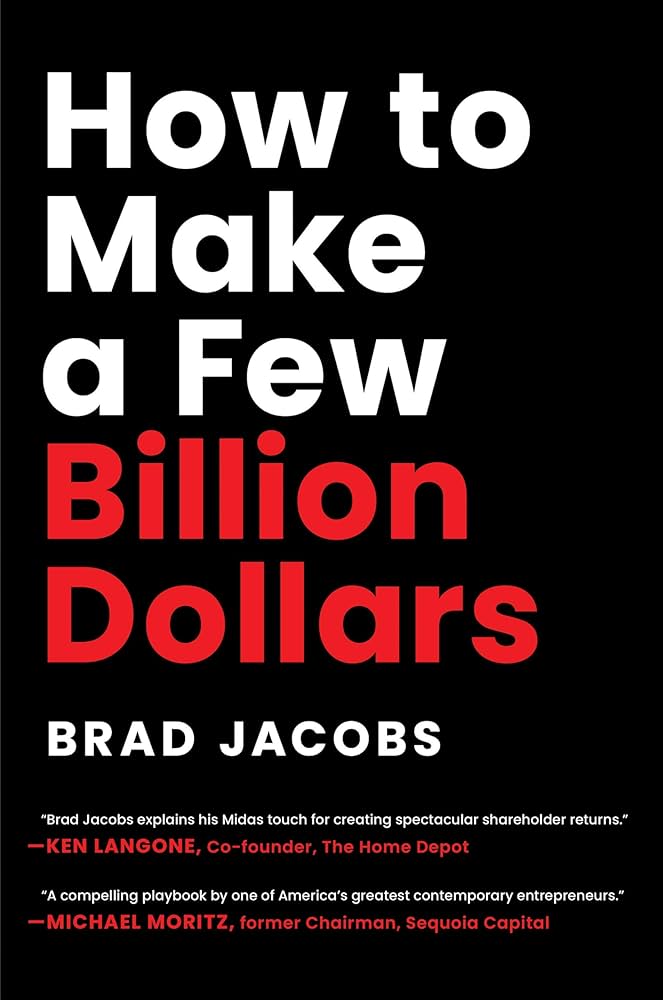
The book itself is fine to read, but also fine to skip if you aren’t yourself burning to build a billion dollar company through excellent management and mergers and acquisitions. I certainly don’t care to, which Jacobs says would make me a bad hire for one of his companies:
I only hire people who are motivated to make a lot of money…. If an candidate says to me ‘I’m not motivated by money’, I suspect either they’re not being candid or they lack the hunger that’s necessary to succeed
The book has plenty of hard-driving sentiments like this that you’d expect from a self-made billionaire:
Fire C players
For the first time ever, an American company, Exxon, had reported quarterly earnings in excess of $1 billion. The words “obscene profits” flashed on my TV screen, and I remember thinking “That sounds pretty good! Maybe I ought to check out the oil sector.” [This part I agree with, economic theory predicts that entrepreneurs will enter the sectors with the highest profits and its what I’d do if I wanted to make money, though in practice I think it is surprisingly rare for would-be entrepreneurs to choose this way -JB]
“The CEO trait most closely correlated with organizational success is high IQ” [specifically more important than EQ]
But Jacobs balances these ideas with some surprisingly hippy-like attitudes. Jacobs went to Bennington College and almost had a career as a jazz keyboardist. Chapter 1 is titled “How to Rearrange Your Brain”, and emphasizes the importance of meditation. Page 21 is basically “have you ever really looked at your hands, man… do it, it’s a trip”
I don’t want to spend even one hour around people who are unkind. An organization is like a party. You only want to invite people who bring the vibe up
Though perhaps this hippy/anti-hippy balance shouldn’t be surprising for someone who says one of the main things he asks about potential hires is “can this person think dialectically”.
Strongly recommend the book if you want to follow Jacobs’ path; weakly recommend it as a general management/self-help book or way to learn about markets.
 Economist Writing Every Day