When the owner of X.com, also the wealthiest man in the world, posted a video of Milton Friedman explaining how a pencil is made, many economists knew exactly where that reference came from: Leonard Read’s classic essay “I, Pencil.”
If you have never read “I, Pencil,” or if it has been a while since you last did, I encourage you to read it right now. It’s quite short and easy to read, as well as easy to understand. That’s what makes it a classic. But let me also summarize what I think are the two main points:
- No one can make a pencil on their own — it takes thousands of people to produce all of the inputs and assemble them into a simple pencil
- The activities of all those thousands of people are coordinated through subtle but miraculous social institutions, such as the price system, international trade, and property rights — rather than by force through government dictate, and even mostly outside of private firms (though firms are often part of the story)
Leonard Read communicated those ideas beautifully in an essay that is, somewhat humorously, written from the perspective of the pencil itself. But many other economists and economic communicators used other examples of goods to discuss similar themes. I’ll list a few of my favorites, but please comment with yours as well. Some of these essays and videos focus more on the production of the good, some focus more on the institutions, and not all are necessarily about international trade. But these “Other I, Pencils” are great introductory readings to remind us of the power of voluntary human cooperation.
Adam Smith’s “woolen coat” — this is a short discussion early in the Wealth of Nations, describing all of the people and trade needed to produce a woolen coat for a day laborer (at the link you’ll also see a comic version of the tale).
Harriet Martineau’s “plum pudding” — Martineau was a 19th century writer that popularized many of the ideas in Adam Smith. Less well known today, her discussion of international trade needed to bring many simple foods to our table, including plum pudding, is many ways superior to Smith’s discussion (start reading at the line “You mean machines”).
Thomas Thwaites “Toaster Project” — a book and Ted Talk explaining how to make a toaster from scratch — and fail miserably despite spending over $1,000 and spending hundreds of hours, all for something you can buy for a few dollars at the store.
Russ Roberts’ “It’s a Wonderful Loaf” — a poem set to video, explaining how a simple loaf of bread is always ready for you at the bakery when you want it in the morning.
T-Shirts — many examples!
- Pietra Rivoli’s Travels of a T-Shirt in the Global Economy — a book-length treatment of the production of a T-shirt, including many of the barriers to international trade that hinder the process.
- Planet Money — inspired by the Rivoli book, NPR’s “Planet Money” made their own t-shirt, from raw material to finished good, documented the process in a series of podcasts and videos
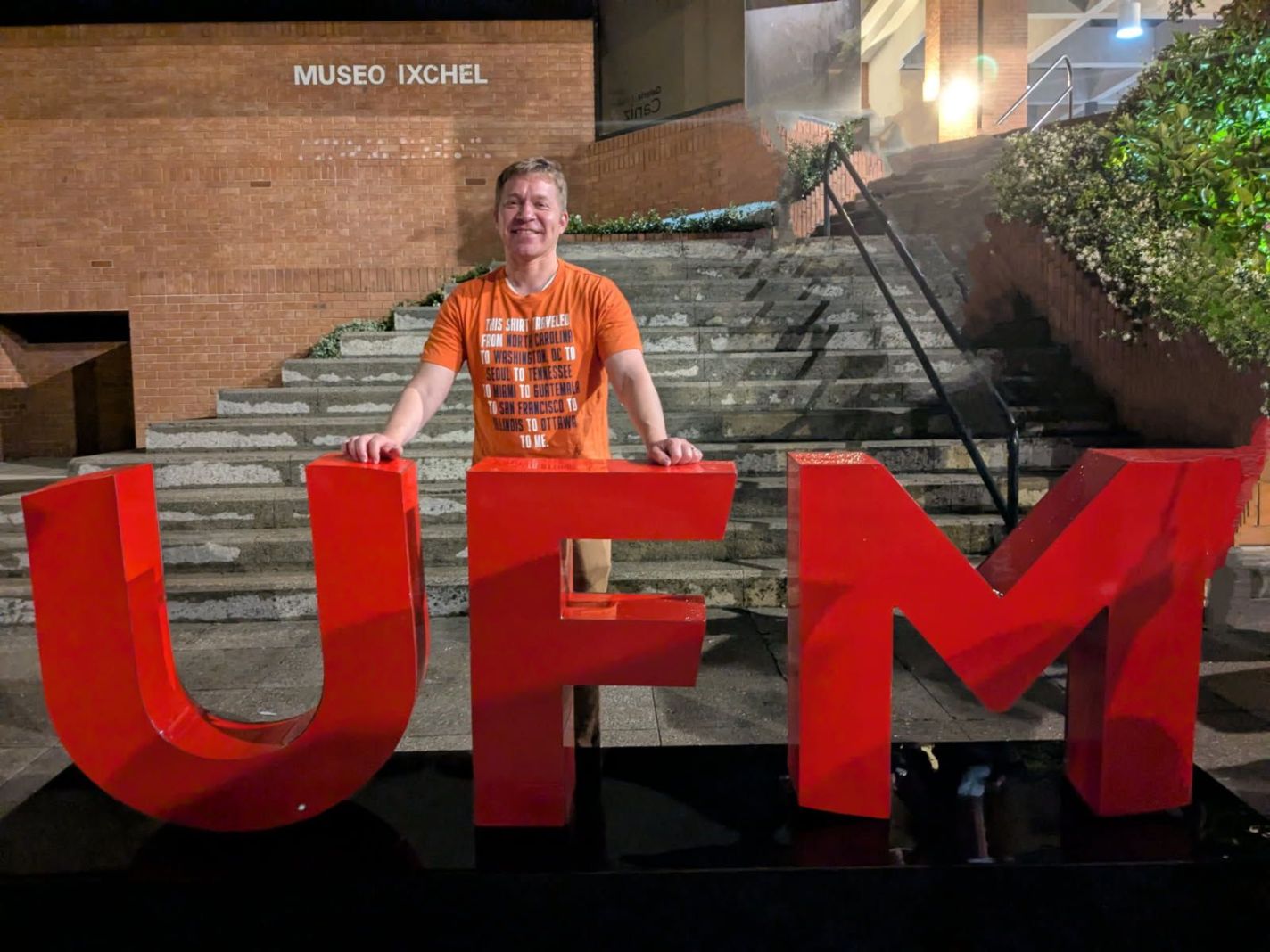
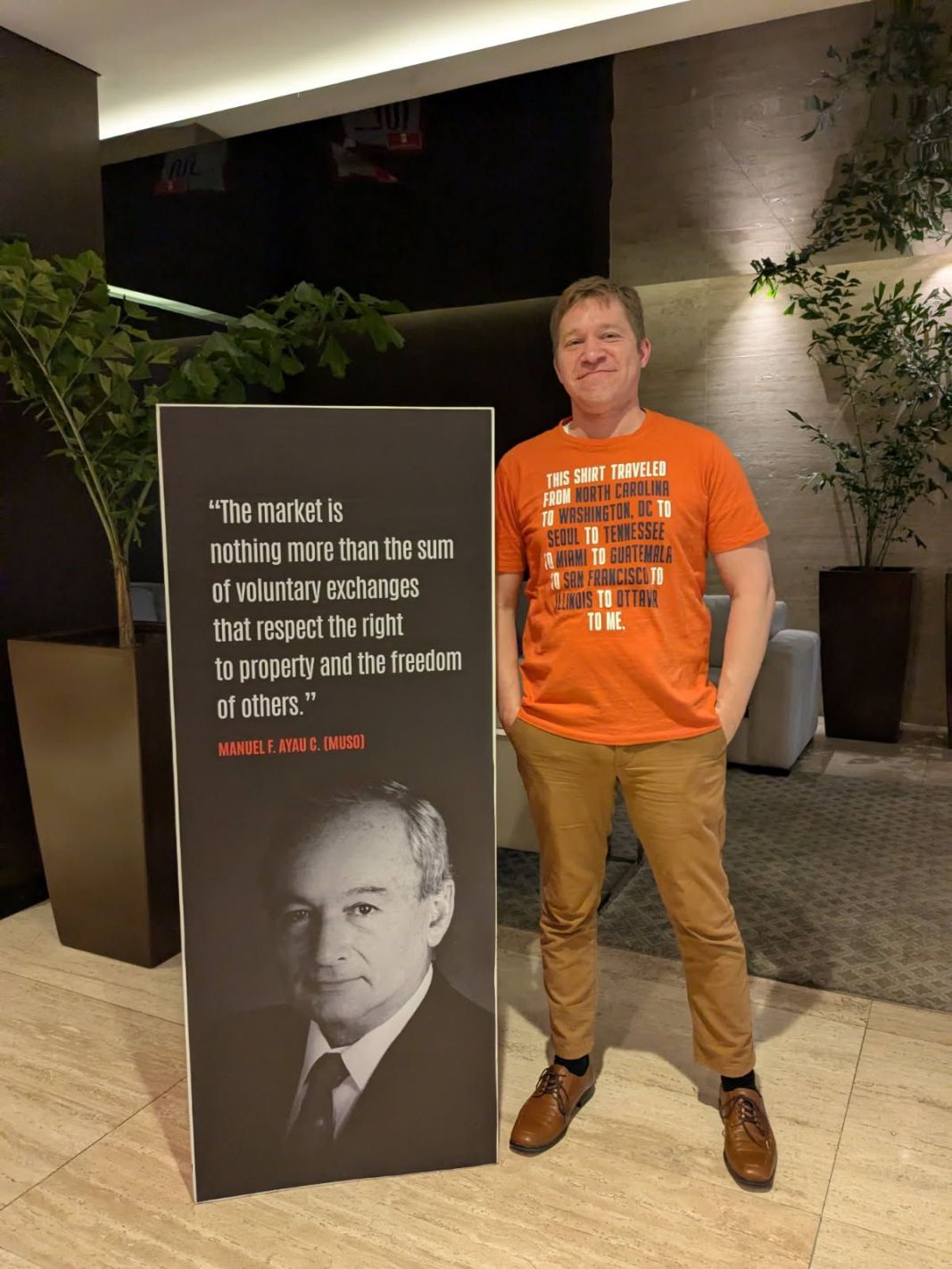
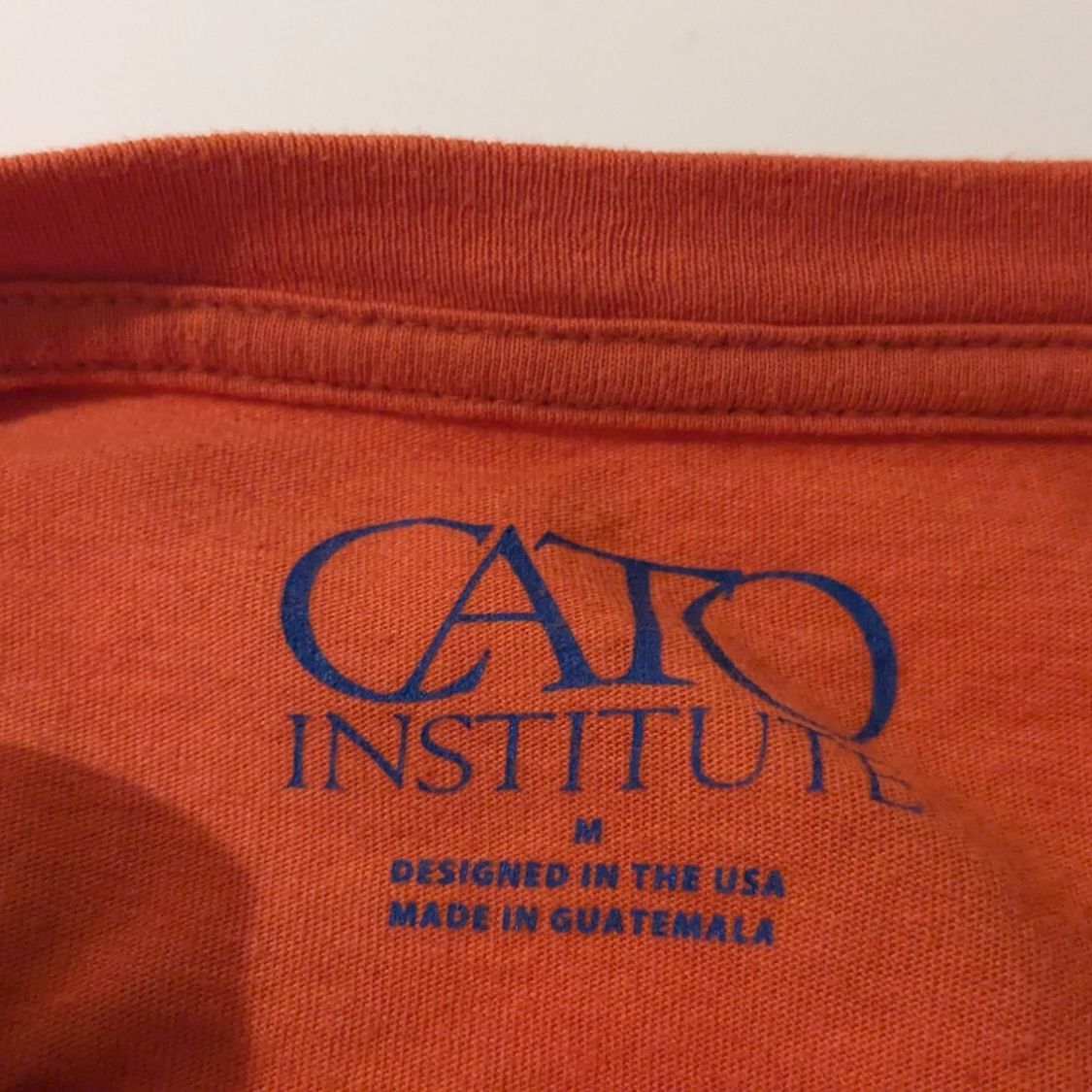
- Cato’s “I, T-Shirt” — the title is an obvious nod to “I, Pencil,” taking a similar approach to making a t-shirt as Planet Money, but with more of an emphasis on globalization and the importance of international trade. Although the shirt says “made in Guatemala,” it is actually the product of global cooperation (much of the value-added being in the US). I was fortunate enough to obtain this t-shirt as well, and even brought it back to Guatemala this week to visit its place of “birth” and take a few photos (at Universidad Francisco Marroquín):
 Economist Writing Every Day
https://tifwe.org/resource/i-smartphone/ made by the Institute for Faith, Work and Economics
LikeLike