Generally, decisions to spend federal funds come is the authority of congress. But the Trump administration has very publicly made clear that it will try to cut the things that are within its authority (or that it thinks should be within that authority). Truly, the fiscal year with the new Republican unified government won’t begin until October of 2025. So, the last quarter is when we’ll see what the Republicans actually want – for better or for worse. In the meantime, we can look past the hyperbole and see what the accounting records say. The most recent data includes 95 days after inauguration. First, for context, total spending is up $134 billion or 5.8% from this time last year to $2.45 trillion.

The Trump administration has been making news about their desire and success in cutting. Which programs have been cut the most? As a proportion of their budgets, below is a graph of were the five biggest cuts have happened by percent. The Cuts to the FCC and CPB reflect long partisan stances by Republicans. The cuts to the Federal Financing Bank reflect fewer loans administered by the US government and reflect the current bouts to cut spending. Cuts in the RRB- Misc refer to some types of railroad payments to employees. In the spirit of whiplash, the cuts to the US International Development Finance Corporation reverse the course set by the first Trump administration. This government corporation exists to facilitate US investment in strategically important foreign countries.

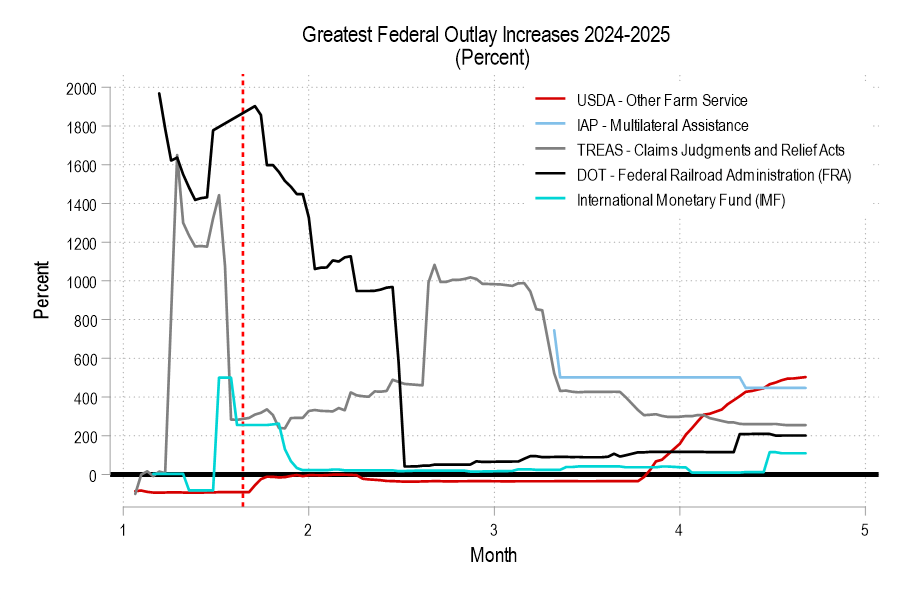
But some programs have *increased* spending since 2024. The five largest increases include the USDA, the US contributions to multilateral assistance, claims and judgments against the US, the federal railroad administration, and the international monetary fund. Funding for farmers and railroads reflect the old agricultural and new union Republican constituencies. The multilateral assistance and IMF spending reflects greater international involvement of the administration, despite its autarkic lip service.
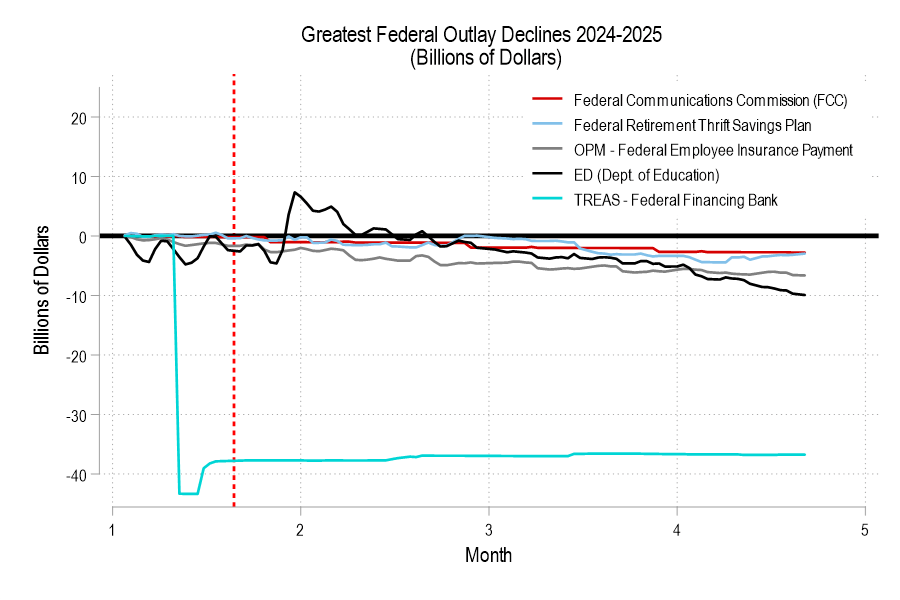
The above noted differences have big impacts on specific programs, but what about the implications for total spending? Below are the five largest cuts and they’re mostly minuscule. The FCC and federal employee benefit cuts amount to $12.4 billion in total. The department of education, which I’ve discussed in the past, has experienced more substantial belt-tightening. It’s down about $10 billion from $94 billion this time last year. But by far, the biggest cuts to spending have been due to the Federal Financing Bank that I mentioned above. Forty billion is a big cut no matter how you count. But, those changes from last year came before the inauguration and the Trump admin may just be continuing scheduled spending changed.
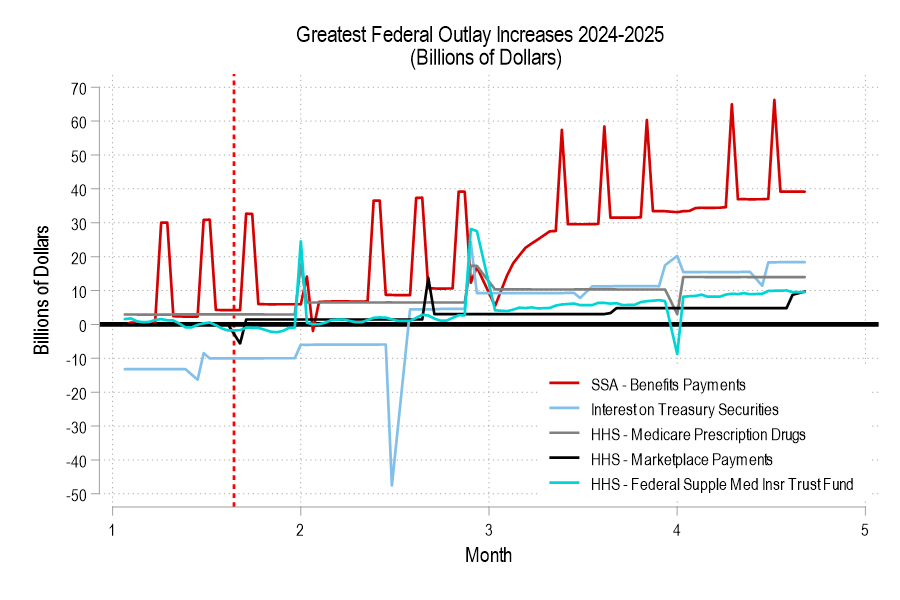
Finally, it’s time for the vertical axis to change. Below are the 5 programs that have included the biggest dollar increases in spending from this time last year. The axis has to change because the spending increases swamp the spending cuts. Except for interest on government debt, the top five biggest increases to spending have been among entitlements, especially old-age entitlements. Those spikes are due to different pay date timings, so they don’t mean anything for the trends or policies. The good news is that the cuts to the Federal Financing Bank offsets the increase in social security benefit distributions. The bad news is that there is only $30 billion more to cut from that program, while social security is projected to end the year with an additional $90 billion in greater expenditures over 2024.
Like I said at the top, any huge and persistent changes in spending would have to come from congress and we won’t have declines in total federal spending unless we engage in entitlement reform. That reform is not on the horizon.
 Economist Writing Every Day