Academics generally agree on the changing patterns of mortality over time. Centuries ago, people died of many things. Most of those deaths were among children and they were often related to water-borne illness. A lot of that was resolved with sanitation infrastructure and water treatment. Then, communicable diseases were next. Vaccines, mostly introduced in the first half of the 20th century, prevented a lot of deaths.
Similarly, food borne illness killed a lot of people before refrigeration was popular. The milkman would deliver milk to a hatch on the side of your house and swap out the empty glass bottles with new ones full of milk. For clarity, it was not a refrigerated cavity. It was just a hole in the wall with a door on both the inside and outside of the house. A lot of babies died from drinking spoiled milk.
Now, in higher income countries, we die of things that kill old people. These include cancer, falls that lead to infections, and the various diseases related to obesity. We’re able to die of these things because we won the battles against the big threats to children.
What prompts such a dreary topic?
I was perusing the 1870 Census schedules and I stumbled upon some ‘Schedule 2s’. Most of us are familiar with schedule 1, which asks details about the residents living in a household. But schedule 2 asked about the deaths in the household over the past year. Below is a scan from St. Paul, Minnesota.

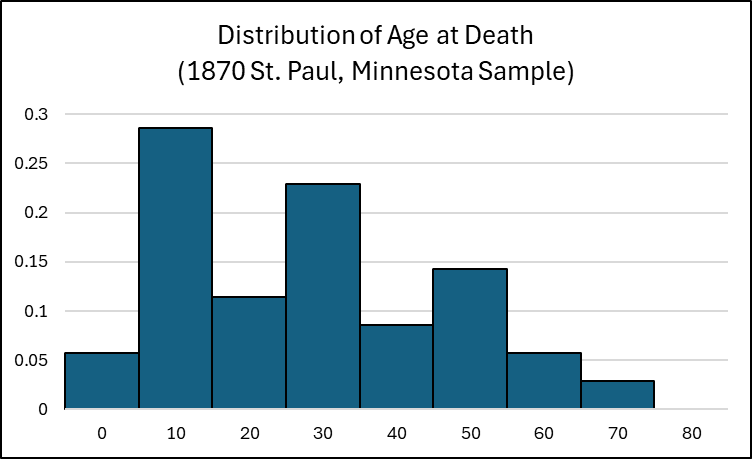
It’s kind of hard to read in the script of the time, so I’ll summarize some of the entries. Obviously, this is only a single form from the many recorded in the census, but the results are no less shocking. First, let’s examine the age of death below. The distribution is heavily right skewed. People were not making it to old age and the most popular age at death was among children younger than 10 (even if omitting stillborn deaths). In the 21st century we talk about older people being closer to death. But young people were *very* likely to die in 1870. And this is not a case of living just fine once you make it past childhood. The 2nd most popular age range for deaths was between ages 20 and 30. Familial Death was salient throughout life.
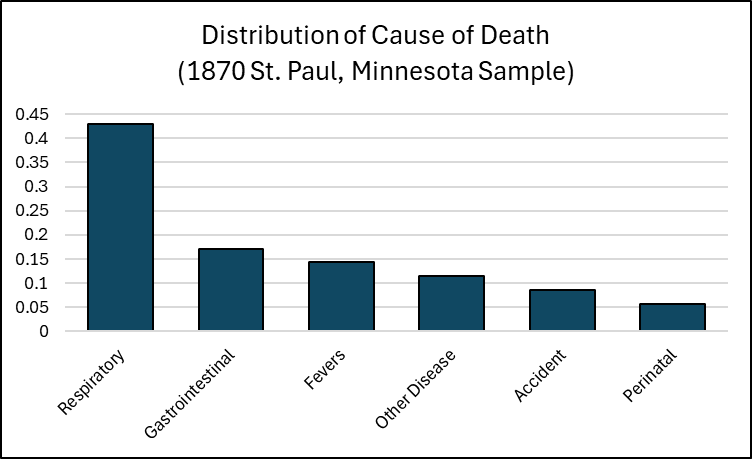
What about the causes of death? Keep in mind that I’m only looking a single page from 1870. But a larger sample would reflect the same pattern. Below is the distribution of ‘Cause of Death’. Overwhelmingly, deaths were due to communicable diseases. “Other Disease” refers to ailments of the kidneys, brain, etc… Basically bad draws from the urn. But the entire left half of the below distribution gets solved with vaccines, antibiotics, and antivirals developed in the 20th century. That’s 74% of deaths that later become mostly non-concerns or treatable.
What about the children? Jeremy has examined more recent data for US children ages 0-19. After all, deaths among children are terribly tragic and heart wrenching. They depend on their caretakers for help and stewardship, so they are the most innocent among us. Let’s compare these data, again acknowledging the small sample for 1870. Below are the proportions of death among US children in 2020 (orange) and St. Paul children in 1870 (blue).

Basically, children don’t die of communicable diseases anymore (the tiny amount of respiratory disease deaths in 2020 is chronic and not communicable). Just about everything that used to kill children no longer does. Now, child deaths are more likely to be due to accidents only because something else doesn’t get them first.
To boot, all of this data examine a cross section of the deaths that happened and is not comprehensive of the lives that happened. Children don’t die like they used to because we protect them from communicable diseases like those that can be stopped by vaccines. Yes, vaccines can have negative side effects (including death). But we certainly don’t live in a world of 71% of child deaths being caused by communicable disease, untreated water, and unsafe food, such as was the case in 1870 St. Paul.
 Economist Writing Every Day
A frustrating thing about Retvrn folks is that they really do not care about these child deaths. They’d do it all again for an aesthetic.
LikeLike