No, according to a new paper from the University of Georgia’s Michael Kotrous.
Many people expected it to, partly by thinking about the jobs that could benefit from faster internet, and partly by looking at the experience of Chattanooga, Tennessee. Chattanooga was the first major city to get gigabit-speed broadband, and they did see a huge improvement in the labor market right afterwards:
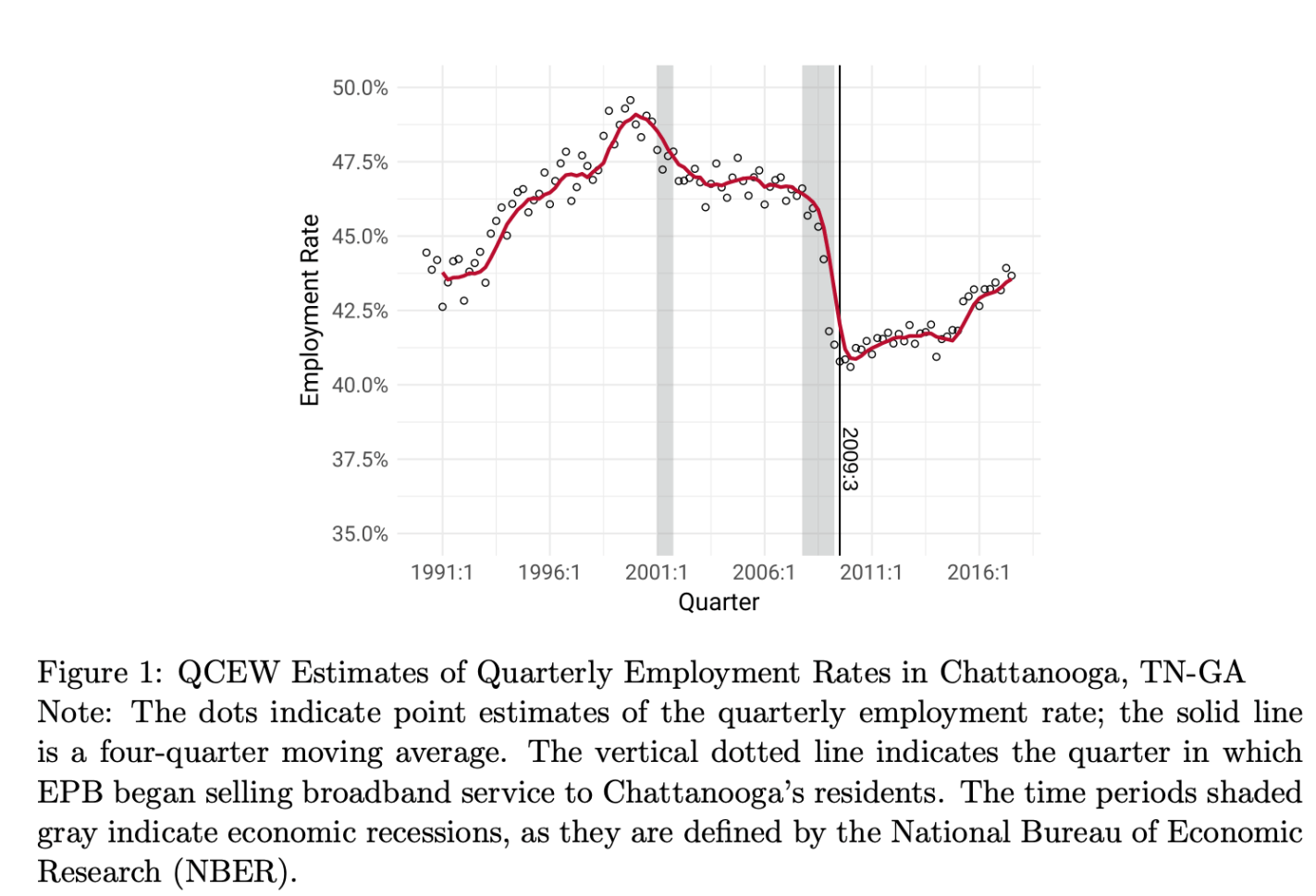
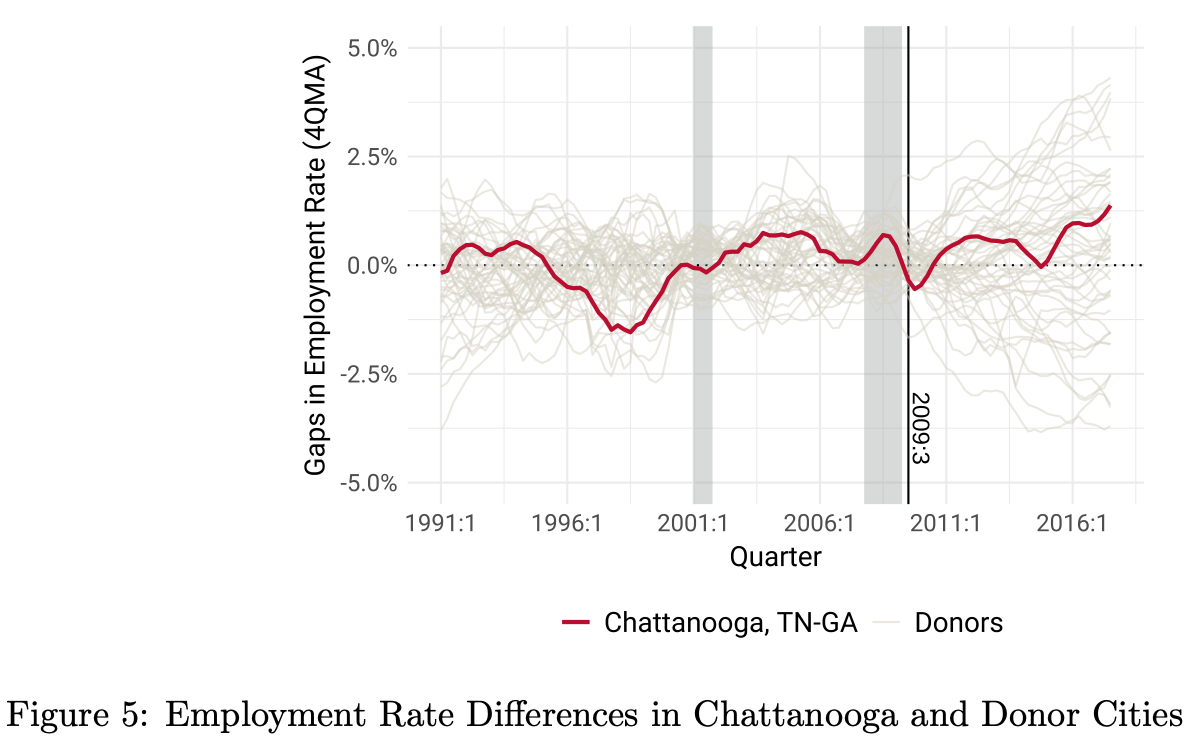
But as the graph shows, the introduction of broadband there coincides with the end of the nationwide Great Recession. Was the boom in jobs after 2009 because of the broadband, or would it have happened anyway as party of the recovery from recession? A synthetic control strategy shows that Chattanooga’s recovery was pretty typical for cities like it, so the broadband angle probably didn’t do much:
This might seem like a historical curiosity about one city, but the federal government is currently trying to spend $42 billion to expand broadband to more places, partly motivated by the idea of bringing jobs. I thought the Broadband Equity Access and Deployment Program‘s big problem is how slow it is- Congress created with the Infrastructure Investment and Jobs Act of 2021, but money didn’t start getting sent out until late 2025, and it could be many more years before it leads to any useable broadband. Even then it now seems unlikely to bring jobs, though there could be other benefits.
This paper’s author Michael Kotrous is currently on the economics job market. As his former professor and coauthor, I recommend hiring him if your school gets the chance.
 Economist Writing Every Day