This is the fourth in a series of occasional blog posts on individual initiatives that made a strategic (not just tactical) difference in the course of the second world war. World War II was not only the biggest, bloodiest conflict, in human history. It played a definitive role in giving us the world we have today. Everyone can find something to complain about in the current state of affairs, but think for a moment what the world would be like if the Axis powers had prevailed.
Winston Churchill’s biggest single worry in WWII was that German submarines (U-boats) would sink enough cargo and troop ships to cut Britain off from America and other allied countries. The standard anti-submarine weapon for the stormy Atlantic was the full-sized destroyer. Destroyers were fast, largely weather-proof, and bristled with guns and depth charge launchers. Unfortunately, building a destroyer took a lot of resources and time, particularly for the state-of-the-art steam turbine engine. There was just no way in 1939-1942 to produce enough destroyers to cover all sides of every convoy in the Atlantic.
The British Admiralty knew they needed some sort of small ship that could be readily produced by civilian shipyards, but they did not know what exactly that would look like. It fell to William Reed, a naval architect at Smith’s Dock Company, to propose a workable design. He based his design on a successful whaling ship, which was just large enough to survive the Atlantic weather. It was powered by a low-tech triple expansion steam piston engine. This Victorian-era sort of engine could be built by even small shipyards. The resulting boat, called a corvette, was small (200 ft long), slow (16 knots), rolled horribly in the waves, and was lightly armed (one forward 4-inch deck gun for surface duels, and simple roll-off racks for depth charges at the stern). But it was good enough for its one mission, which was to sink or pin down U-boats trying to attack a convey.
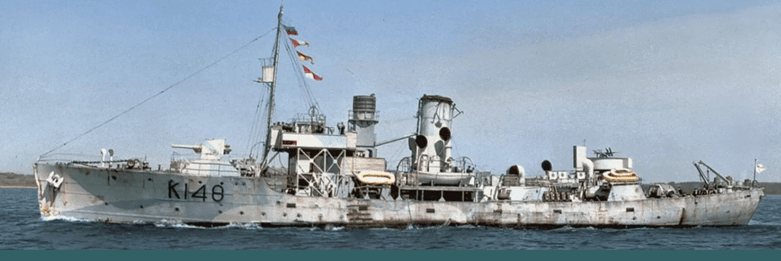
By the end of January 1940, 116 ships were building or on order to this initial design. Over 200 were eventually built in UK and Canadian shipyards. Twenty-two of these Flower-class corvettes were sunk by enemy action, and the conditions for their crews were miserable, but they are credited with tipping the balance of the Battle of the Atlantic, which was a crucial phase of WWII.
For his contributions, Reed was appointed an Officer of the Order of the British Empire.
 Economist Writing Every Day