Parenthood rapidly became much easier and safer between the 1930s and 1950s. The spread of labour-saving devices in the home such as washing machines and fridges made raising children easier; improvements in medicine making childbirth safer; and easier access to housing made it cheaper to house larger families.
Anvar Sarygulov & Phoebe Arslanagic-Wakefield
I hate to be the next person publicly talking about Joe Jonas and Sophia Turner. I wish them both the best, and this kind of attention is probably hard on their kids. Anyway… what interests me about this case is that parenting seems to have been hard on them, even though Joe Jonas is worth $50 million. They could have a washing machine on every floor of their huge house. So, do the Works in Progress authors really understand the Baby Boom?
C.S. Lewis is known as a novelist, but he was an academic familiar with university politics. In 1944, he gave a lectured called “The Inner Ring” about how everyone wants to be accepted into an “inner ring” of friends or colleagues. Being on the fringes of a group can be a source of misery.
My main purpose in this address is simply to convince you that this desire is one of the great permanent mainsprings of human action. It is one of the factors which go to make up the world as we know it—this whole pell-mell of struggle, competition, confusion, graft, disappointment… Unless you take measures to prevent it, this desire is going to be one of the chief motives of your life, from the first day on which you enter your profession…
To a young person, just entering on adult life, the world seems full of “insides,” full of delightful intimacies and confidentialities, and he desires to enter them. But if he follows that desire he will reach no “inside” that is worth reaching.
I’ll list the items that got me thinking about “the inner ring”.
This week, Alex posted on Misandry. Are men starting to feel like it is actually the women who are in the inner ring and men are on the outside?
I’ll share a story in which I felt like I was not in the inner ring. Before I had a job, I was at a professional conference. A colleague invited me to go out with him and some guys to a cigar shop that evening. “Yes!” I said at first, because this sounded both fun and good for my career. Then I remembered that I was three months pregnant. Smoking would damage the baby’s health, so I awkwardly backed out of the event. Of course, this is not a big deal in retrospect, but it’s the kind of thing that can bother you if you obsess over the rings you can’t join.
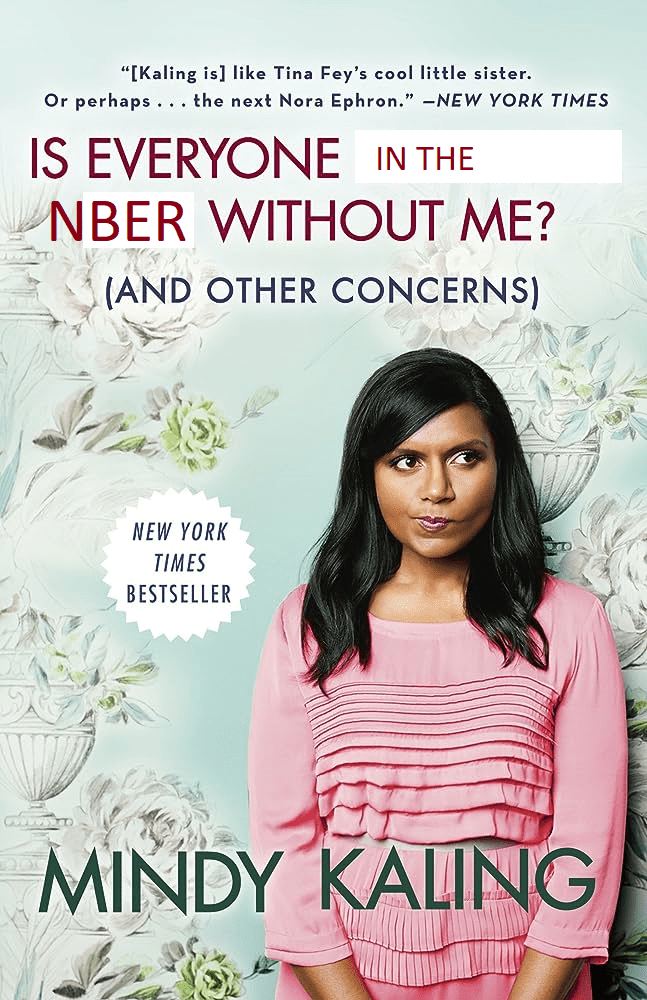
Women have long felt like they were on the outside of the boy’s club. “Is everyone smoking cigars without me?” The second item in reverse chronological order is the Barbie movie. In the movie, the top-floor meeting room of male executives at the L.A. Mattel office represents the male inner ring. The cul-de-sac of pink dream houses in Barbieland represents the female inner ring. Every character in the movie feels left out of a ring. In the article I was pointed to by Alex, John Tierney writes, “Smug misandry has been box-office gold for Barbie, which delights in writing off men as hapless romantic partners, leering jerks, violent buffoons, and dimwitted tyrants who ought to let women run the world.”
Several posts by my excellent co-bloggers are related to being left out of opportunities for networking or funding. Click through if you want to learn more about the NBER, the dark side, or grants.
The National Bureau of Economic Research (NBER) sent out its membership invitations this week. My twitter timeline quickly filled with explicit congratulations and oblique commentary. My private messages filled with…less than oblique commentary. Academia has always been hierarchical and economics has never been an exception.
In my early days, I innocently asked a researcher what the letters N.B.E.R. stood for. He remarked that it was a “money laundering scheme run out of Boston.” I essentially took him literally, because I didn’t know any better, at the time. It is easy to tell that he was never invited to be a member, else he would have described it positively.
The bureaucratic and scholarly gamesmanship that can hold back one paper and elevate another. Every story your paranoid lizard brain can dream up explaining why a node in the tournament decision tree turned against you and in another’s favor.
It’s always nice, rhetorically speaking, to end on a positive note. That’s what Lewis did in his lecture. He said that there is a form of human association that is rewarding and virtuous: true friendship. Have a good weekend, friends.
I did go see the Barbie movie (last month I had to put up someone else’s blog about it). Kate McKinnon and the Birkenstock choice is my favorite part. You can catch part of that scene in the middle of the trailer.
Here is America Ferrera’s monologue:
It is literally impossible to be a woman. You are so beautiful, and so smart, and it kills me that you don’t think you’re good enough. Like, we have to always be extraordinary, but somehow we’re always doing it wrong.
You have to be thin, but not too thin. And you can never say you want to be thin. You have to say you want to be healthy, but also you have to be thin. You have to have money, but you can’t ask for money because that’s crass. You have to be a boss, but you can’t be mean. You have to lead, but you can’t squash other people’s ideas. You’re supposed to love being a mother, but don’t talk about your kids all the damn time. You have to be a career woman but also always be looking out for other people.
You have to answer for men’s bad behavior, which is insane, but if you point that out, you’re accused of complaining. You’re supposed to stay pretty for men, but not so pretty that you tempt them too much or that you threaten other women because you’re supposed to be a part of the sisterhood…
Movies and Money
The Barbie movie is doing well commercially. So many other special projects, such as the all-female remake of Ghostbusters, flopped at the box office. Barbie and Taylor Swift concert tickets were serving as the primary examples of spending in “Hot Profit Summer“. Congratulations to Greta Gerwig on a huge success.
Barbie has unresolved existential angst, universe portals, mother-daughter conflicts and fight scenes. To that extent, Barbie reminds me of Everything Everywhere All At Once. The big commercial successes within the same decade often share key components. Earlier I wrote about how Frozen and The Queen’s Gambitare similar.
One could write a very serious post about the Barbie movie and the portrayal of female reality. Instead, let’s acknowledge that the movie is fun, just like American life generally. No one needs Kate McKinnon (to survive). We get to watch her on TV because the world is rich now. Not only has child mortality fallen because of economic development, but life has gotten more fun.
I noted this when I reviewed the movie Austenland. The film shows that when an American woman goes to a Regency-era simulation she gets bored.
… afternoons spent on needlepoint projects were not so much painful as boring to the heroine. Boring. Matt Ridley tells us in The Rational Optimist that life in pre-modern England was more miserable than we imagine in terms of health outcomes. An underrated feature of modernity is how much more interesting the world is now that we can read widely and travel and tweet. If you were rich enough to escape endless manual labor in 1810, your options for leisure time were still very limited.
John Maynard Keynes predicted that future people would only work for 15 hours per week. Why, then, did the Barbie dolls (who don’t need money) talk so much about careers? President Barbie and Doctor Barbie seem happy.
Do we keep working past 15 hours a week because it is fun? (Tyler says it is in Big Business.)
Would it be accurate to say that professionals spend less than 15 hours a week on tasks that they truly hate? Maybe striding down a clean hallway to a meeting with coffee in hand is what we like to do? Or is that a strictly American phenomenon?
Interestingly, the human mom character (America Ferrera) does not love her job. She is not President or a Doctor. Would she prefer to be unemployed?
I want to know if the career barbies sell, but I could not find the data. The Guinness Book of World Records indicates that the best-selling Barbie is “Totally Hair Barbie”.
It’s the 3-year anniversary of EWED. Thanks for reading and sharing. Our blog has been cited by The Financial Times, The Wall Street Journal, The Atlantic, Reason Magazine, Marginal Revolution, and many others.
The following posts are in order, starting with the entry that got the most page views so far in 2023.
“Why Tenure” Mike Makowsky on academic tenure and the unintended consequences of taking it away.
“Steal My Paper Ideas!” James offered the internet research ideas that he does not have time to pursue.
“ChatGPT Cites Economics Papers That Do Not Exist” I wrote about a problem with ChatGPT hallucinations. This idea has now been more formally explored in my working paper available on SSRN (which has been trending in top-10 download lists on SSRN throughout the summer). The point is not just that GPT will create fake citations. The important take-away is that GPT can fabricate falsehoods of all kinds that sound serious. Citations are easy to count and verify. Once we have a quantitative measure, we can also demonstrate that accuracy declines when a topic is less general.
If you ever want to know what people were saying about my generation when we were fresh out of college, watch an SNL sketch called “The Millennials”. Now we are just the parents at the parent-teacher conferences. Our jams play at the grocery store at 8am (Wonderwall, anyone?). And Jeremy is documenting the state of our finances.
I’m gearing up to teach macroeconomics for the first time. The following is a story that I will keep in mind as I work to make technical material relevant to undergraduates.
Years ago, I was an undergraduate sitting in a macroeconomics class. As it happened, I was in an intermediate-level macro class with no relevant background or context for the material. (If I had taken principles-level econ, then maybe I wouldn’t have been in this situation.)
My instructor was grinding through theory in a methodical way. By the end of the first month, as I remember it, we had covered the short run and the medium-term effects of monetary policy.
For anyone who is not familiar, see these MRU videos on shifting the aggregate supply curve.
In summary, the government can inject money into the economy to achieve a short-term increase in output. For a short amount of time, you can help, and that seemed good to me. I had signed up for the course to understand how to reduce poverty and make the world better. I was acing the exams. Things were going well at first.
Then we got bad news. Increasing the money supply does not work for long. Consumers realize that everything is more expensive, so they cut back on real spending. The economy shifts back to where it was before. Nothing actually improves. I had spent a month of my life on this class and we were getting nowhere.
After the lecture on returning to the long-run aggregate supply curve, I went up to the professor after class. I asked him what was going on and when would we learn something that matters. (I was polite. I realized I was going to sound dumb to him, but life is short. I needed to know if this class was going to deliver anything.)
He looked at me, surely confused that I was unsatisfied with the standard progression of material in his course. Then he explained, “Oh. You are talking about the long term, and we will get to that next month.” That’s what I needed. I did not drop the course or the major. I’m an economics professor today because I didn’t mind looking like an idiot if I could get my questions answered.
This story helps me remember what it was like to be an undergrad in an economics class. Tyler says “context is that which is scarce.” Economics teachers need to do two things at once: present technical material and provide context. I will try to get that mix right going forward.
Note to students: Students, don’t be afraid to ask stupid questions. This is your chance. A good teacher will be glad you took the initiative. However, if the question occurs to you right in the middle of a lecture, then it may or may not be the appropriate time for the lecturer to stop and have a conversation with you. Teachers will be most amenable to having a deep conversation after class or during office hours.
Where is my 600 words on the Barbie movie? I’m trying to get ready for the Fall semester, which includes two classes that I have never taught before. In the university slang, that would be “two new preps.” There is someone out there living my dream of dropping hot current cultural takes on schedule. I’m going to direct you over to Maia Mindel. Along with Adam Minter, she is someone I would love to meet.
For more economics of Barbie, Jeremy wrote “Barbie Dolls and Women’s Wages“. “… the gains for women in the labor market since the introduction of Barbie are large and worth celebrating.”
For more on film, I did list some thoughts and links for Oppenheimer.
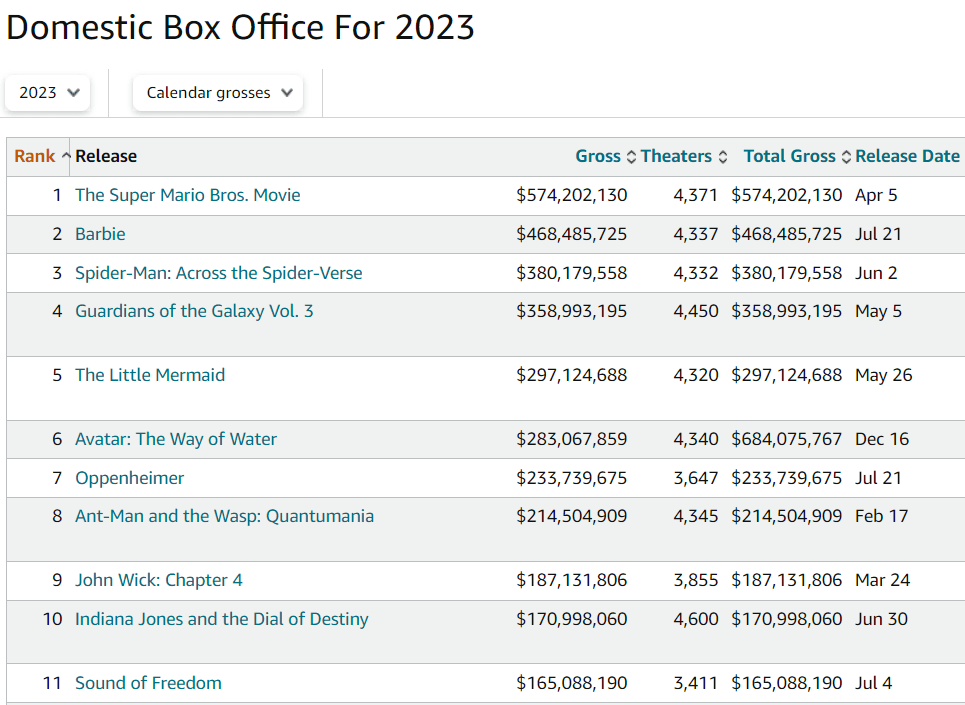
Here is the Box Office Mojo report on 2023 American theater sales, as of August 2023. In less than a month, Barbie reached #2! And Oppenheimer is doing well for a serious historical movie.
The author of Secondhand, Adam Minter, simultaneously appreciates the value created by large “impersonal” markets and also paints colorful pictures of the individual people involved. He has respect for individuals in the system who, using local knowledge, extract all the value out of what rich people consider to be trash. Minter sits in the seat of Adam Smith.
But it is not the popular movement, but the travelling of the minds of men who sit in the seat of Adam Smith that is really serious and worthy of attention.
Lord Acton, Letter of Lord Acton to Mary Gladstone
Another piece about clothes from AdamSmithWorks is: “WHO ARE YOU WEARING?” FASHION PRODUCTION IN THE AGE OF ADAM SMITH. This article does “the pin factory” for clothes. The global supply chain is incredible, just looking at manufacturing alone. Minter takes it further by following goods all the way from their first consumer to their very last user.
There is some good news about how the world is getting better as the average person gets richer, but trash does also cause problems as we consume more stuff. Does Minter write about the environmental concerns of the “fast fashion” camp? He has a different idea than what others have proposed like taxing by volume or banning some commercial activity. In terms of practical advice, Minter advocates for labeling consumer goods by how long they are expected to last. It’s tragic when someone spends $20 on a good that will wear out after 1 year when they should have spent $30 on a good that will last 10 years. There are some “dollar bills on the ground” here because consumers don’t accurately assessing quality at the time of purchasing. The power of brands to signal quality helps with this problem, but if you don’t want washing machines piling up in landfills then you might want stores to put a greater emphasis on durability at the point of sale. We do something like that with nutrition labels, so it is possible.
Even though I had already heard that it will disappoint high expectations, I wanted to be in on the conversation. I’m going to link the film to some other posts and ideas.
I can see why Tyler was disappointed. However, if you don’t go in with those high expectations, it still is a thoughtful period piece. It’s more interesting than the next Marvel installment.
Los Alamos National Laboratory, Attribution, via Wikimedia Commons
Though it almost drowns in the unwieldy plot, this is a movie about talent. Hitler was alienating and killing Jews in Germany, which affected the kind of talent mobilized on both sides of the war. There are several explicit references to antisemitism and motivation among physicists. Matt Yglesias observes, “They beat Heisenberg to the bomb — in part because Niels Bohr refuses to help the Nazis…”
I had written about talent and wars earlier, also concerning World War II but a different kind of doctor. “In 1939, Keynes had hired János Plesch, a Hungarian Jewish doctor who had relocated to London after fleeing Nazi persecution.”
How to manage talent becomes the challenge once brilliant scientists have been recruited to Los Alamos. The scientists did coordinate their activities enough to succeed in making the bomb, but some of the drama hinges on their rebellions against Oppenheimer. Now that machines are becoming smart, this ties into a previous post about managing artificial intelligence. “A question this raises is whether we can develop AGI that will be content to never self-actualize.”
Yet another theme of the film is the Communist movement in America in the 1930’s. I have studied this through the biographies and essays of Joy Davidman. Davidman was a committed member and then left the Party, as did several characters in the film.
And yet another tiny theme was women scientists on the project. There is a woman who complains that she was asked to be a typist even though she went to Harvard for science. Oppenheimer briskly puts her on one of the scientist teams. It goes by fast. I felt like the director was saying, “If you went to see Hidden Figures, here’s a 20 second recap of Hidden Figures for the people who like that, NEXT!” This is an example of hurrying everything in order to stuff 8 movies into 3 hours. The Advanced Placement Program® (AP) has a blog on “Women Scientists of the Manhattan Project” I know from my research on getting people to code, that women today study AP Computer Science at a considerable lower rate than male high school students.
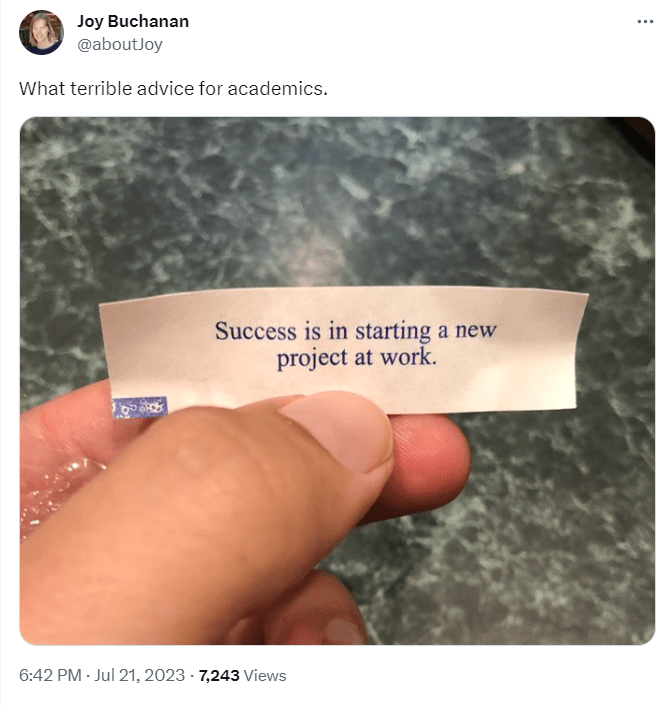
At a Chinese restaurant, I got a fortune that said, “Success is in starting a new project at work.” It struck me as very funny, and it resonates with other people on Twitter.
Starting a new project at work does not translate to success in academia. The danger is usually in starting too many projects and finishing too few.
Starting a new research project, whether alone or with coauthors, is exciting. You fall in love with a new idea.
The hard part is sticking with that idea until the very end of the publication process. This is more comparable to staying married. The project will see you at your worst, and you will discover that the project is not as wonderful as it seemed initially. You might end up re-writing the manuscript several times, years after the initial infatuation has worn off.
Academics do need to start projects. It is important to start the right projects. A reason to not start too many projects is to preserve time for the best work. A downside to being overloaded is that you might have to say no to a new project when an actual good opportunity comes along.
In my post on the Beatles documentary Get Back, I observed the way that the bandmates start new songs together. It reminded me of coauthors convincing each other to start a new project.
Their creative process resembles co-authoring a research paper. When Paul is working out a song and humming through places he hasn’t worked the lyrics out yet, that reminds me of the early drafts of a paper. You don’t have to have the whole Introduction written. The hook of a song is a bit like the main result of a research paper. Persuading yourself and your coauthor that you have a project worth finishing is the first step. Coauthors have unspoken agreements on how the project is going to proceed. The tacit knowledge of the collaborative process is one of the most important things you can learn in graduate school.
This quote from Rules of Thumb was surprising: “None of this is part of a grand plan. At any moment, I work on whatever then interests me most. Coming up with ideas is the hardest and least controllable part of the research process. It is somewhat easier if you have broad interests.” He goes on to say: “I sometimes fear that because I work in so many different areas, each line of work is more superficial than it otherwise would be. Careful choice of co-authors can solve this problem to some extent, but not completely.”
He really refutes my fortune cookie with this line, “Deciding which research projects to pursue is the most difficult problem I face in allocating my time.” Success is about starting the right projects and no others.
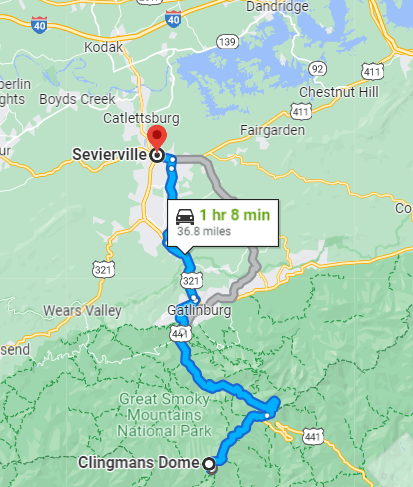
The area from Sevierville, TN to the peak of the Smoky Mountains is a popular destination for summer road trips.
Much of the American Southeast is too hot in July for hiking. The nice thing about the Great Smoky Mountains National Park is that you can keep driving up in elevation until you get to 70 degrees F or less.
The problem with the Smoky Mountains is that too many people want to go. The economist Donald Shoup has written about The High Cost of Free Parking. Entry to the national park is still free, however as of 2023 parking is paid. Good for them. The fee is very cheap. You can print a pass before you go or easily buy one on the way in.
The parking pass didn’t deter many people when we went in 2023. I recommend going early if you want to be able to park near a trailhead, or if you want to avoid a line getting into the Clingman’s Dome parking lot.
Our family has a running joke about “the pancake cabin people”. As we drive into the mountains in the morning, we pass parking lots full of cars outside of restaurants called pancake cabins. As long as you are up early enough to beat the pancake cabin people, you should be able to park where you want to.
There are more attractions in the national park than you could see in one day. The most dramatic view is at the top of Clingman’s Dome. The most historic educational sites are at Cades Cove. The best swimming (that I know of) is in the creek at Chimneys picnic area.
There are dramatic lookouts that you can drive right up to. Cades Cove is mostly a driving experience with lots of optional stops (closed to cars on Wednesdays).
With little kids in tow, it’s hard to make progress on the hikes. The map says just 2 miles to a waterfall. Sounds great. We make it 0.3 miles in. Then someone demands to be carried. Someone trips and breaks down crying. Our snacks are gone. We turn around and return to the car… it’s all good as long as you get excited about leaves and bugs. If you are in the stroller stage of life, don’t expect to get far on any hikes.
If you get a hotel within an hour of the national park on the Tennessee side, there is a lot to do. I might call it “the Orlando of the mountains.” Dollywood is darling at Christmas time.
Years ago, I sent out a note from Chattanooga, a few hours away in Tennessee. That’s another cute green place with hiking and restaurant options, on a smaller scale than the Smoky’s area. Their aquarium is fantastic. It’s neat how their “River building” starts by showing how small streams in the Smoky Mountains feed into the Tennessee River.





 Economist Writing Every Day