What Killed Youth Optimism?

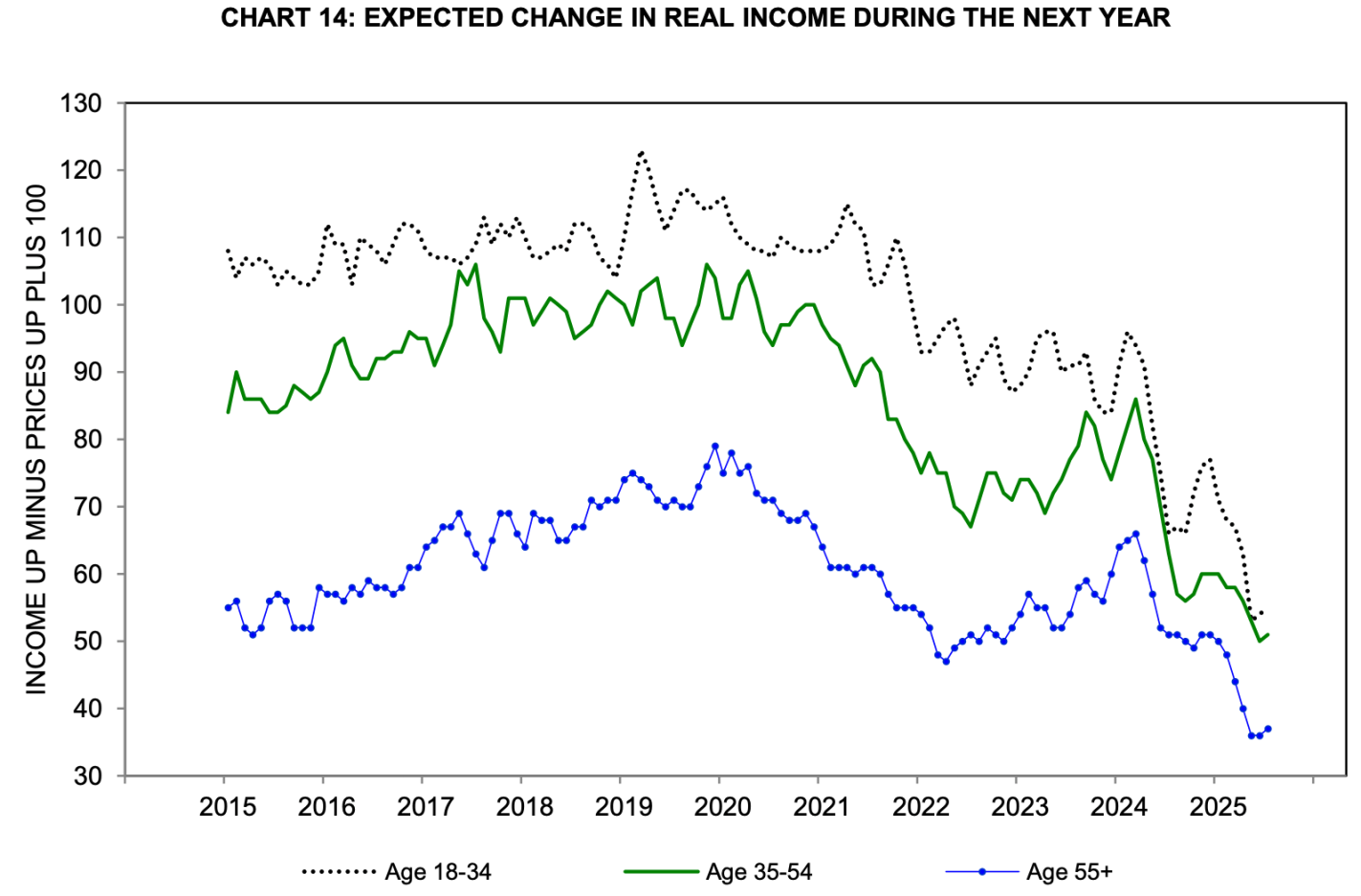
The young have always been more optimistic than the old, but this is no longer the case, at least according to the Michigan consumer sentiment survey:

Source: Bloomberg via Joe Weisenthal

But as Jeremy often points out here, young adults have actually been doing pretty well at building wealth. So why are they so gloomy?

Since I’ve now aged out of the young adult category, I’m obligated to start by wondering if kids these days are just whinier, and need to quit doomscrolling and toughen up. But if I try to see things their way, here’s what I can come up with for why their pessimism could be rational:

  1. It’s About The Future: Sure things have been fine, but that is about to change. The more farsighted youth know they will be the ones expected to pay back the big deficits the Federal government is running. They have student loans to pay today now that payments have fully resumed. I predicted after the 2022 student loan forgiveness that we would be back to all-time highs in student debt by 2028, but in fact we are there already. The youth unemployment rate is now 10.5%, up from 6.6% in April 2023, and could rise a lot more if AI really starts displacing jobs:
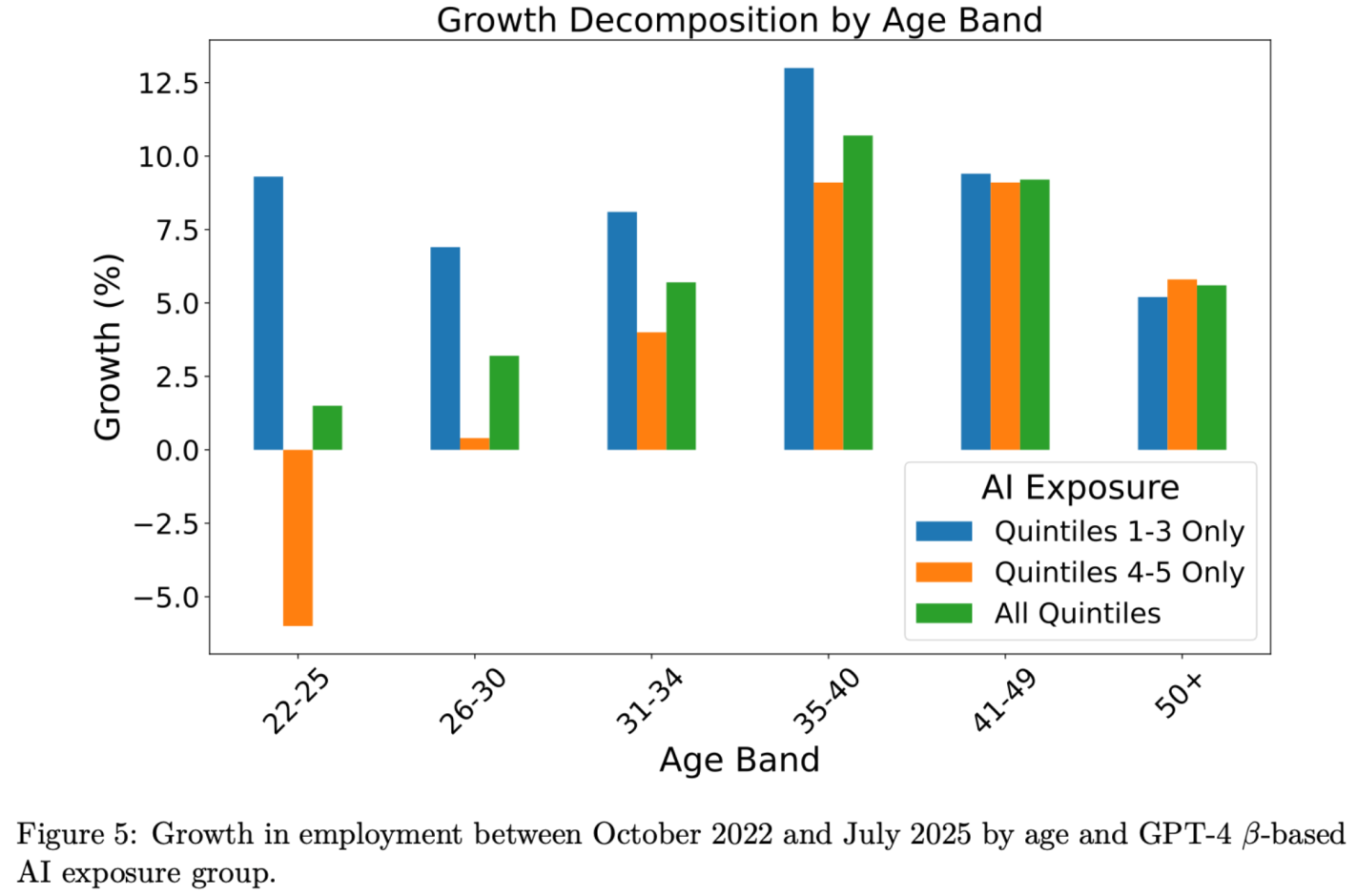
Source: Brynjolfsson, Chandar and Chen 2025.
Source: Michigan Consumer Survey

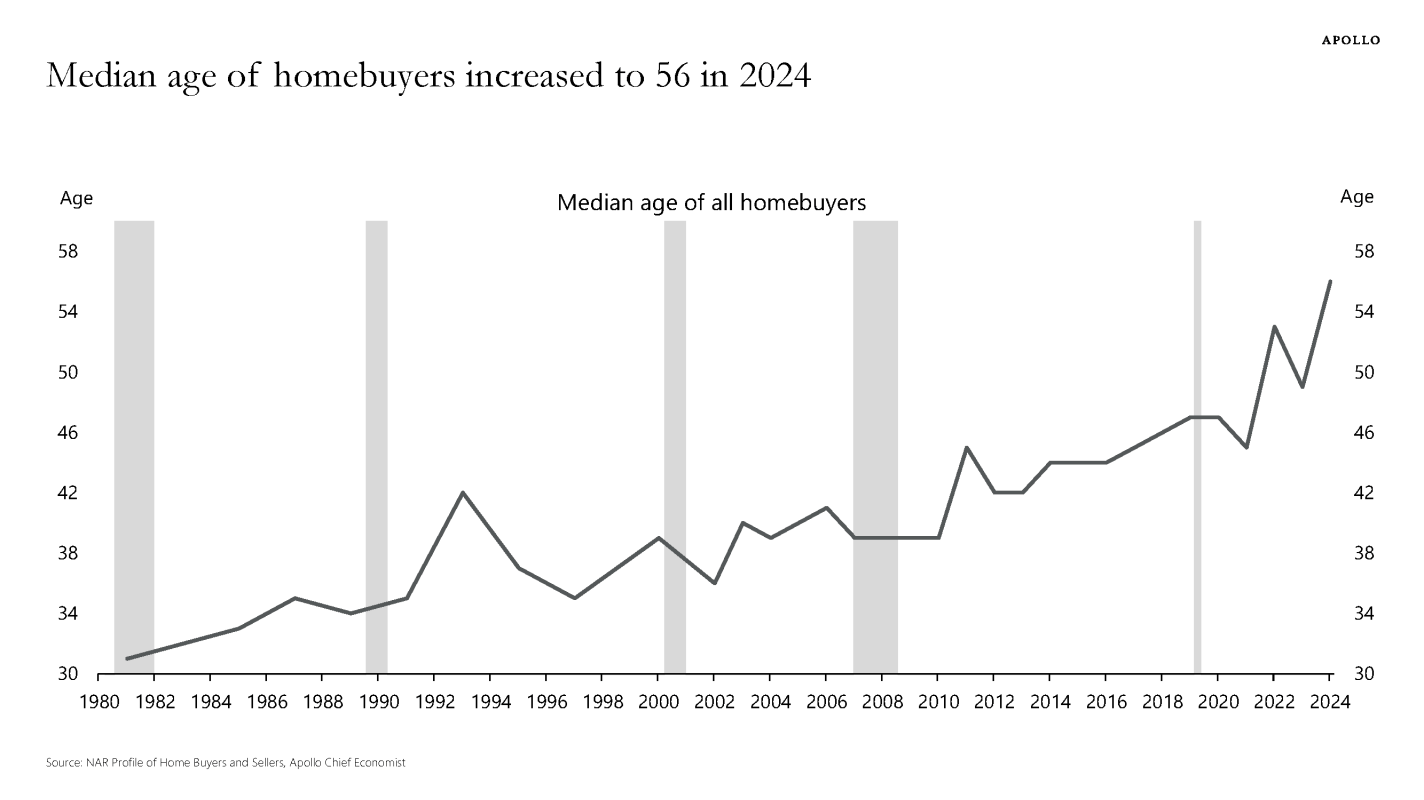
2. It’s About Housing: House prices are at all time highs (far above the prices during the 2000s “bubble”). Mortgage rates remain high, and to the extent that Fed rate cuts push them down, they will likely push prices higher, leaving homes hard to afford. High credit standards post-Dodd-Frank mean younger buyers in particular find it hard to get a mortgage; homeownership rates are falling while the average age of homeowners shoots upward. Most older people already own a house, while most young people want to buy but see that as increasingly out of reach.
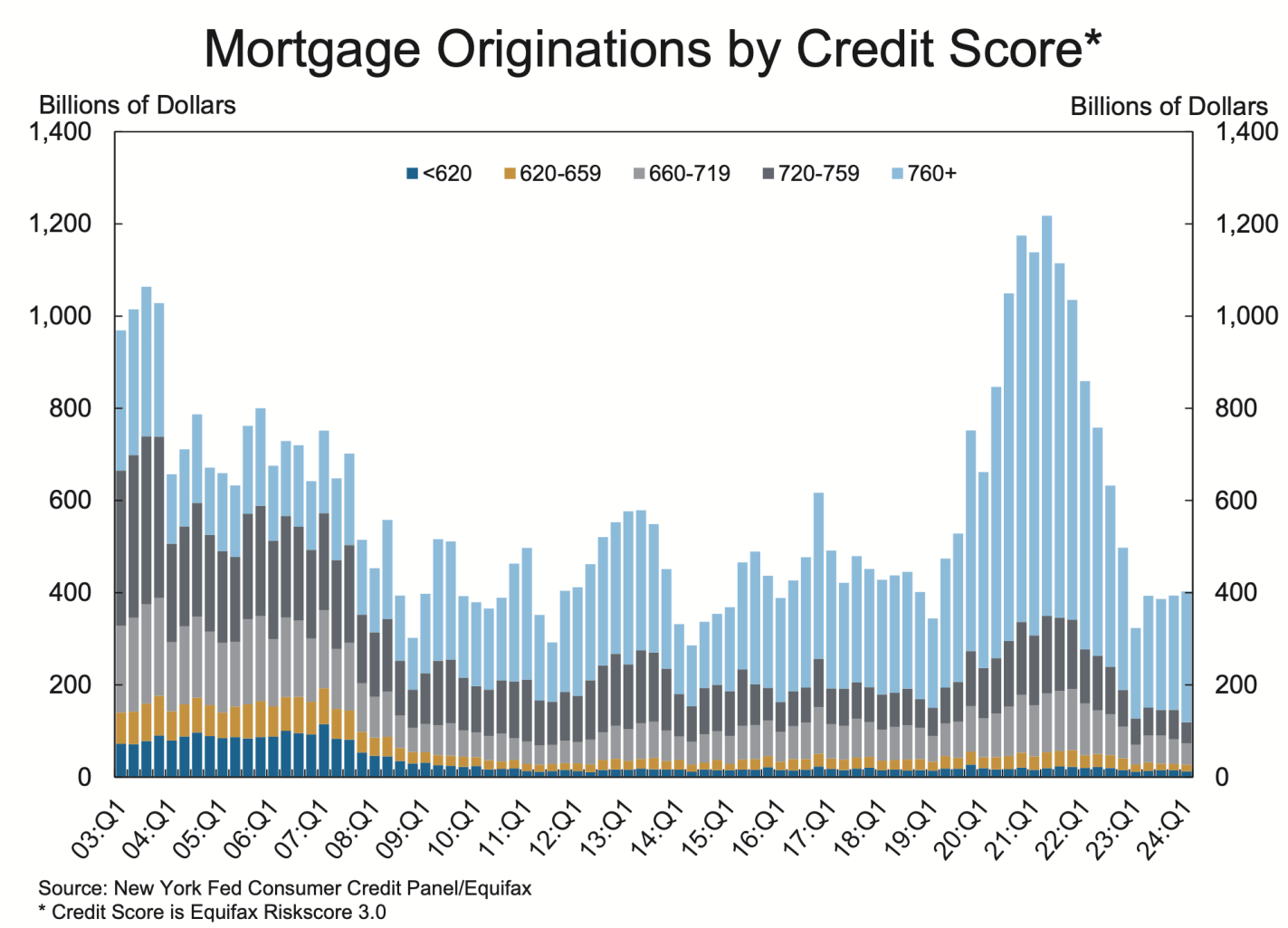
Good luck getting a mortgage without super-prime credit
Everyone thinks it’s a bad time to buy a house, but this matters most if you’re young and don’t already own one
The median American is 39 years old but the median homebuyer is 56

Mortgage Fraud Is Surprisingly Common Among Real Estate Investors

That is the conclusion of a recent Philadelphia Fed working paper by Ronel Elul, Aaron Payne, and Sebastian Tilson. The fraud is that investors are buying properties to flip or rent out, but claim they are buying them to live there in order to get cheaper mortgages:

We identify occupancy fraud — borrowers who misrepresent their occupancy status as owner-occupants rather than investors — in residential mortgage originations. Unlike previous work, we show that fraud was prevalent in originations not just during the housing bubble, but also persists through more recent times. We also demonstrate that fraud is broad-based and appears in government-sponsored enterprise and bank portfolio loans, not just in private securitization; these fraudulent borrowers make up one-third of the effective investor population. Occupancy fraud allows riskier borrowers to obtain credit at lower interest rates. 

One third of all investors is a lot of fraud! The flip side of this is that real estate investors are much more prevalent than the official data says:

We argue that the fraudulent purchasers that we identify are very likely to be investors and that accounting for fraud increases the size of the effective investor population by nearly 50 percent.

Many people blame investors for making housing unaffordable for regular people. Economists tend to disagree, and one of our arguments has been to point out that investors are still a small fraction of home buyers. However, official statistics recently showed the investor share over 25% (though dropping fast), and apparently that may still be an understatement. If investors are a problem, there are enough of them to be a big problem.

Of course, there are other reasons economists aren’t so concerned about real estate investors. One is that they can provide the valuable service of renting out homes to people who couldn’t qualify for a mortgage themselves (especially after 2010, when Dodd Frank made it difficult for people without great credit to qualify). Another is that many investors seem to be surprisingly bad at flipping homes for higher prices. The panic over “ibuyers” that would buy houses sight unseen based on algorithms abated when it turned out those those companies lost a ton of money, saw their stock prices plunge, and gave up.

The mortgage fraud paper also provides evidence of investors losing money. In particular, rather than fraudulent investors crowding out the good ones, they are actually more likely to end up defaulting on their purchases:

These fraudulent borrowers perform substantially worse than similar declared investors, defaulting at a 75 percent higher rate.

Still, such widespread fraud is concerning, and I hope lenders (especially the subsidized GSEs) find a way to crack down on it. Based on things I see people bragging about on social media, I’m guessing that tax fraud is also widespread in real estate investing, though I haven’t looked into the literature on it.

This mortgage fraud paper seems like a bombshell to me and I’m surprised it seems to have received no media attention; journalists take note. For everyone else, I suppose you read obscure econ blogs precisely to find out about the things that haven’t yet made the papers.