Tomorrow, the Bureau of Labor Statistics is set to release the first major report of economic data that was delayed by the federal government shutdown: the September 2025 employment situation report. It’s good that we will get that information, but notice that we’re now in the middle of November and we’re just now learning what the unemployment rate was in the middle of September — 2 months ago (you can see their evolving updated release calendar at this link). This is less than ideal for many reasons, including that the Federal Reserve is trying to make policy decisions with a limited amount of the normal data.
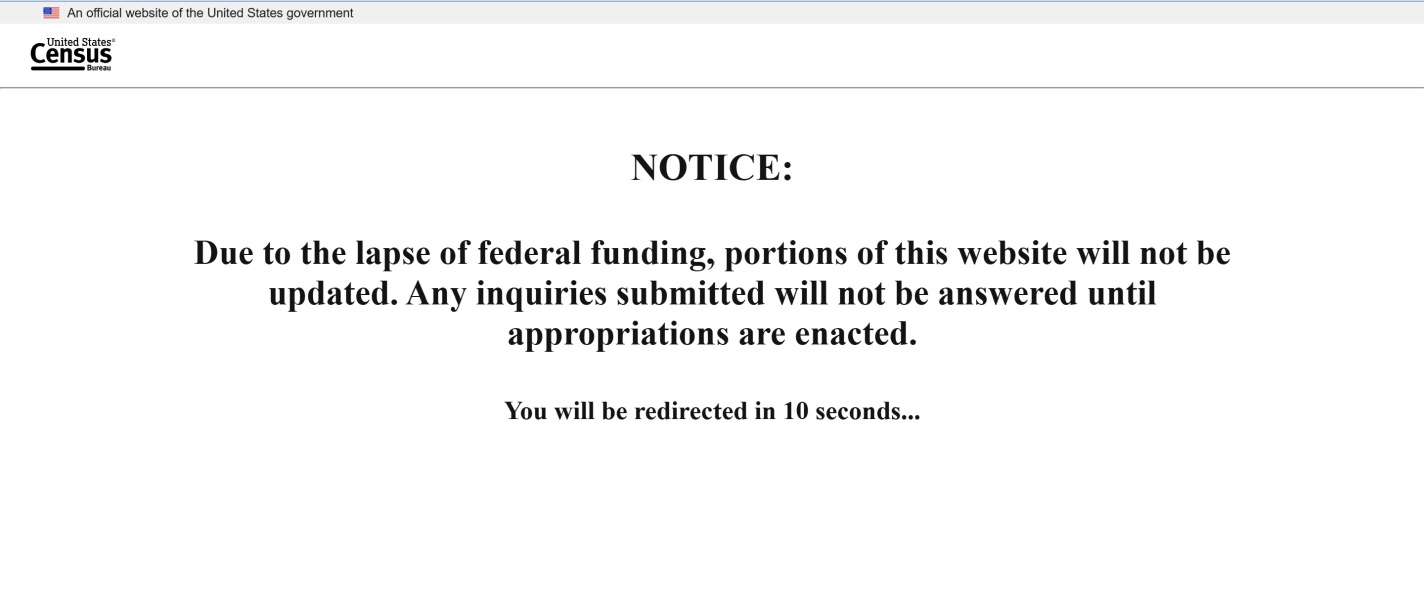
What about the October 2025 unemployment rate? Early indications from the White House are that we just will never know that number. Why? Because the data likely wasn’t collected, due to the federal government shutdown. There was some confusion about this recently, with many people asking why they don’t just release it. Well, that’s because they can’t release what they don’t collect: the unemployment rate comes from the Current Population Survey, a joint effort of the BLS and Census where they interview 60,000 households every month. The survey was not done in October. It would not be impossible to do this retroactively, but the data would be of lower quality and, again, quite delayed. That gap in a series that goes back to 1948 wouldn’t be the end of the world, but it is symbolic of the disfunction of our current political moment.
What about GDP? We are now over half way through the 4th quarter of the year, and… we still don’t know what happened with GDP in the third quarter of 2025. BEA is in the process of revised their release calendar too, but they haven’t yet told us when 3rd quarter GDP will be released. In this case, the data was likely collected, but there is a certain amount of processing that needs to be done. Sure, we have estimates from places like the Atlanta Fed’s GDPNow model, but the trouble is… many of the inputs it uses are government data which haven’t been released yet for the last month of the quarter.
Eventually, all will mostly be well and back to normal, even if there are a few monthly gaps in some data series. The temporary data darkness may be coming to an end soon, but I fear it will not be the last time this happens.
 Economist Writing Every Day