Cold symptoms are personally unpleasant, and also have economic aspects. In 2011, Americans directly spent some $40 billion on cold medicines, and the societal costs of workers and students staying home are much greater.
Having dealt with one or two colds a year for quite a few decades, I have
significant experience with cold remedies. Also, being a habitual researcher, I have nosed around the internet looking at various studies of the effectiveness of medications.
The biggest problem I have with colds is the nasal drippage at night. In the daytime, I can just blow my nose, but at night this can keep me from sleeping, and also leads to nasty coughing and even bronchial infection if the stuff goes down into my lungs.
There are various so-called first-generation antihistamines out there. They all have some sedative affects. Second-generation antihistamines (e.g. fexofenadine, loratadine, and cetirizine) have fewer sedating qualities, since they do less crossing of the blood-brain barrier, but they tend to be only effective for allergies and less effective for colds.
The best antihistamine for colds which I have found, which seems to be confirmed on the internet, is chlorpheniramine maleate. This was the key ingredient in classic Coricidin, and now appears in Coricidin HPB. HPB stands for high blood pressure. It seems to be always accompanied with some acetaminophen (Tylenol).
(Side comment: the internet seems to say that in general antihistamines are not a problem for people with high blood pressure. Decongestants are. I guess the manufacturer turned the lack of a decongestant in this formulation into a virtue, by calling it “safe for high blood pressure.”)
Coricidin HPB exists in many different incarnations on drugstore shelves. The one I go for is the Cold and Flu package, see below. It just has the chlorpheniramine maleate plus acetaminophen:
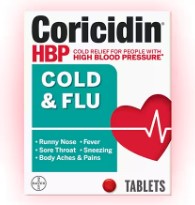
Most of the other variants have the word “cough” in the title, such as “Cough and Cold,” and contain dextromethorphan cough suppressant. I find the combination of the dextromethorphan plus the antihistamine to be extremely soporific. In my medicine cabinet I label them “zombie pills, since they leave me feeling torpid even 24 hours after taking them. The plain antihistamine version (Cold and Flu) also slows me down, but not nearly as much as the cough suppressant version.
I have also found generic versions (e.g. CVS brand) of chlorpheniramine maleate. However, less than half the pharmacies I check have this stuff on their shelves, for some reason. I guess it is not as heavily promoted as the Vicks NyQuil, which contains the heavily sedating doxylamine succinate (active ingredient in Unisom sleep aid) as the antihistamine component.
I recently ran across an article by Parkview Health which happens to come to the same conclusions I have. I will share their recommendations here in italics, with a little further commentary of my own. On antihistamines for runny nose:
In patients older than 12 years of age: Nyquil™ (doxylamine succinate), Tavist (clemastine fumarate), chlorpheniramine maleate or Benadryl® (diphenhydramine) may help relieve symptoms, although these may cause sleepiness. Chlorpheniramine maleate is the least sedating of the products listed above.
For Nasal Congestion:
The best oral medication would be Sudafed® (psudoephedrine) [sic], which is a medication behind the counter in the pharmacy. There is a medication that is similar and available over-the-counter, Sudafed PE® (phenylephrine), but it’s not nearly as effective as plain Sudafed®. These medications have precautions in some disease states so it is best to consult your physician before treating your nasal congestion.
The best nasal spray medication is Afrin® (oxymetazoline) and while this medication is very effective. It should only be used for 3 days due to the potential side effect of rebound congestion.
Nearly all the meds on the drugstore shelves for stuffy nose use phenylephrine, which is known to be essentially useless. Go figure. Anyway, go for the good stuff, the pseudoephedrine. I use the 12-hour slow-release formulation, keeps me going all day. This med does jazz up your nervous system, so some folks may find the racing brain to be unpleasant. Truck drivers use it to stay awake at night, but for the rest of us, don’t take this at bedtime. I take the antihistamine at night (half hour before bedtime, and typically once in the middle of the night, since it only lasts about four hours), and the decongestant in the morning.
If I can’t afford to be slow-brained the next day, or if I am at peak nasal congestion, I might use the nasal spray at night once or twice, but I know from experience that using it too much leads to permanent stuffiness.
Pseudoephedrine can be used in the manufacture of methamphetamine, so you can’t just load up your shopping cart with boxes of it. In the U.S., you typically have to go to the pharmacist’s counter, and they dole all out maybe two boxes at a time, noting your driver’s license, and entering it into some national database.
I’ll let the good folks at Parkview Health offer the closing wisdom here on cold and flu meds:
Cough:
The best way to address cough is to assess what kind of cough it is. When you cough is it dry and non-productive? Or is it wet and mucus exits with the cough?
If the cough is dry and non-productive:
- Utilize Delsym® (dextromethorphan)
If the cough is wet and produces mucus:
- Drink water to make the mucus thinner
- Utilize Mucinex® (guaifenesin)
Fever/Sore throat:
The best medication for fever and/or sore throat is plain Tylenol® (acetaminophen) or NSAIDs such as Motrin® (ibuprofen).
What medications are best to treat the symptoms of the common cold in children?
Many medications that are used in the common cold for adults should not be used in children because there have been few trials supporting their use in infants and children. Therefore, the best treatment is Children’s Tylenol® (acetaminophen) or Children’s Motrin® (ibuprofen) for fever or uncomfortable symptoms due to the common cold.
Other than the medications listed, the best way to help your infant or child get rid of the common cold is drinking an adequate amount of fluids. If further help or direction is needed, contact your physician.
What medication(s) are best to treat the flu?
Unfortunately, the flu is much harder to treat over-the-counter, as there aren’t medications to really treat this viral infection. The best measures to take are to get plenty of rest, drink enough fluids and utilize Tylenol® (acetaminophen) for fever.
There are medications that can be prescribed by your physician to help shorten the duration of the flu although studies have shown the medications shorten the flu by only a day.
The best way to prevent the flu by getting the flu shot
Other Types of Cold Remedies
The above discussion covered plain vanilla, non-prescription (over the counter) medications. There are other more exotic and expensive meds to be had by prescription, as well as a plethora of folk remedies. Here is a link to about a dozen such nostrums, such as garlic and cognac, vinegar and cayenne pepper, and sauerkraut.
 Economist Writing Every Day