Quick thoughts on what I read in 2024- though note that none of these were published in 2024, since almost all the best stuff is older. First some econ books I reviewed here this year:
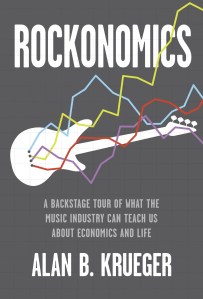
Rockonomics– “Alan Kreuger’s 2019 book on the economics of popular music…. a well-written mix of economic theory, data, and interviews with well-known musicians, by an author who clearly loves music.”
We’ve Got You Covered– “Liran Einav and Amy Finkelstein are easily two of the best health economists of their generation.… while I don’t agree with all of their policy proposals, the book makes for an engaging, accurate, and easily readable introduction to the current US health care system.”
The Psychology of Money– “Morgan Housel’s Psychology of Money is not much like other personal finance books…. The book is not only pleasant to read, but at least for me exerts a calming effect I definitely do not normally associate with the finance genre, as if the subtext of ‘just be chill, be patient, follow the plan and everything will be alright’ is continually seeping into my brain.”
One Up on Wall Street– “Peter Lynch was one of the most successful investors of the 1970’s and 1980’s as the head of the Fidelity Magellan Fund. In 1989 he explained how he did it and why he thought retail investors could succeed with the same strategies”
Leave Me Alone and I’ll Make You Rich– “a 2020 book by Dierdre McCloskey and Art Carden…. attempts to sum up McCloskey’s trilogy of huge books on the ‘Bourgeois Virtues‘ in one short, relatively easy to read book”
Non-fiction I didn’t previously mention here:
The Simple Path to Wealth (JL Collins, 2016): the book is indeed simple, and its advice is indeed likely to leave you fairly wealthy in terms of money. One sentence summarizes it well: save a large portion of your income and invest it in VTSAX, and perhaps VBTLX. Easy to read, a bit like reading a series of blog posts, which is how much of the material originated. Good introduction to the lean-FIRE type mentality. But the book, like that mentality, is too frugal and debt-averse for my taste, and I say that as someone much more frugal and debt-averse than the average American.
The Great Reversal: How America Gave Up on Free Markets: Thomas Philippon argues that markets have been growing less competitive in America because of weakening antitrust enforcement, and that this has harmed consumers and productivity. He acknowledges that over-regulation can also harm competition, but clearly thinks antitrust is much more important; I think otherwise and didn’t find the book convincing. He sets European markets as an example for what America should aspire to, which means the book has aged poorly since its 2019 publication. It still of course has some value, and I may do a full review at some point.
The Storm Before the Storm: The Beginning of the End of the Roman Republic (Mike Duncan, 2017): Non-fiction but more exciting than most novels. A story of obvious importance to those who worry about modern republics teetering, but fresh compared to the much more famous events around Julius and Augustus Caesar and the ‘official’ fall of the Republic. Though arguably the Republic fell in the 80s BC, not the 40s- the book explains that Rome was taken over three times in this era by armies seeking political change.
Self-Help Is Like a Vaccine: Essays on Living Better: Nice collection of Brian Caplan blog posts on the subject.
Fiction:
Ivanhoe (Walter Scott, 1819): A particularly medieval telling of the Robin Hood tale, with a focus on the nobility and knights of England at that time. Chivalric romance, trial by combat, storming a castle. Highs are high but it needed an editor, could be cut by at least 1/3 without losing anything.
Kim (Rudyard Kipling, 1901): Three books in one, all excellent: a coming of age story, a spy thriller, and a portrait of the many different types of people and religions to be found in India around 1900. All wrapped together with beautiful English prose that makes heavy use of Indian loan words.
Final Thoughts:
Obviously I’m not Tyler Cowen reading a book a day, unless you count the kids books I read to my 1-year-old. But overall 2024 was a good year, better than I realized before I put this post together. Partly I credit the 1-year-old who wants to take my phone and computer but doesn’t mind when I have a book in my hands.
 Economist Writing Every Day