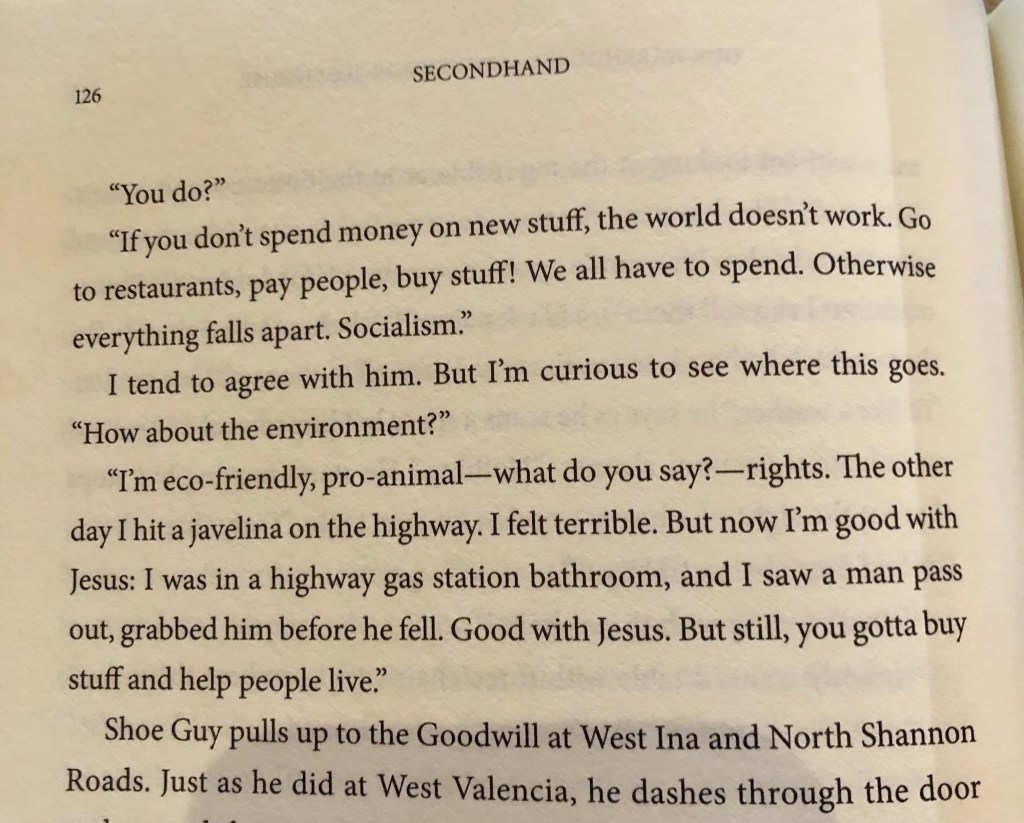
Last month, I blogged about the book Secondhand. This week, I wrote a piece about it for AdamSmithWorks: THE INVISIBLE THREADS: ADAM SMITH AND THE GLOBAL SECOND-HAND CLOTHING TRADE
The author of Secondhand, Adam Minter, simultaneously appreciates the value created by large “impersonal” markets and also paints colorful pictures of the individual people involved. He has respect for individuals in the system who, using local knowledge, extract all the value out of what rich people consider to be trash. Minter sits in the seat of Adam Smith.
But it is not the popular movement, but the travelling of the minds of men who sit in the seat of Adam Smith that is really serious and worthy of attention.
Lord Acton, Letter of Lord Acton to Mary Gladstone
Another piece about clothes from AdamSmithWorks is: “WHO ARE YOU WEARING?” FASHION PRODUCTION IN THE AGE OF ADAM SMITH. This article does “the pin factory” for clothes. The global supply chain is incredible, just looking at manufacturing alone. Minter takes it further by following goods all the way from their first consumer to their very last user.
There is some good news about how the world is getting better as the average person gets richer, but trash does also cause problems as we consume more stuff. Does Minter write about the environmental concerns of the “fast fashion” camp? He has a different idea than what others have proposed like taxing by volume or banning some commercial activity. In terms of practical advice, Minter advocates for labeling consumer goods by how long they are expected to last. It’s tragic when someone spends $20 on a good that will wear out after 1 year when they should have spent $30 on a good that will last 10 years. There are some “dollar bills on the ground” here because consumers don’t accurately assessing quality at the time of purchasing. The power of brands to signal quality helps with this problem, but if you don’t want washing machines piling up in landfills then you might want stores to put a greater emphasis on durability at the point of sale. We do something like that with nutrition labels, so it is possible.
 Economist Writing Every Day