Even before Elon Musk gutted X’s content moderation, James Bailey was tired of the shouting. “It’s like a cursed artifact that gives you great power to keep up with what’s going on, but at the cost of subtly corrupting your soul,” said the 38-year-old Providence College economics professor.
He retreated. This year, he realized he was spending five to 10 minutes a day on a site he used to ignore.
The WSJ reporter contacted me after seeing my previous post about LinkedIn here, explaining how I think LinkedIn has improved as a way to share and read articles, and was always good as a way to keep up with former students. Just in the short time since the WSJ article came out, I finally used LinkedIn for one of its official purposes, hiring, where it worked wonders helping to fill a last-minute vacancy.
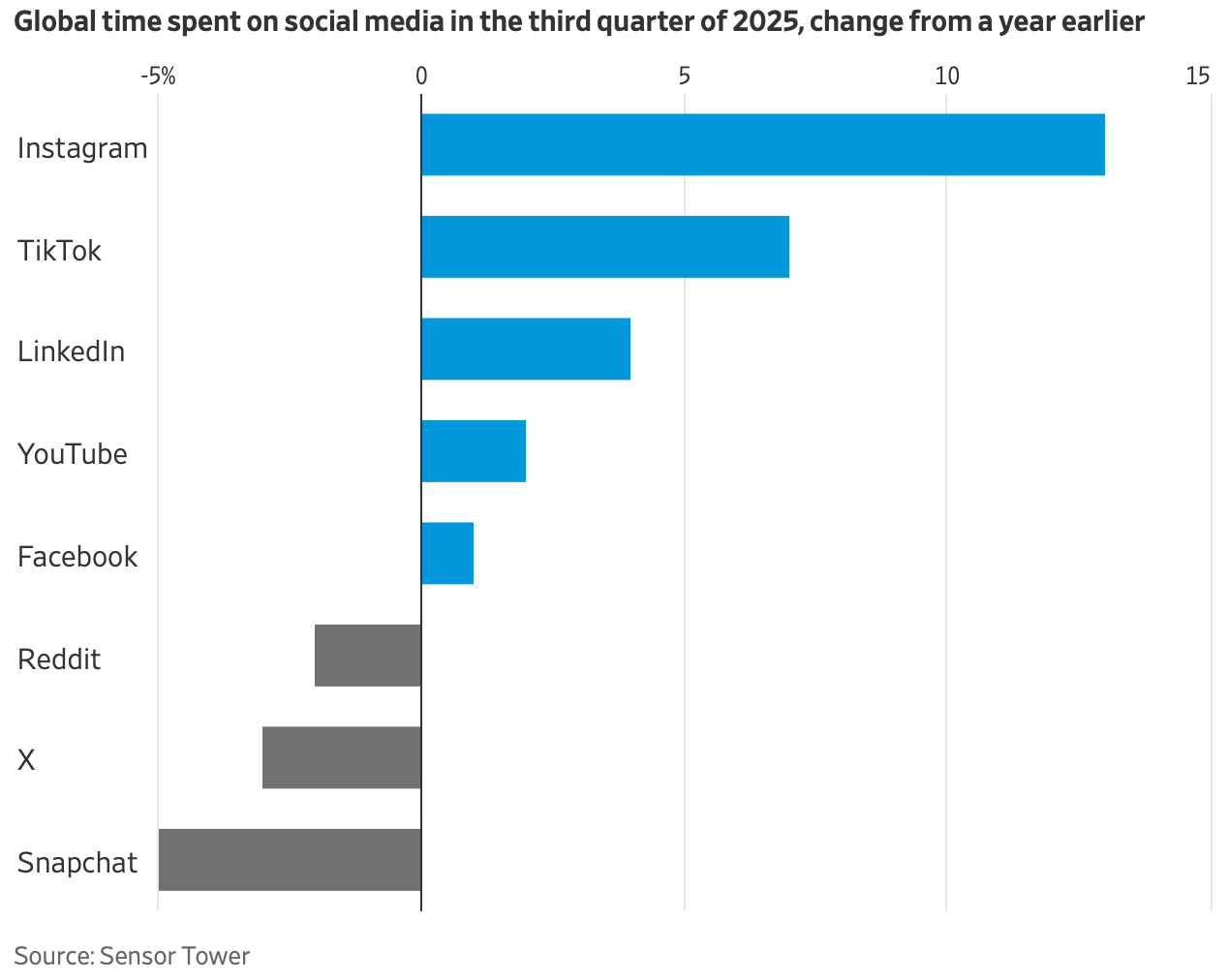
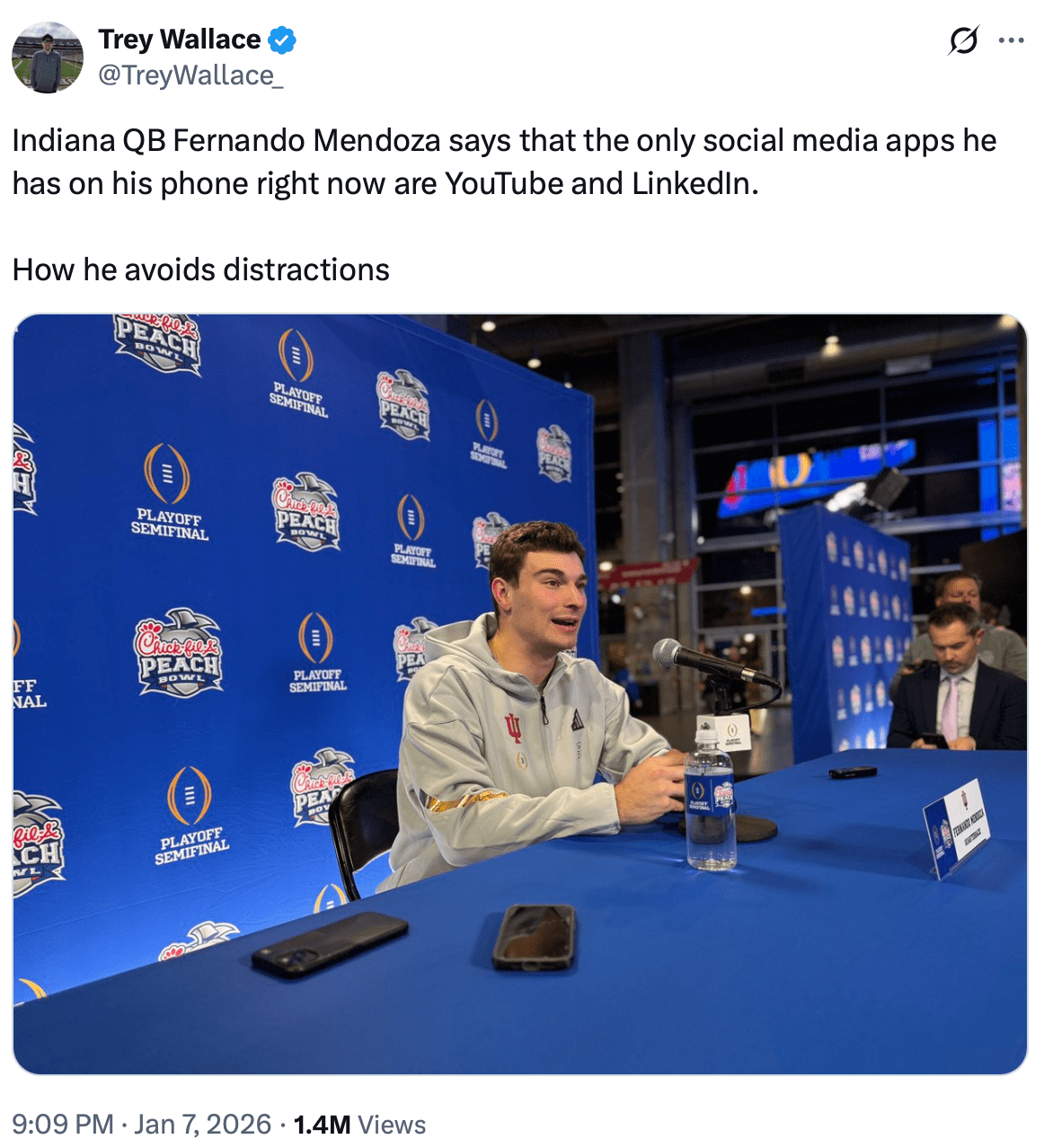
If you don’t trust me or the WSJ to identify the hot social network, lets see what the actual cool kids are up to
LinkedIn has its problems, but so does every other social network.
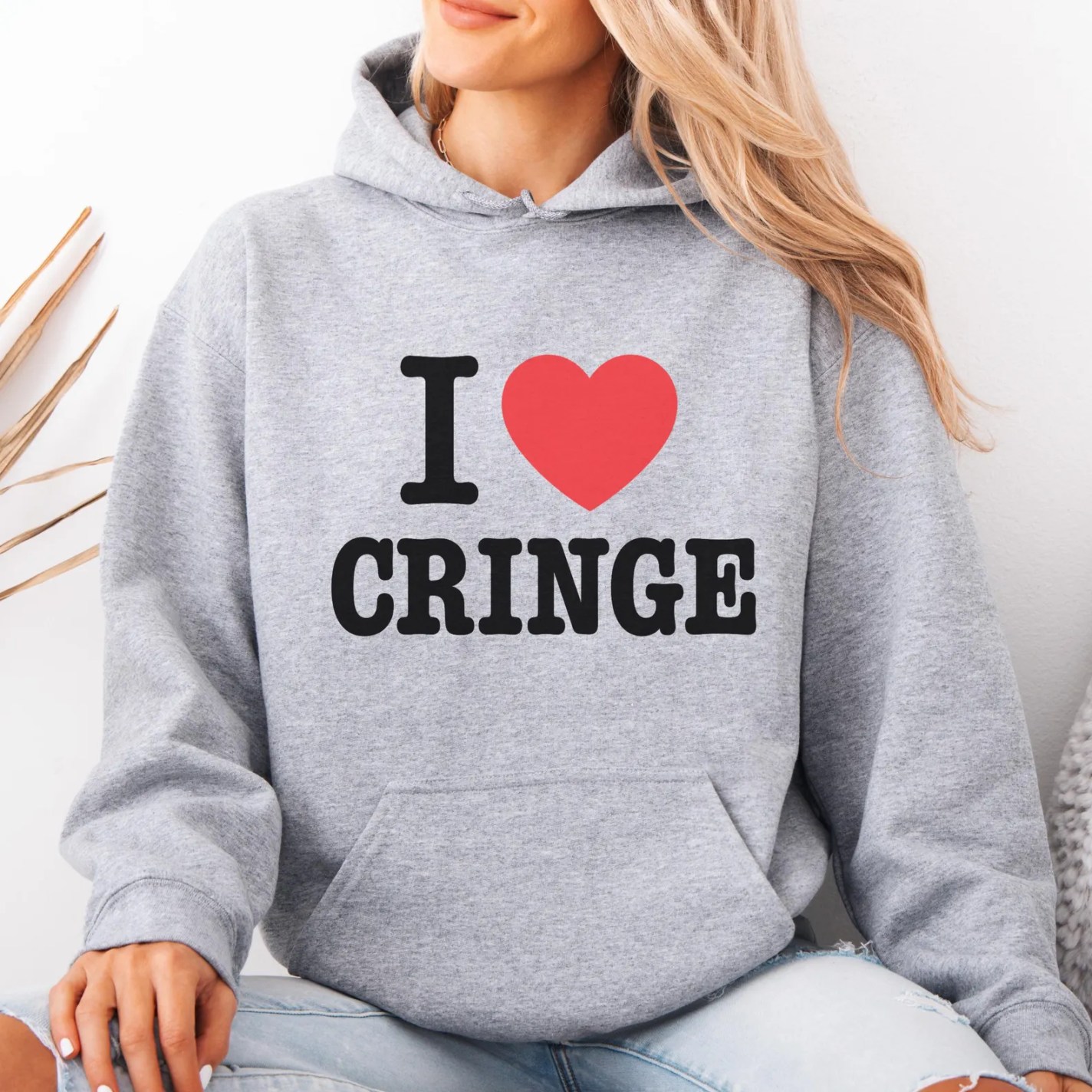
I joined LinkedIn out of college because it seemed like something you were supposed to do if you want a job someday, but I never checked it because the academic job market makes little use of LinkedIn. In 2013 LinkedIn added social media features like a newsfeed, but I still never spent time there. Facebook and Twitter seemed more interesting, and like many people I’ve always been allergic to “networking” or other social settings where one person is just trying to get something from another. It seemed like a recipe for posts that are cringe, soulless, or desperate.
But over the past couple years, I’ve found myself spending more time there- and not because I’m looking for a job or looking to hire. Some of the posts are genuinely interesting, and it is a nice way to keep up with what people I know are up to. Either LinkedIn got better or I got worse.
I find that LinkedIn is particularly good for staying in touch with my old students. I always told my students they could still e-mail me or stop by my office after the semester is over, but they almost never do; that takes a lot of thought and energy. Social networks are the ideal way to keep in touch with “weak ties“, but you have to find the right one. Facebook was the best for this when it was ubiquitous, but now it is becoming more common for Americans not to have or not to check Facebook, especially young ones (plus it was always a bit too personal for former students). Twitter has never been something that most people have, and the more popular networks are either too personal (Instragram, Snap et c) or too impersonal where almost all content users see comes from people they don’t know (TikTok, Youtube, et c).
LinkedIn by contrast is ubiquitous and just the right amount of personal. It also seems to be increasingly a good place to share interesting writing. I like much of what I read there, and my writing gets a good reception; I tend to get more engagement for EWED posts on LinkedIn than on X and Facebook despite having fewer connections there than Facebook friends or Twitter followers. Yes, you’ll still see some cringe posts there, but it beats the angry political posts that are ubiquitous on Facebook and especially X.
 Economist Writing Every Day