Some Random Gifts (Maybe for Yourself) To: Clean Sap/Tar Off Car, Clean Dust from Inside PC, Eat “Forbidden” Black Rice, Glue Almost Anything

I reviewed some of my smallish purchases of the past several months, and noted some ones that I still feel very good about, because they worked so well. I will share these here, along with appropriate Amazon link. These may be practical gifts for family/friend, or may be something you’d like to get for yourself.

( 1 ) Stoner “Tarminator” to safely remove sap and tar from car.    In search of shade in the searing summer heat, we sometimes park under a pine tree, which can drip sap on the car paint and windows. Removing the sap without harming the car finish is not so easy. The internet pointed me to this product, which has performed well. I spray some on a little folded part of a paper towel, and rub at sap with that. Stoner Car Care 91154 10-Ounce Tarminator Tar, Sap, and Asphalt Remover Safe on Automotive Paint and Chrome on Cars, Trucks, RVs, Motorcycles, and Boats, Pack of 1

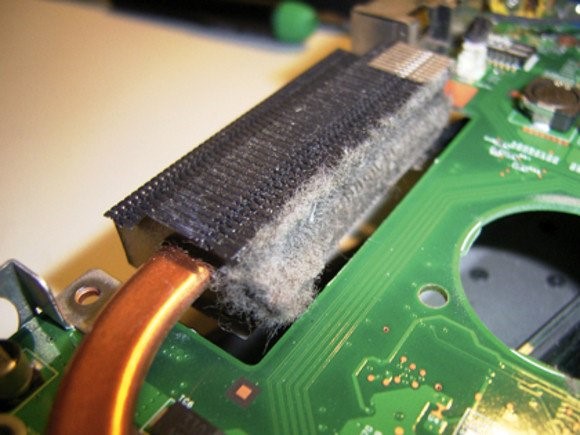
( 2 ) Compressed gas to blow dust off laptop heat exchanger.  I got a warning message on my laptop that the fan was not functioning properly, and needed immediate attention. I think by that they meant the machine was overheating. It turns out that in your laptop there is a thick copper heat conductor that runs from your hot processing chip to the fan outlet on the side of your computer. The fan sucks air from the bottom of your PC, and blows it across a heat exchanger attached to the heat conductor. In time, dust can build up on this heat exchanger, and block the airflow.

Image: https://www.quora.com/How-can-I-clean-the-fans-in-my-Dell-Inspiron-15-5000-series?share=1

The “right” way to address this problem is to disassemble the laptop to expose this heat exchanger from the inside (as shown in picture above), and peel the lint off. Problem is with my particular PC, it is a huge, perilous task to do this disassembly. The internet told me of a hack solution, which is to shoot cleaning gas into the heat exchanger from the outside, to knock off at least some of this lint. See this YouTube video by “Ultimate DIY” for the technique. It seemed to work for me – I got a can of cleaning gas (below), shot it into my PC side outlet vent in various spots, and have had no fan or overheating warnings since. (I also tweaked my standby power settings so the fan does not run all day if I am not using the PC).

Falcon Dust, Off Compressed Gas (152a) Disposable Cleaning Duster, 1, Count, 3.5 oz Can (DPSJB),Black

( 3 ) Barge “rubber cement” to glue almost anything.  This stuff sticks really well – spread a thin coat on both surfaces, wait 10-15 minutes, press together, and leave for a few hours. Unlike most “superglues”, it will work on rough or porous surfaces, including situations like leather where flexibility is needed.

Barge All-Purpose TF Cement Rubber, Leather, Wood, Glass, Metal Glue 2 oz

( 4 ) Indulge in nutty taste, impressive appearance, and health lore of black rice. A couple of years ago I got some so-called “forbidden” (black) rice from an Asian gourmet outlet. (At one time this rice was so prized it was forbidden for anyone but the emperor to eat it).  It tasted great, but was ruinously costly. I have found similar rice on Amazon, imported from Italy. No cooking directions on the box, so here is what worked for me: Add 1 cup rice to 2 cups boiling water, simmer 20 minutes, and strain off excess water. Try it once:

Black Rice, Premium Quality, Product of Italy, Venere, All Natural, Ancient Grain, 1.1 lbs, Riso Scotti

( 5 ) Small indoor/outdoor play/crafts table with bench seats for 2-8 year old kids. This has worked well, especially for otherwise messy foods and activities. Give it away when your kids are done with it. See picture below. The sides and benches fold in, under the table, for storage or transport. Includes optional shade umbrella. Avoid the smaller version of this table, it would get outgrown immediately.

Little Tikes Easy Store Picnic Table with Umbrella, Multi Color, 42.00”L x 38.00”W x 19.75”H

Professional Hunger Games and the costs of filtering out talent too soon

For all the fuss over whether schools provide actual skills or merely signal underlying ability, I think we may underappreciate the consquences of internalizing education within employment tournaments. “Neurotic parents worry for their kid’s future if they don’t get into the best pre-school” is a fairly trite sitcom premise at this point, but like a lot of tropes it bears enough truth to carry an episode. Parents “red-shirting” their kids to give them a competitive advantage in both academics and sports has received plenty of attention. Researchers have observed that birthdays early in the calendar year are overly predictive of selection into hockey at the advanced amateur and professional levels. These are all products of, and reactions to, the long and grueling tournaments that portend to identify talent.

We are rightfully obsessed with how to best identify talent at the micro level, but I spend more of my time thinking about the broader consequences that emerge from how we sort talent. More specificly, when and how we sort talent out. The filters.

The above is two academics arguing, both quite reasonably, about how a department should hire faculty. What I want to focus on is that last line of the second tweet:

“are you arguing we should hire.. (people) who weren’t competitive for higher-tier PhD programs?”

And there it is. The filter. If you weren’t good enough to get into a good PhD program at 22-25 years old, why should we waste our already thin resources considering you for position when we have plenty of candidates who did get into a higher-tier program? That’s a completely reasonable argument. The candidates at the best programs are, on average, better than those from less prestigious academic pedigrees.

What I want to do now is persuade you that this is a deeply flawed strategy. To overweight entry into your pool of consideration based on these early filters is bad for your academic department, company, or your hockey team. It will not only cause you to miss out on whole swaths of talent, but will have long run consequences upstream as well, as more and more resources will be wasted within an increasingly desperate all-pay auction to avoid being filtered out. In fact, those resources will be worse than wasted, as growing resource demands to survive the filter will result in both a shrinking and homogenizing final talent pool, condemning departments and disciplines to the stultifying malaise of sameness.

(From here on I’m going to overly lean on an academic framing here becuase it’s what I know best, but I think the story and argument are broadly applicable.)

Surviving the academic filter

I myself am part of a generation of tenured academic economists that can’t help but quietly wonder if we would have made it to the other side of what is now less a path to an academic career and more a post-baccalaureate Hunger Games. Two years predoc, six years of graduate school, three years postdoc, six years on the tenure clock at your first job, a-hopefully-shortened-to-four-year clock at your second job. That’s a 17 to 21 years of often brutal competition for publications at journals and grants from institutions with <5% acceptance rates. But now let’s walk backwards through that path.

Getting published in top outlets and getting funding for your research is a lot easier given the resources available to junior faculty at elite research institutions, appointments which are almost exclusively available to graduates of elite PhD programs. Even if one fails to receive an appointment or receive tenure at a top research institution, the networks you build in a top graduate program will bear fruit your entire career. You will get invited to present in seminars, join the right clubs, and disseminate your work through the best working papers series.

So how do you get into a good graduate program? I haven’t inspected the numbers personally, but I have been told by colleagues that the vast majority of students at top programs have at least near-perfect GRE scores and GPAs. These standard performance metrics left insufficient for final decisions, what’s left is the the prestige of your institution, extraordinary non-traditional undergraduate performance (i.e. writing an outstanding senior thesis), or procuring a prestigious post-baccalaurare research experience (a predoc). The net of this is that when you weight faculty appointmentss disproproportionately towards the prestige of a graduate academic program, you are indirectly weighting your decisions towards the selective criteria of undergraduate admisisions and a young person’s ability to independently network with faculty. You are effectively filtering out candidates based on attributes they failed to display when they were teenagers.

The trap of failed forecasting and early filters

When hiring and admitting talent, you are playing a statistical game. You’re not just trying to maximize the expected value (the mean), you’re also pursuring optimal variance, specifically upside variation. An NBA team would rather draft 1 hall of famer, 2 all-stars, and 7 busts that never play a minute than 10 players with average NBA careers. Pursuing upside and the upper tail, pursuing outliers, has a strange alchemy to it. To say that outliers and the rest of extreme upper tail is less understood than average outcomes is almost tautalogical, but in this case it’s important. To pursue upside variance in recruitment is, at least partly, an effort to forecast that upper tail. Forecasting these people is not only hard to do, it’s hard even to tell ex post if someone has been successful at it for reasons attributable to skill or merely luck.

When we filter out candidates based on where they went to graduate school, we are indirectly saying we believe that undergraduate admissions can forecast outcomes of considerable rarity. That’s quite the leap of faith.

I don’t get the impression that venture capitalists are particularly concerned with the prestige of their entrepreneur’s undergraduate education. Some people might use this as a cudgel to demean the value of a college education or an opportunity to extoll the greatness of genius that refuses to be suffocated by a structured education, blah blah blah. You will be shocked to learn that I think both of these strawmen arguments I’ve created are entirely silly. I think venture capitalists place so little weight on educational prestige because they are looking for extreme outliers in dimensions that are not necessarily orthogonal to education, but are simply unforecastable at any sort of scale. They can’t be predicted, only observed retrospectively in evidence of successfull entrepreneurship.

I put it to you, humble department hiring committee, that attributes that make for a high quality researcher are similarly difficult to forecast early in life. Further, the skills that make for great student, I am sorry to say, do not correspond all that well to successful research. While perhaps not as extreme as professional basketball players or billionaire entrepreneurs, top researchers are in many ways outliers. They are strange amalgams of, yes, intelligence, but also conscientousness and rebelliousness. They are creative and pragmatic, capable of working with other outliers and managing teams while also tolerating long periods of loneliness and even professional derision. These combinations of characteristics are not necessarily special, but they certainly are unusual.

Mechanisms that maximize the mean of your recruited talent will not maximize the upper bound on the pool you are choosing from. It will not maximize your upside outliers. Maxmizing the mean, however, is exactly what undergraduate admissions are largely doing. They are maximizing the SAT scores and GPAs of their incoming class and, in doing so, they are maximizing expected 5-year graduatiuon rates, post-graduation employment, medical school admissions, etc. They are maximizing the quality of each admission cohort. They are maximizing the mean and, in the process, minimizing the variance of those cohorts.

When you are recruiting talent to your research faculty you are looking for upside variance, the exact statistical characteristic that undergraduate admissions are often minimizing. When you overweight your hiring decisions based on whether candidates were competitive when applying to graduate school, you are likely increasing the mean of your pool of consideration but also reducing it’s variance. You are indirectly filtering your candidates through a chain of graduate and undergraduate admissions criteria that are minimizing upside variance.

Now, to be clear, this may be exactly what you want. If you’re recruiting to a job or field that is about minimizing downside risk, then this may be the optimal strategy. I’d be thrilled to learn that the mechanism that produced primary care physicians was explicitly designed to maximized the mean and minimize the variance of physician quality. But for a research department recruiting junior faculty (or a basketball team, or entrepreneurial tech incubator,…), downside risk is fairly minimial while upside potential remains enormous.

The cost of early filters

Early sub-optimal talent filters are costly in two ways. First, they filter out talent before its value can be observed. Second, they incentivize individuals and households to commit resources to wasteful tournaments.

The first, micro, costs of early filters are pretty obvious: we miss out on the contributions of potential stars because of decisions overweighted towards criteria that reflected mean cohort maxmization, an attribute at least orthogonal, if not explicitly counter to, the qualities you are recruiting. The second, more macro, costs should be considered as well.

If an individual identifies a career they want, whether its professor, medical doctor, or professional athlete, and observes institutions that filter people out of consideration, they will invest resources to survive the filter. If slots that survive the filter are a fixed quantity, it will quickly devolve into a tournment, where surivival will depend, at least in part, on the resources an individual is willing to commit. These resources are largely unrecoverable. This is an all-pay auction. It’s a trap where social welfare goes to die.

This is a trap in which diversity dies, too. Social and economic diversity for sure, but also diversity of ideas, perspective, patterns of though, and intuition. The fraction of households that can commit significant resources to gain admission to top secondary and undergraduate institutions, that can endure the opportunity cost of unpaid internships and underpaid “predocs” is not representative of the broader population. It is wealthier, Whiter, and far more educated. As Schultz and Stansbury note, 65% of U.S.-born economics PhDs had at least one parent with a graduate degree, while only 14% of those PhDs were first-generation college graduates.

Every academic scholar knows the pressure to conform to trends in models, theories, hypotheses, sometimes even explicit policy prescriptions. This pressure comes in the form of editorial, hiring, and promotion decisions. This pressure is only further augmented by the forces that filter talent into these positions. Filters that may, in fact, increase the how smart and diligent we are on average, but in doing so sand off the fat tails of our distribution of colleagues. The very people perhaps most likely to think of something completely different. The people most likely to change our minds.

To lose them for the possibility of being a little smarter on average? That is costly indeed.
Willingness to be Paid Treatments

This is the second of two blog posts on my paper “Willingness to be Paid: Who Trains for Tech Jobs”. Follow this link to download the paper from Labour Economics (free until November 27, 2022).

Last week I focused on the main results from the paper:

  • Women did not reject a short-term computer programming job at a higher rate than men.
  • For the incentivized portions of the experiment, women had the same reservation wage to program. Women also seemed equally confident in their ability after a belief elicitation.
  • The main gender-related outcomes were, surprisingly, null results. I ran the experiment three times with slightly different subject pools.
  • However, I did find that women might be less likely to pursue programming outside of the experiment based on their self-reported survey answers. Women are more likely to say they are “not confident” and more likely to say that they expect harassment in a tech career.
  • In all three experiments, the attribute that best predicted whether someone would program is if they say they enjoy programming. This subjective attitude appears more important even than having taken classes previously.
  • Along with “enjoy programming” or “like math”, subjects who have a high opportunity cost of time were less willing to return to the experiment to do programming at a given wage level.

I wrote this paper partly written to understand why more people are not attracted to the tech sector where wages are high. This recent tweet indicates that, although perhaps more young people are training for tech than ever before, the market price for labor is still quite high.

The neat thing about controlled experiments is that you can randomly assign treatment conditions to subjects. This post is about what happened after adding either extra information or providing encouragement to some subjects.

Informed by reading the policy literature, I assumed that a lack of confidence was a barrier to pursuing tech. A large study done by Google in 2013 suggested that women who major in computer science were influenced by encouragement.

I provided an encouraging message to two treatment groups. The long version of this encouraging message was:

If you have never done computer programming before, don’t worry. Other students with no experience have been able to complete the training and pass the quiz.

Not only did this not have a significant positive effect on willingness to program, but there is some indication that it made subjects less confident and less willing to program. For example, in the “High Stakes” experiment, the reservation wage for subjects who had seen the encouraging message was $13 more than for the control subjects.

My experiment does not prove that encouragement never matters, of course. Most people think that a certain type of encouragement nudges behavior. My results could serve as a cautionary tale for policy makers who would like to scale up encouragement. John List’s latest book The Voltage Effect discusses the difficulty of delivering effective interventions at scale.

The other randomly assigned intervention was extra information, called INFO. Subjects in the INFO treatment saw a sample programming quiz question. Instead of just knowing that they would be doing “computer programming,” they saw some chunks of R code with an explanation. In theory, someone who is not familiar with computer programming could be reassured by this excerpt. My results show that INFO did not affect behavior. Today, most people know what programming is already. About half of subjects said that they had already taken a class that taught programming. Perhaps, if there are opportunities for educating young adults, it would be in career paths rather than just the technical basics.

Since the differences between treatments turned out to be negligible, I pooled all of my data (686 subjects total) for certain types of analysis. In the graph below, I group every subject as either someone who accepted the programming follow-up job or as someone who refused to return to program at any wage. Recall that the highest wage level I offered was considerably higher on a per-hour basis than what I expect their outside earning option to be.

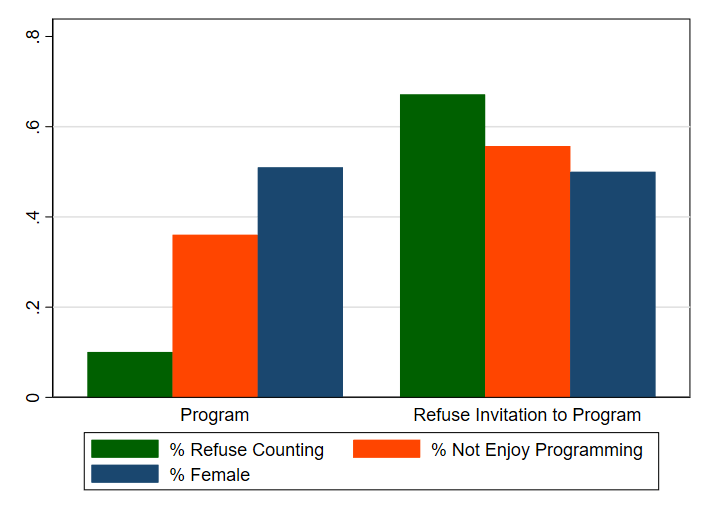
Fig. 5. Characteristics of subjects who do not ask for a follow-up invitation, pooling all treatments and sample

I’ll discuss the three features in this graph in what appear to be the order of importance for predicting whether someone wants to program. There was an enormous difference in the percent of people who were willing to return for an easy tedious task that I call Counting. By inviting all of these subjects to return to count at the same hourly rate as the programming job, I got a rough measure of their opportunity cost of time. Someone with a high opportunity cost of time is less likely to take me up on the programming job. This might seem very predictable, but this is a large part of the reason why more Americans are not going into tech.

Considering the first batch of 310 subjects, I have a very clean comparison between the programming reservation wage and the reservation wage for counting. People who do not enjoy programming require a higher payment to program than they do to return for the counting job. Self-reported enjoyment is a very significant factor. The orange bar in the graph shows that the majority of people who accepted the programming job say that they enjoy programming.

Lastly, the blue bar shows the percent of female subjects in each group. The gender split is nearly the same. As I show several ways in the paper, there is a surprising lack of a gender gap for incentivized decisions.

I hope that my experiment will inspire more work in this area. Experiments are neat because this is something that someone could try to replicate with a different group of subjects or with a change to the design. Interesting gaps could open up between subject types under new circumstances.

The topic of skill problems in the US represents something reasonably new for labor market and public policy discussions. It is difficult to think of a labor market issue where academic research or even research using standard academic techniques has played such a small role, where parties with a material interest in the outcomes have so dominated the discussion, where the quality of evidence and discussion has been so poor, and where the stakes are potentially so large.

Cappelli, PH, 2015. Skill gaps, skill shortages, and skill mismatches: evidence and arguments for the United States. ILR Rev. 68 (2), 251–290.

6 Tips for Taming Your Inner Spock

The younger, high school and undergrad version of me was not the best person. My sense of humor was too dark and I didn’t much care about the experience of other people. When I went to grad school, I was so excited. I would finally be around other economists and I would be able to drop all of the niceties, empty social signals, and fuzziness that I thought non-economists employed. And I was oh so very wrong.

It turned out that economists are also human beings and that no amount of self-congratulatory Spock-praising would stop that from being the case. Indeed, with some candid feedback, I became convinced that I was in desperate need of the kind of prosocial norms that could help me to better produce social capital. In other words, I needed to figure out how to get along. Below is some advice that I’ve found pivotal. Maybe you can share it with another person who might be well-served by reading it too.

Below are six norms that are good to employ in order to improve social cohesion, agreeableness, and, frankly, better mental health. And these aren’t just for economists. I suspect that there are plenty of people (maybe young men) who can benefit from what took me too long to learn. So here we go!

Continue reading

The Quotable Walter Russell Mead

I listen to a lot of podcasts, but many are forgettable, and even the good ones can be hard to share, since they get their point across slowly and gradually. But on the latest Conversations with Tyler, I found foreign policy thinker Walter Russell Mead to be eminently quotable. Some highlights:

On Germany:

Kennan’s goal for Germany was to have a united, neutral, disarmed Germany at the heart of Europe. In some ways, [laughs] Kennan’s goal looks, maybe, closer than ever.

China’s development plan, much more than its Taiwan policy or its human rights, is a gun pointed at the head of German business

On America:

Over the last 40 years, there’s been an enormous increase in the number of PhD grads engaged in the formation of American foreign policy. There’s also been an extraordinary decline in the effectiveness of American foreign policy. We really ought to take that to heart.

The American academy is actually a terrible place for coming to understand how world politics works.

One of the teachers at Groton used to take aside some of the boys — it was an all-boys school at the time — and explain to them how their family fortune was made. He might say, “Well, George, we’ve been reading a lot about war profiteers in World War I. You need to know that your grandfather . . .”

I think neoconservatism reflected a sense of people who’ve never been wrong and never been beaten, at least in their own minds

On the Middle East:

In the Arab world, the Middle East, Islamism, and jihad — just call it jihadi ideology more broadly — is seen to have failed. Like socialism, like Arab nationalism, it’s one more in a long list of failed ideological movements. Not that there still aren’t terrorists, or for that matter, Arab socialists, but it’s not the same.

Nobody really thought, in 2008, as George W. Bush left office, that you could possibly mess up the Middle East worse than the Bush administration. But President Obama proved that that was wrong and that you could actually take the Middle East at the end of 2008 and make it almost infinitely worse, both for American interests and for the safety and happiness of the people in the region

On Ukraine:

The message, actually the totality of the message that we sent to Putin [through the intelligence we released] is, “You are going to win if you do this”.

I read Mead’s book Special Providence in college and enjoyed it then, but have’t kept up with his work since. The book’s title comes from another great quote, this time attributed to Otto von Bismarck:

God has a special providence for fools, drunks and the United States of America.

“The central values of civilization are in danger”

The Mont Pelerin Society was founded 75 years ago. The title of this post was the opening sentence of the Statement of Aims the new Society agreed upon. They had many concerns about what they considered “central values,” but primary among those concerns were the dangers related to market economies: “a decline of belief in private property and the competitive market” and “the growth of theories which question the desirability of the rule of law.”

How has the world done since 1947? It’s easy to point to the decline of communism and socialism, both in practice and as a dominant theory, as a victory for the goals of the Mont Pelerin Society. However, we might be concerned that in the non-communist world, economic freedom has declined even as communism has failed. Let’s dig a little deeper.

One source we can use is an extension of the Fraser Institute’s Economic Freedom of the World index. The primary index only extends back to 1970, but recently Lawson and Murphy have constructed a version of the index which goes all the way back to 1950 for some countries. As far as I’m aware, they haven’t yet perfectly mapped the pre-1970 index with the primary index that extends to the present, but I’ll make a quick comparison using the available data. The 1950 data brings us very close to the date of the first MPS meeting.

Here’s a list of countries relevant to the discussion at MPS in 1947. The list includes countries where attendees came from, as well as other countries of interest to the discussion, such as China and Russia (I’m using the list from Caldwell’s recent edited transcripts of the 1947 meeting). Caveat: this isn’t a chain-linked index, so the 1950 and 2020 numbers are perfectly comparable. Also, the 2020 number only includes Areas 1-4 of the index, since that’s what the pre-1970 data contains.

The table above should give us some optimism about the state of market economies in the world from the perspective of 1947. Not only have China and Russia, clearly improved their economic freedom scores, but all of the Western market economies have as well. Again, exercise caution in interpreting these, since it’s not a chain-linked index, and it excludes one area of economic freedom (regulation, which surely has grown substantially since 1947). Despite those cautions, the picture in 2020 looks pretty good compared with 1950.

But what of other liberal institutions? While the MPS statement of aims doesn’t specifically mention democratic institutions, the threat to democracy seems to clearly be a concern in 1947 (“extensions of arbitrary power” and “freedom of thought and expression”).

Continue reading

Administration’s Drastic Drawdown of Strategic Petroleum Reserve Makes Us Vulnerable to Actual Oil Supply Shock

Although fracking technology has enabled renewed oil production in the U.S., the West remains heavily dependent on oil imports, especially from the Middle East. Even in the U.S., the current refining capacity is not well-matched to the type of light oil produced by fracking, so we still import oil (of types that our refineries can handle), although we also export fracked oil. Since oil remains the basis of so much economic activity, and since many oil exporting countries are unstable or even hostile to the U.S and our allies, the U.S. in 1975 established a large Strategic Petroleum Reserve (SPR) to store up crude oil. The storage is mainly in caverns in Texas and Louisiana, dissolved out of underground salt deposits. It was mainly filled in the Reagan/Bush administrations in the late 1970’s, and topped up under Bush II around 2003-2004.

The statutory purpose of this stockpile is to protect us and our allies against a “a significant reduction in supply which is of significant scope and duration,” per the Department of Energy. If such an event occurs, leading to high prices and associated economic impact, the President is authorized to release oil from the SPR. However,

In no case may the Reserve be drawn down…

 (A) in excess of an aggregate of 30,000,000 barrels with respect to each such shortage;

(B) for more than 60 days with respect to each such shortage;

Somehow various administrations and also Congress have circumvented these restrictions on draining the SPR, and over the years have sold off bits and pieces to raise money for government spending. However, the current administration has decimated the SPR, selling off a third of it (some 200 million barrels), mostly in the past six months:

Source: U.S. EIA

The administration projects this gusher to stop after November. Essentially all objective observers recognize this as primarily a political move, to reduce gasoline prices in order to curry favor with voters for the mid-term elections this November. It’s one thing to knock the price of gasoline down from $5.00/gallon back in the spring, when the world was panicked about Russia’s invasion of Ukraine, but to keep on selling into a moderated market is irresponsible. We haven’t had an actual shortfall in supply these past few months. Among other things, Russia keeps happily pumping and selling, out into the global grey market.

I won’t belabor the point here (stay tuned for more posts on this subject), but the world is structurally short of oil. With this administration having spent its first year demonizing oil and oil companies, the petroleum industry is understandably cautious about making expensive investments in future oil production. They know they will be stabbed in the back as soon as the current party in power no longer needs them.

By dumping this oil now, the administration is making the U.S. and the West more vulnerable later, if there is an actual global oil supply crisis (think: Iran vs. Saudi Arabia in the Persian Gulf…). Irritated by the lowish oil prices engendered by the SPR release, OPEC just announced production cuts which will drive prices right back up. They can cut production far longer than we can drain the SPR. If this all motivates further investment in low CO2 energy (including nuclear), that is perhaps a good thing. But between now, and attaining a carbon-free utopia in the future, we need to keep the crude flowing. Let us hope for the best here.

Energy analyst Robert Rapier writes:

Ultimately, drawing down the SPR was a political decision. Think about it. An administration that has frequently emphasized the importance of reducing carbon emissions is trying to increase oil supplies to bring down rising oil prices — which will in turn help keep demand (and carbon emissions) high.

But even though the Biden Administration wants to address rising carbon emissions, high gasoline prices cause incumbents to lose elections. So, they try to tame gasoline prices even though it contradicts one of their key objectives of reducing carbon emissions.

The SPR has now been depleted since President Biden took office from 640 million barrels to 450 million barrels…

President Biden’s gamble to deplete the SPR in order to fight high oil prices may not hurt him at all. Of course, if for some reason we had a true supply emergency and found ourselves needing that oil, it would be looked upon as a terrible decision.

Why are racists all the same?

If you were worried that we haven’t spent enough time and intellectual energy pondering terrible people, I give you this thought-provoking tweet from Zach Weinersmith:

There’s a million unsatisfying answers to the question “Why are terrible people terrible?”, but maybe we can get a little traction here from a few simple economic concepts. Why are racist people and groups so often racist in the same way? Why do we observe so little innovation in racism?

Let’s sketch a toy model.

The production of social goods (mutual support, friendship, community, etc) can be reductively modeled using labor inputs (human time and energy) and social technology. One very important strain of social technology is the amalgam of ideas, identities, and institutions that groups leverage when producing the mutual support systems and emotional goods that all but the most pathologically isolated of us depend on.

Ideas have the important property that they are unaffected by parallel use i.e. use comes at zero marginal cost. That means they offer the possibility of not just significant returns to scale, but in some contexts increasing returns to scale. In this case, the path to massive scale returns through social technology will come through network effects. Goods that are consumed within social networks, and where the value of the good being consumed is positively increasing with the number of other people who use ie (i.e. social media, media formats, etc), will often be characterized by critical mass thresholds beyond which use rapidly escalates as each marginal consumer increases the value of consumption, attracting more subsequent consumption.

Racist ideas as zero-marginal cost network social technology

Let’s model racism as a set of ideas that serve as social technology that serve to increase the output from labor inputs into the production social goods. Internalization of stupid racist ideas by one person does not diminish the stock of stupid racist ideas (they have zero marginal cost), but the output elasticity from that labor is actually increasing as more people contribute to the production of social goods using the same set of ideas. The network effects of production using zero-marginal cost racist ideas gives them a least some range of increasing returns to scale.

What’s the net of all this? There will be extremely powerful incentives to return to the oldest forms of racist ideology because the pre-existing body of believers grant significant scale advantages over newer racist ideologies. For both your everyday racist looking to enjoy the social goods of mutual admiration and support from your fellow bigots or the aspiring leader of a racist faction aiming to effect social change through the scale of your community of monomaniacal twits, the returns to scale to be enjoyed by leveraging a set of racist beliefs that have already achieved historical critical mass are too attractive to pass up.

The pre-existing body of zero marginal cost ideas, in this model, endows a tremendous amount of path dependence to the ideas being leveraged by communities seeking to produce social goods using the technology of racist ideas. The deck is stacked against innovation, which means we should expect endless regurgitation of the same racist bullshit.

Path dependence is a systemic property where the current state is heavily influenced by past events and states. Much of the “Guns, Germs, and Steel” model of the world is that the current state of things is heavily determined by past states (widespread animal domestication and husbandry in the Old World) and events (Europeans bringing germs from those animals to the new world) that can never be undone. In much the same way, I suspect we observe the same racist tropes over and over simply because the old tropes got there first and there’s no undoing the past.

Or maybe racists are all just stupid and lazy? Who knows, I can barely even tell most racists apart.

Postmodernism to Poastmodernism

Authors of the kinds of books I read present themselves as a voice of reason against our declining society that no longer can evaluate arguments or define moral principles. (I’m fun at parties.) “Postmodernism” has been attacked all my life.

For a while, I have been looking for a successor of postmodernism. To simply define our age as the one that came after modernism seems unsatisfactory. How many more decades can we coast along on this antithesis idea?

One reason I don’t like the term postmodernism is that it gives a sense of progress where we might be losing ground. If you aren’t modern, then you are pre-modern. If you aren’t a verbal culture, then you have regressed to pictographs. If you aren’t engaging arguments, then you have degenerated to tribalism. So, postmodern might be dressing up a decline with a word that is too respectable sounding.

Calling people who use smartphones premodern does not seem right. But, what information are they consuming on those screens? Is it mostly low-quality videos and quick poasts? That doesn’t seem like what someone in 1900 would expect of a modern person.

Here’s an idea for the new century. We are in an age of poastmodernism, beginning with the founding of Twitter. This is different from the kind of skepticism or moral relativism that defined postmodernism. The poasters and their followers can be earnest. They retweet like evangelists. (A “poast” is a message posted in an internet forum.)

Poasts are short. This does not allow for nuance or traditional rational forms of argumentation. A poast could be referencing a rich history or body of literature, but if this generation has not evaluated those original sources then they are really just getting the meme. The poast does not provide its own context. Tyler Cowen says that people who think “modern art” is absurd have no context. Context for modern art would be the classical art and realistic landscape paintings that came before. Most Americans including myself are pretty ignorant about classical art. Similarly, how much value would teenagers get from Lord of the Rings internet memes if they have never seen the movies or read the books?

I’m on Twitter. The pace of discourse is more fun than reading a 50-page econ journal article. I get the appeal of poasting. It’s easy. Our first pediatrician told us not to let our baby use touchscreen games. She told us that it is good for a child to struggle to touch a ball that is two feet away across the floor. Better that they cry over the ball than get the dopamine too easily on a tablet game. Tapping on a screen trains kids for instant rewards. Something that concerns me about a generation that was not raised on books is that they will actually enjoy poasting less than I do, because they will be used to the rapid pace of reward. Twitter as a company benefits from the current generation of people who did not grow up with Twitter.

Poasting affects politics. This week two US Senate candidates had a debate. What would someone who gets most of their news from social media learn about the debate? Some top poasts about the debate have almost zero positive policy substance. Campaigners use the internet medium to dunk on their opponents instead of offer solutions to problems. What attracts engagement is the fire emoji.

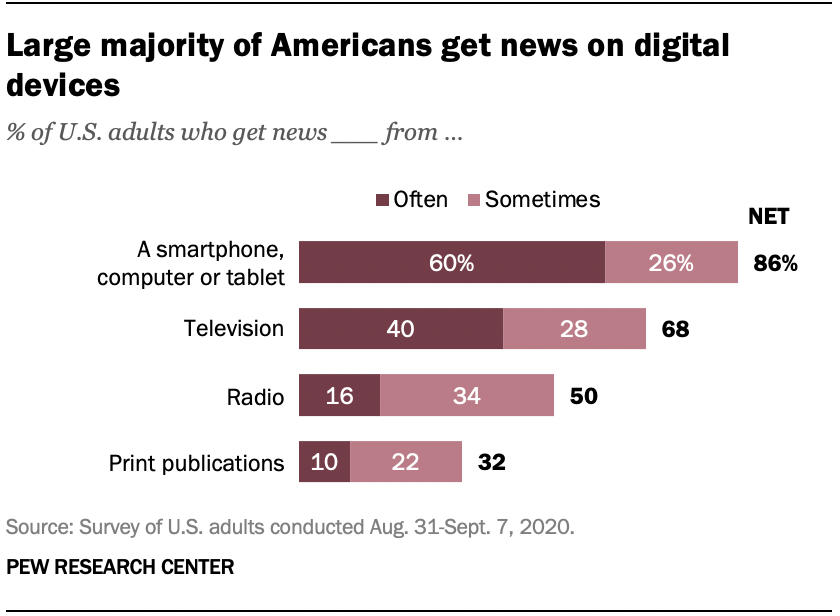
This is not meant as a comment on either men as candidates. I share these jabs because lots of Americans are consuming their “news” in this form (see Pew Research chart). In postmodernism a successful political candidate has to appeal to feelings as much as reason. In poastmodernism, they only have 280 characters to work with. (Donald Trump was a skilled poaster.)

Getting elected today might require great poasting, but that has little to do with being good at governing. Most people think the details of government are dull. Ten minutes into a city council meeting, I’m bored and ready to check the notifications on my phone. And yet, we cannot just poast about poasting. It’s the physical political world and the classic books that make the best subjects of conversation. So, I’m not sure if the era of poastmodernism will last for a long time, or simply to the end of my lifetime. Millennials are not going to give up the dog fire meme.

You’ll have to pry it from our hands after our large generation has passed on. But will it inspire people in the future? I have already been informed that teenagers are calling our gifs “cringe”. They seem to prefer 90 second videos of their peers dancing to pop music. Don’t ask me what comes next after that.

I’ll end on a positive note by saying that sometimes shorter is better. Get to the point quickly, if you can. Some of the novels produced in the modern era were too long. Adam Smith’s books would be more widely read if they were shorter. Long-winded speeches are not necessarily good and I’m glad I am not forced to listen to them. (I get the tl;dr the next day.)

A lot of bad ideas were dressed up in pages of smart-sounding language and then passed off for wisdom in the modern era. It might be harder to pull that off today. Authoritarian regimes in the past relied on being able to lie about conditions on the ground. Today, we know what is happening because of individuals on the ground sharing to Twitter (although social media can also be used for disinformation). American elites believed lies about what was going on inside the Soviet Union for years. That would be more difficult today.

Svante Pääbo: The Surprising Science behind Who We Are and How We Got Here

Its Nobel Prize season- the economics prize will be announced Monday, while most prizes are announced this week. My favorite so far is the Medicine prize being awarded to Svante Pääbo “for his discoveries concerning the genomes of extinct hominins and human evolution”. He figured out how to sequence DNA from Neanderthal remains despite the fact that they were 40,000 years old.

As recently as 2010 it was controversial to suggest that Neanderthals might have mixed with humans, until Pääbo’s DNA definitively settled the debate, showing that “Neanderthals and Homo sapiens interbred during their millennia of coexistence. In modern day humans with European or Asian descent, approximately 1-4% of the genome originates from the Neanderthals”

While the Neanderthal genome settled an existing controversy, Pääbo’s other big discovery came entirely unlooked for. The Nobel Foundation explains:

In 2008, a 40,000-year-old fragment from a finger bone was discovered in the Denisova cave in the southern part of Siberia. The bone contained exceptionally well-preserved DNA, which Pääbo’s team sequenced. The results caused a sensation: the DNA sequence was unique when compared to all known sequences from Neanderthals and present-day humans. Pääbo had discovered a previously unknown hominin, which was given the name Denisova. Comparisons with sequences from contemporary humans from different parts of the world showed that gene flow had also occurred between Denisova and Homo sapiens. This relationship was first seen in populations in Melanesia and other parts of South East Asia, where individuals carry up to 6% Denisova DNA.

Pääbo’s discoveries have generated new understanding of our evolutionary history. At the time when Homo sapiens migrated out of Africa, at least two extinct hominin populations inhabited Eurasia. Neanderthals lived in western Eurasia, whereas Denisovans populated the eastern parts of the continent. During the expansion of Homo sapiens outside Africa and their migration east, they not only encountered and interbred with Neanderthals, but also with Denisovans

The same techniques that enabled these discoveries have been applied much more widely throughout the field of Paleogenomics, which continues to rewrite what we thought we knew about history and pre-history. The field has been advancing so quickly over the last decade that its hard to keep up with it. I’ve found the best introduction to be David Reich’s Who We Are and How We Got Here, though again the field is moving so fast that a 2018 book is already a bit out of date. Razib Khan is always writing about the latest updates at Unsupervized Learning. If you haven’t kept up with this stuff since school, this post and diagram give a quick introduction to how much our understanding of human origins has recently changed: