Six ideas to reduce firearms deaths

Firearm deaths are a problem, both mass shootings and the broader class of gun violence. I am not open to the argument that mass shootings are per capita irrelevant given their low frequency relative to other deadly events. The reality is that mass shootings, particularly school shootings, are sufficiently frequent that they generate a predictable news cycle that culminates in the increasingly familiar despair over a political stalemate. We live in that despair and there is no denying it.

Firearms deaths cannot be dismissed as insignificant portions of the risk landscape. Firearms are the leading cause of death in the United States before the age of 18, outpacing traffic accidents and cancer. Yes, they fall to third place if we exclude teenagers. Yes, that is in part because of the progress we’ve made on traffic safety and cancer. Fine. Great job all around. None of that reduces the salience of firearms if we are trying to reduce child mortality.

I’ve written about firearms restrictions and mass shootings before and I am sufficiently pessimistic that I expect to write about it again. There was another mass shooting at a children’s school in Nashville. I admit I am sad and angry. I am trying to not be despondent. A nine-year old girl lost her life trying to pull a fire alarm to save her classmates. Her bravery shames me away from despondence. It should be shaming a lot more people, if I am being honest.

I am, however, also on the record that the stalemate of US firearms policy is an…ahem…
So what can be done? While “do nothing” is in fact often the optimal policy, I don’t believe that is the case with regard to firearms. Let’s talk some options through, both in terms of potential efficacy and political feasibility, all framed within the broader objective of reducing the supply and demand for killing capacity.

1. Ban aftermarket firearm modification of any sort, including cosmetic changes

End the toyification of firearms. If you believe that firearms are tools, great, but the firearm market would seem to disagree with you. We banned flavored tobacco products to keep then away from kids. Let’s ban the toyification of firearms to make them less appealing to idiots.

A firearm should provide you no more identity-signally consumption than owning a pick axe. It’s a tool. Treat it as one. Any modification should destroy it’s resale value and carry risk of misdemeanor punishment if observed in public (i.e. a gun range or hunting). Guns should be as plain as a shovel. I’m already judging you for owning this death toy. Owning it in school colors, or with a punisher logo, or in don’t you just love it purple? Congrats, now I’m even more sure I’m absolutely right and you should be banned from owning anything deadlier than a toaster oven.

I’ll be honest that I am speaking more anecdotally from personal interactions with enthusiastic assault weapon owners, but a big part of the appeal is no different from owning a 400 horsepower sports car or giant truck. Assault weapons ownership makes them feel powerful and cool in a way that a standard 12 gauge shotgun wouldn’t.

While I know the NRA will, by dint of their own pure policy of universal opposition, resist limits on firearms modification, the legal merits of opposing bans on after-market firearms modification would be considerably weaker. Firearms manufacturers, on the other hand, would earn better margins on weapons forcibly more uniform in design. Further, the returns to scale would favor larger incumbent firms, hopefully weakening lobbying resistance.

2. Tax ammunition, scale it with killing power

The tax on bullets should be onerous. The tax on ammunitaton with higher killing power (e.g. hollow points), armor piercing capability, or explosiveness should be so burdensome that the scale of acquisition should be trackable in a national database. It’s not just about reducing the amount of ammunition floating around society, but rendering large scale acquisition trackable.

I don’t know if this is politically feasible. A baseline tax on all ammunitition would be resisted feverishly, but focusing on deadlier ammunitition might create a window of feasibility.

The vegas shooter fired over 1000 rounds into a crowd, wounding and killing a total of 473 people. He had fourteen AR-15s, some of which had 100 round magazines and bump stocks to facilitate the fastest and most efficient means to commit as many murders as possible. Is it a perfect world if a $35 tax on top of the current $15 box of 20 rounds limited him to 500 rounds? No, but there are at least 10 more people alive today. And in the current landscape of firearm violence in the United States, I’ll take any marginal gain I can get.

3. Hold people responsible for crimes committed with their guns

Not just parents, either, but that’s a good start. I was given a rifle by my parents when I was 16. If I committed a crime with it, they should have been held responsible. Same should go for all weapons. If you can’t lock your guns securely, you shouldn’t own them. Firearms manufacturers absolutely have the ability to biometrically lock them. They don’t because it isn’t required. Legal liability would increase demand for exactly this ability. Biometric locks mean fewer accidents, gun thefts, and would reduce the broader supply of guns as people would be far more likely to have older weapons destroyed.

Now, I know some would argue that legal liability is a back-door tax on firearms. Here’s my counter-argument: yes, it absolutely is a tax, but if responsibility for your firearms is a tax you can’t afford, then you can’t afford a firearm. That’s called being an adult.

4. Absolute ban on names and images of perpertrators unless they are at large.

You will not become famous. There will not be a Netflix series about you. Your identity will be scattered to the wind long before it could even be resigned to the dustbin of history. Is this politically feasible? I think so. Sure, podcasts and tweets about shooters will still inevitably pop up still, but anything that lowers the historical status of shooters, the better. Broad regulation of when to name shooters seems low risk, high benefit.

5. End No-knock raids

People will own fewer guns if they feel safer in their homes, which means at the very least fewer firearms accidents. Reaffirming 4th Amendment rights would go a long way towards reducing citizen’s desperate need to express their 2nd Amendment rights. Ending all no-knock raids is more than politically feasible, I would go so far as to say it is potential political winner, though I’ll concede there will resistance from police unions.

6. Ban assault weapons

Let’s close with most discussed policy solution, an outright ban based centered around power and kill capacity. Banning a good with high demand is always difficult, just ask the war on drugs. If we’re going to try to ban assault rifles, we need to go in with our eyes open. Assault weapons are by and large consumption goods, if not outright toys, and in case you can’t hear the derision in my tone let me be clear I am absolutely judging you for owning one. They have zero value for hunting: a .556 round from an AR-15 will destroy your quarry. Better hunting option: anything firing .45-70 caliber ammunition. An assault rifle has negative value for defending your family at home. The through-wall collateral damage leaves you as likely to harm your family as any intruder. Better home defense option: any 12 gauge shotgun. An assault rifle is not a bulwark against tyranny any more than a samurai sword would have been living in a rural town in the Jim Crow South. We all need to accept that we are woefully outmatched in terms of physical and human capital in a confrontation on the local monopsolist on violence. Better option: join a peaceful political action organization. Join a major political party. Hell, join a local religious group. Resistance against tyranny is about numbers, not the stopping power of the weapon you or your drinking buddies are holding.

There is absolutely no more reason for civilians to own high power, high capacity assault rifles than there is for them to own anti-aircraft guns or weapons grade plutonium. It’s a disaster and it’s stupid. So why are we stuck here? Short answer: gerrymandering and lobbying. How do we get out? High shame campaign. Aggressive, unrelenting politics of shaming. No quarter taken, none given. Ads. With. The. Victims. It will be awful, I will cry. You will cry. It’s the only way. Why can 18 year olds vote? The Vietnam draft shamed us into giving draftees the right to vote before we sent them to die. Shame works when it is this pointed and undeniable. And there is no denying our shame.

Adam Smith in Taylor Swift

See my latest post for Adam Smith Works.

TAYLOR SWIFT’S ANTI-HERO AS A SMITHIAN ANTHEM

The song “Anti-Hero” by Taylor Swift was the number-one song on charts in the United States and globally when it was released in October of 2022. Based on the record-breaking and continued popularity of the song, Swift’s struggles with self-loathing resonates with us. 

 It’s me, hi, I’m the problem, it’s me
 At tea time, everybody agrees

The theme of the song is that Swift feels like a moral monster who is exposed to the watching eyes of society. She imagines proper people gossiping about her flaws at teatime. This reference to British tea culture makes a perfect segue to the moral philosophy of Adam Smith. Those who only think of Smith as an early observer of modern economies might be surprised, but regular readers of AdamSmithWorks won’t be. 

The impartial spectator is a key concept in Smith’s theory…

At the end I even quote the song “Shake it Off.”

Fed Priority #1: Financial System Stability

The Fed was founded after a spat of banking crises.

We know that the Federal Reserve also has the goals of full employment and steady, moderate inflation. Since the 1990s, that’s meant 2%. But it’s a relatively recent addition to the Fed’s policy goals. The primary purpose was initially and always has been financial system stability.


In 2008, the Fed demonstrated that it’s willing to attain financial stability at the cost of employment. After and during the financial crisis, the Fed purchased mortgage backed securities (MBS) from private banks at a time when their value was highly uncertain (and discounted). The purpose was to replace these assets of uncertain value with less risky assets. At the time, there was resentment that these security holders were insulated from losses while the homeowners whose loans composed the MBS did not get comparable relief. I remember arguing that the Fed, with the cooperation of congress, could have just paid part of the mortgages on behalf of the homeowners such that there were fewer foreclosures and fewer personal bankruptcies. That way, both the borrowers wouldn’t default and the debt holders would enjoy stable returns.


But, the primary goal of the Fed is financial system stability. Pre-financial crisis, banks had loaded-up on securities of uncertain value with the help of regulatory arbitrage and some lending shenanigans. The Fed needed to avoid the ensuing catastrophe that was a consequence of the greater-than-anticipated realized risk. Importantly, catastrophe to the Fed is financial-sector specific. Markets losing liquidity, bank-runs, and financial sector business failures all qualify as the stuff of concern (all of which occurred). While making mortgage payments for specific mortgages would have been popular amongst many debtors, it also would have taken much more time to implement. The Fed wanted to avoid more financial instability than had already occurred. And frankly, the Fed’s first priority isn’t to take care of the public. Given the alternative between a slow popular option and a quick adequate option, the Fed has demonstrated an inclination toward the latter.

Continue reading

Is Equity Crowdfunding Beating Adverse Selection?

Most new businesses are funded with a combination of debt and the owners’ savings; equity funding has traditionally been relatively rare:

Source: Kauffman Foundation

Partly this has been a regulatory issue. Raising equity adds all sorts of legal burdens. Traditionally businesses could only accept equity investments from accredited investors and a small number of friends and family unless they did a full IPO and became public (hard enough that there are less that 5000 public companies in the US out of millions of businesses). This changed with the JOBS Act of 2012, which allowed small businesses to raise money from large numbers of non-accredited investors without having to register with the SEC.

Following the JOBS Act, equity crowdfunding sites like WeFunder emerged to match new businesses with potential investors. But equity crowdfunding has taken off relatively slowly:

Total dollar amount raised by regulated CF crowdfunding campaigns. Source: FAU Equity Crowdfunding Tracker

Its seen more success recently with some additional regulatory relief and the overall market boom of 2020-2021. But at ~$400 million/yr, its still well under 1% of all venture investment (~$300 billon/yr), which is itself tiny relative to the public stock market ($40 trillion market cap).

Why has equity crowdfunding been slow to take off? Partly its new and most people still don’t know about it. Partly early-stage companies aren’t a good way for most people to invest a significant fraction of their money; you probably want to be at least close to accredited investor levels (~$300k/yr income or $1 million liquid wealth) for it to make sense, and those at the accredited investor level already have other options. WeFunder is up front about the risks:

The other issue here is with asymmetric information and adverse selection. Its hard to find out much information about early-stage companies to know if they are a good investment; part of the point of the JOBS Act is that the companies don’t need to tell you much. The companies themselves have a better idea of how well they are doing, and the best ones might not bother with equity crowdfunding; they could probably raise more money with less hassle by going to venture funds or accredited angel investors.

I’ve long thought this adverse selection would be the killer issue, but my impression (not particularly well-informed and definitely not investment advice) is that there are now quality companies raising money this way, or at least companies that could easily raise money elsewhere. WeFunder has a whole page of Y-Combinator-backed companies raising money there. This week Substack, an established company that has already raised lots of venture funding, offered crowd equity and reached the $5 million limit of how much they could legally accept in a single day.

Overall I think this model is working well enough that I’m no longer in a hurry to become an accredited investor. Accredited investors have many more options for companies they can invest in and aren’t subject to the $2,200/yr limit on how much they can invest in early-stage companies. But even if I completed the backdoor process of getting accredited without being rich, I wouldn’t want to put more than $2,200/yr into early-stage companies until I was a millionaire, at which point I’d be accredited the usual way. And while most companies aren’t raising crowd equity, enough are that there seem to me to be no shortage of choices.

The Leading Causes of Death Among Elementary-Age Children

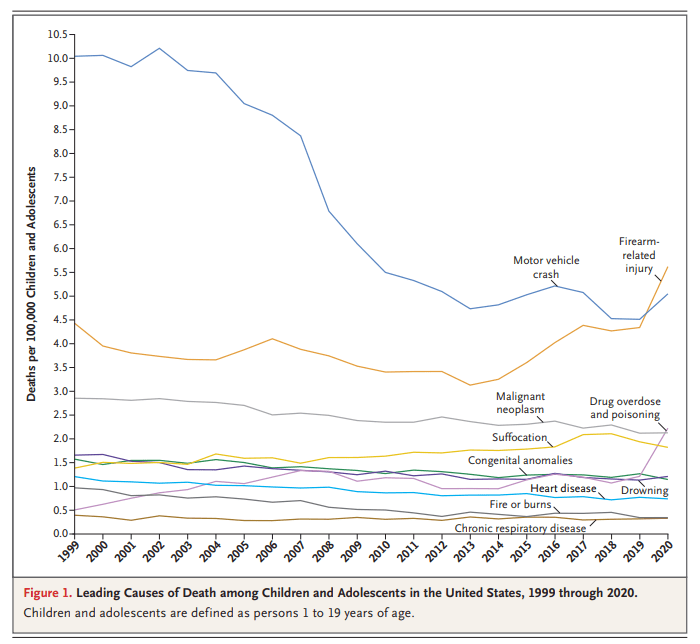
You might have seen this chart recently. It comes from a letter published in the New England Journal of Medicine in April 2022. The data comes directly from the CDC. It shows the leading causes of death for children in the US. You will notice that firearm-related deaths have been rising for much of the past decade, and in 2020 eclipsed car accidents as the leading cause.

Many are sharing this chart in response to the recent elementary school shooting in Nashville. It’s natural to want to study these problems more in the wake of tragedies. After the Uvalde shooting last year, I tried to read as much as I could about the history of homicide and gun violence in the US, and to look at the research on what might work to reduce gun violence, which is summarized in a post I wrote last June.

That being said, I don’t think the chart above accurately characterizes the problem of elementary school shootings. It might accurately describe some broader problem, but it’s misleading with respect to the shooting we all just witnessed. The most important reason is that the definition of “children” here extends to 18- and 19-year-olds. Much of the gun-related homicides for “children” shown here are gang-related violence, not random school shootings at elementary schools. It’s not that we shouldn’t care about these deaths too — we very much should care — but the causes and solutions are entirely different from elementary school mass shootings.

Continue reading

Banking Crises: Are We Done Yet?

It has been a tumultuous several weeks in the world of finance. Just when “soft landing” (i.e., the notion that Fed rate hikes would tame inflation without causing a nasty recession) was the meme, a string of banks went belly-up. We summarized the history and status of this dismal parade of corpses a week ago.

On Friday, Germany’s Deutsche Bank (DB) was added to the list of endangered financial species. Its share price plunged as the cost of insuring its credit swaps soared, a sign of lack of confidence in DB among other financial parties. As best I can discern, however, DB is a relatively poorly-managed bank, but not one teetering on insolvency like Credit Suisse or the smaller American banks that have collapsed.

Silicon Valley Bank Getting Sold Off, Finally

On this side of the pond, the big news is that Silicon Valley Bank (SVB), whose spectacular implosion was really what brought “crisis” to banking, will be taken over by another regional bank, First Citizens Bank of North Carolina.  The first attempt to auction off SVB was a fizzle, so the feds tried again. They really, really wanted to get this kind of full takeover deal done (rather than breaking up SVB and selling off bits piecemeal), so First Citizens was able to drive a juicy bargain. First Citizens was a fairly modest-sized bank, about half the size of SVB at the end of last year. First Citizens will get SVB assets of $110 billion, deposits of $56 billion and loans of $72 billion, and will start operating the SVB branch offices again.    They will pay only $55 billion for the nominal $72 billion in loans that SVB had made, a 29% mark-down. The cost to the FDIC for this deal is about $20 billion. (I don’t know how First Citizens is paying for this acquisition). First Citizens stock skyrocketed on this news, so the market sees this as a sweet deal for First Citizens.

Going forward, the FIDC has pledged to share any losses (or gains) on those loans in the future, which offers further protection to First Citizens. FDIC gets shares of First Citizens valued up to $500 million. First Citizens decided not to take an additional $90 billion in securities that the FDIC will now have to sell on its own. These are likely the long-term bonds which sunk SVB when their value cratered with rising interest rates this past year. I’m not sure how much further losses the FDIC will bear on these bonds.

Anyway, so far, so good, kind of; it is sobering to note that this $20 billion cost to the FDIC just chewed up 1/6 of its total $128 billion kitty for backstopping all qualifying deposits at all banks in America. So we can’t readily afford too many more meltdowns of this magnitude.

Bank Deposits Continue to Flee, But Slower

A worrisome trend in the past month or so has been for depositors to pull their funds from bank checking/savings accounts, and stash their money instead in higher yielding money market funds or CDs or Treasury bills. Banks have borrowed records amounts from the Fed in recent weeks, in order to have lots of cash on hand if they have to pay off departing clients. And within the banking system, about half a trillion dollars has been moved from smaller regional banks to large banks.

I can’t find the reference now, but in the past two days I read an article stating that rate of deposit withdrawals is slowing down, and will likely not of itself destabilize the system. I’m going with that narrative, for now.

An indirect fallout from all this bank turmoil is the reduced inclination of banks to extend loans to businesses. This will make for a slowdown in economic activity, which should cool off inflation – -which is exactly what Jay Powell was hoping would be the outcome of the Fed rate hikes.

John Wick 4 is in theatres because of a market failure

The market for the assassination of John Wick has absolutely failed, at least through three films. Lots of people want him dead. They keep sending people to kill him. Those people keep getting killed. Why?

John Wick 4 is in theatres now, I enjoyed it thoroughly, this discussion will have no spoilers. The question I want to ask is: how is this character still alive to inhabit a fourth film? Is he immortal? Some sort of demon or demi-god? No.

John Wick survived three films because the market for assassination is run by a oligopsonistic cartel (“The High Table”) with extreme price-setting power. And that cartel is simply not willing to pay the necessary price. John Wick lives because the High Table is a bunch of penny-pinching cheapskates.

Point of fact: trying to kill John Wick is dangerous. Everyone who tries to dies. Through the first three films he has killed 114 people. If you want someone to take on a dangerous job, you have to pay them accordingly. In economics we refer to this as compensating wage differentials. Killing John Wick is more than just dangerous, however. It’s also a tournament. It’s an open contract and only one person, the successful assassin, receives payment. So you, the would-be assassin who is considering entering this market, has to consider both the probability of success and the probability of your own death. The two are, of course, also inextricably related. So how much do you value your own life?

The value of statistical life in 2016 was somewhere around $9.6 million dollars. Updating that into 2023 dollars based on nothing but inflation pushes us to about $12 million. If we are to assume that the 115th person actually is successful in their task (which is a pretty heroic assumption considering the low probability that John Wick dies in the first 5 minutes of a nearly 3 hour 4th film), the you should expect that a less than 1% chance of success and that in your failure you will also lose your life. The appropriate compensating wage differentials should in turn be in the neighborhood of $1.38 billion.

That’s just the additional compensation on top of the standard wages that clear the market for individuals with the kind of skill set and, ahem, demeanor necessary to enter the high end assassin labor market. The market clearing price in question is likely closer to $1.5 billion. By the end of John Wick 3, the bounty on his head reaches a paltry $14 million, which is tells you all you need to know about the High Table. They just don’t get the economics of the situation they are in. You can’t treat killing John Wick like a standard labor market transaction for the same reason you can’t pay uniform wages for cleaning windows. Sometimes you need the first floor cleaned. Sometimes the 80th floor. Sometimes the inside of the windows. Sometimes the outside.

John Wick 4 is in theaters because The High Table ignored the first rule of economics. You get what you pay for.

Discrepancy in Views about Music Pirating

It’s unusual for the expert opinions on an issue to range all the way from zero to 100%.

Economists using an instrumental variable approach found that digital piracy did not hurt record sales in the 2000’s. Hammond (2014) found, incredibly, that file-sharing increased record sales. The picture above is of an article critiquing the Oberholzer-Gee and Strumpf (2007) conclusion that was published by a top journal.

Liebowitz reports that music industry professionals believed that digital piracy was the primary or complete cause of the decline of record sales. One would think that industry insiders have accurate data on the problem and a decent mental model relating the variables together.

The estimated effect of music file-sharing ranged from helping music sales to completely eliminating them. Where else can we find so much disagreement on the answer to a narrow empirical question?

Deaf Census Speculations

Between 1850 and 1910, most US censuses asked whether an individual was deaf. There were four alternative descriptions among the combinations of deafness and dumbness. Seems straightforward enough. The problem is that these aren’t discrete categories, they’re continuous. That is, one’s ability to hear can be zero, very good, bad, or just middling. What constitutes the threshold for deafness? In practice, it was the discretion of the enumerator. Understandably, there was a lot of variation in judgement from one enumerator to another. A lot of older people were categorized as deaf, even if they had some hearing loss.

Continue reading

Why are desktop computers so cheap?

I recently bought a used desktop computer for what seemed like next to nothing. $240 for a machine more powerful than my much-more-expensive 2019 MacBook Pro, most notably due to its 32GB of RAM. Desktops have always been cheaper than equivalently powerful laptops, Windows computers cheaper than Macs, and used computers cheaper than new, so this isn’t totally shocking. But the extent of the difference still surprised me. For instance, buying a new desktop from Dell with similar specs to the used one I just got would cost $1399.

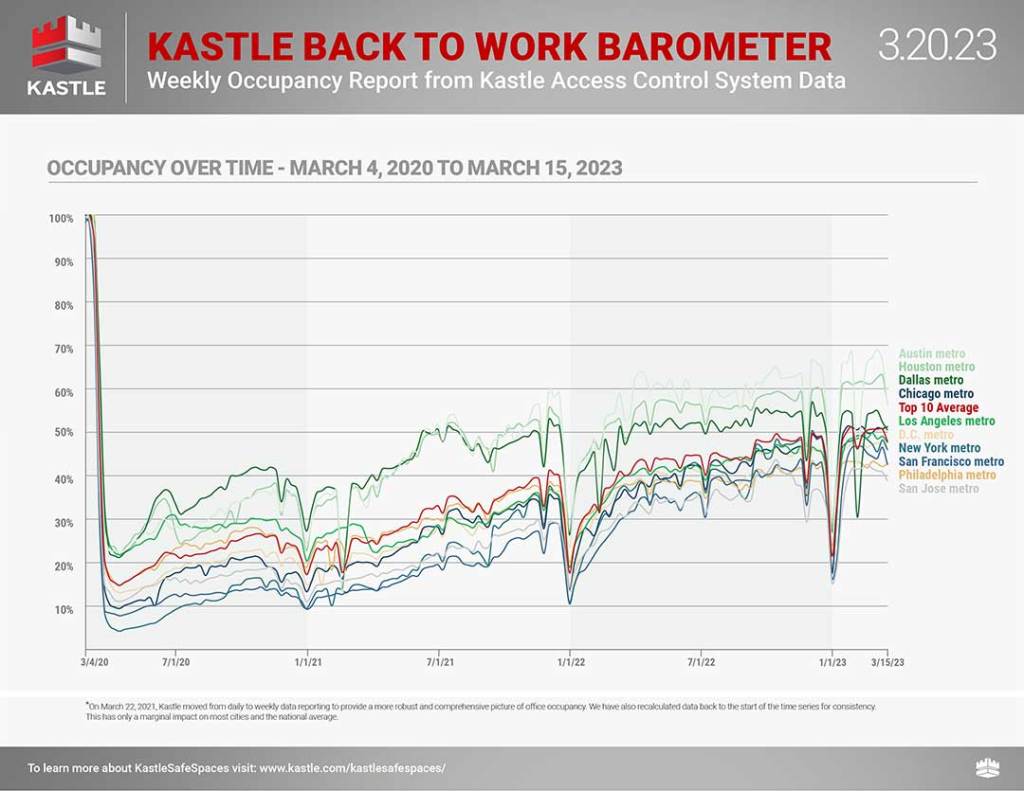
So why is the used discount so big right now? My guess is that its one more knock-on effect of work-from-home. Remote work has been the most persistent change from Covid, and there’s been a huge decline in the demand for office space, with occupancy rates still half of pre-Covid levels.

This means that offices are on sale relative to their pre-Covid prices. Office REITs are down 37% over the past year even after the Covid-induced drop of the previous two years. So it makes sense that all sorts of office equipment is on sale too. Offices tend to be full of employer-owned desktop computers, but when employees work from home they typically use their own machine or a company laptop. That means less demand for office desktops going forward, and a big overhang of existing office desktops that are being under-used. Employers realizing this may just sell them off cheap. Several things about the refurbished desktop I bought, such as its Windows Pro software, indicate that it used to be in an office.