EWVED could be our new name. Americans worked so hard to develop a vaccine (here’s Jeremy’s ode to development) and now we are seeing the distribution become painfully slow.
Weblogs
How Bayesians Read a Think Piece
How likely is it that an opinion critical of [topic] will get expressed by someone on the internet?
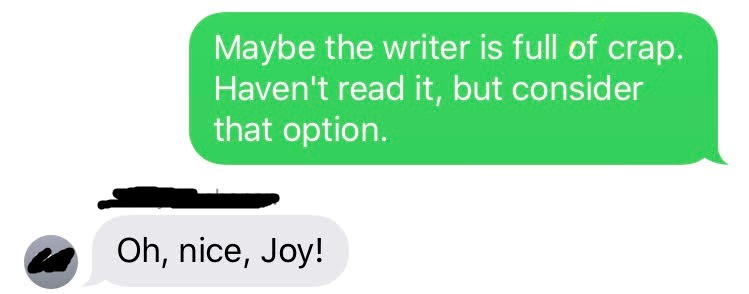
My good friend (call her Anne) texted me this week. Anne sent me a link to a blog that declared some of her preferred works of art (i.e. musicals) to be inferior. She loves art, so to be told that her tastes were not exceptionally good was disappointing.
In my reply I wanted to make sure that Anne wasn’t putting too much weight on this new evidence:
How should we incorporate blogs into our beliefs about reality? (I see the irony – I’m writing a blog right now.)
The non-technical summary: you should be skeptical of what you read online.
The technical summary: the fact that some writer said “H” on the internet, should make you only slightly more confident that “H” is true.
I can’t improve on the Wikipedia presentation of Bayes’ theorem, so I’ll just paste in:
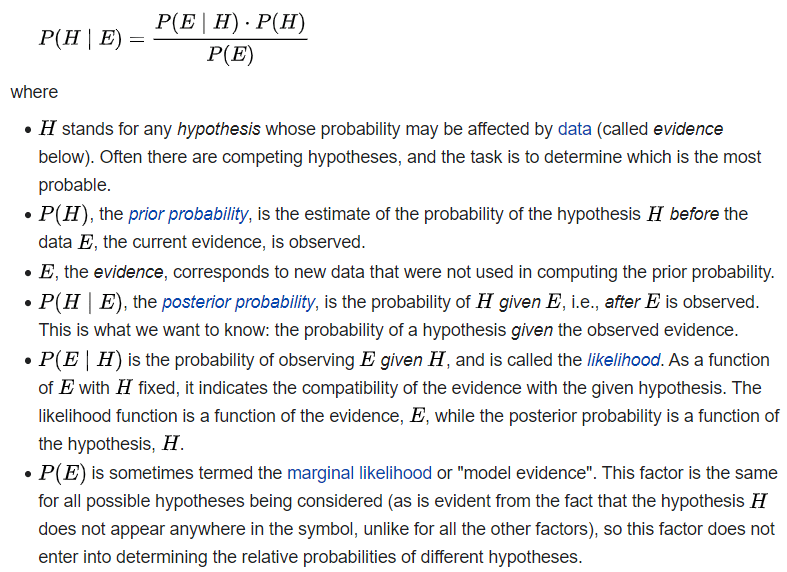
Let’s consider the probability that it is true that Anne’s favorite musical is bad. We’ll call that hypothesis “H”. What’s the probability of H, given that one person wrote an article stating that the musical is bad?
The evidence, E, is the article.
Instead of just evaluating whether the article is convincing or not, Bayesian inference requires that we consider
- Were we confident that H was true BEFORE seeing the article? Was there good data up until this point that convinced us H is true?
- If H is true, what’s the probability of this article being written?
- What’s the overall probability of this article being written, regardless of whether H is true?
The probability that musical is bad given that someone wrote an article saying so is :
P(H|E) = P(bad|article)
P(bad|article) = ( P(article|bad) x P(bad) )/ P(article)
The right side of the equation asks whether we are likely to see the article if the musical is bad. If the musical is actually bad, then we are likely to see it condemned in print. HOWEVER, if we had a prior belief that the musical is not bad, then the numerator gets smaller.
Finally, we consider the denominator, P(E) or the probability of seeing an article that is derogatory towards the musical. If that probability is high, then the probability of the musical actually being bad goes down.
Here’s how Anne should think:
P(bad|article) = ( likely that article will be written if bad x prior evidence suggests not bad) / snobby think pieces get written regardless
so
P(bad|article) = (big x small)/ big = small probability that Anne’s favorite musical is actually bad
You should be just the right amount of skeptical when it comes to internet content. Be Bayesian.
Only Real Quotes
I’m going to occasionally make cartoons of actual things that people have said. The real world can be very entertaining. I was a graduate student at George Mason University, so I got to take a class from Bryan Caplan.
He broke up his 3-hour lectures with Caplan-jokes. I only remember one. Maybe it stuck with me because of the funny voices. He was talking about happiness and consumption in the context of microeconomics. He impersonated a German philosopher debating a British philosopher.

This is an idea Bryan explores in a recent blog.
Do people do what makes them happy? What do we make, as economists, of people who claim that they want to write a novel but never do? If someone claims to prefer sad songs, can we really call them sad songs?
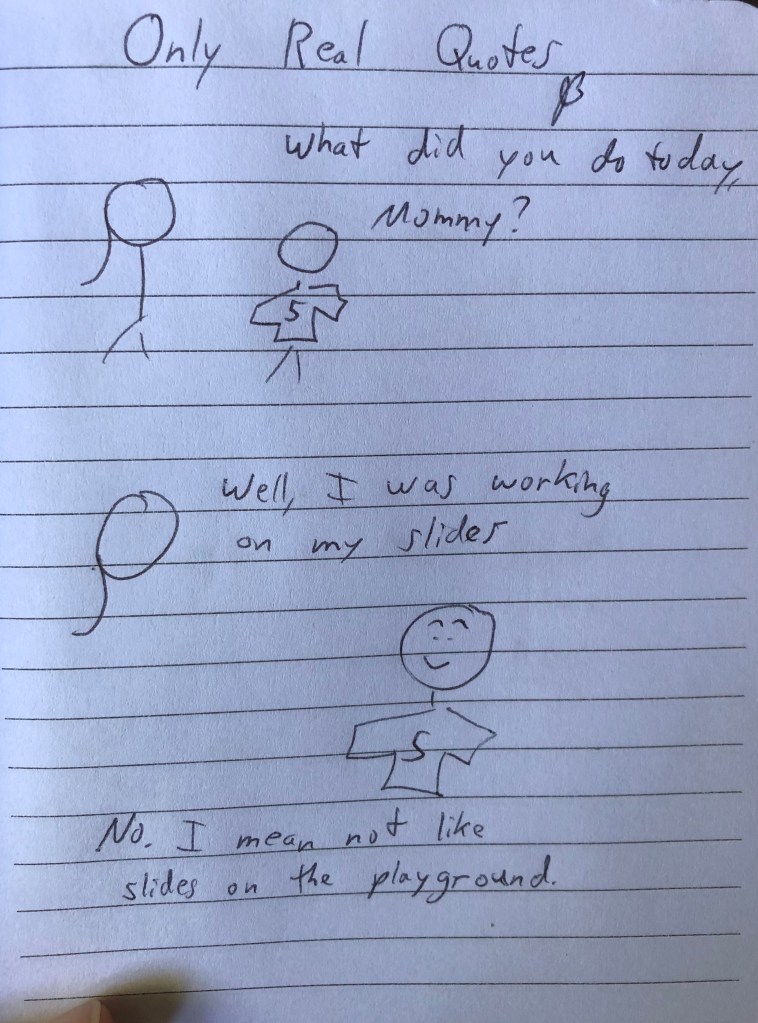
Next, here’s one from me and my son. I put his age on his cartoon shirt. I always ask him about the details of his day while I was away at work. He’s old enough to understand a little bit about how I spend my time, but sometimes I don’t get it right when I attempt two-way communication.
Can I Borrow Your Reference Point?
That is the title of a blog I wrote for a new publication Works in Progress.
I summarize an article I published in 2020 and relate it to the current polarized political environment, which is not an extension I made as explicitly in the article.
We often talk of a moral obligation to sympathize with others and “walk a mile in his/her shoes”. We do not often “walk a mile” in the shoes of our neighbors just to be nice, and we can’t even do it for money. In a lab experiment, I put people in an environment where they could earn money for accurately guessing what others did. I found that people tend to transfer their own reference point on to other people, which causes them to make bad predictions.
There is more at the blog. I end with a conclusion that some might say is too optimistic or too generous to the opposing side:
If people of opposing political persuasions spent more time learning each other’s life stories, then we would end up with a less toxic climate.
Yglesias ‘One Billion Americans’ CWT podcast
I have been looking forward to this podcast. It dropped today. I was too busy “at work” (I work from home on Wednesdays) to listen. Then in the evening I wanted to tell my kids that I could not sing “Wheels on the Bus” another time for them because I had a podcast I really wanted to listen to. Of course that doesn’t really work with a toddler. The upshot is that I’ve only listened to half of it.
Here’s a quote that I thought was interesting
There could be a lot of benefits to that. I went to Ireland. It was the last international trip I took. It’s a beautiful country, very successful in a lot of ways, but obviously, a really empty country. If you’re working on a book about a billion Americans while going across from Dublin to Galway, I could not help but be struck. It’s like, “Where is everybody here? Couldn’t we do more?”
Matt Yglasias
One of the interesting questions when you think about packing more people into prosperous countries is why must we focus on making congested cities larger. There really is a lot of land around.
I know of “blighted” neighborhoods near me that already have streets and ample parking and just everything that you could want except rich neighbors. The shrinking cities in cold places seem like the ideal candidates for where more people could go.
I haven’t read Matt’s new book. I do not endorse it, since I don’t know what is in it. However, I like the fact that he has a vision, and I’m excited to read it.

