Is satisfactory healthcare (currently) unattainable?

There is a broad consensus that healthcare in the United States is suboptimal. Why it is suboptimal is, of course, a subject of much debate, but that’s not what I am curious about at the moment. When people argue against the merits of the status quo, the superior systems of western Europe, Canada, the UK, and (occasionally) Singapore are mentioned. But if you look at most of those countries, the rate of satisfaction is, by the standards of most goods we consume, quite poor. In the survey reported below, 30% of US consumers are satisfied with their healthcare, compared to 46% of Canadians. The high water mark of “non-city states whose data I actually believe” is Belgium at a whopping 54%, and this is a survey conducted before the Covid-19 pandemic!
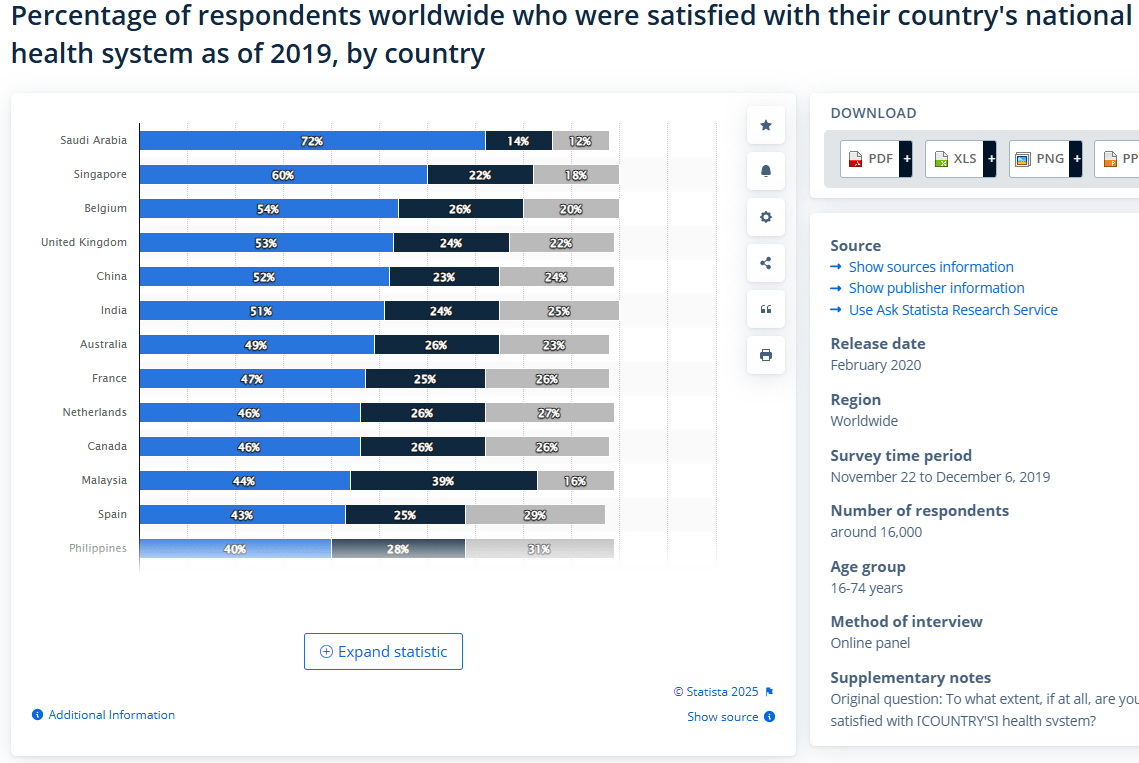
So while I have no doubt that improvements can be made in any system, there’s perhaps an under-discussed obstacle that may be unavoidable in any democracy: there is no stable political equilibrium because voters will never be happy with the status quo.

Here’s my simply reasoning.

  1. The wealthier we get, the more expensive healthcare will get. Healthcare is example 1A of Baumol’s curse in the modern world. No matter how much our economies grow, the cost of labor will grow commensurately, meaning healthcare will keep getting more expensive until we find a significant capital substitute for labor. (This is not a cue for AI optimists to chime in, but yes, I get it. We’ve been waiting for a “doc in a box” for a long time, and if the speed with which I got a Waymo is any indicator, we’ve got a ways to go before Docmo get’s real traction.)
  2. The wealthier we get, the more we value our lives. With that greater valuing comes greater risk aversion, and a greater willingness to pour resources into healthcare. If the labor supply of sufficiently talented and trained doctors can’t keep up, then wealth inequality is going to have a lot to say about how access to healthcare quality is distributed. Yes, there are positive spillovers as wealthiest individuals dump resources into healthcare, but are those spillovers enough to overcome envy?
  3. Citizens in wealthy countries are deep, deep into diminishing returns on healthcare expensitures. Combine that with growing risk aversion, and you’re got yourselves something of a resource trap, where you’re chasing a riskless, decision-perfect, healthcare experience that you can’t afford and likely doesn’t even exist.
  4. Fully socialized medicine a la the UK is of course an option, but the perils of connecting your entire healthcare system to the vicissitudes of politics is something being keenly felt since Brexit. Put bluntly, I always struggle with the idea of making healthcare wholly dependent on voters who will happily vote for anything so long as it doesn’t increase their taxes…

If economic growth allows for greater health, but that greater health itself pushes your baseline expectations for health farther out, then you’re on something akin to a hedonic treadmill— one where cost disease keeps increasing the incline. If the world getting better means that increased demand for healthcare will always outstrip increases in our ability to supply it, that it will always be too expensive and overly distributed to those wealthier than us, and if and when we do socialize healthcare voter demands will, again, outstrip their willingness to be taxed for it…I don’t see a clear path to satisfied consumers.

Maybe this is just me projecting, but I don’t have a hard time imagining that I’d be complaining about the quality of health care I’m receiving no matter what country I lived in, though I’d be willing to try out “Billionare in Singapore” if anyone wants to support a one household experiment.

WSJ Guidance on Rate Cuts

With the government back open and a little more official data coming out, the WSJ reports a picture of the typical Fed dilemma ahead:

Hiring Defied Expectations in September, With 119,000 New Jobs

The latest data will likely do little to resolve the debate at the Federal Reserve, where some policymakers, wary of inflation, want to leave rates on hold, while others are pushing for a rate cut in December as insurance against a labor market deterioration.

Hawks can point to the bump up in job growth as a reason to postpone any further easing, while doves can focus on rise in the unemployment rate, as well as the general trend toward weaker job growth, as reasons to cut. Thursday’s report was the last official snapshot the Fed will see before the next rate-setting meeting in December. As a result of the shutdown, the Labor Department pushed back its release of the November jobs report to Dec. 16, the week after the rate decision.

“I’m sure we’ll see plenty of articles now claiming that AI is creating jobs, right?”

People who think there isn’t enough work to go around must not be moms or be fighting infertility.

Efficient Frontier Function (Python)

Over the last two weeks I’ve been learning and writing about possible portfolios, the risk-return boundaries, and the efficient frontiers. This won’t be the last post either. I created a python function that can accept a vector of asset returns and a covariance matrix, then produce the piece-wise parabolic function for all of the possible frontiers. It also optionally graphs them, noting the minimum possible variance.

Continue reading

What Tariffs Mean For Your Finances

That’s the title of a talk I’ll be giving Saturday at the Financial Capability Conference at Rhode Island College. Registration for the conference, which also features personal finance speakers and top Rhode Island politicians, is free here.

A preview: after many changes, the average tariff on the goods Americans import has settled in the 15-20% range:

If the tariffs stay in place, which is far from certain, this will represent roughly a 2% increase in overall costs for Americans (a ~17% tax on imports which are ~14% of the economy predicts a 2.4% increase, but a bit of that will be paid by foreign producers lowering prices).

This is bad for US consumers, but not as bad as the Covid-era inflation, and likely not as bad as our upcoming problems with debt and plans to weaken the dollar. It is more valuable for most people to make sure they are getting the personal finance basics right than to think about how to avoid tariffs, though they may want to consider investments that hold their value with a weakening dollar.

The Return of Data

Tomorrow, the Bureau of Labor Statistics is set to release the first major report of economic data that was delayed by the federal government shutdown: the September 2025 employment situation report. It’s good that we will get that information, but notice that we’re now in the middle of November and we’re just now learning what the unemployment rate was in the middle of September — 2 months ago (you can see their evolving updated release calendar at this link). This is less than ideal for many reasons, including that the Federal Reserve is trying to make policy decisions with a limited amount of the normal data.

What about the October 2025 unemployment rate? Early indications from the White House are that we just will never know that number. Why? Because the data likely wasn’t collected, due to the federal government shutdown. There was some confusion about this recently, with many people asking why they don’t just release it. Well, that’s because they can’t release what they don’t collect: the unemployment rate comes from the Current Population Survey, a joint effort of the BLS and Census where they interview 60,000 households every month. The survey was not done in October. It would not be impossible to do this retroactively, but the data would be of lower quality and, again, quite delayed. That gap in a series that goes back to 1948 wouldn’t be the end of the world, but it is symbolic of the disfunction of our current political moment.

What about GDP? We are now over half way through the 4th quarter of the year, and… we still don’t know what happened with GDP in the third quarter of 2025. BEA is in the process of revised their release calendar too, but they haven’t yet told us when 3rd quarter GDP will be released. In this case, the data was likely collected, but there is a certain amount of processing that needs to be done. Sure, we have estimates from places like the Atlanta Fed’s GDPNow model, but the trouble is… many of the inputs it uses are government data which haven’t been released yet for the last month of the quarter.

Eventually, all will mostly be well and back to normal, even if there are a few monthly gaps in some data series. The temporary data darkness may be coming to an end soon, but I fear it will not be the last time this happens.

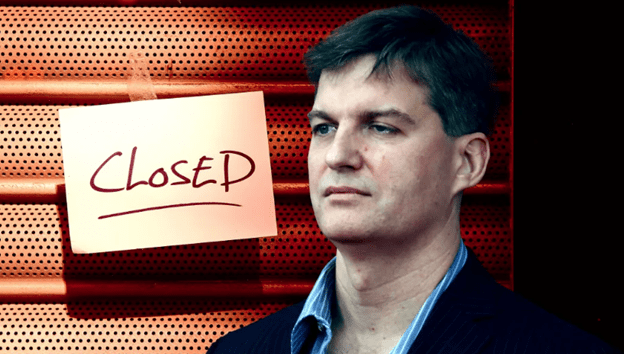
“Big Short” Michael Burry Closes Scion Hedge Fund: “Value” Approach Ceased to Add Value?

Michael Burry is famed for being among the first to both discern and heavily trade on the ridiculousness of subprime mortgages circa 2007.  He is a quirky guy: brilliant, but probably Asperger‘s. That comes through in his portrayal in the 2015 movie based on the book, The Big Short.

He called it right with mortgages in 2007, but was early on his call, and for many months lost money on the bold trading positions he had put on in his hedge fund, Scion Capital. Investors in his fund rebelled, though he eventually prevailed. Reportedly he made $100 million himself, and another 700 million for his investors, but in the wake of this turmoil, he shut down Scion Capital.

In 2013 he reopened his hedge fund under the name Scion Asset Management. He has generated headlines in the past several years, criticizing high valuations of big tech companies. Disclosure of his short positions on Nvidia and Palantir may have contributed to a short-term decline in those stocks. He has called out big tech companies in general for stretching out the schedule of depreciation of their AI data center investments, to make their earnings look bigger than they really are.

Burry is something of an investing legend, but people always like to take pot shots at such legends. Burry has been rather a permabear, and of course they are right on occasion. For instance, I ran across the following OP at Reddit:

Michael burry is a clown who got lucky once

I am getting sick and tired of seeing a new headline or YouTube video about Michael burry betting against the market or shorting this or that.

First of all the guy is been betting against the market all his career and happened to get lucky once. Even a broken clock is right twice in a day. He is one of these goons who reads and understands academia economics and tries to apply them to real world which is they don’t work %99 of the time. In fact guys like him with heavy focus on academia economic approach don’t make it to far in this industry and if burry didn’t get so lucky with his CDS trade he would be most likely ended up teaching some bs economic class in some mid level university.

Teaching econ at some mid-level university, ouch.  (But a reader fired back at this OP: OP eating hot pockets in his moms basement criticizing a dude who has made hundreds of millions of dollars and started from scratch.)

Anyway, Burry raised eyebrows at the end of October, when he announced that he was shutting down his Scion Asset Management hedge fund. This Oct 27 announcement was accompanied by verbiage to the effect that he has not read the markets correctly in recent years:

With a heavy heart, I will liquidate the funds and return capital—minus a small audit and tax holdback—by year’s end. My estimation of value in securities is not now, and has not been for some time, in sync with the markets.

Photo

To me, all this suggested that Burry’s traditional Graham-Dodd value-oriented approach had gotten run over by the raging tech bull market of the past eight years. I am sensitive to this, because I, too, have a gut bias towards value, which has not served me well in recent years. (A year ago I finally saw the light and publicly recanted value investing and embraced the bull, here on EWED).

Out of curiosity, therefore, I did some very shallow digging to try to find out how his Scion fund has performed in the last several years. I did not find the actual returns that investors would have seen. There are several sites that analyze the public filings of various hedge funds, and then calculate the returns on those stocks in those portfolio percentages. This is an imperfect process, since it will miss out on the actual buying and selling prices for the fund during the quarter, and may totally miss the effects of shorting and options and convertible warrants, etc., etc. But it suggests that Scion’s performance has not been amazing recently. Funds are nearly always shut down because of underperformance, not overperformance.

Pawing through sites like HedgeFollow (here and here) , Stockcircle, and Tipranks, my takeaway is that Burry probably beat the S&P 500 over the past three years, but roughly tied the NASDAQ (e.g. fund QQQ). This performance would naturally have his fund investors asking why they should be paying huge fees to someone who can’t beat QQQ.

What’s next for Burry? In a couple of tweets on X, Burry has teased that he will reveal some plans on November 25. The speculation is that he will refocus on some personal asset management fund, where he will not be bothered by whiny outside investors. We shall see.

Is art anti-capitalist?

A large portion of my favorite art and artists frame themselves as “anti-capitalist”. Now, I know I am repeatedly on the record saying that the terms “capitalism” and “socialism” have been stripped of most meaning at this point, with limited ability to communicate any useful information save group signaling or mood affiliation (i.e. everything I don’t like is an exemplar of late-stage capitalism or crypto Marxist socialism), but the language is used enough within the art I like that it’s worth pondering a moment.

Now, I think it’s a bit of a trap to impose strong interpretations on how artists interpret themselves or their art. It’s their art, not mine. I also think it’s a memeable offense to try to “gotcha” artists who sell their art in the marketplace as capitalists who doth protest too much.

Yeah, I get it, everyone has to eat, even if you would prefer to live in a socialist utopia. I do think there is more worth untangling, though, and as an act of good faith I will spoil part of my conclusion. I don’t think there is anti-capitalism art anymore than there is pro-capitalism art. Rather, I think there is art and there is propaganda.

Art is one of many luxuries yielded by the remainder of time not subsumed by the needs of survival. A society that builds within itself a marketplace that rewards specialization, innovation, and efficiency will find itself suffused in art. I’m sure there are things beyond relationships, purpose, and art that make life worth living, but I can’t think of any. If in pursuing your purpose you can find art and build community, well, that’s a life well-lived.

So does art depend on the marketplace or is it an act of rebellion against it? Can it be both? I think it can. The true threat to art is not the intercession of commerce but service to power. Art is characterized more than anything by a direct, if parasocial, relationship between the artist and their audience. Service to power corrupts that relationship, demanding service to an intentionally unobserved third party. The perceived communication from the artist is now an act of deception, surrepticiously communicating the preferred messaging of the third-party. Beyond just robbing the artist of their integrity, it undermines the confidence an audience can have in all the art it consumes. Propaganda is, in this manner, a negative externality, polluting everything that art can and does provide in our lives.

When writers and other artists complain about the interventions of private equity, they are complaining about a couple things. First, and probably foremost, it is often the insistence on a revenue model (high risk, high growth) that simply does not translate to the current media landscape. It’s a bad model and makes for bad business. It should not be ignored, however, that one of the failures that a high-growth revenue model brings to a media context is a necessary subserviance to power. Service to large equity stakes (i.e. evil rich people), yes, but also service to regulatory authorties, cultural authorities, anyone and everyone that might derail your path to the hearts of the largest common denominator, to the other side of a dreamed of (and likely wholly imaginary) tipping point beyond which the glories of power law scaling will turn your tens of millions into hundreds of billions.

When a story teller places you in a dystopian future where the vagaries of a galactic-scale marketplace lead to the devaluing of life on wholesale planetss in service to the profits of preexisting conglomerates, corporations, and sultanates, it is often framed as anti-capitalist fiction. And that’s a natural summation: people are commodified, exchanged, and disposed of. But of course the power behind commodification comes with military bodies, royal lineages, and a sci-fi feudalism whose roots always trace back eventually coercive force. Commerce may be the engine producing the resources underpinning your evil army (soldiers gotta have something to eat, a way to get there, and something to shoot), but in the end the big bad evil empire is always pointing a gun.

Conversely, when a comedian both sets up shop in Austin, TX and underpins a genre of comedy that frames itself as “anti-woke”, it is not disappinting to most artists because it is “pro-capitalism”. It’s disappointing because once you scratch the surface, it becomes clear it is in service of power. It’s not aligning itself as anti-woke because there are three words that audiences will shame them for using. It’s doing so in the hopes that punching down on the same vulnerable, (often extremely) small minority populations targeted by other locuses of political and media power, they can acquire the same kind of most-favored nation status that have lifted the careers of others whose mediocre talents were insuffient to garner an audience on their own.

Art is inherently, maybe even necessarily, anti-power, because there is no room in the relationship with it’s audience for the interests of a third party. Art needs patrons, yes. The marketplace is a boon to the production and consumption of art. But when the movies, television, writing, music, video games, dance, etc of our lives is compelled to serve the interests of anyone but the artist and the audience, people sniff it out. They rebel. They blame. Whether they blame the market, the government, or religious authorities, well, that just depends on the current framing of power. And honestly, I’m not sure the framing matters all that much. It might show up in the artist’s statement next to the installation or in their AMA on reddit, but most people don’t read those, they already know who to be mad at. And besides, the art already exists. They don’t need intervention from any third-parties, maybe not even the artists.

Joy in French Magazine on Fast Fashion

The French magazine L’Express is widely read as magazines go. I was asked to give comments on fast fashion. An interview with me has been published in French at

Le regard de l’économiste Joy Buchanan sur Shein : “Les détracteurs de la fast fashion oublient souvent ses avantages sociaux”

Idées: Alors que Shein provoque une controverse nationale en France, l’économiste américaine invite à un regard nuancé sur la fast fashion, rappelant que le trop-plein de vêtements est un problème très récent dans l’histoire humaine.

Ideas: While Shein is causing a national controversy in France, the American economist urges a more nuanced view of fast fashion, reminding us that the overabundance of clothing is a very recent problem in human history.

I enjoyed talking with their reporter Thomas Mahler (kindly for me, in English). He informed me that French politicians are proposing to ban Shein from the country, meanwhile millions of people in France shop through Shein regularly.

Much overlap with my article: Fast Fashion, Global Trade, and Sustainable Abundance

Forget not that I also am featured in a French economics textbook for my drawing of a fat mouse. Vive la France!

Portfolio Efficient Frontier Parabolics

Previously, I plotted the possible portfolio variances and returns that can result from different asset weights. I also plotted the efficient frontier, which is the set of possible portfolios that minimize the variance for each portfolio return.* In this post, I elaborate more on the efficient frontier (EF).

To begin, recall from the previous post the possible portfolio returns and variances.

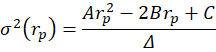
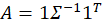
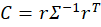
From the above the definitions we can see that the portfolio return depends on the asset weights linearly and that the variance depends on the asset weights quadratically because the two w terms are multiplied. Since the portfolio return can be expressed as a function of the weights, this implies that the variance is also a quadratic function of returns. Therefore, every possible portfolio return-variance pair lies on a parabola. So, it follows that every pair along the efficient frontier also lies on a parabola. Not every pair lies on the same parabola, however – the efficient frontier can be composed on multiple parabolas!

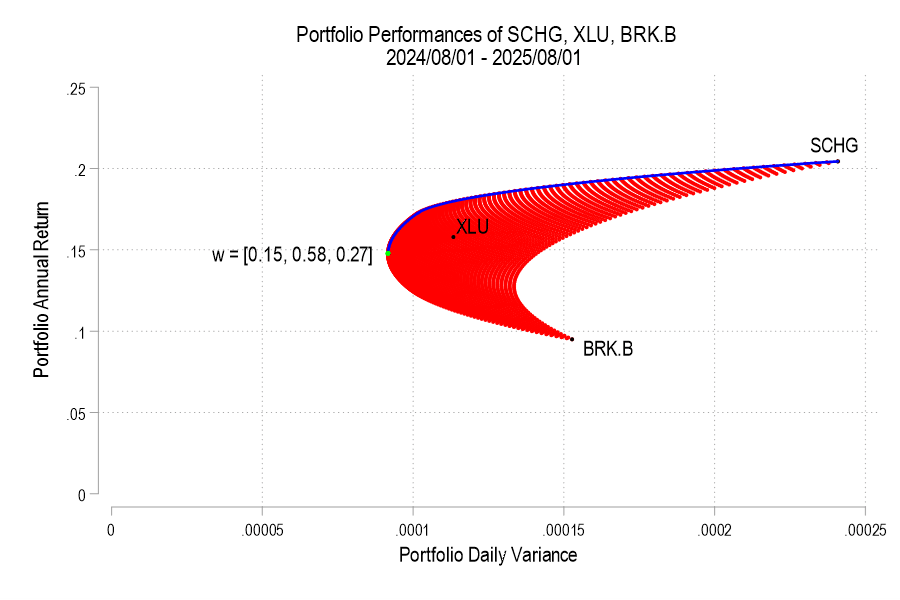
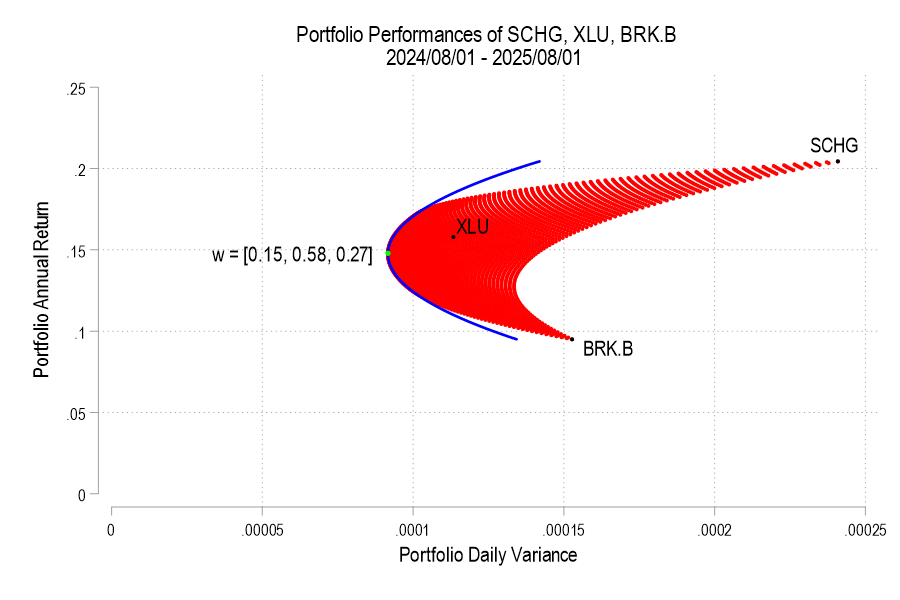
I’ll use the same 3 possible assets from the previous post, below is the image denoting the possible pairs, the EF set, and the variance-minimizing point.

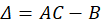
One way to find the EF is to calculate every possible portfolio variance-return pair and then note the greatest return at each variance. That’s a discrete iterative process and it definitely works. One drawback is that as the number of assets can increase the number of possible weight combinations to an intractable number that makes iterative calculations too time consuming. So, we can instead just calculate the frontier parabolas directly. Below is the equation for a frontier parabola and the corresponding graph.

Notice that the above efficient frontier doesn’t appear quite right. First, most obviously, the portion below the variance-minimizing return is inapplicable – I’ve left it to better illustrate the parabola. Near the variance-minimizing point, the frontier fits very nicely. But once the return increases beyond a certain level, the frontier departs from the set of possible portfolio pairs. What gives? The answer is that the parabola is unconstrained by the weights summing to zero. After all, a parabola exists at the entire domain, not just the ones that are feasible for a portfolio. The implication is that the blue curve that extends beyond the possible set includes negative weights for one or more of the assets. What to do?

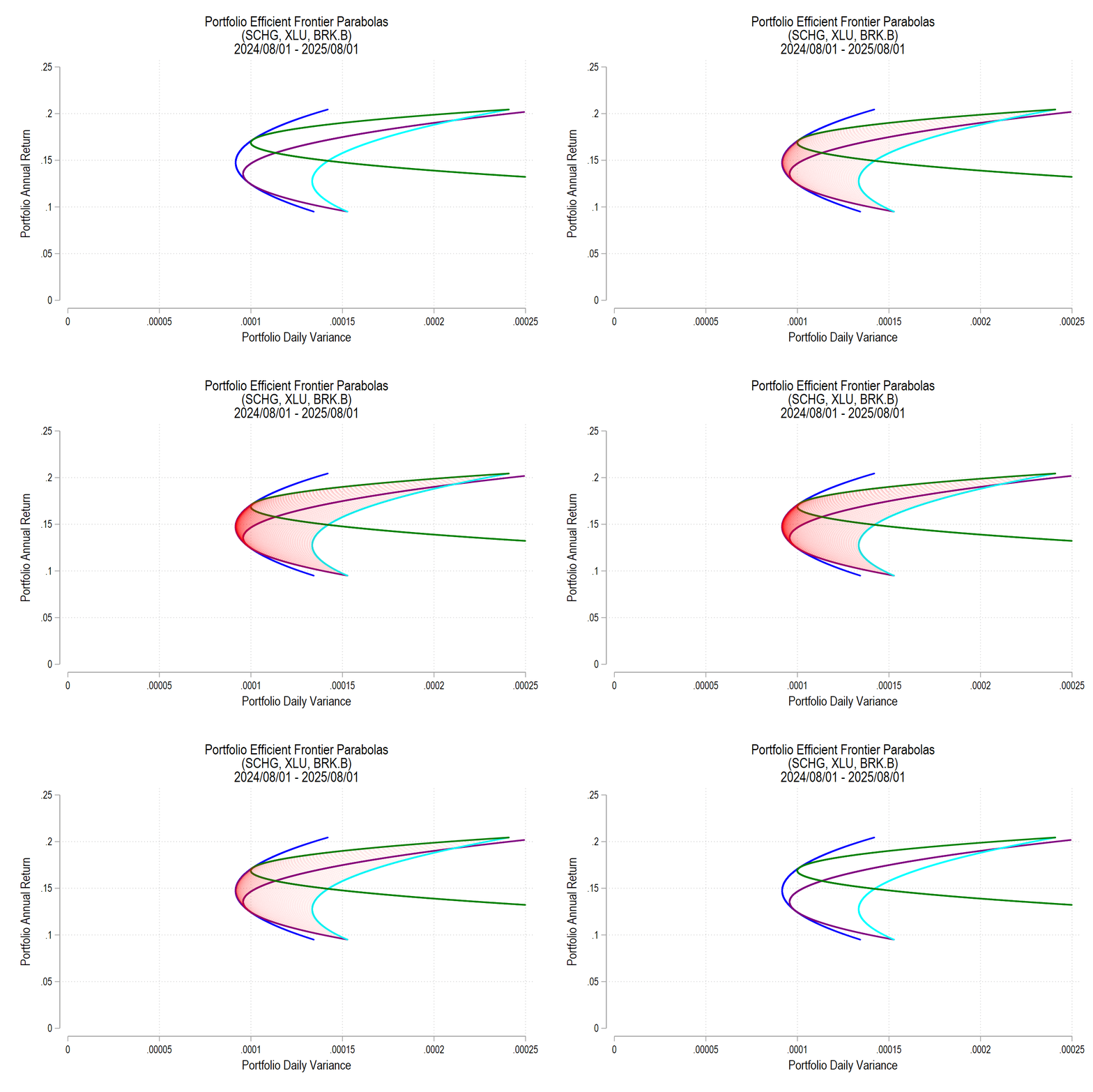
As we deduced earlier, each pair corresponds to a parabola. So, we just need to find the other parabolas on the frontier. The parabola that we found above includes the covariance matrix of all three assets, even when their weights are negative. The remaining possible parabolas include the covariance matrices of each pair of assets, exhausting the non-singular asset portfolios. The result is a total of four parabolas, pictured below.

Continue reading

Do Required Personal Finance Classes Work?

41 states now require students to take a course in economics or personal finance in order to graduate high school:

Source: Council for Economic Education

12 states representing 21% of US high schoolers passed mandates for personal finance classes just since 2022. This sounds like a good idea that will enable students to navigate the modern economy. But does it work in practice?

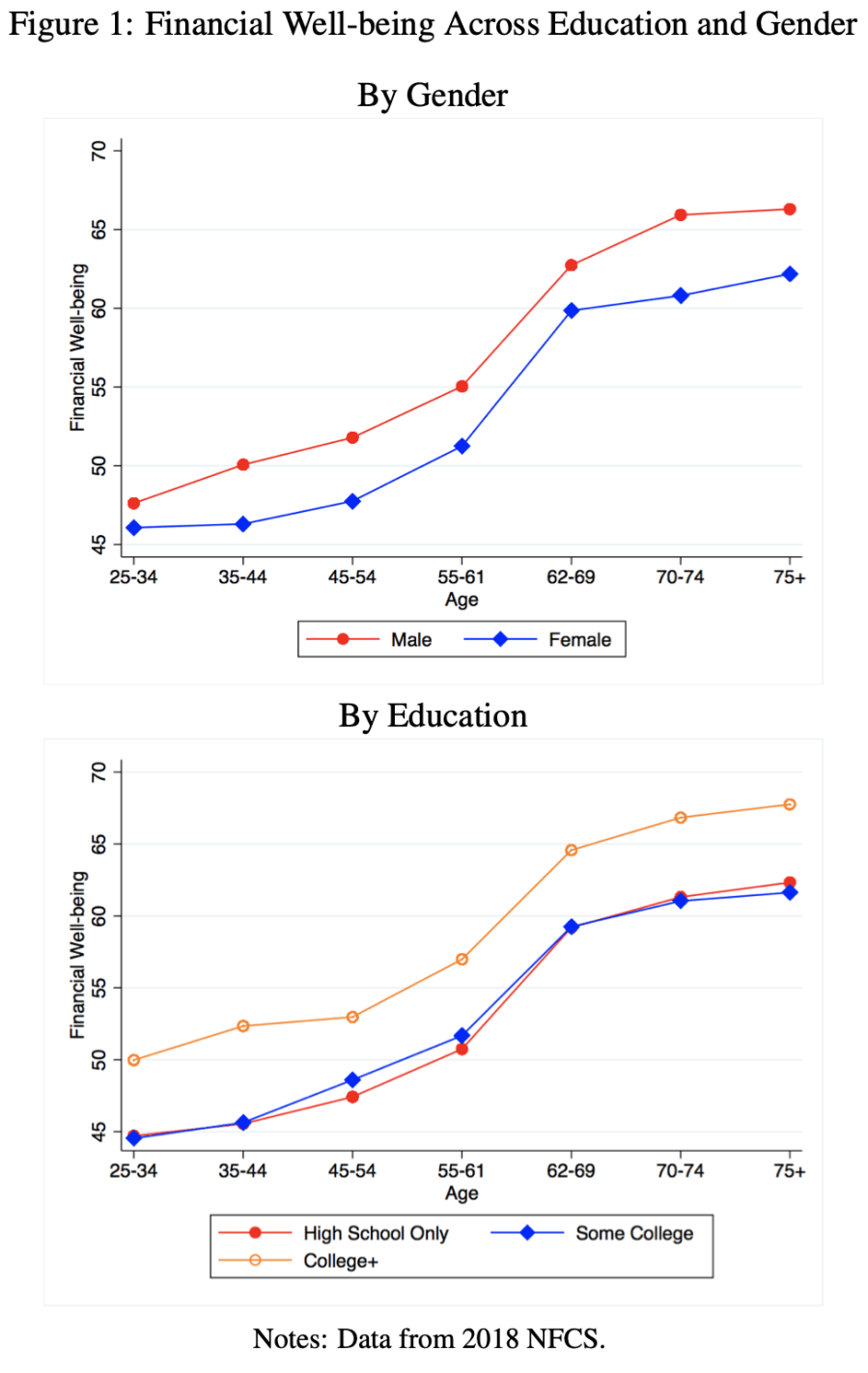
A 2023 working paper “Does State-mandated Financial Education Affect Financial Well-being?” by Jeremy Burke, J. Michael Collins, and Carly Urban argues that it does, at least for men:

We find that the overall effects of high school financial education graduation requirements on subjective financial well-being are positive, between 0.75 and 0.80 points, or roughly 1.5 percent of mean levels. These overall effects are driven almost entirely by males, for whom financial education increases financial well-being by 1.86 points, or 3.8 percent of mean financial well-being.

The paper has nice figures on financial wellbeing beyond the mandate question:

As soon as I heard about the rapid growth in these mandates from Meb Faber and Tim Ranzetta, I knew there was a paper to be written here. I was glad to see at least one has already tackled this, but there are more papers to be written: use post-2018 data to evaluate the new wave of mandates, evaluate the economics mandates in addition to the personal finance ones, and use a more detailed objective measure like the Survey of Consumer Finances.

There’s also more to be done in practice, hiring and training the teachers to offer these new classes:

our estimates are likely attenuated due to poor compliance by schools subject to new financial education curriculum mandates. Urban (2020) finds evidence that less than half of affected schools may have complied. As a result, our estimated overall and differential effects may be less than half the true effects