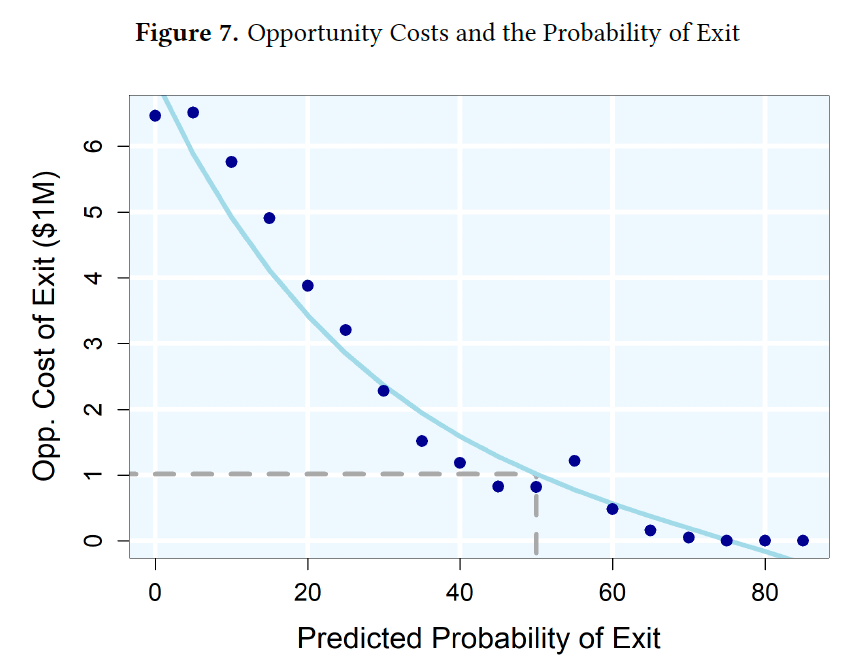
Former teammates of athletes who died of CTE would require $6 million to offset this disamenity and $1 million to be indifferent between exiting and staying in the profession.
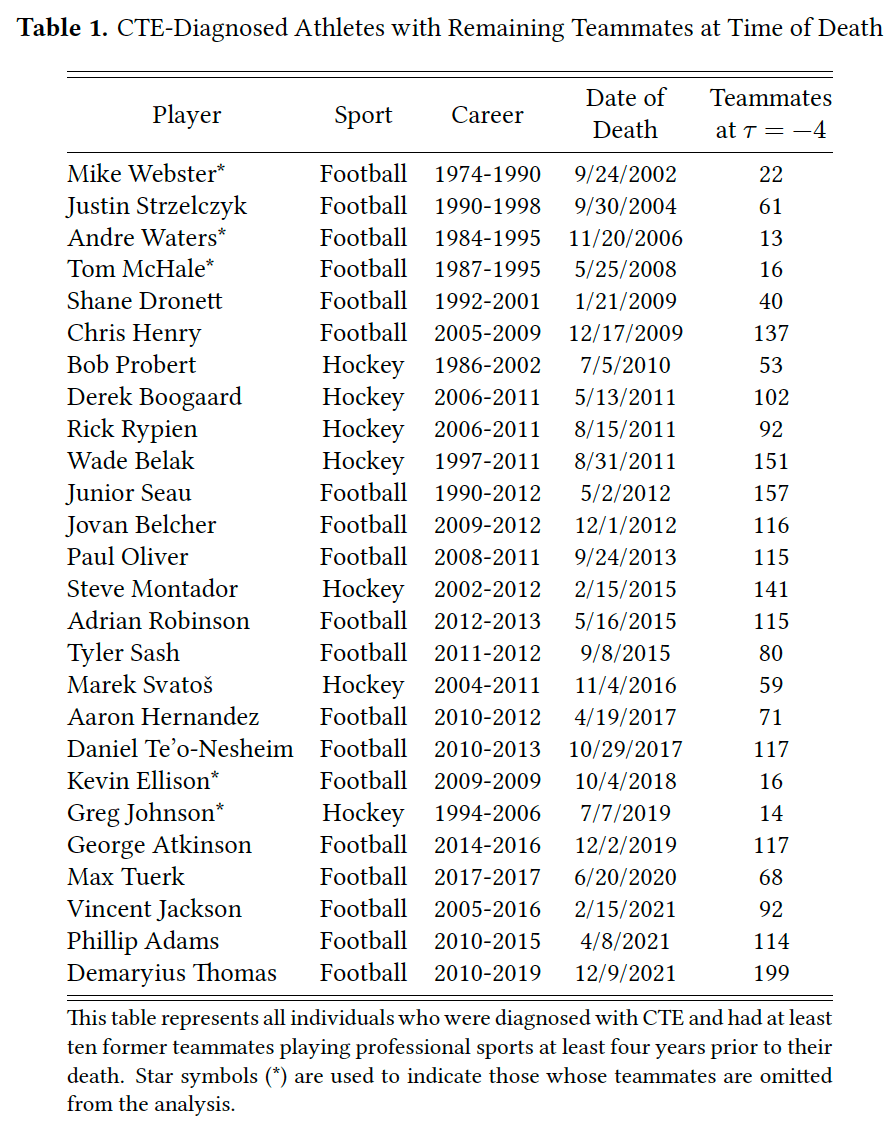
So concludes a paper by Josh Martin. I thought this paper would be about a small group, since CTE deaths mostly happen among long-retired players with few or no former teammates still playing. But it turns out there were a fair number of early deaths, and each player had many teammates who can be affected, totaling 23% of NHL players and 14% of NFL players:
But teams mostly won’t pay worried players enough extra to stay, especially in hockey. So many of them retire early:
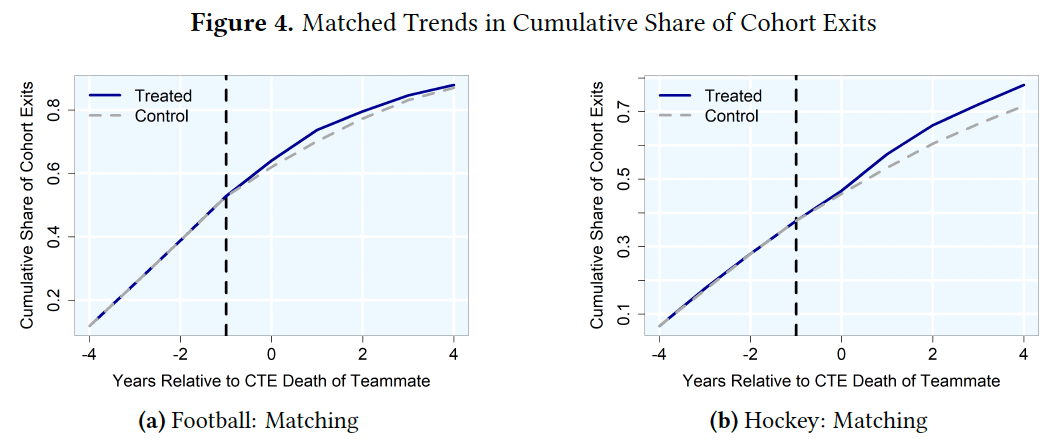
Athletes who were teammates with a former teammate who died with CTE for three or more years and played for a team with them at least two years before their death are 7.22 percentage points more likely to retire than characteristically similar non-treated players in the same years. Relative to the pre-treatment mean, this represents a 69% increase.
People still respond to incentives though, and if you do pay them enough they mostly take the risk and stay:
The remaining players will take measures to protect themselves, like skipping games to recover from concussions:
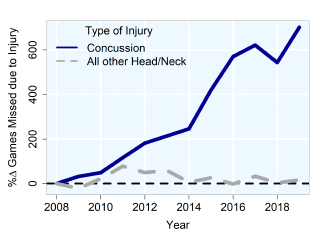
Michael previously pointed out here that these concerns matter more for certain positions, like running backs:
If you want millionaires to show up every week to willingly endure the equivalent of a half-dozen car accidents, you’re going to have to pay them.
This all makes for a good illustration of the theory of compensating differentials, which is sometimes surprisingly hard to observe in the labor market. But sports tend to have the sort of data we can only dream of elsewhere. Which other workers have millions of people observing, measuring, and debating their on-the-job productivity and performance?
This summer I was one of thousands of people crowding into Foxborough just to watch them practice:
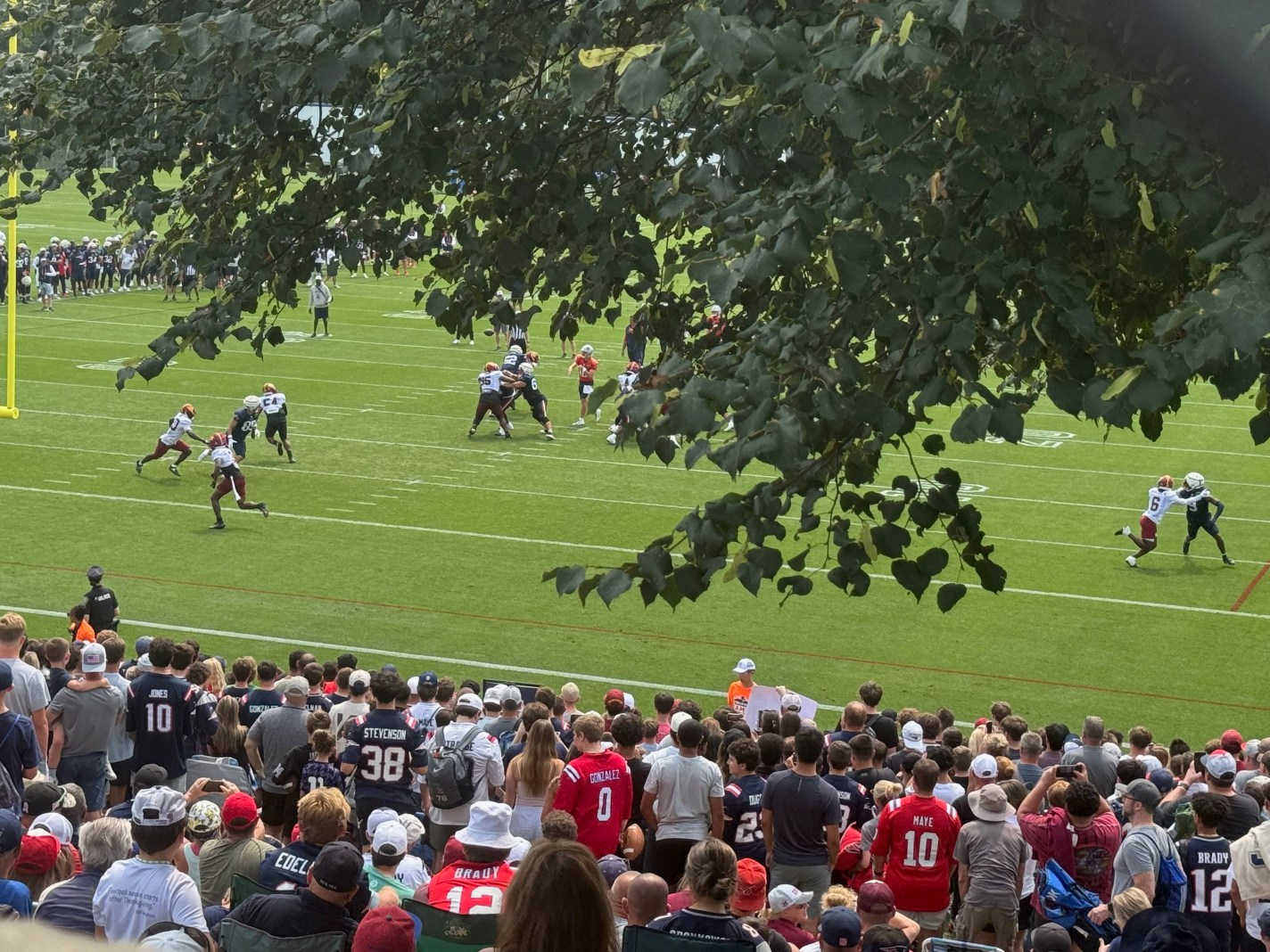
The NFL season kicks off today, and I say the players deserve the millions they are about to earn.
 Economist Writing Every Day