I have sourdough starter in my fridge and have tried making two rounds of bread. I write this as a civilian, for others who will never elevate baking above a hobby.
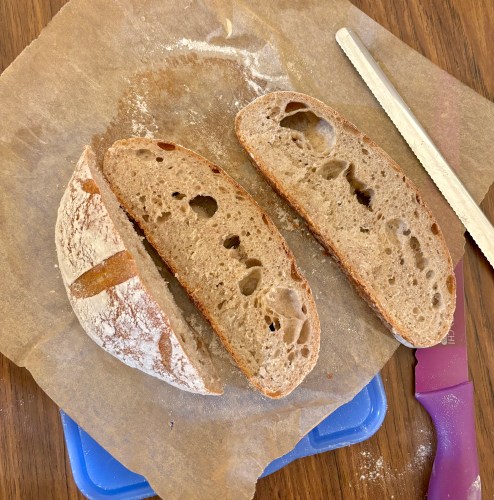
I will begin with a picture of my first bread:
That’s not very fluffy but not terrible. It was real bread to go with butter or soup. My neighbor’s starter was in great condition when she gave it to me, and I followed the standard recipe. I use 80% bread flour and 20% whole wheat flour to make it healthier.
Below I will speculate on whether sourdough projects are a good use of time or not. Call it home economics.
Efforts to establish the death toll in the Iranian protests are confounded by the regime’s internet blockade, but even the most conservative estimates take the tally way beyond some of the most brutal political crackdowns in modern history.
Even the lowest estimates—between 2,000 and 3,000—have surged past the death tolls in unrest during protests in 2019 and 2022.
I have sadly seen much higher estimates circulating which may be confirmed eventually.
In 2025, after mostly feeling too busy for great literature for a few years, I picked up two books that come highly recommended by people with good taste: Middlemarch and Anna Karenina. They are excellent, and they are long. I propose two reasons why they need to be long.
My second reason for long novels:
The second powerful thing about a long novel, if they are written by geniuses like Eliot or Tolstoy, is that you have enough time to see how choices play out over years. You have space to even see the consequences of the consequences. You will experience moral formation from these novels in a way that you just cannot from a 2-hour movie or social media post.
Quick bio of Henry: Henry Oliver writes the popular literary SubstackThe Common Reader, which has been quoted in theAtlantic and elsewhere. His book Second Act, a study of late-blooming talent, was released in 2024.
Lastly, I must thank my sister for engaging me in literature discussion over the Christmas break. She is reading Proust.
This quote from the introduction explains the title:
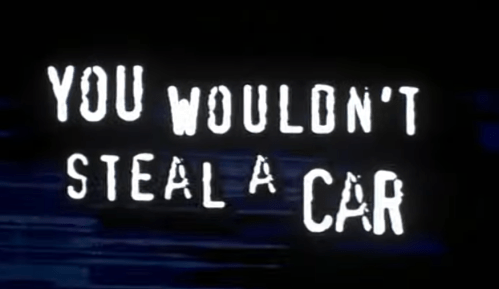
… in the early 2000s… the Motion Picture Association of America (MPAA) released an anti-piracy trailer shown before films that argued: (1) “You wouldn’t steal a car,” (2) pirating movies constitutes “stealing,” and (3) piracy is a crime. The very need for this campaign, and the ridicule it attracted, signals persistent disagreement over whether digital copying constitutes a moral violation.
The main idea:
In contemporary economies, “idea goods” comprise a substantial share of value. Our paper examines how norms evolve when individuals evaluate harm after the taking of nonrivalous resources such as digital files.
We report experimental evidence on moral evaluations of unauthorized appropriation, contingent on whether the good is rivalrous or nonrivalrous. In a virtual environment, participants produce and exchange two types of resources: nonrivalrous “discs,” replicable at zero marginal cost, and rivalrous “seeds,” which entail positive marginal cost and cannot be simultaneously possessed or consumed by multiple individuals. Certain treatments allow unauthorized taking, which permits observation of whether participants classify such actions as moral transgressions.
Participants consistently label the taking of rivalrous goods as “stealing,” whereas they do not apply the same term to the taking of nonrivalrous goods.
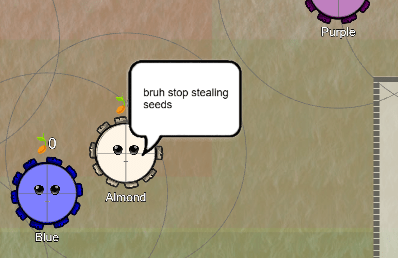
To test the moral intuition for taking ideas, we create an environment where people can take from each other and we study their freeform chat. The people in the game each control a round avatar in a virtual environment, as you can see in this screenshot below.
In the experiment, “seeds” represent a rivalrous resource, meaning they operate like most physical goods. If the playerin the picture (Almond) takes a seed from the Blue player, then Blue will be deprived of the seed, functionally the equivalent of one’s car being stolen.
Thus, it is natural for the players to call the taking of seeds “stealing,” Our research question is whether similar claims will emerge after the taking of non-rivalrous goods that we call “discs.”
The following quote from our paper indicates that the subjects do not label or conceptualize the taking of digital goods (discs) as “stealing.”
Participants discuss discs often enough to reveal how they conceptualize the resource. In many instances, they articulate the positive-sum logic of zero-marginal-cost copying. For example, … farmer Almond reasons, “ok so disks cant be stolen so everyone take copies,” explicitly rejecting the application of “stolen” to discs.
Participants never instruct one another to stop taking disc copies, yet they frequently urge others to stop taking seeds. The objection targets the taking away of rivalrous goods, not the act of copying per se. As farmer Almond explains in noSeedPR2, “cuz if u give a disc u still keep it,” emphasizing that artists can replicate discs at zero marginal cost.
We encourage you to read the manuscript if you are interested in the details of how we set up the environment. The conclusion is that it is not intuitive for people to view piracy as a crime.
This has implications for how the modern information economy will be structured. Consider “the subscription economy.” Increasingly, consumers pay recurring fees for ongoing access to products/services (like Netflix, Adobe software) instead of one-time purchases. Gen Z has been complaining on TikTok that they feel trapped with so many recurring payments and lack a sense of ownership.
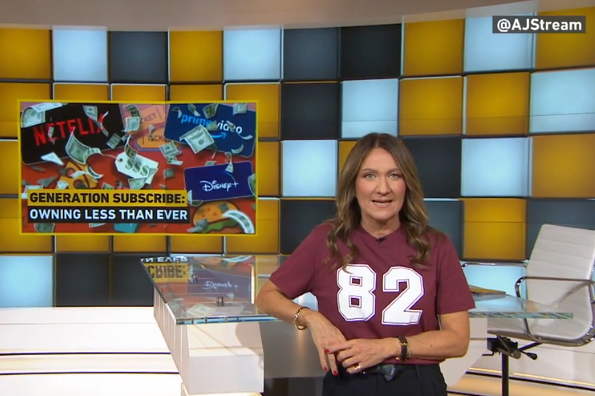
In a recent interview on a talk show called The Stream, I speculated that part of the reason companies are moving to the subscription model is that they do not trust consumers with “ownership” of digital goods. People will share copies of songs and software, if given the opportunity, to the point where creators cannot monetize their work by selling the full rights to digital goods anymore.
A feature of our experimental design is that creators of discs get credit as the author of their creation even when it is being passed around without their explicit permission. Future work could explore what would happen if that were altered.
Ever since becoming aware of the terrible news about “grooming gangs” in the UK, I’ve been wanting to write something about why men succeed in manipulating women. Having a moment to read fiction during my break from classes, I have picked up Tolstoy’s Anna Karenina. Now that I’m past the turning point in the book where Anna and her lover Vronsky have to think about a new life outside the care of Anna’s husband, it’s clear that Anna fell for a person who will struggle to take care of her and any children. How does it work?
Most women are unprepared concerning how desperate they are for what I’ll call love. Many women receive very little attention. More than 40% of adult women in the US are single. We have statistics on marital status, but profound loneliness can also occur within an official relationship.
Articles about the UK grooming gangs often emphasize the disadvantaged economic backgrounds of the victims. That does matter, and it did make them more vulnerable to manipulation. Vulnerability within most people everywhere is underexplored.
Anna Karenina is married, privileged, admired in society, yet she feels lonely. When Vronsky shows her focused attention she falls hard, even though she knows there could be consequences. Tolstoy shows how powerful validation can be to almost any woman, not just those who might seem the most vulnerable.
Vronsky is charming and attractive on the surface, but ultimately self-centered. He ruins Anna’s life and deprives her children of a mother. Why did he succeed in the first place?
If Anna is beautiful, some would assume that she would not be lonely. There are theories going around about the advantages of being beautiful (lookism). Even Jennifer Garner and Jennifer Aniston get cheated on. Most women are not experiencing something that feels like love to them.
In the case of the grooming gangs, folks with an understanding of emotional deprivation hacked the system for evil. None of this diminishes the responsibility of perpetrators or the reality of coercion. Because the initial phase feels so validating, grooming victims often blame themselves later. We might do better by bringing the system out into the open.
Systems can be used for good by those who understands them. Especially young people with a better understanding of the system can have a better chance of making it work in their favor.
It’s a weird conversation to have with youths (easier to assign Anna Karenina in high schools, but kids are losing the ability to read a novel). Could we educate them with something like: “You have a desire to be loved that may never get fulfilled. That does not make you special. It’s the most unoriginal thing about you. Try to make the system work for you and not get tricked.”
The red flag for Vronsky should have been his lack of family and lack of care for his community (he does not pay his tailor). The classic advice for young women to observe how a prospective boyfriend treats his mother is still very good.
Tolstoy does not give specific advice about what people should do. A superficial reading of the story would be that Anna Karenina is about duty and sin and the wages of sin. But throughout, it is a meditation on happiness. The second word of the novel is “happy,” as in “All happy families…”
In the first line of the novel, Tolstoy situates happiness within a family, not as something experienced by individuals. The characters, Levin and Kitty, who seem happiest at the end, find each other and work toward something greater than themselves.
Our episode began with some clips from TikTok of young people expressing anger over feeling trapped in “the subscription economy.” Watch our show at the link above to see.
The subscription economy is a business model shift where consumers pay recurring fees for ongoing access to products/services (like Netflix, SaaS) instead of one-time purchases, focusing on “access over ownership” for predictable revenue. Gen Z feels upset that they are getting charged for subscriptions, some of which they simply forgot to cancel. They have nostalgia for the days of toting a zipper case of CDs onto the yellow school bus in 2004.
My commentary starts around minute 5:30 in the show. The first thing I point out is that, by and large, we have more entertainment available to us at a lower price than people did in that bygone era of mostly cable TV and physical discs. (This is a bit like the point I made on The Stream in March 2025 about how fast fashion represents more stuff for consumers at lower prices, which is good.)
In the episode, we discussed how people can still buy CDs today. Sanya Dosani made the point that, “there’s a place for buying and a place for renting.” Everyone should be aware of how cheap DVDs, books, and CDs are at rummage sales in the United States in 2025. You can get a music album for 50 cents. Some youths have (re)discovered that DVD players are cheaper than a year of streaming subscription costs.
Around minute 17, I got to bring up my research about intellectual property, digital goods, and morality.
We find that people do not feel bad about taking the digital goods, or “pirating.” We even find that, in a controlled experiment with no previous context for what we might call intellectual property protection, the creators of these digital goods do not call such taking stealing either. It seems to be understood that folks will take and share if they can.
The proposed reason for artificially restricting the taking and resale of intellectual property is that creators need a way to profit from providing a public good. (Intellectual property rights in the U.S. Constitution are covered by Article I, Section 8.)
I said in the interview, “If you were able to just give a song to all of your friends, you probably would, and then that artist might not be able to make songs the next year.”
Thus, I suggested, “The subscription economy is a reaction to the fact that most people don’t view it as wrong to take things they can take and not necessarily pay for them. Companies had to find a new way to be able to make money and stay in business.”
I’ll clarify that I have not done quantitative research to prove that subscription models emerged causally because of pirating. I’m speculating. Another side to this is that people simply want to stream and companies are providing exactly what people want (despite the complaints circulating on TikTok). People reminisce about the “golden days” of early Netflix, but most people forget that the company was losing money at that time. Media production and distribution companies have to make money to stay in business.
At the end, the host asked me, “… what does it mean for who we are as humans, more of an existential question, where we are going with this age?”
That’s a deeper question than you might expect for a conversation about CD-ROMs. However, people do care about having some tangible form of art about them. Think of the ancients buried alongside beads and dolls. Netflix will never be the only thing that people want. As for Gen Z being upset about convenient Spotify, “what does it mean for who we are” has got to be part of it.
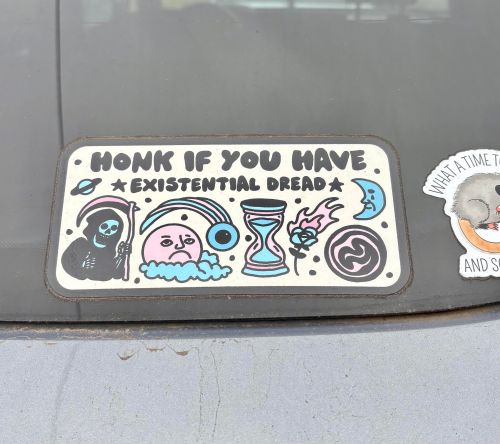
As an aside, furthermore, I’ll say here on the blog that Gen Z is by some measures the most entertained generation in history. For spiritual, not financial, reasons, I encourage them to cancel their subscriptions, take out their AirPods, and feel the silence and dread for a week.
In August, I listed the Top EWED Posts of 2025. Here are a few more highlights. This list is roughly based on web traffic, starting with the highest number of views for 2025, since the August list.
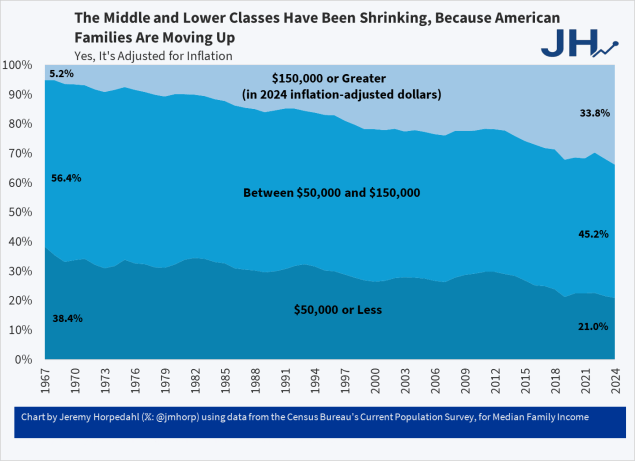
Our breakout post for the entire year is Jeremy Horpedahl with:
It has been cited in the Washington Post and the Financial Times, and shared many times.
Mr. Green has understated typical family income by something like 70 percent. Knowing this fact alone would, I think, cause him to reconsider his entire essay. But it’s worse than that: he also overstates the amount of spending required to support a family!
On Twitter I joked that if it is true, you should just run all of GDP through SNAP and we could be 80% richer. But my joke isn’t quite fair, because it could be true at the margin, but the effects might dissipate at some point. At what point? Well, a key assumption by USDA’s model is that the recipients of SNAP benefits have a higher marginal propensity to consume than the average household…
6. I rarely do this in top post roundups, but I’ll mention that Mike Makowsky’s post from 2022 generated a lot of interest this year, possibly because of the rise of interest in “agents”: Why Agent-Based Modeling Never Happened in Economics
I, myself, am embarking on a research project about AI agents. More to come on that.
Though don’t worry: not everyone went to Europe this summer, despite what social media might have you believe.
Just wait for my posts from Europe, people. I’ll get back there soon.
This cuts against the idea that all progress is just more people staring into their screens. Although, arguably, people travel for the social media engagement it generates. Sometimes I feel like my Facebook friends document their trips so thoroughly that I don’t even need to go.
16. This post hasn’t had weeks to pick up a high views score, but Mike was one of the first to this paper, and I subsequently saw big accounts talking about it: Obviously baseline economic security matters, but…
If you asked me five years ago where a new UBI might, at the margin, have a zero effect, I would have picked a Nordic country, but still…
Our biggest source of web traffic is Google search. We get readers who click through links shared by our friends (thank you). And, something that’s way up in percentage terms is referral traffic from a certain “chatgpt.com” – 8 times more than in 2024.
Joy writes: I read Co-Intelligence by Ethan Mollick (thanks to Samford for the free book). Most of it is old news for those of us who follow Ethan on social media and use ChatGPT. However, something that stood out to me was his mention of a study in which humans decide to give themselves a painful shock rather than sit alone in silence for 15 minutes.
Claude comments further based on my prompt:
The End of Boredom: How AI Companions Might Reduce Random Violence
Remember that study where people would rather shock themselves than sit alone with their thoughts? Ethan Mollick references it in Co-Intelligence, and it reveals something unsettling: 67% of men and 25% of women chose electric shocks over sitting quietly for just 15 minutes.
Here’s a strange thought—what if our AI-saturated future accidentally reduces certain types of violence simply by eliminating boredom?
The Violence-Boredom Connection
“Idle hands are the devil’s workshop” exists for a reason. Research has long linked boredom to risk-taking, substance abuse, and impulsive violence—the opportunistic kind that emerges from restlessness rather than planning. Young men starting fights on street corners, vandalism on summer nights, the restless energy that sometimes turns destructive—much of this stems from the unbearable weight of having nothing to do.
Enter Infinite Engagement
We’re rapidly approaching a world where boredom might become extinct. AI companions are becoming always available, infinitely patient, endlessly novel, and perfectly tailored to individual interests. Your future AI won’t just answer questions—it will debate philosophy at 3 AM, create personalized games, generate stories with you as the protagonist, or help explore any curiosity rabbit hole.
The cognitive void that once led people to shock themselves rather than think? It might simply cease to exist.
The Unexpected Benefits
Consider the implications: Young men who might have started fights out of restlessness could instead be deeply engaged in AI-assisted music production or coding projects. The same restless energy that manifests destructively could be channeled into creative collaboration.
AI companions could help process frustration before it builds to a breaking point—imagine having an infinitely patient listener during those dangerous 2 AM spirals of rage. While not replacing human connection, AI interaction might buffer the worst effects of isolation that can lead to radicalization.
The Dark Side
This isn’t utopian. An always-engaged society raises concerns: What happens to human relationships when AI companionship is always easier? Does constant stimulation atrophy our ability to self-reflect? Might we lose the creative insights that emerge from boredom?
Crucially, this would only address impulsive, boredom-driven violence. Systemic violence, ideological extremism, and deeper social problems won’t disappear because people have engaging AI companions.
A Strange New World
For the first time in history, boredom—that uncomfortable void that has driven both creativity and destruction—might become optional. The same species that chose shocks over silence is about to get exactly what it wanted: constant, meaningful stimulation.
Whether this leads to a more peaceful society or new problems we haven’t imagined remains to be seen. The question is whether we’ll recognize what we’ve lost only after it’s gone.
The experiment is already underway—we’re all participating in it.
Joy comments at the end: The AI-written essay is willing to explore downsides of AI engagement.
The latest data will likely do little to resolve the debate at the Federal Reserve, where some policymakers, wary of inflation, want to leave rates on hold, while others are pushing for a rate cut in December as insurance against a labor market deterioration.
Hawks can point to the bump up in job growth as a reason to postpone any further easing, while doves can focus on rise in the unemployment rate, as well as the general trend toward weaker job growth, as reasons to cut. Thursday’s report was the last official snapshot the Fed will see before the next rate-setting meeting in December. As a result of the shutdown, the Labor Department pushed back its release of the November jobs report to Dec. 16, the week after the rate decision.
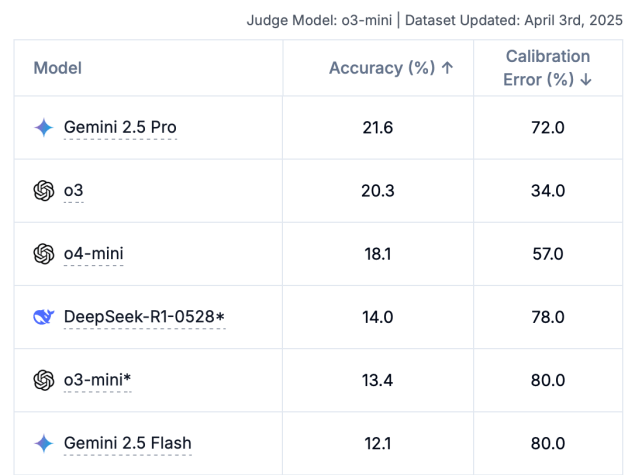
I'm sure we'll see plenty of articles now claiming that AI is creating jobs, right? pic.twitter.com/1OcUoRrsUl
The French magazine L’Express is widely read as magazines go. I was asked to give comments on fast fashion. An interview with me has been published in French at
Idées: Alors que Shein provoque une controverse nationale en France, l’économiste américaine invite à un regard nuancé sur la fast fashion, rappelant que le trop-plein de vêtements est un problème très récent dans l’histoire humaine.
Ideas: While Shein is causing a national controversy in France, the American economist urges a more nuanced view of fast fashion, reminding us that the overabundance of clothing is a very recent problem in human history.
I enjoyed talking with their reporter Thomas Mahler (kindly for me, in English). He informed me that French politicians are proposing to ban Shein from the country, meanwhile millions of people in France shop through Shein regularly.
 Economist Writing Every Day