When Genius Failed

Myron Scholes was on top of the world in 1997, having won the Nobel Prize in economics that year for his work in financial economics, work that he had applied in the real world in a wildly successful hedge fund, Long Term Capital Management. But just one year later, LTCM was saved from collapse only by a last-minute bailout that wiped out his equity (along with that of the other partners of the fund) and cast doubt on the value of his academic work.

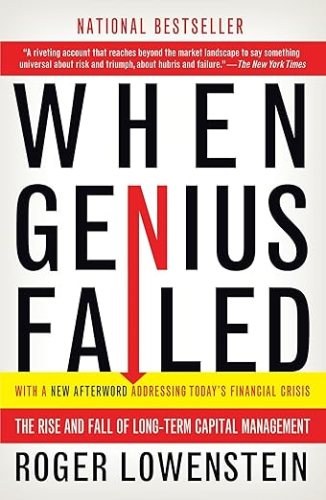
Roger Lowenstein told the story of LTCM in his 2001 book “When Genius Failed“. I finally got around to reading this classic of the genre this year, and I’d say it is still well worth picking up. The story is well-told, and the lessons are timeless-

  • Beware hubris
  • Beware leverage
  • Bigger positions are harder to get out of (especially once everyone knows you are in trouble)
  • In a crisis, all correlations go to one
  • Past results don’t necessarily predict future performance
  • Sometimes things happen that are very different from anything that happened in your backtest window.

The book came out in 2001 but it presages the 07 financial crisis well- not about mortgage derivatives specifically, but the dangers of derivatives, leverage, using derivatives to avoid regulations restricting leverage, and over-relying on mathematical models of risk based on past behavior. If Fed had let LTCM fail, could we have avoided the next crisis? Perhaps so, as their counterparties (most major Wall Street banks) who got burned would have been more careful about the leverage and derivatives used by themselves and their counterparties, and regulators may have taken stronger stances on the same issues.

Perhaps some more recent well-contained blowups foreshadow the next big crisis in the same way, like FTX or SVB?
Some more specific highlights about LTCM:

Continue reading
Get rich or get famous? Edward Thorp vs Myron Scholes

When finance professors publish papers claiming to find inefficiencies in asset markets, my initial reaction is skepticism. The odds are stacked against them to start since asset markets are mostly efficient. Then even if the inefficiency they found is real, shouldn’t they keep that fact to themselves and get rich trading on it?

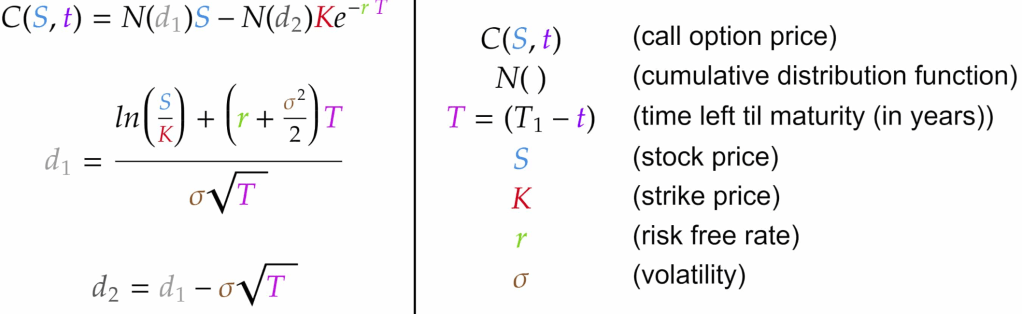
But listening to a recent interview with Edward Thorp, I realized I shouldn’t entirely discount the possibility that someone would publish a real inefficiency, even a tradeable one. After all, Myron Scholes and Fischer Black did just that when they published the Black-Scholes model in the Journal of Political Economy. This made them famous on Wall Street and in econ/finance academia, and won Scholes the 1997 Nobel Memorial Prize in Economics.

Thorp explained that he had come up with a similar model years earlier, but instead of publishing it, he started a hedge fund and got rich. He says it makes sense that he didn’t share the Nobel Prize, partly because the Black-Scholes model was better than his, but mostly because you should need to publish and share your ideas with the world to get scientific credit for them; his prize was 20% annual returns at his hedge fund.

Why do some opt to get rich, and others to get famous? I’d say academics’ first instinct is to publish everything rather than put it into practice. But Thorp was also an academic, a math professor. Thorp was already famous for publishing a book about how to beat the house at blackjack by counting cards (which is what I knew him for before this interview), so perhaps he valued additional fame less. But he was also already rich from winning at blackjack and from book sales.

Putting ideas into practice can also bring up unanticipated difficulties. When Myron Scholes finally did start working at a hedge fund in 1994 he saw initial success, but by 1998 it had become an embarrassing blunder that inspired the book “When Genius Failed: The Rise and Fall of Long-Term Capital Management”. Scholes may have been better off sticking to academic fame.

Black-Scholes formula for options pricing. The Efficient Markets Hypothesis says that markets instantly incorporate all public information, but original research like this isn’t public until you publish it, and even then it can take years for market participants to fully incorporate it