Edward O. Thorp grew up in Depression-era California, a tinkering kid who cooked up homemade nitroglycerin with a chemistry set. (That gets my respect, since as a kid I only made it to manufacturing old-fashioned black gunpowder). He became a math professor, worked out how to count cards at blackjack, and published Beat the Dealer in 1962.
He didn’t just theorize. He took a $10,000 bankroll from a gambler and hit Vegas in 1961, and started making big winnings at blackjack. Casinos soon realized something was up. Nevada casinos are private businesses and can simply ask a winning player to leave, so he was often “backed off” rather than formally blacklisted. To keep playing, Thorp used disguises, including wigs, glasses, and a fake beard. Based on his achievements, Thorp was an inaugural member of the Blackjack Hall of Fame.* (As a countermeasure to his methods, casinos now shuffle long before the end of the deck is reached in blackjack.) Thorp also teamed up with information-theory legend Claude Shannon to build what’s often called the first wearable computer, a cigarette-pack-sized gadget to beat roulette.
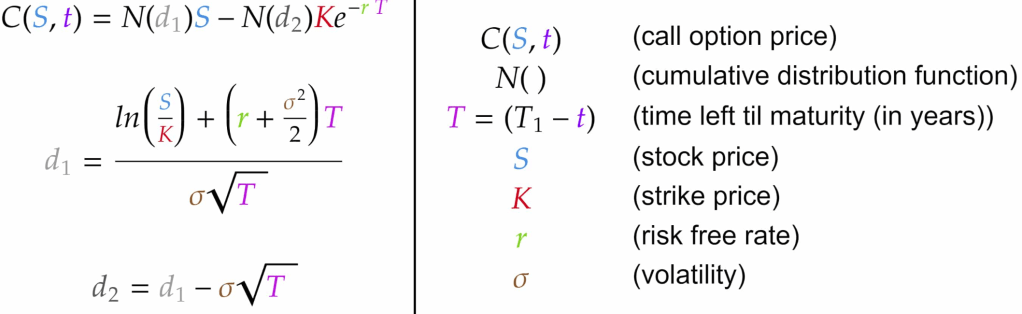
Wall Street, it turned out, was just a bigger casino. Thorp’s trading came down to a simple idea: find things that are priced wrong relative to each other, and let math tell you how much to bet. With Sheen Kassouf, he spotted that warrants (long-dated options issued by companies) were often mispriced against the underlying stock. They bought the cheap one, shorted the expensive one, and adjusted the ratio as prices moved so the position stayed balanced. This is what we now call delta hedging. Thorp also worked out an options pricing formula on his own, years before Black and Scholes published theirs in 1973, and used it quietly to trade. In the 1980s his team moved into statistical arbitrage, using computers to hunt for small, repeatable mispricings across lots of stocks at once. Throughout, he used the Kelly criterion to size positions, so no single bet could sink the fund.
His fund, Princeton Newport Partners, ran from 1969 to 1988 and returned roughly 19% (!!) a year after fees, with no losing calendar years and low volatility. That is a stunning record, both on returns and drawdowns (high Sharpe ratio), considering it spanned the 1973-74 bear market and the 1987 crash. His later fund, Ridgeline Partners, reportedly did similarly well. He is often cited as one of the most successful (G.O.A.T.) traders ever, and a pioneer in quant investing. Using faster computers and bigger datasets, a modern quant shop is like Thorp on steroids: many small hedged bets, following models rather than hunches, and strict risk control. Convertible arbitrage, stat arb, and market-neutral investing all trace back to people like Thorp
Thriving in Bear Markets
A traditional long-only investor needs stocks to go up. When the market tanks, they just suffer. Thorp’s approach didn’t care much about market direction. If you’re long the underpriced thing and short the overpriced thing, you’re betting on the gap closing, not on the market rising. Panic can even help, since mispricings get bigger when everyone’s scared. As an amateur connoisseur of uncorrelated assets, I find this intriguing. (See this earlier post on market-neutral funds which are available to retail investors).
This is not so easy to do. First, edges can fade: once everyone copies your math, the free lunch shrinks and trades get overcrowded. Also, the spreads per trade are small, which leads traders to leverage up, which can destroy you in a day if markets go against you. A big part of Thorp’s success was sizing bets carefully and staying alive long enough for the edge to compound.
* The “Blackjack Hall of Fame” is housed at Barona Resort & Casino near San Diego. The Barona Casino awards to each inductee a permanent lifetime complimentary full room, food, and beverage, in exchange for each member’s agreement never to play on Barona’s tables.