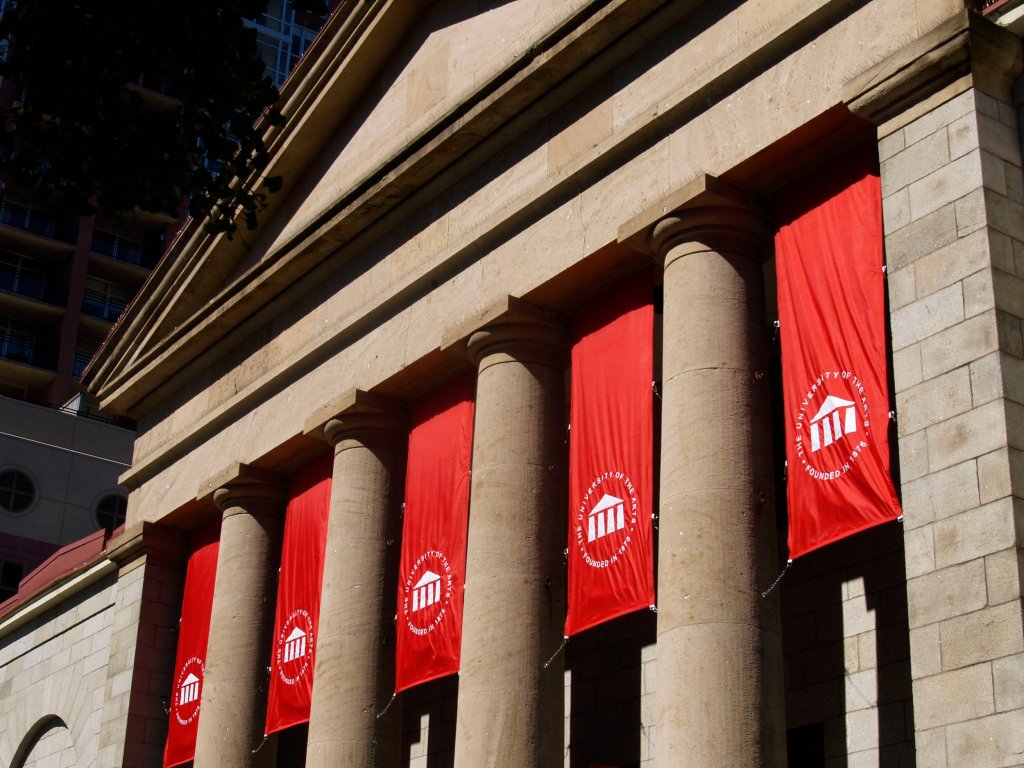
This week the University of the Arts in Philadelphia announced they were closing effective immediately, leaving students scrambling to transfer and faculty desperate for jobs. U Arts now joins Cabrini University and Birmingham-Southern as some the 20 US colleges closing or being forced to merge so far this year. This trend of closures is likely to accelerate given falling birth rates that mean the number of college-age Americans is set to decline for decades; short-term issues like the FAFSA snafu and rising interest rates aren’t helping either.
All this makes it more important for potential students and employees to consider the financial health of colleges they might join, lest they find themselves in a UArts type situation. But how do you predict which colleges are at significant risk of closing? One thing that jumps out from this year’s list of closures is that essentially every one is a very small (fewer than 2000 undergrad) private school. Rural schools seem especially vulnerable, though this year has also seen plenty of closures in major cities.

There appear to be a number of sources tracking the financial health of colleges, though most are not kept up to date well. Forbes seems to be the best, with 2023 ratings here; UArts, Cabrini, and Birmingham-Southern all had “C” grades. If you have access to them, credit ratings would also be good to check out; Fitch offers a generally negative take on higher ed here.
In a 2020 Brookings paper, Robert Kelchen identified several statistically significant predictors of college closures:
I used publicly available data compiled by the federal government to examine factors associated with college closures within the following two to four years. I found several factors, such as sharp declines in enrollment and total revenue, that were reasonably strong predictors of closure. Poor performances on federal accountability measures, such as the cohort default rate, financial responsibility metric, and being placed on the most stringent level of Heightened Cash Monitoring, were frequently associated with a higher likelihood of closure. My resulting models were generally able to place a majority of colleges that closed into a high-risk category
The Higher Learning Commission reached similar conclusions. Of course, there is a danger in identifying at-risk colleges too publicly:
Since a majority of colleges identified of being at the highest risk of closure remained open even four years later, there are practical and ethical concerns with using these results in the policy process. The greatest concern is that these results become a self-fulfilling prophecy— being identified as at risk of closure could hasten a struggling college’s demise.
Still, would-be students, staff and faculty should do some basic research to protect themselves as they considering enrolling or accepting a job at a college. College employees would also do well to save money and keep their resumes ready; some of these closures are so sudden that employees find out they are out of a job effective immediately and no paycheck is coming next month.


This is a major topic for parents of prospective students. One issue is financial health as relates to school closure. The second is the risk that the school you attend has financial difficulties such that it cuts your program of study or said reductions materially change the education experience. The latter is rampant right now – the situation is critical. The former (closure) is getting lots of press lately. Both risks should be assessed by parents and prospective students. And substantial endowments won’t necessarily reduce the risk of the second because schools can’t run operating deficits unless they have a large endowment with access to unrestricted funds. So you have schools like Bradley, Drake, St Norbert, Valparaiso all making program cutbacks despite balance sheets that would be the envy of most smaller schools.
The biggest problem is the widespread lack of proactivity by college leaders and boards – perhaps out of fear that prospective students will become scared off. When leadership is shown, many faculty react negatively with denial (witness the situations I mentioned above like Bradley).
The government stats are woefully inadequate for predicting any of this. I think the accountants and accreditors are the ones best positioned to sound the alarms. For example, the University of the Arts in Philadelphia maybe could have been saved with dramatic action or pursuit of a merger a year or two ago. Did anyone warn the board? Did the school’s CFO not discuss the criticality with the board?
The economics of education are similar to that of airlines: high fixed costs and low variable costs, especially on a marginal basis. The last 5% of students cost you nothing. This means every year you have material risk to the financial plan for the next year if you miss your enrollment figures. You know your financial situation for 2024-2025 in May 2024 – for better or worse. But you do have time to react. But it also means you can delude yourself into thinking you are always one good student intake/enrollment from solving your problem. Where we are now, too many schools bet on the come on good enrollments the last couple years to offset the loss of COVID funding.
Bottom Line: Like with retail and office space, we are in a slow motion apocalypse train wreck. We have too much brick & mortar – even if online didn’t exist (which it does exist and will only grow). 1,000 schools have to close. Presidents, boards and states need to be proactive about this because the problems are here and they won’t be getting any better any time soon – as your charts show for most states (very cool graphic – you really see the NE and Midwest issues).
LikeLiked by 1 person
Excellent and valid points, all.
LikeLike
Good point about program cuts, closure isn’t the only risk
LikeLike
It’s the comparisons that matter. I created the College Viability App to let students, families, faculty, staff, and other stakeholders compare that last 8 reported years of financial, enrollment, and graduation rate data. It is kind of a ‘reverse FAFSA’ that lets students and their families see the finances of the colleges they are considering.
No one should predict a college closure. Let the consumers use data – kind of like the Kelly Blue Book to make their own comparisons and analyses.
LikeLike