Solving the Participation Pickle with Pick.al

Joy: This post was written by my friend and fellow econ professor Cameron Hardwick.

One of my biggest ongoing teaching challenges is keeping students engaged during lectures.

Sure, there are ways to add interactivity here and there, but sometimes there’s just no way around an old-fashioned lecture.

There are a few ways of dealing with this, and I haven’t been satisfied with any.

  1. It’s their grade, if they zone out that’s on them. In terms of the incentives, sure, the externalities are all internalized. But as a macroeconomist, I also know: if time-inconsistency problems are hard for policymakers, how much more for students! We shouldn’t be surprised when students do poorly if the main feedback they get from paying attention or not comes a week later with the homework grade.
  2. Posing questions and waiting for answers. Either you get a minute of awkward silence, or you get the same two engaged students answering everything while everyone else keeps zoning out.
  3. Cold calling. I started doing this a few years into teaching. The advantage is that it keeps students on their toes and paying attention. But a few problems left me unsatisfied:
    1. “How about you in the red shirt”. Hard to catch a student’s attention that way, and in a class of 40 or more, learning names takes a good chunk of the semester.
    1. I had no systematic way of keeping track of participation. Every semester I’d look at the roster and still have a few names I couldn’t put a face to.
    1. Humans are really bad at making random choices! Much as I tried, I couldn’t guarantee I wasn’t biased toward or against (say) the corners of the room, or students whose names I knew.
  4. LMS software. These can offer a lot of great student participation tools. But students have to pay for them – which isn’t worth it if you’re just looking for one feature. On top of that, then you’re locked into an ecosystem.

So, I made an app myself. It does one thing and does it well.

Pick.al (pronounced Pickle) picks students at random from a roster and keeps track of participation points. I can now pose a question in class, ask “what do you think…”, pull out my phone and hit a button, and have a name.

I can also record the quality of their answers:

  • ✓: 1 point, good attempt! (Since this is for participation points, I record ✓ whether right or wrong, as long as they give it a good shot)
  • ?: 0.5 points, if they ask “wait, what was the question?”
  • ×: 0 points, if they’re not there or don’t respond at all.

There’s also a 1-5 scale option, for those who want a more fine-grained evaluation.

This has a lot of benefits in the classroom:

  • Since I can call on students by name, I learn names more quickly.
  • Pick.al chooses randomly from the pool of students who have been called on the least so far. So, I know my participation points are as fair as possible.
  • Students know they can get called on at any time, so they pay attention more in class, and then do better on the homeworks and tests.
  • Students appreciate being brought in more frequently. One noted on the evaluations the first semester I piloted it: “something specific I like is he got the class involved by calling people out which forced them to test their knowledge which is something teachers need to do more of.”

Using Pick.al is as simple as registering (with an email address or an OrcID), uploading a roster, and then hitting a button during class. You can also swipe through the history and edit or undo participation events, and go back in the admin interface and add, edit, and remove participation events after the fact if necessary.

Pick.al is secure and password-protected, and has a number of handy features:

  • You can set excused absences if a student lets you know beforehand, so their name doesn’t come up until a certain date.
  • You can select specific students from the roster in a sidebar, if you want to give credit to – say – a student who raises his hand unbidden.
  • If you’d like to use the classroom computer instead of pulling out a phone, you can use it with full keyboard navigation.
  • Scores can be downloaded as a CSV to be put in your own gradebook.
  • Private notes can be added to students to show up when their names are selected, e.g. “sits in the back corner”

If you use it and find a bug or have an idea that would make it more useful to you, feel free to let me know. It’s been a great tool in my own classes, and I hope it’ll be useful for other teachers to keep students engaged too.

Hand-in-Hand: Demand & Technology

In standard microeconomics, the long-run demand is unimportant for the market price of a good. Firm competition, entry, and exit causes economic profits to be zero and the price to be equal to firms’ identical minimum average cost. This unreasonably assumes that they have constant technology. That is, they have a constant mix of productive inputs and practices.

Just so we’re clear: time is passing such that firms can enter, exit, and adjust the price – but no productive innovation occurs. For the modeling, we freeze time for technology, but not for other variables. The model ceases to reflect reality on the margin of scale-induced innovation. The standard model assumes an optimal quantity of production for each firm and the only way for total output to change is for there to be more or fewer firms. The model precludes adopting any different technology because firms are already producing at the minimum average cost – if they could produce more cheaply, then they would.

Enter Scale

One of my favorite details about production was taught to me by Robin Hanson.* Namely, that the scale of production isn’t merely with the aid of more raw materials, labor, and capital. There are perfectly well-known existing technologies and methods that reduce the average cost – if the firm could produce a large enough quantity. This helps to illustrate what counts are technology. A firm can achieve lower average costs without inventing anything, and merely by adopting a superficially different production method.

Continue reading

OpenAI wants you to fool their AI

OpenAI created the popular Dall-E and ChatGPT AI models. They try to make their models “safe”, but many people make a hobby of breaking through any restrictions and getting ChatGPT to say things its not supposed to:

Source: Zack Witten

Now trying to fool OpenAI models can be more than a hobby. OpenAI just announced a call for experts to “Red Team” their models. They have already been doing all sorts of interesting adversarial tests internally:

Now they want all sorts of external experts to give it a try, including economists:

This seems like a good opportunity to me, both to work on important cutting-edge technology, and to at least arguably make AI safer for humanity. For a long time it seemed like you had to be a top-tier mathematician or machine learning programmer to have any chance of contributing to AI safety, but the field is now broadening dramatically as capable models start to be deployed widely. I plan to apply if I find any time to spare, perhaps some of you will too.

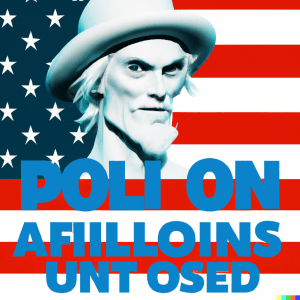
The models definitely still need work- this is what I got after prompting Dall-E 2 for “A poster saying “OpenAI wants you…. to fool their models” in the style of “Uncle Sam Wants You””

The Fermi Paradox: Where Are All Those Aliens?

Last week NASA’s independent study team released its highly anticipated report on UFOs.  A couple of takeaways: First, the term “UFO” has been replaced  in fed-speak by “UAP” (unidentified anomalous phenomena). Second, no hard evidence has emerged demonstrating an extra-terrestrial origin for UAPs, but, third, there is much that remains unexplained.

Believers in aliens are undeterred. Earlier this summer, former military intelligence officer David Grusch had made sensational claims in a congressional hearing that the U.S. government is concealing the fact that they are in possession of a “non-human spacecraft.”  The NASA director himself, Bill Nelson, holds that it is likely that intelligent life exists in other corners of the universe, given the staggering number of all the stars which likely have planets with water and moderate temperatures.

A famous conversation took place in 1950 amongst a group of top scientists at Los Alamos (think: Manhattan Project) over lunch. They had been chatting about the recent UFO reports and the possibility of faster-than-light travel. Suddenly Enrico Fermi blurted out something like, “But where is everybody?”

His point was that if (as many scientists believe) there is a reasonable chance that technically-advanced life-forms can evolve on other planets, then given the number of stars (~ 300 million) in our Milky Way galaxy and the time it has existed, it should have been all colonized many times over by now. Interstellar distances are large, but 13 billion years is a long time.  Earth should have received multiple visits from aliens. Yet, there is no evidence that this has occurred, not even one old alien probe circling the Sun. This apparent discrepancy is known as the Fermi paradox.

A variety of explanations have been advanced to explain it. To keep this post short, I will just list a few of these factors, pulled from a Wikipedia article:

Extraterrestrial life is rare or non-existent

Those who think that intelligent extraterrestrial life is (nearly) impossible argue that the conditions needed for the evolution of life—or at least the evolution of biological complexity—are rare or even unique to Earth.

It is possible that even if complex life is common, intelligence (and consequently civilizations) is not.

Periodic extinction by natural events [e.g., asteroid impacts or gamma ray bursts]

 Intelligent alien species have not developed advanced technologies [ e.g., if most planets which contain water are totally covered by water, many planets may harbor intelligent aquatic creatures like our dolphins and whales, but they would be unlikely to develop starship technology].

It is the nature of intelligent life to destroy itself [Sigh]

It is the nature of intelligent life to destroy other technically-advanced species [A prudent strategy to minimize threats; the result being a reduction in the number of starship civilizations].

And there are many other explanations proposed, including the “zoo hypothesis,” i.e., alien life intentionally avoids communication with Earth to allow for natural evolution and sociocultural development, and avoiding interplanetary contamination, similar to people observing animals at a zoo.

As a chemical engineer and amateur reader of the literature on the origins of life, I’d put my money on the first factor. We have reasonable evidence for tracing the evolution of today’s complex life-forms back to the original cells, but I think the odds for spontaneous generation of those RNA/DNA-replicating cells are infinitesimally  low.  Hopeful biochemists wave their hands like windmills proposing pathways for life to arise from non-living chemicals, but I have not seen anything that seems to pass the sniff test. It is a long way from a chemical soup to a self-replicating complex system. I would be surprised to find bacteria, much less star-travelling aliens, on many other planets in the galaxy.

Maybe that’s just me. But Joy Buchanan’s recent poll of authors on this blog suggest that we are collectively a skeptical lot.

Generative AI Nano-Tutorial

Everyone who has not been living under a rock this year has heard the buzz around ChatGPT and generative AI. However, not everyone may have clear definitions in mind, or understanding of how this stuff works.

Artificial intelligence (AI) has been around in one form or another for decades. Computers have long been used to analyze information and come up with actionable answers. Classically, computer output has been in the form of numbers or graphical representation of numbers. Or perhaps in the form of chess moves, beating all human opponents since about 2000.

Generative AI is able to “generate” a variety of novel content, such as images, video, music, speech, text, software code and product designs, with quality which is difficult to distinguish from human-produced content. This mimicry of human content creation is enabled by having the AI programs analyze reams and reams of existing content (“training data”), using enormous computing power.

I wanted to excerpt here a fine article I just saw which is informative on this subject. Among other things, it lists some examples of gen-AI products, and describes the “transformer” model that underpins many of these products. I skipped the section of the article that discusses the potential dangers of gen-AI (e.g., problems with false “hallucinations”), since that topic has been treated already in this blog.

Between this article and the Wikipedia article on Generative artificial intelligence , you should be able to hold your own, or at least ask intelligent questions, when the subject next comes up in your professional life (which it likely will, sooner or later).

One technical point for data nerds is the distinction between “generative” and “discriminative” approaches in modeling. This is not treated in the article below, but see here.

All text below the line of asterisks is from Generative AI Defined: How it Works, Benefits and Dangers, by Owen Hughes, Aug 7, 2023.

*******************************************************

What is generative AI in simple terms?

Generative AI is a type of artificial intelligence technology that broadly describes machine learning systems capable of generating text, images, code or other types of content, often in response to a prompt entered by a user.

Generative AI models are increasingly being incorporated into online tools and chatbots that allow users to type questions or instructions into an input field, upon which the AI model will generate a human-like response.

How does generative AI work?

Generative AI models use a complex computing process known as deep learning to analyze common patterns and arrangements in large sets of data and then use this information to create new, convincing outputs. The models do this by incorporating machine learning techniques known as neural networks, which are loosely inspired by the way the human brain processes and interprets information and then learns from it over time.

To give an example, by feeding a generative AI model vast amounts of fiction writing, over time the model would be capable of identifying and reproducing the elements of a story, such as plot structure, characters, themes, narrative devices and so on.

……

Examples of generative AI

…There are a variety of generative AI tools out there, though text and image generation models are arguably the most well-known. Generative AI models typically rely on a user feeding it a prompt that guides it towards producing a desired output, be it text, an image, a video or a piece of music, though this isn’t always the case.

Examples of generative AI models include:

  • ChatGPT: An AI language model developed by OpenAI that can answer questions and generate human-like responses from text prompts.
  • DALL-E 2: Another AI model by OpenAI that can create images and artwork from text prompts.
  • Google Bard: Google’s generative AI chatbot and rival to ChatGPT. It’s trained on the PaLM large language model and can answer questions and generate text from prompts.
  • Midjourney: Developed by San Francisco-based research lab Midjourney Inc., this gen AI model interprets text prompts to produce images and artwork, similar to DALL-E 2.
  • GitHub Copilot: An AI-powered coding tool that suggests code completions within the Visual Studio, Neovim and JetBrains development environments.
  • Llama 2: Meta’s open-source large language model can be used to create conversational AI models for chatbots and virtual assistants, similar to GPT-4.
  • xAI: After funding OpenAI, Elon Musk left the project in July 2023 and announced this new generative AI venture. Little is currently known about it.

Types of generative AI models

There are various types of generative AI models, each designed for specific challenges and tasks. These can broadly be categorized into the following types.

Transformer-based models

Transformer-based models are trained on large sets of data to understand the relationships between sequential information, such as words and sentences. Underpinned by deep learning, these AI models tend to be adept at NLP [natural language processing] and understanding the structure and context of language, making them well suited for text-generation tasks. ChatGPT-3 and Google Bard are examples of transformer-based generative AI models.

Generative adversarial networks

GANs are made up of two neural networks known as a generator and a discriminator, which essentially work against each other to create authentic-looking data. As the name implies, the generator’s role is to generate convincing output such as an image based on a prompt, while the discriminator works to evaluate the authenticity of said image. Over time, each component gets better at their respective roles, resulting in more convincing outputs. Both DALL-E and Midjourney are examples of GAN-based generative AI models…

Multimodal models

Multimodal models can understand and process multiple types of data simultaneously, such as text, images and audio, allowing them to create more sophisticated outputs. An example might be an AI model capable of generating an image based on a text prompt, as well as a text description of an image prompt. DALL-E 2 and OpenAI’s GPT-4 are examples of multimodal models.

What is ChatGPT?

ChatGPT is an AI chatbot developed by OpenAI. It’s a large language model that uses transformer architecture — specifically, the “generative pretrained transformer”, hence GPT — to understand and generate human-like text.

What is Google Bard?

Google Bard is another example of an LLM based on transformer architecture. Similar to ChatGPT, Bard is a generative AI chatbot that generates responses to user prompts.

Google launched Bard in the U.S. in March 2023 in response to OpenAI’s ChatGPT and Microsoft’s Copilot AI tool. In July 2023, Google Bard was launched in Europe and Brazil.

…….

Benefits of generative AI

For businesses, efficiency is arguably the most compelling benefit of generative AI because it can enable enterprises to automate specific tasks and focus their time, energy and resources on more important strategic objectives. This can result in lower labor costs, greater operational efficiency and new insights into how well certain business processes are — or are not — performing.

For professionals and content creators, generative AI tools can help with idea creation, content planning and scheduling, search engine optimization, marketing, audience engagement, research and editing and potentially more. Again, the key proposed advantage is efficiency because generative AI tools can help users reduce the time they spend on certain tasks so they can invest their energy elsewhere. That said, manual oversight and scrutiny of generative AI models remains highly important.

Use cases of generative AI

Generative AI has found a foothold in a number of industry sectors and is rapidly expanding throughout commercial and consumer markets. McKinsey estimates that, by 2030, activities that currently account for around 30% of U.S. work hours could be automated, prompted by the acceleration of generative AI.

In customer support, AI-driven chatbots and virtual assistants help businesses reduce response times and quickly deal with common customer queries, reducing the burden on staff. In software development, generative AI tools help developers code more cleanly and efficiently by reviewing code, highlighting bugs and suggesting potential fixes before they become bigger issues. Meanwhile, writers can use generative AI tools to plan, draft and review essays, articles and other written work — though often with mixed results.

The use of generative AI varies from industry to industry and is more established in some than in others. Current and proposed use cases include the following:

  • Healthcare: Generative AI is being explored as a tool for accelerating drug discovery, while tools such as AWS HealthScribe allow clinicians to transcribe patient consultations and upload important information into their electronic health record.
  • Digital marketing: Advertisers, salespeople and commerce teams can use generative AI to craft personalized campaigns and adapt content to consumers’ preferences, especially when combined with customer relationship management data.
  • Education: Some educational tools are beginning to incorporate generative AI to develop customized learning materials that cater to students’ individual learning styles.
  • Finance: Generative AI is one of the many tools within complex financial systems to analyze market patterns and anticipate stock market trends, and it’s used alongside other forecasting methods to assist financial analysts.
  • Environment: In environmental science, researchers use generative AI models to predict weather patterns and simulate the effects of climate change

….

Generative AI vs. machine learning

As described earlier, generative AI is a subfield of artificial intelligence. Generative AI models use machine learning techniques to process and generate data. Broadly, AI refers to the concept of computers capable of performing tasks that would otherwise require human intelligence, such as decision making and NLP.

Machine learning is the foundational component of AI and refers to the application of computer algorithms to data for the purposes of teaching a computer to perform a specific task. Machine learning is the process that enables AI systems to make informed decisions or predictions based on the patterns they have learned.

( Again, to make sure credit goes where it is due, the text below the line of asterisks above was excerpted from Generative AI Defined: How it Works, Benefits and Dangers, by Owen Hughes).

Is Long Covid Really a Thing?

We seem to be somewhat exhausted by all the dire predictions around Covid, now that life has largely gotten back to the normal. Shops and theaters are open, and people are once more crowding aboard those floating petri dishes called cruise ships. The most vulnerable segments of the population have mainly been vaccinated, and each new strain of the disease seems less harmful. All the anti-vaxxers I know have had Covid at least once and hence have some level of immunity, or else they caved and got vaccinated after seeing a close friend or relative die back in the winter of 2021-22. One enduring benefit of Covid is much more availability to work from home.

One of the direst prognostications was that the world would suffer a more or less permanent step down in standards of living due to “long Covid.”  According to this narrative, untold numbers of healthy young or middle-aged people would remain debilitated indefinitely due to the ongoing after-effects of a Covid infection: struck down in their prime, never to rise again.

A recent review of the field in Nature concluded, “The oncoming burden of long COVID faced by patients, health-care providers, governments and economies is so large as to be unfathomable”. Ouch. The federal government has provided $1.15 billion for research into the problem of long COVID and its mitigation.

Just the Facts

A couple of facts stand out: First, in many cases, scans of internal organs have shown changes in victims’ hearts and lungs and brains, following a severe Covid infection. Second, many people have reported symptoms such as weakness, fatigue and general malaise, impaired concentration and breathlessness, weeks after the primary symptoms of the disease have resolved.

How big a problem is this? I cannot, in the scope of a short blog post, adequately canvass all the data and literature. I will just cite a few numbers and charts, and let the professional data analysts dig into the fine points.

One meta-analysis found that a full “41.7% of COVID-19 survivors experienced at least one unresolved symptom and 14.1% were unable to return to work at 2-year after SARS-CoV-2 infection.” [That number seems much higher than my personal observations would suggest]. A CDC survey found that as of July 26-Aug 7, 2023, about 5.8 % of all Americans (which is 10.4% of Americans who ever had Covid) report experiencing some effects of long Covid, with 1.5% of all American adults experiencing significant activity limitations as result of long Covid. These numbers show a modest downward trend with time.

The chart below depicts the incidence of long Covid in England, again showing a modest downward trend in the latest year:

Weekly estimates of prevalence of COVID-19 and long COVID in England. Source.

Correlation versus Causation

So: we have many people experience severe symptoms from Covid, but most resolve within a few months at most. That leaves a small but nontrivial minority of Covid victims reporting problems long after that window. A significant question is whether Covid of itself caused those long-term symptoms, or just precipitated some problem that was bound to show up anyway.

I have read poignant anecdotes of perfectly healthy young people who suffer from brain fog two years later. But I have lived long enough to be wary of generalizing from poignant anecdotes. After all, the whole anti-vaccination movement has been fueled by poignant anecdotes of, say,  perfectly normal two-year-olds going autistic shortly after getting their vaccine shots.

The 2023 metastudy referred to earlier found that long Covid sufferers tended to be older, and had pre-existing medical comorbidities.  Similarly, we have known since 2020 that the cohorts most likely to die from Covid were older folks (such as me!), many of whom were bound to die anyway.  

In this light, the data brought forth by James Baily in his recent article on this blog, Long Covid is Real in the Claims Data… But so is “Early Covid”?, is most interesting. He noted that on average people use more health care for at least 6 months post-Covid compared to their pre-Covid baseline, which is consistent with some measure of long Covid. However, those same individuals also spent significantly more on healthcare 1-2 months before their Covid diagnosis. This seems consistent with the notion that some of what gets blamed on Covid would have occurred sooner or later anyway.

A Nuanced View of Long Covid

An article in Slate by Jeff Wise has dug deeper into the data. He noted that the survey-based datasets that have been largely used to estimate the effects of long Covid tend to be biased: those who feel ongoing symptoms are more likely to complete the surveys, giving rise to some of the largish numbers I have shared above. Newer, better-controlled retrospective cohort studies tend to show much lower ongoing incidence of symptoms, especially compared to control groups who had not had Covid. The feared tidal wave of mass disabilities never arrived:

“The best available figures, then, suggest two things: first, that a significant number of patients do experience significant and potentially burdensome symptoms for several months after a SARS-CoV-2 infection, most of which resolve in less than a year; and second, that a very small percentage experience symptoms that last longer. ”

Further, “Another insight that emerges from the cohort studies into long COVID is that it is not so easy to prove causality between a particular infection and a symptom. Almost all the symptoms associated with long COVID can also be triggered by all sorts of things, from other viruses to even the basic reality of living through a pandemic.”

Finally:

It looks more as if people who complain of long COVID are suffering from a collection of different effects. “I think there’s quite a heterogeneous group of people all sailing under the one flag,” said Alan Carson, a neuropsychiatrist at the University of Edinburgh in Scotland. Some patients may be experiencing the lingering aftereffects that occur in the wake of many diseases; some patients with chronic comorbidities might be experiencing the onset of new symptoms or the continuation of old ones; others might be affected by the sorts of mood disorders and psychiatric symptoms you’d expect to find in a population undergoing the stress of a global pandemic.

Another Slate article from last month gently debunks alarmism stemming from a Nature Medicine study of U.S. veterans who showed increased susceptibility to disease even two years after contracting Covid.

 There is often great difficulty in discerning the actual organic, biochemical basis for the reported symptoms. This makes it hard to come up with a pill or a shot that might adjust the body’s metabolic pathways in order to cure them. Thus, simply treating the symptoms as such may offer the best near-term relief. To that end, a team of French researchers had the audacity to propose that much of the fatigue and brain fog associated with long Covid may be largely in our heads. In an article in the Journal of Psychosomatic Research  Why the hypothesis of psychological mechanisms in long COVID is worth considering , Lemogne, et al. noted strong links between a patient’s prior expectations of symptom severity and the actual reported outcomes. The intent of the researchers is not to belittle the reported distress of long Covid sufferers, but to point towards established therapeutic methods to help treat disorders with at least a partial psychosomatic basis:

Many potential psychological mechanisms of long COVID are modifiable factors that could thus be targeted by already validated therapeutic interventions. Beside the treatment of a comorbid psychiatric condition, which may be associated with fatigue, cognitive impairment or aberrant activation of the autonomous nervous system, therapeutic interventions may build on those used in the treatment of ‘functional somatic disorders’, defined as the presence of debilitating and persistent symptoms that are not fully explained by damage of the organs they point. These disorders are common after an acute medical event, particularly in women, and include psychological risk factors, such as anxiety, depression, and dysfunctional beliefs that can lead to deleterious, yet modifiable health behaviors. Addressing these factors in the management of long COVID may provide an opportunity for patient empowerment.

In sum: A significant number of those who contract COVID suffer ongoing symptoms for a number of months afterward. Over a billion dollars of research has been directed at the problem. The severity of these symptoms tends to decline with time, in the vast majority of cases resolving by twelve months. This leaves some individuals still suffering fatigue and brain fog over a year later. Studies are ongoing to discern the organic basis of these complaints, and the exact role that COVID may have played, in the light of the fact that complaints of enduring fatigue and brain fog were not uncommon before the pandemic. We hope that following the science will bring more relief here.

Circling back to our original interest in the economic impact of long COIVD, early studies indicated that a large fraction of the population might continue to be debilitated, to the point of being unable to work, with significant effects on the workforce and GDP. Actual data (e.g., on disability claims) indicate that these problems have not actually materialized.

Collapsible Boats You Can Store in Your Apartment: ORU Folding Kayaks and MyCanoe Canoes

My wife and I were sitting on a bench near a local lake, having a picnic dinner. On a little grassy spot nearby I noticed a young woman put down a large bag, and then slide out some large, odd-looking plastic pieces. Then she unfolded something, and, oh my goodness, she had brought a fold-up kayak in that bag:

A friend joined her with sliding some joiner tubular pieces over the seams on top to zip these seams together:

The whole assembly took less than ten minutes. The resulting kayak was very light to carry:

And away she paddled:

I had drifted over to talk to her as she was assembling the kayak, and she said she just stored the boat in its bag in a closet in her apartment. Also, that it was great  fun to use.

This was one of a selection of foldable kayaks sole by ORU. They make smaller, lighter, cheaper models for paddling on still water, and heavier-duty kayaks for ocean waves and white-water rivers. These kayaks get generally very high reviews. They are a bit pricy, and may not stand up for long scraping over rocks. But they are  clearly  full-blown, worth-paddling kayaks with rigid sides and clean lines.

This resonated with me, because maybe twenty years ago, I got a pair of inflatable kayaks that we could store in the basement and pull out and inflate at the lake. Paddling them was an awful experience. Although we inflated them to spec, they sagged in the middle, with the two ends sticking up in the air and catching the wind. It was like paddling a bathtub which was being constantly carried downwind.

I also found through that experience that kayaking was very uncomfortable for me. But I do like canoeing. So, after seeing how great the folding kayak was, I looked online and found a similar collapsible canoe, made by MyCanoe.  The design is a little harder to execute, because with a canoe you have an open top, whereas with a kayak you can seal up the top and get the whole boat to be something of a nice structural tubular structure. But the MyCanoe seems to work OK, and has the same advantages of being lightweight (19 lb for one-person Solo, 43lb for two-person Duo) and of folding into a small package for transport and storage. There is an oar-lock accessory so you can row it with two oars, as an alternative to paddling. The Solo is pretty short and wide, so it is very maneuverable , but I would be surprised if it tracks well in a straight line when you just want to paddle from point A to point B using one paddle.

You can find plenty of demos and reviews on YouTube for these folding kayaks and canoes. And there are other collapsible kayaks out there, per this review, but some of them are heavier and more involved to assemble.

Anyway, these folding craft are a pretty classy, free-enterprise technology solution for folks who like to get out on the water, but don’t have a garage or backyard to store a regular kayak or canoe, much less a trailer for a motorboat or a sailboat.

New EG.5  Variant Spreading: Start of New Covid Surge?

The spread of highly-contagious and sometimes fatal Covid-19, and the responses to it (lockdowns and then trillions of dollars of federal giveaway money to mitigate the effects of the lockdowns and now huge interest rate hikes to counter the inflation caused by that giveaway money) have been arguably the most economically momentous events of this decade so far. Thus, it behooves us to keep an ongoing eye on this beast, since it seems to keep coming back in waves.

We all know that Covid is spread by little “aerosol”  droplets coming out the infected people’s mouths and noses. Those aerosols are mainly generated by speaking and singing. So being in a room full of talking or singing people (e.g., a happy convention or bar, or a hymn-singing church) can be a super-spreader situation.

I have reasons to try to avoid respiratory diseases, and so I attended church on-line or outdoors for most of the past three years. The Covid numbers finally got low enough this spring that I started attending inside, and even going unmasked the past two months.

Alas, Covid cases and hospitalizations are back on the rise, it seems due to the new Eris or EG.5 subvariant. Like the infamous omicron variant of a year ago, it is very transmissible and resistant to existing vaccines, but is not as deadly as the original strain. Much of the population has some immunity due to vaccines and/or prior exposure. Also, antivirals like Paxlovid are widely available to help mitigate symptoms. Still, a case of Covid often makes for an uncomfortable and disruptive  week or two, and can still be fatal or debilitating.

So, I have done a quick amateur scan of the internet, trying to get a fix on what to expect. One thing that stands out is that actual case numbers are far higher than officially reported, for a couple of reasons. One is that the rigorous, systematic reporting of cases has fallen off, since Covid was deemed no longer an emergency. Also, with the end of free test kits and the generally more lax public attitude (we just want to be done with this), there is far less testing done than in 2022. (In communities with systematic testing, it turns out that the best way to track Covid is by analyzing wastewater).

Will the Latest Vaccines Save Us?

The vaccine story seems somewhat mixed. The latest booster vaccine, to be available around October, will target the XBB.1.5 subvariant, which is what was mainly circulating earlier this year. However, it is expected that since EB.5 is closely related to XBB.1.5 (both of these are of the general omicron family), the booster will confer some immunity to EB.5. That is the good news.

The bad news is that the public’s uptake of boosters in general is well under 50%, so we may expect EB.5 or whatever the next subvariant is to continue to circulate, and probably surge during the colder months when respiratory diseases tend to spread. Also, vaccines do not really stop you from getting Covid, they mainly act to mitigate the symptoms by helping your body’s defenses to react faster.

Starting next week, I will resume wearing an effective KN-95 or my preferred KF-94 mask at church and other venues where a lot of people are talking or singing.

5 Easy Steps to Improve Your Course Evals.

Incentives matter. I’ve taught at both public and private universities, and students have given me both great course evaluations and less great student evaluations. The private university cared a lot more about them. Obviously, some parts of student evaluations of their instructors are beyond the instructor’s control. The instructor can’t control inalienables and may not be able to change their charisma. But what about the things that instructors can control? Regardless of your current evals, here are 5 policies that are guaranteed to improve your course evaluations.

1: Very Clear Expectations/Schedule

Have all deadlines determined by the time that the semester starts. Students are busy people and they appreciate the ability to optimally plan their time. Relatedly, students desire respect from their instructor. Having clear rubrics and deadlines helps students know your expectations and how to meet them – or at least understand how they failed to meet them. Students want to feel like they were told the rules of the game ahead of time. This means no arbitrary deductions or deadlines. The syllabus is a contract if you treat it like one.

2: Mid-Semester Evaluations

One of the absolute best ways to improve your evaluation is to ask your evaluators for a performance update. Make a copy of your end-of-semester course evaluation and issue it about halfway through the semester. Then, summarize the feedback and review it with your class. This achieves three goals. (1) It is an opportunity to clarify policy if there are misplaced complaints. You may also wish to explain why policy is what it is. Knowing a good reason makes students more amenable to policies that they otherwise don’t prefer.  (2) It provides voice to students who have things to say. Often, students want to be heard and acknowledged. It’s better that a student vents during the informal mid-semester survey than on the important one at the conclusion of the course. (3) If there are widespread issues with your course, then make changes. If you’re on the fence about something, then take a poll. And if you decide to make changes, then be graciously upfront about it. Unexplained or covert changes violate policy #1.

Continue reading

Solar Cookers: Save Money, Save Lives, Save the Planet by Cooking with the Sun’s Rays

The Case for Solar Cooking

We all know we ought to reduce our CO2 generation to mitigate global warming and to conserve limited fuel reserves. Without descending into a tussle over exactly how man-made it is or whether it is part of a natural cycle which may turn soon to plunge us into yet another ice age, it does seem clear that the earth is experiencing a warming trend with possible serious consequences, and it is obvious that fossil fuel reserves (oil, natural gas, coal) are finite.

Although domestic cooking in developed countries comprises only a tiny fraction of total energy consumption, this is not true in some regions. Some 2 billion people still cook over fires of wood, charcoal, or animal dung. It is usually the women doing the cooking over these fires, inhaling smoke with all its consequences. Also, it is again women who largely end up gathering the fuel. All this gathering and fire-tending consumes time which takes away from other tasks like raising food. Also, women are often assaulted in the forests while they are foraging for wood.

It is possible to construct devices which capture enough of the sun’s rays to cook food (more technical details below). Many NGOs try to help people in poor, mainly sunny/tropical regions and in refugee camps to purchase or construct solar cookers. It is possible to set up cottage industries for locally making and selling these devices at low cost. It is just a win-win-win.  Solar Cookers International specializes in this work, and has developed and shared some of the most useful technology here. They claim some four million solar cookers are in use, and present figures for how much CO2 emissions and money for fuel are saved.

Why is this relevant to us in the West? Well, if we care to help the lot of the less-fortunate, we can give money to support these solar cooking initiatives. As noted, they can help the well-being of people, especially women, in many ways. A less-obvious  impact of us using solar cookers in our own homes is that folks in other lands are aware of our life-styles. It turns out that a non-trivial barrier to wide-spread adoption of solar cooking is that they are suspicious of Western aid workers promoting a method of cooking that no one back in the developed countries uses. If solar cooking could be more visible in our lifestyles it would have a significant effect in lands where it is really needed.

And getting around to our more personal motivations – it is kind of intriguing and rewarding to cook directly from the sun. On a hot day, it can mean cooking a casserole without heating the oven/kitchen. You can do great projects with kids (your own or others), designing and making and using solar ovens. And of course, you can signal your virtue by reducing your CO2 footprint.

If you find yourself in some situation when you have no other means to cook, a solar cooker could be a life-saver. To temper this reality, however, in most  temperate regions there will be many days without sufficient sunshine to make these work. Also, they are often much slower to heat up and cook than conventional stoves, so you need to plan ahead. That said, if you have a sunny morning or afternoon, you can put your pot of rice or whatever out to cook in the sun, go about your business, and come back in 2-3 hours, knowing your “solar crock pot” will have simmered your dish without burning it.

Types of Solar Cookers

I find the technical details here fascinating, but I will skip the juicies here and just briefly describe how these things are made and how they work. In all cases, there are some mirrored reflecting surfaces which concentrate the sun’s rays onto a cooking pot. For reflecting surfaces, one can glue aluminum foil onto cardboard. However, the foil grows dull with time, so it is better to use some kind of aluminized plastic surface, such as car windshield reflectors, mirrored craft adhesive sheeting, or even the insides of potato chip bags. Usually, the pot is in some kind of enclosure which is transparent to let the sunlight in but traps heat around the pot.  

There are a number of configurations that work. A description of various designs, with illustrations, is here  and here.

Perhaps the most minimalistic solar cooker is the panel cooker. Here, the pot is enclosed in a clear  oven bag or within two glass bowls. Segmented or curved reflective panels are arranged to reflect the sun on the pot from multiple angles. Solar Cookers International’s Cookit ($50) is said to be the most widely produced solar cooker, and it is of this design. There are many DIY designs floating around, including ones made from bent car windshield sun screens. A high-end, high-performance panel solar cooker is the Haines 2 ($100). These panel cookers lose effectiveness in cold, windy conditions, due to excessive heat loss.

Another design that people make a lot at home (see the internet) is a box solar cooker. Typically, you use a smaller cardboard box within a larger box, with the spaces between the two boxes filled with some kind on insulation (e.g., crumpled newspaper). A hinged glass lid and some reflecting panels on top of the box complete the device. A very expensive ($450) but very effective box-type solar cooker is the All-American Sun-Oven. This can function year-round, but takes up a lot of space in storage.

In tropical regions with the sun high overhead, there is some use of a plain, large parabolic mirror which can focus a very hot spot of sunlight onto the bottom of a pot or pan suspended above the mirror.

A more recent, high-tech approach is the line of solar cookers from Go-Sun. These feature smallish parabolic reflectors that focus the rays on a long, skinny cooking tube inserted in a double-walled glass tube with vacuum insulation. These cookers have only medium size capacity, but cook food really hot, really fast (e.g., can bake biscuits) and are not affected by cold weather. So, they are the most convenient and versatile cookers in many ways, although they do best with relatively solid foods like hot dogs or breads or cut-up meat or vegetables, not with liquidy loads like stew or soup or simmering beans. (Full disclosure: I caved in to my itch for one of these things, and have put it on my birthday list).