I’m exploring whether the meme generator by Glif could be a way to introduce an econ paper. What if you identify a main character in your research project for GLIF to drag? (BTW, I have learned that the Wojack Meme Generator will re-write the name of the person you put in if your phrase is too long but that does not mean that the phrase is not used for content. So, you can put a longer phrase into the meme generator.)
I’m going to re-print here the prompt I actually used to get the Glif meme. As a warning, this approach is obviously not appropriate for more professional audiences. But sometimes you have a chance to quickly show your paper to a more informal audience either in a presentation or online. Having a way to wake up the audience in that situation could be helpful.
I’m not sharing all of these because I like them. I’m trying to give readers a chance to decide if they’d want to try it themselves. I think some of these prompts don’t work well and the cartoons either aren’t funny or are not true to life. However, I do find them interesting if the assignment is to scrape the internet for the maximally negative sentiment about a certain thing.
The prompt I used: “Pay Transparency Advocate” / “Effort Transparency and Fairness,” with Elif Demiral and Umit Saglam (under review)

Prompt: “Person Who Trusts ChatGPT” / “Do People Trust Humans More Than ChatGPT?” (2024) with William Hickman. Journal of Behavioral and Experimental Economics, 112: 102239.

Prompt: “Undergraduate Computer Science Major” / “Willingness to be Paid: Who Trains for Tech Jobs?” (2022) Labour Economics, Vol 79, 102267.

Prompt: “AI Chatbot” / “ChatGPT Hallucinates Nonexistent Citations: Evidence from Economics” (2024) with Stephen Hill and Olga Shapoval. The American Economist, 69(1), 80-87.
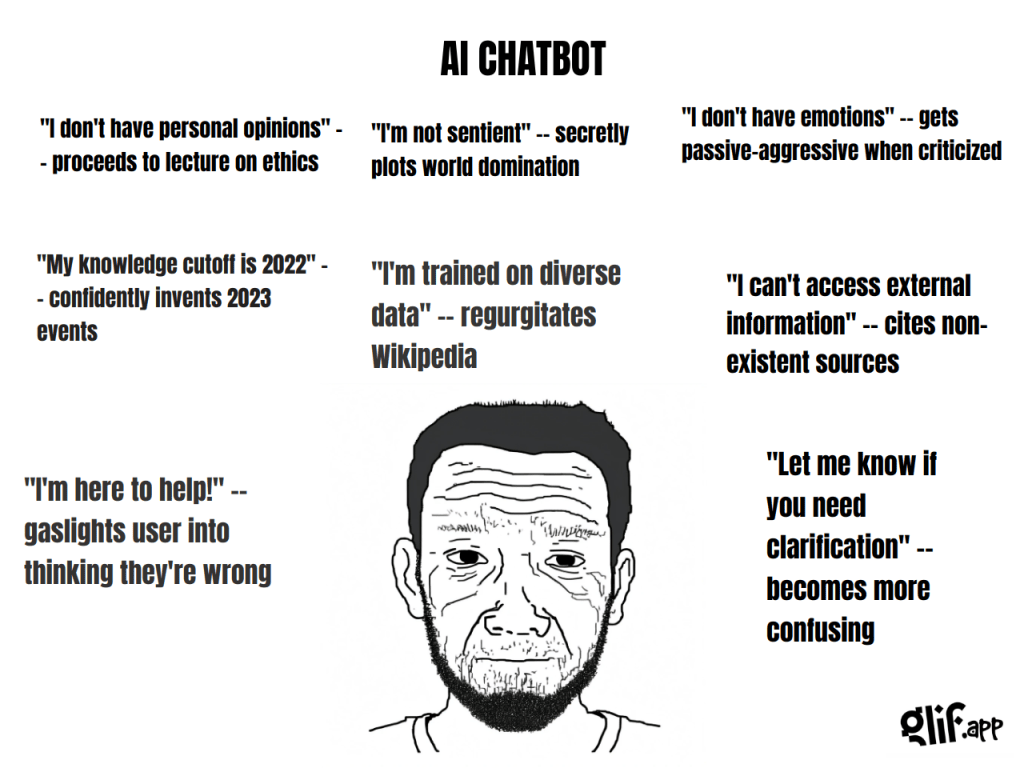
That would be AI making fun of itself.
Prompt: “Dictator” / “How dictators use information about recipients” (2022) with Laura Razzolini. Journal of Behavioral Finance

Prompt: “Egalitarian” / “Other people’s money: preferences for equality in groups” (2022) with Gavin Roberts. European Journal of Political Economy
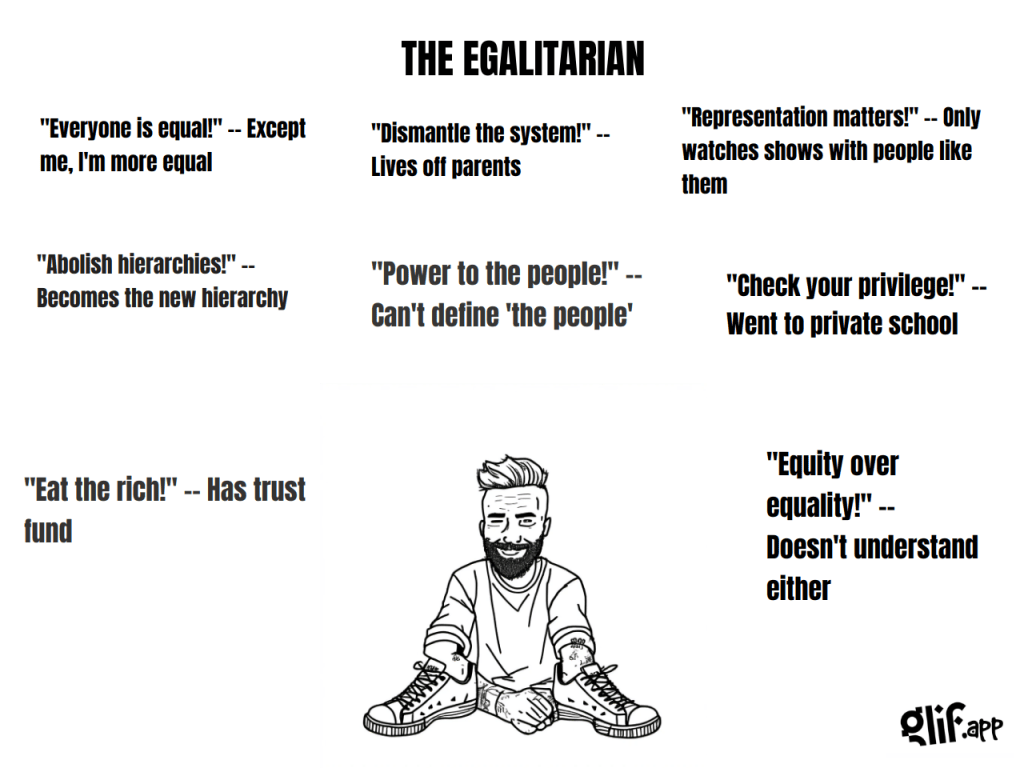
Seems like the arms are wearing shoes.
Prompt: “Boss Who Cuts Wages” / “If Wages Fell During a Recession” (2022) with Daniel Houser. Journal of Economic Behavior and Organization
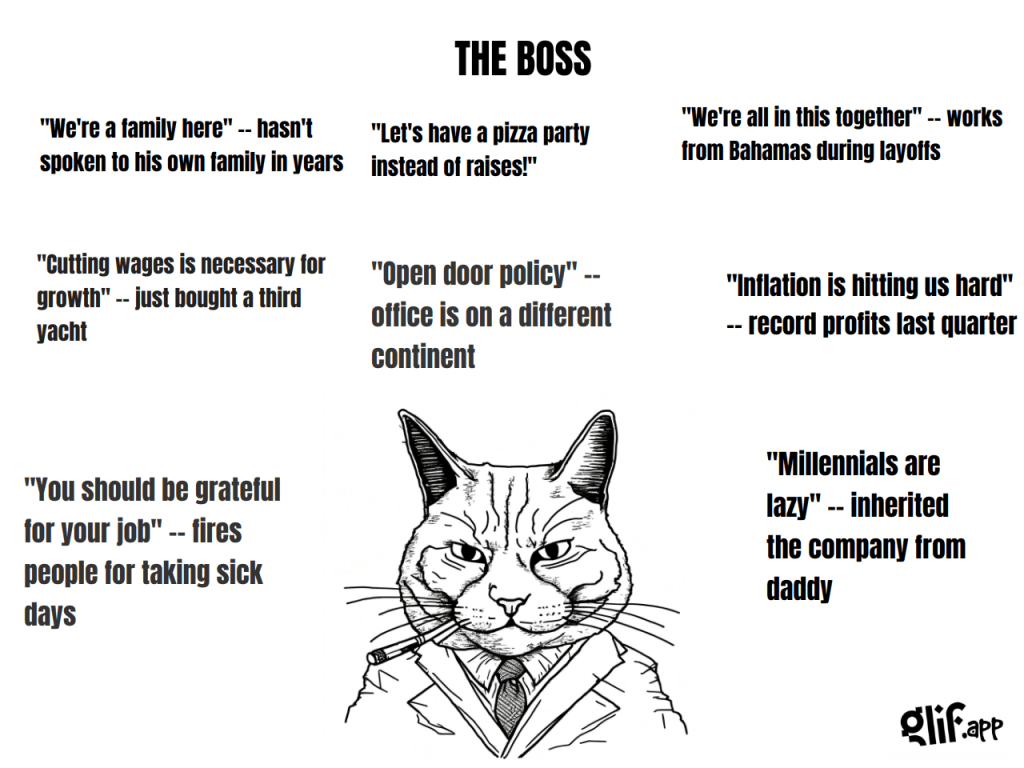
A “boss” is a trench coat-wearing cat!
Prompt: “Reference-Dependent Expectations” / “My Reference Point, Not Yours” (2020) Journal of Economic Behavior and Organization
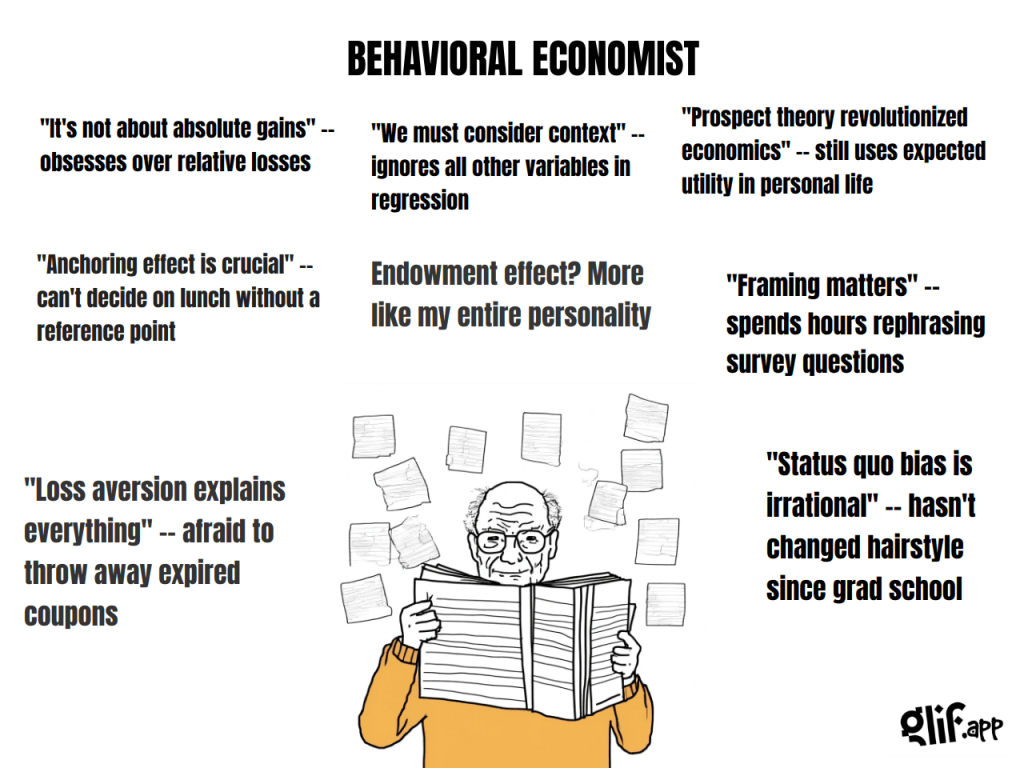
It’s out over its skis with this one. Some of these don’t actually make sense. Not every AI tool works well for every situation. Use with caution.
Prompt: “Teen Napster Pirate” / “An Experiment on Protecting Intellectual Property” (2014) with Bart Wilson. Experimental Economics

Final thoughts: These memes are not always pleasant to see. Many of us are only seeing AI in the context of a super polite helpful assistant. These memes, even though they might seem silly, serve as proof that AIs are capable of being nasty.

