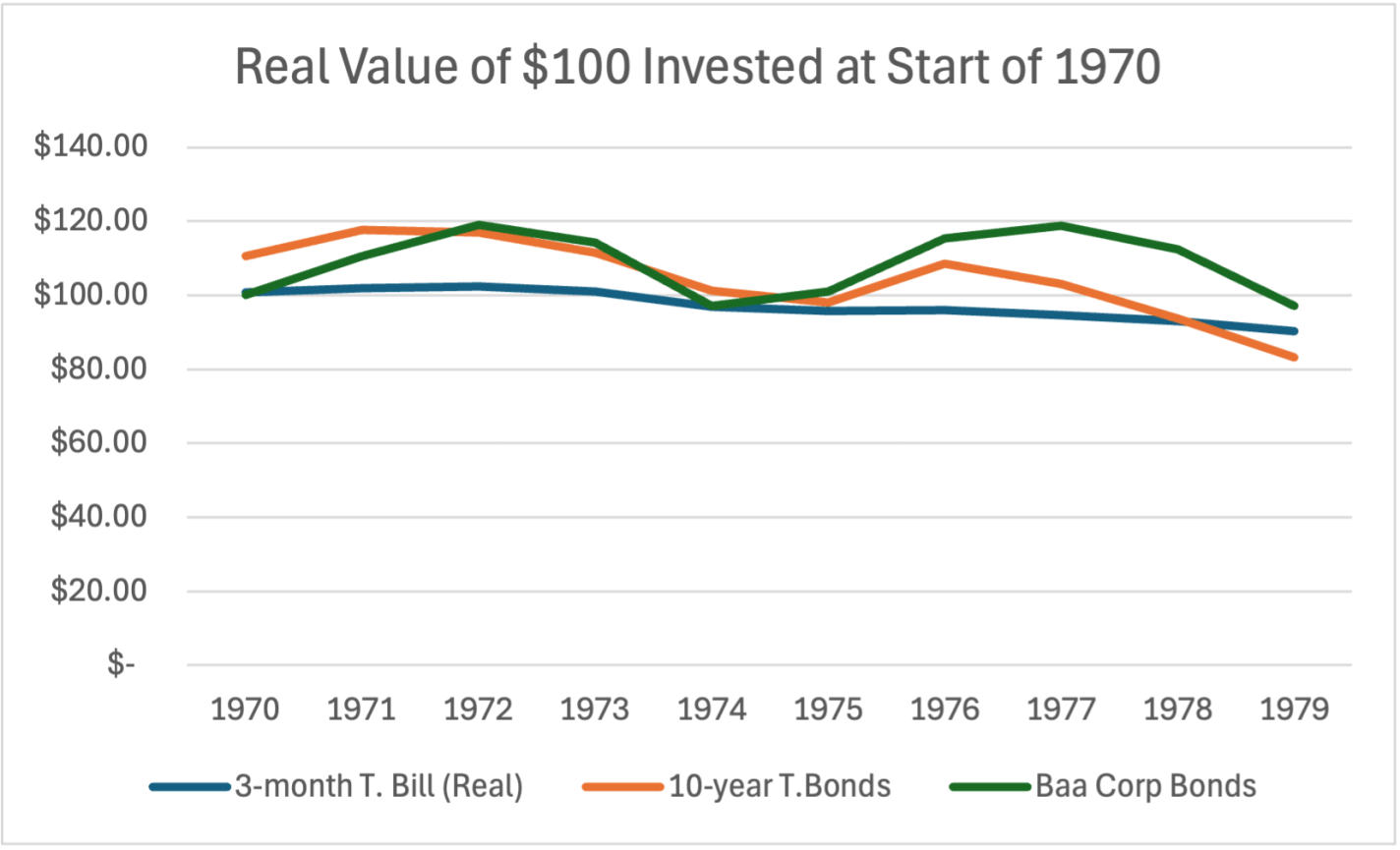
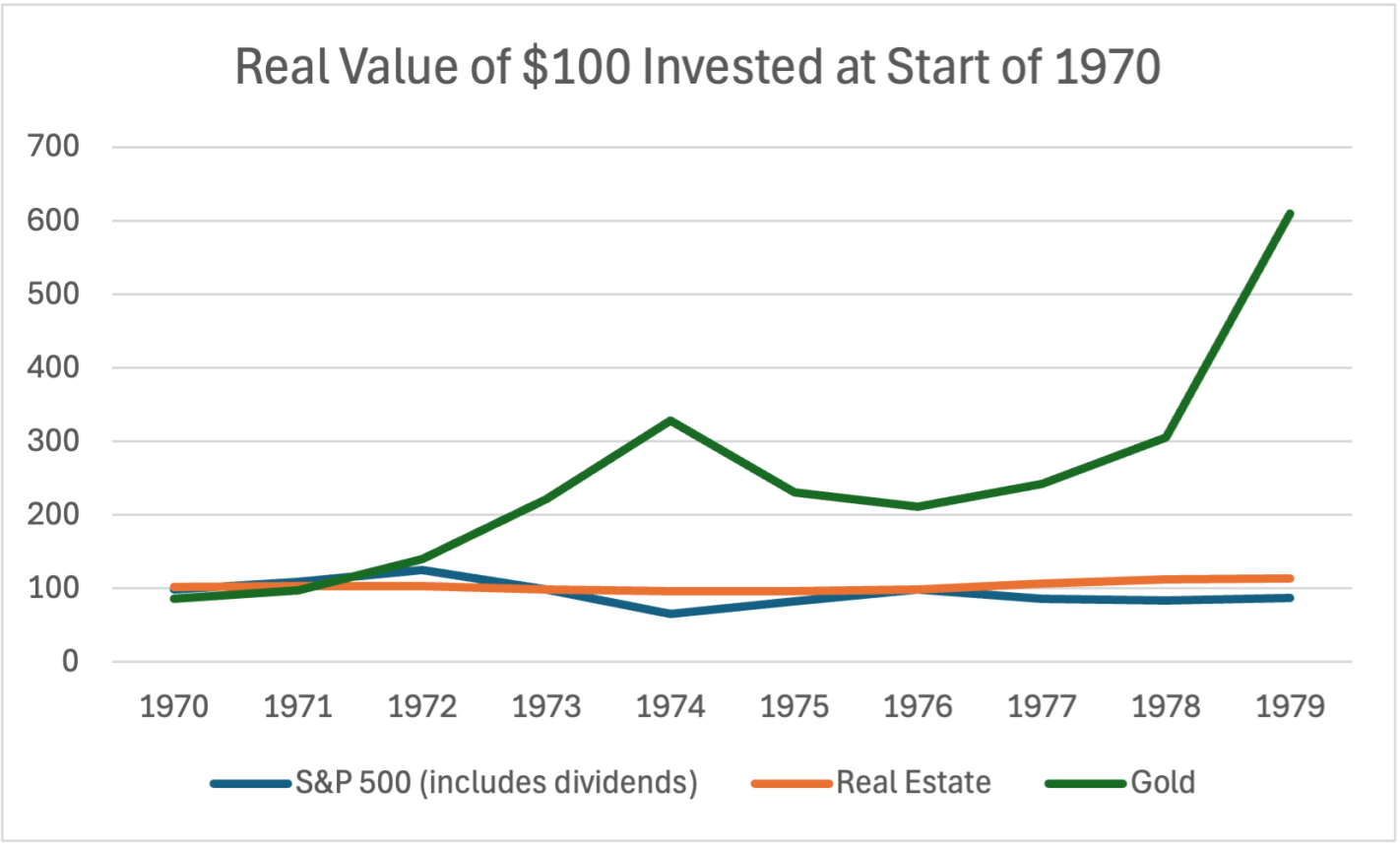
Mike is concerned that US stocks could be a bubble, as are many others:
if we take parallels to the past seriously, there arises the question of whether a 40 year old with a 100% index fund portfolio should consider hedging/reallocating their portfolio a decade sooner than they planned on becuase, well, just look at that [CAPE] chart.
But what to do about it?
So, seriously. Are we hedging? And what are we hedging into? Asking for a friend. Who is an economist. And also me.
My answer: I’m diversifying into global stocks, which tend to be much lower-priced:
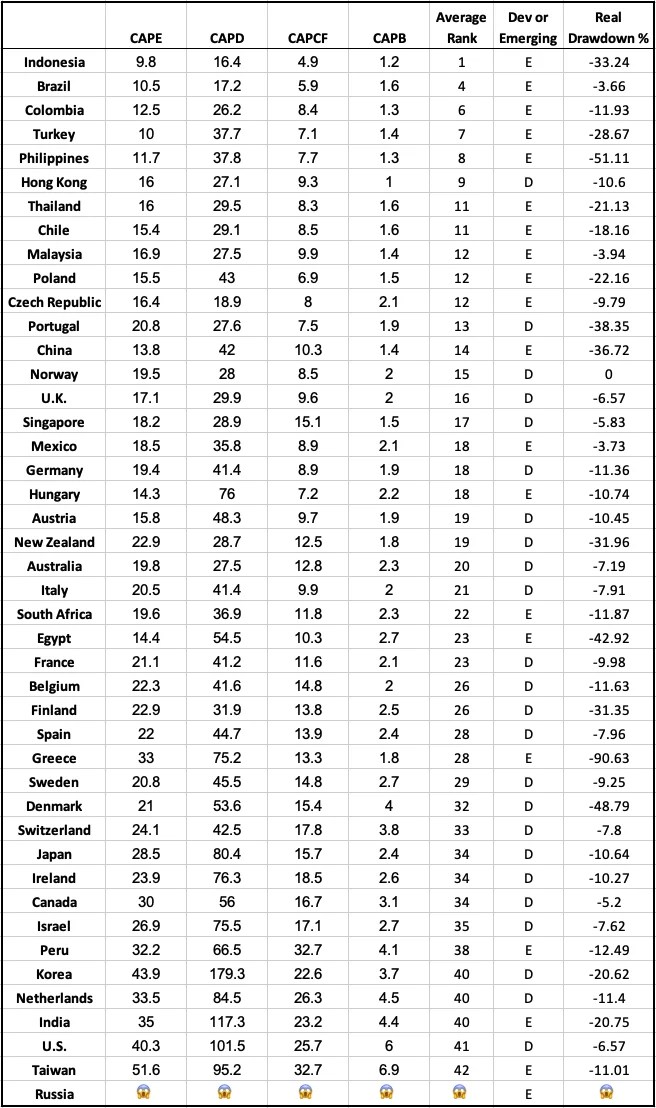
But how do you practically do this?
A simple and cheap way to get a highly diversified basket of global stocks is VEU (Vanguard ex-US). Over 3000 stocks from around the world, P/E of 19, rock-bottom fees. One disadvantage for diversification purposes is that its biggest 5 holdings make up 12% of the index and they are all AI-related.
If you’re willing to make more concentrated and specific bets in order to get even cheaper, here are some other foreign indices I like:
- FRDM (Freedom 100 Emerging Markets ETF): Invests in emerging markets with the highest economic freedom ratings. I love the theory & it’s performed very well for me & its overall PE is a reasonable 17, though it’s largest holdings are in Taiwan and South Korea, so not a good way to get away from AI.
- ILF (iShares Latin America 40): Invests in large Latin American companies. P/E 11 with low AI exposure.
- FYLD (Cambria Foreign Shareholder Yield ETF): Invests in high-yielding companies in developed countries outside the US. Measures yield using stock buybacks in addition to dividends. This serves as a value screen that keeps PE low (currently 13) and avoids expensive sectors like AI.
- EYLD (Cambria Emerging Shareholder Yield ETF): Same idea as FYLD but for emerging markets. Current PE 12
I also hold single-country indices for Japan (FLJP, PE 20), Poland (EPOL, PE 13), and India (EPI, PE 17). These are probably riskier than the broad indices above, but still fairly diversified across companies.
While foreign stocks are my preferred hedge, there are many others. For US stocks there are small-cap or value indices, or just buying individual stocks you like (not necessarily crazy). The 20- and 30-year US treasury bonds are intriguingly yielding over 5%, though between my age and my inflation concerns I don’t own any. TIPS are much more attractive, yielding 2-3% over inflation, I don’t own any yet but I’m considering it. Gold indices like IAUM are another good hedge.
Of course this isn’t necessarily a bubble that will pop any time soon, or at all- AI is a real technological advance- so between that & general efficient market principles I don’t think the answer is to sell everything & go to cash, much less short the market. But Mike is right to ask how to hedge, and I think anyone holding ~100% US stocks should consider diversifying.
Disclaimers: Not investment advice, I hold some of the indices named.