Covid Pandemic Diary Part 1

Last week on Twitter, a writer in France reached out for accurate information about what is going on the US right now with regard to vaccines.

This got me thinking about the value of narratives and true stories. I’m going to chronicle a few of the Covid events experienced by me personally. Myself and the adults in my family are fully vaccinated, so life is starting to feel normal again, even though I still wear masks in many public places. I’d like to write this down in case it is useful and so that I don’t forget it.

Continue reading

Bad Jobs Exist

I’m James Bailey, an economist at Providence College who studies how government policies affect health care and the labor market. Thanks to Joy for the chance to join the blog for a few months!

For my first post, I have to share the brand new book I wrote a chapter of, “Regulation and Economic Opportunity: Blueprints for Reform“. Normally academic volumes like this are sold for hundreds of dollars, so only a few people with access to academic libraries end up reading them. But the publisher of this volume, the Center for Growth and Opportunity, released it as a free Ebook– so I hope you’ll check it out. It covers everything from housing and health care to energy and education to beer and cigarettes.

I wrote chapter 5, on how various regulations affect wages and employment. Here’s an excerpt:

Continue reading

The Pappy Pricing Puzzle

If you drink bourbon whiskey (or even if you don’t) you’ve probably heard of Pappy Van Winkle. Bourbon has experienced something of a revival in the past two decades, after being in decline for much of the 20th century. As part of this revival, some bourbons have become very highly sought after by the nouveau bourbon enthusiasts. And the various offerings of Pappy Van Winkle are arguably the most highly sought after. Finding Pappy is almost impossible these days, though this was also true a decade ago so it’s not really a “new” phenomena.

So here’s the “puzzle” for economists: why aren’t Pappy and other rare whiskies sold at market prices? No one in the “legal” market seems willing to do so. I put “legal” in quotation marks because there is a robust secondary market for these bottles, and the legal status of these sales is entirely unclear to me as an economist (alcohol markets are, to say the least, highly regulated).

In these secondary markets, it is not unusual for a 20-year bottle of Pappy Van Winkle to sell for $2,000. The “manufacturer’s suggested retail price” is $199.99. But you will never find this bottle on the shelf for that price. The bottles are held by retailers, either to sell to friends, auction off for charity, or conduct a lottery for the right to purchase the bottle at well below market prices.

So why doesn’t the distillery raise the MSRP? Clearly, they do this from time to time. Ten years ago, if you were lucky enough to find this bottle it was around $100 (I was lucky enough, on occasion). Clearly, they recognize that prices can increase. And that’s not just “keeping up with inflation”: $100 in 2011 is about $120 in current dollars. By 2016, they had raised the MSRP to $169.99. But why doesn’t the distillery raise the price more, perhaps all the way up to the market clearing price? By doing so, they would, perhaps, be able to ramp up production so that in 2041 there might be a lot more Pappy on the shelf. At the very least, they could dramatically increase their profit.

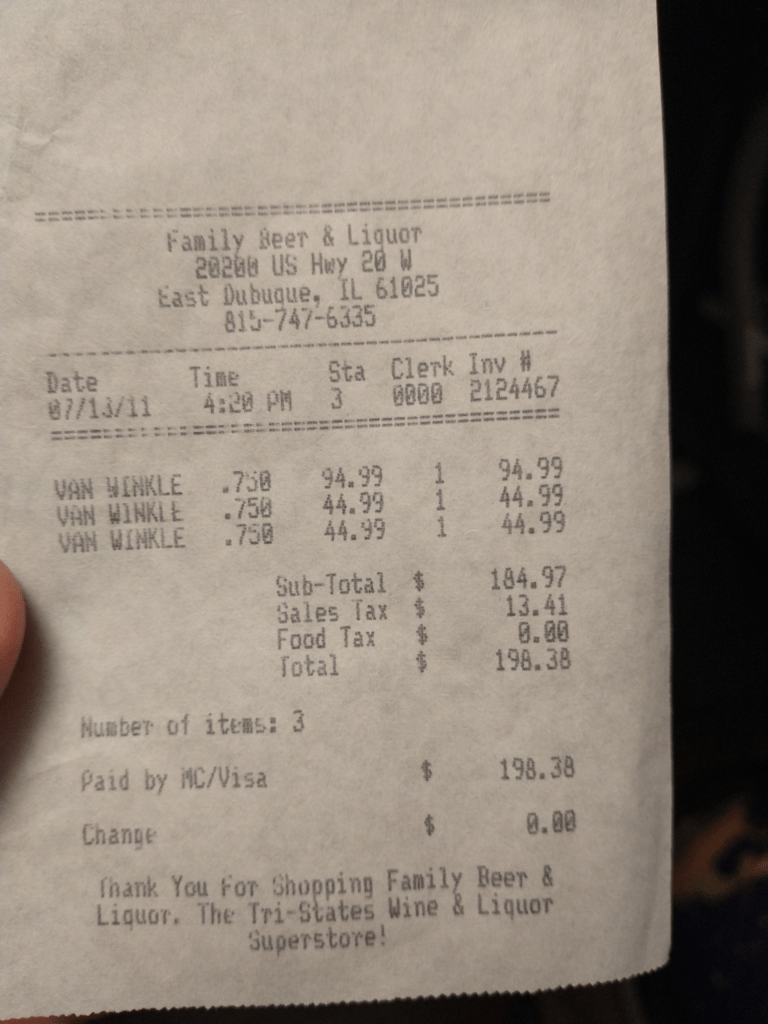
Receipt for 1 bottle of 20-year Pappy and 2 bottles of 12-year Van Winkle “Special Reserve” from 2011.

Also, why don’t retailers just put bottles on the shelf at $2,000? Stores occasionally do this, but mostly because they are fed up with all of the customers calling about rare bottles. Sometimes they will price it even higher than secondary markets. But usually, they allocate the bottles by something other than the price mechanism. Why? Businesses don’t usually leave dollar bills, especially $1,000 dollar bills, on the table.

Continue reading

Was “World War II” Just a Myth?

May 5, 2415

[To:] Mark Livingstone,

25 The Standards,

Verneville, Alassippi

Dear Mark:
in your last letter you made one palpable hit, but only one: I admit that the atomic wars of the Twenty-first Century and the cataclysms of the Twenty-second Century destroyed so much of our cultural inheritance, including nearly all our Nineteenth and Twentieth Century history, that there is very little we can turn to of those times that is authentic. Apparently that is the only point we will be able to agree on.

I cannot possibly believe, for instance, as you do, that there ever did exist an Abraham Lincoln as so glowingly portrayed by our two or three surviving “history” digests; nor can I believe there ever was a World War II, at least such as they described. Wars, yes – there have always been wars, and a World War II may have occurred – but certainly not with such incredible concomitants.

In short, your history is much too fictional for me.

Continue reading

Active empathy makes for better research

There are skills necessary for good research and policy design, but not all of them can be taught. One of the skills I advocate that my students develop, but to be honest I’m not sure if I’m all that convincing, is active empathy i.e. to willfully try to place yourselves in the context that is driving the model underlying your research question and imagine how you would behave. This is, perhaps, more work than it sounds.

Trying to imagine how you would behave in a given decision context requires not just imagining how you would make the best possible decision, but what you might actually do. This means imagining your own hypothetical state of mind in the model event context. How tired you might be, how frustrated or bored or scared. How invested you are cognitively or how distracted from the entire enterprise. Would you even be conscious of the decision in the moment you were making it, or would you only realize it upon later reflection?

What would your resource constraints be and what would it feel like to live under those constraints? What sort of rewards or punishments are you considering? This is where it pays to be honest with both your current and hypothetical selves. If you’re a car salesman, are you more excited about making the most money or being the best salesperson in the lot? If you’re a cop, are you more excited about making a big arrest or making it through the day with the minimum of interactions? Do you care more about your boss liking you or your fellow street officers?

This also, more often than not, means imaging you are a completely different person. This is where it is strongly advisable to practice not just active empathy, but active humility. I like to think I am pretty good at putting myself in other people’s shoes, but I also know I will never be able to fully empathize with the experience of being a woman in an abusive domestic context with two young children during a global pandemic. What I can do, however, is start by actively empathizing with the elements of that context that are accessible to me and my life experience, and then do my best to add into the exercise the different constraints, outside options, and resources available that might change the decisions made. I can enrich the mental model I am building by trying to appreciate what it means to make decisions, in any context, under the duress of physical fear and heightened uncertainty, while all the while acknowledging my exercise is inherently limited by my own experience.

Having invested real time and energy in this exercise, you’ll be in a better place to guide your research and policy design, not just because you’re thinking about the problem from the ground level, but because you’ve forced yourself to acknowledge where your blind spots are, and can do your best to address them. First person narrative accounts (“anecdotes”) don’t usually make for great data, but they are great way to let someone else’s experience to partially (but never fully) fill in your gaps. To be clear, I don’t view this as an alternative to standard rational choice frameworks of analysis. Quite the contrary, I think it exactly when the choices being made by others seem entirely irrational that it is most advisable to step back and try to actively empathize with the decisionmaker– to try to see the choices, constraints, and other players in the game as they actually see them. It’s amazing what can quickly become completely rational once you consider in resource constraints, especially information constraints, people are operating within.

If it sounds like I’m trying to convince economists everywhere of the merits of Method Acting, don’t worry, I’m not.

No, scratch that. That’s exactly what I’m doing. Just keep your rehearsals to yourself.
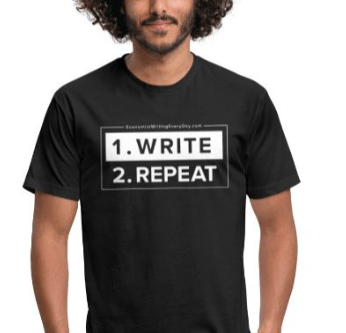
Write Repeat

We at EWED hope that we are creating quality ungated content to make the world a better place. This blog is also a commitment device to write more.

Everyone expects that the only way to get better at running is to run. Not everyone realizes that writing more makes you a better writer.

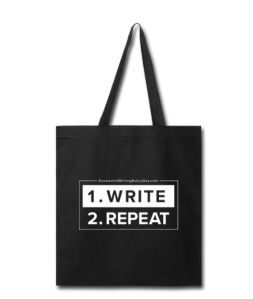
As a reminder for myself to write, I created an EWED design line in the same store that I posted about yesterday.

Black T-Shirt

Tote bag for all your pens and notebooks.

There a a few other styles and iterations at the store.

The Epsilon Delta Sorority

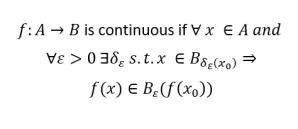
When I was a first-year graduate student in an economics Ph.D. program, I was taking a class we called Math Econ (taught by Dr. Omar Al-Ubaydli, at the time). I also was lucky to be renting a house along with several other women in the same program. For a few weeks, our group study sessions featured epsilon and delta.

Like many aspiring economists, I had taken Real Analysis at my undergraduate institution to bulk up on math skill and impress the admissions committee.*  

I never had a chance to join a sorority as an undergraduate student. It does look fun to walk around wearing a Greek code that is only fully understood by other members of a club. So, in grad school, I wanted to make shirts for what I called our “epsilon delta sorority”. We had Greek letters and a sisterhood (brotherhood). There are lots of women and men who are in the epsilon delta sorority.

It only took a decade for me to realize my dream. I have created shirts and shipped them to the girls I lived with. So more people can join, I created a store: https://shop.spreadshirt.com/economist-writing-every-day/

Here’s me wearing a t-shirt for women

Here’s a version for men

We have accessories, too. Why not? Life is too short to not put this on a mug. Someone already told me they want to give this to their daughter, so I added kids’ sizes.

I pulled out an old paper from my Math Econ course binder for this post. Here is something I had written for the class:

*If you are looking for an introduction, try Khan Academy. Taking Real Analysis before you get to an economics Ph.D. program is helpful, although not always necessary. Multivariable calculus is more practical than Real Analysis and used on a more routine basis for economists. Some subfields require more formal proofs than others.