We noted that “People Are Paying For Music Again” in 2024, showing that streaming was partly making up for the drop in sales of physical recordings, while live music sales were setting record highs. Thus,
When you combine live and recorded sales, total spending on music has now passed the 1999 peak; this is the biggest the market for music has ever been.
But I didn’t have a chart showing the music market as a whole. I meant to make on for a followup post, but still hadn’t got around to it when I saw this from Joey Politano’s Apricitas Substack:
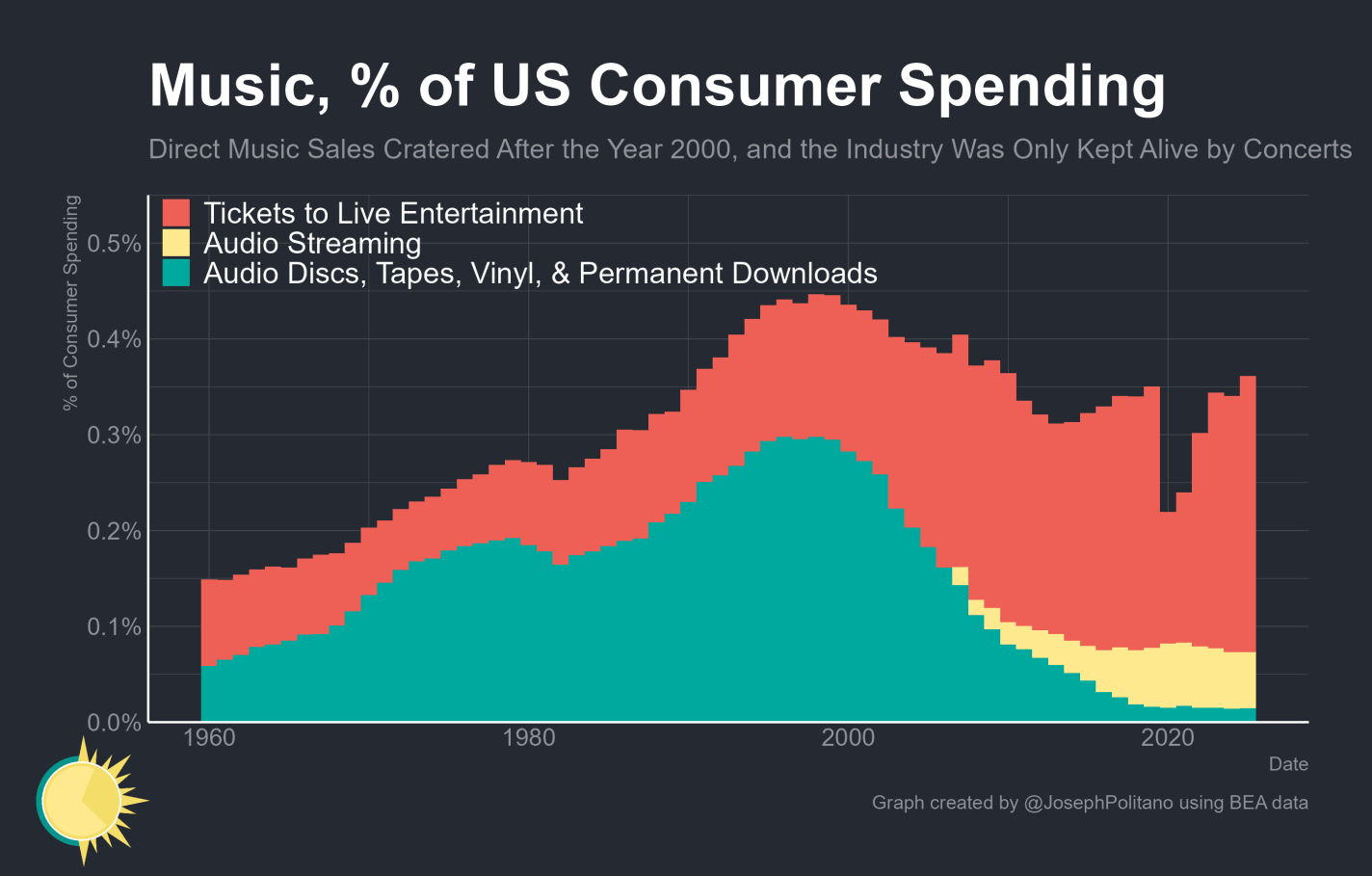
He uses BEA data instead of the music industry sources I was using, which means a wider range of years is available, and the colors tell the story nicely. This chart still shows a late ’90s peak because it is measuring music as a percentage of all consumer spending; but total real consumer spending is way up since the ’90s, so the real dollar peak of money flowing to the music industry is today. Here’s my version of the chart using real dollars:
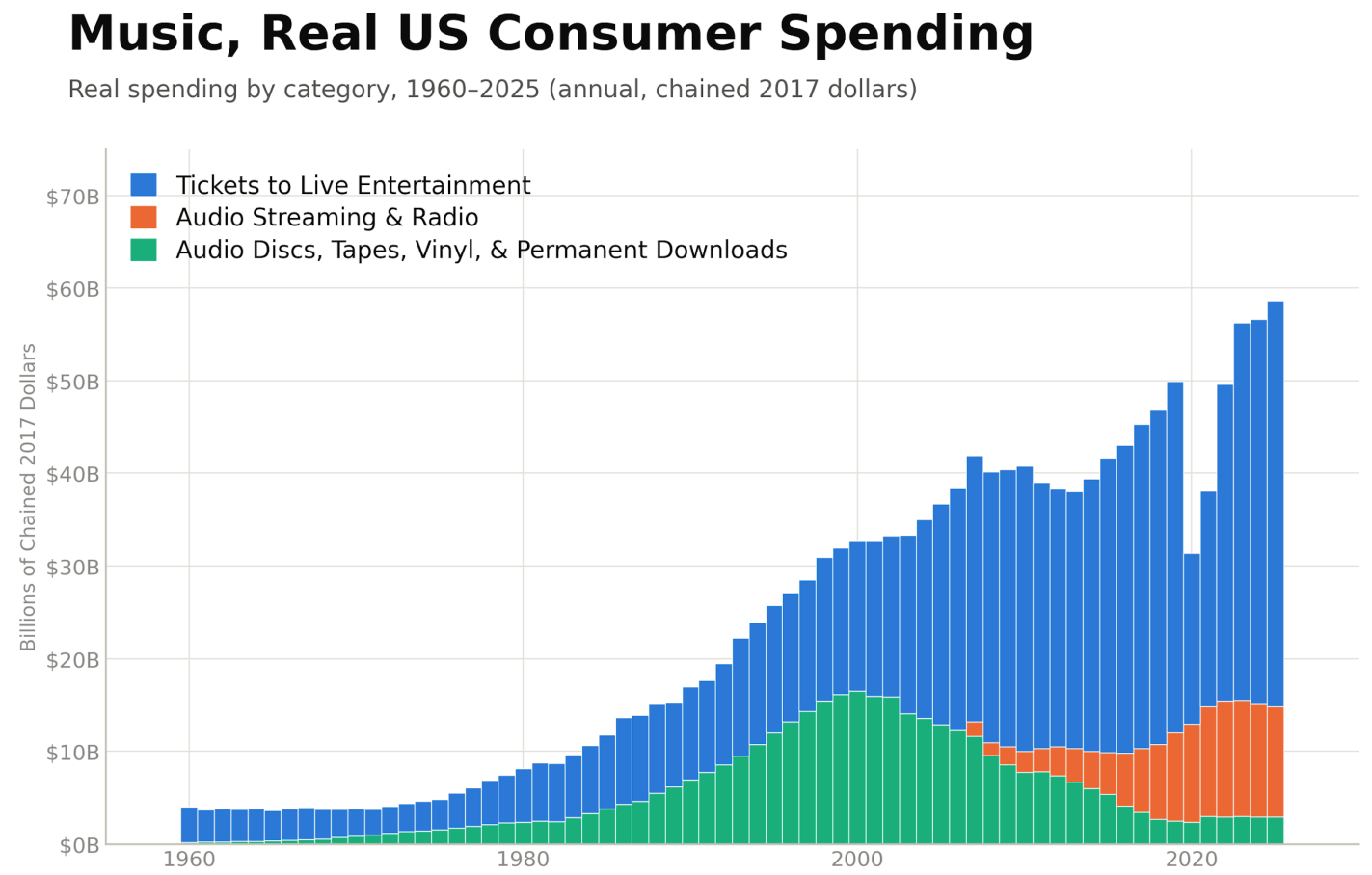
This chart tells a more optimistic story. But it’s worth reading the entirety of Politano’s post, which suggests that AI is already significantly reducing overall employment in the arts. He also notes that money moving from recorded to live music has changed which artists are winning. I’ve noted something of a ‘rich get richer’ phenomenon, with ticket prices for top artists shooting higher while it becomes harder for regular musicians to stay full time.
My semi-serious solution is to bring back hipsters. Make it once again cooler to spend $20 each weekend on an obscure band’s show or vinyl than to spend $1000 on a VIP ticket to a Taylor Swift-level show once a year. Hipsters might be annoying, but the hipster music strategy is an efficient way to support more people putting in the time to make music- and I think that would be a good thing in a field where talent is fairly widely distributed. The difference between full-time musicians and semi-pros who do a few gigs a year (or the best amateurs) is often not musical talent but luck, connections, and the willingness and ability to push through early years with little income. We’re a richer society than we were in 1999 and we can afford to support more people giving music a real try.