Macroeconomic Policy In a Nutshell

What I’m telling my Intro Macro students on the last day of class, since we weren’t able to get through every chapter in the textbook:

A few of you might end up working in economic policy, or in highly macro-sensitive businesses like finance. For you, I recommend taking followup classes like Intermediate Macroeconomics or Money and Banking so you can understand the details. For everyone else, here are the very basics:

  1. In the long run, economic growth is what matters most. The difference between 2% and 3% real GDP growth per capita sounds small in a given year, but over your lifetime it is the difference between your country becoming 5 times better off vs 10 times better off.
  2. How to increase long-run economic growth? This is complicated and mostly not driven by traditional macroeconomic policy, but rather by having good culture, institutions, microeconomic policy, and luck.
  3. In the shorter run, you want to avoid recessions and bursts of inflation.
  4. High inflation means too many dollars chasing too few goods. To fix it, the federal government and the central bank need to stop printing so much money (the details can get very complicated here, but if we’re talking moderately high inflation like 5% the solution is probably the central bank raising interest rates, and if we’re talking very high inflation like 50% the solution is probably a big cut to government spending).
  5. If there is a recession (which will look to you like a big sudden increase in layoffs and bankruptcies), the solution is probably to reverse everything in the previous point. The government should make money ‘easier’ via the central bank lowering interest rates while the federal government spends more and taxes less.
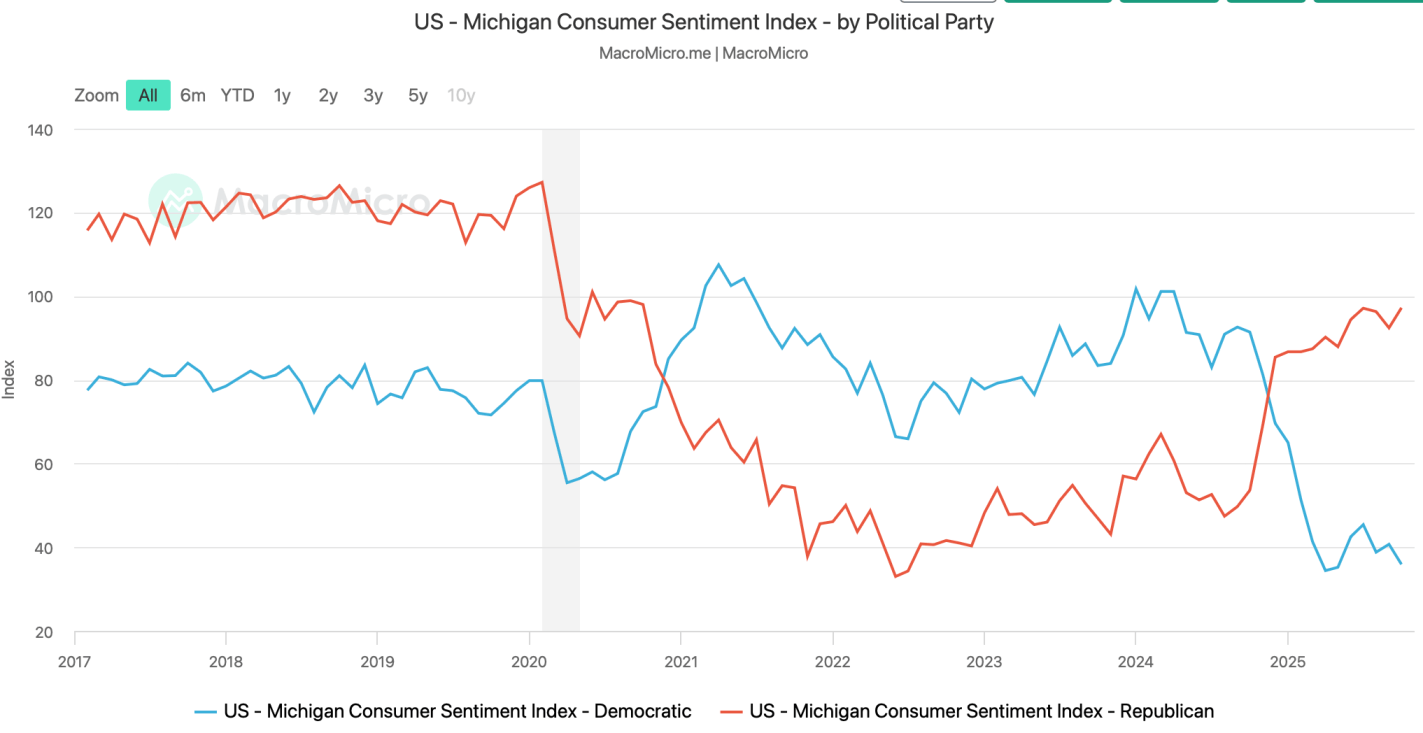
  6. If you don’t take more economics classes, you will likely hear about macro issues mainly through the news media and social media. You should be aware of their two main biases: negativity bias and political bias.
    • Negativity Bias: If It Bleeds, It Leads on the news. Partly this is because bad news tends to happen suddenly while good news happens slowly, so it doesn’t seem like news; partly it just seems to be what people want from the news and from social media.
    • Political Bias: People tend to seek out news and social media sources that match their current preferences. These sources can be misleading in consistent ways for ideological reasons, or in varying ways based on whether the political party they like is currently in power.
  7. There are different ways to measure each key macroeconomic variable. Think through them now and make a principled decision about which ones you think are the best measures, and track those. Otherwise, your media ecosystem will cherry-pick for you whichever measures currently make the economy look either the best or the worst, depending on what their biases or incentives dictate.
  8. There are good ways to keep learning about economics outside of formal courses and textbooks, I list a few here.

Visualizing the Sharpe Ratio

We all like high returns on our investments. We also like low volatility of those returns. Personally, I’d prefer to have a nice, steady 100% annual return year after year. But that is not the world we live in. Instead, there are a variety of returns with a diversity of volatilities. A general operating belief is that assets with higher returns tend to be associated with greater return volatility. The phrase ‘scared money don’t make money’ implies that higher returns are risky. The Sharpe ratio is a tool that helps us make sense of the risk-reward trade-off.

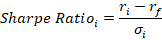
Let’s start with the definition.

By construction, the risk-free return is guaranteed over some time period and can be enjoyed without risk. Practically speaking, this is like holding a US treasury until maturity. We assume that the US government won’t default on its debt. Since there is no risk, the volatility of returns over the time period is zero.

Since an asset’s return doesn’t mean much in a vacuum, we subtract the risk-free return. The resulting ‘excess return’ or ‘risk premium’ tells us the return that’s associated with the risk of the asset. Clearly, it’s possible for this difference to be negative. That would be bad since assets bear a positive amount of risk and a negative excess return implies that there is no compensation for bearing that risk.

The standard deviation of an asset’s returns are a measure of risk. An asset might have a higher or lower value at sale or maturity. Since the future returns are unknown and can end up having any one of many values, this encapsulates the idea of risk. Risk can result in either higher or lower returns than average!

Putting all the pieces together, the excess return per risk is a measure of how much an asset compensates an investor for the riskiness of the returns. That’s the informational content of the Sharpe ratio, which we can calculate for each asset using historical information and forecasts. Once we’ve boiled down the risk and reward down to a single number, we can start to make comparisons across assets with a more critical eye.

Sometimes friends or students will discuss their great investment returns. They achieve the higher returns by adopting some amount of risk. That’s to be expected. But, invariably, they’ve adopted more risk than return! That means that their success is somewhat of a happy accident. The returns could easily have been much different, given the volatility that they bore.

Let’s get graphical.

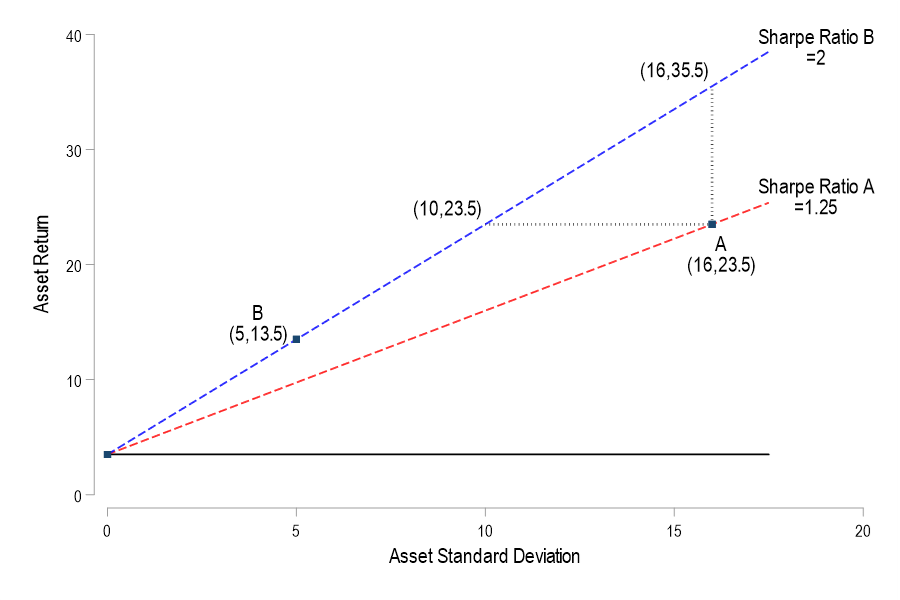
Consider a graph in (standard deviation, return) space. In this space we can plot the ordered pair for some portfolios. The risk-free return occurs on the vertical intercept where the return is positive and the standard deviation is zero. Say that a student was thrilled with asset A’s 23.5% return and that it’s standard deviation of returns was 16%. Meanwhile, another student was happy with asset B’s 13.5% return and 5% standard deviation. With a risk-free rate of 3.5%, the Sharpe ratios are 1.25 & 2 respectively. We can plot the set of standard deviation and return pairs that would share the same constant Sharpe ratio (dotted lines). Solving for the asset return:

The above is simply a linear function relating the return and standard deviation. In particular, it says that for any constant Sharpe ratio, there is a linear relationship between possible asset returns and standard deviations. The below graph plots the two functions that are associated with the two asset Sharpe ratios. The line between the risk-free coordinate and the asset coordinate identifies all of the return-standard deviation combinations that share the same Sharpe ratio. This line is known as the iso-Sharpe Line.

With this tool in hand, we can better interpret the two student asset performances. There are a couple of ways to think about it. If asset A’s 23.5% return had been achieved with an asset that shared the Sharpe ratio of asset B, then it would have had risk that was associated with a standard deviation of only 10%. Similarly, if asset A’s volatility remained constant but enjoyed the returns of asset B’s Sharpe ratio, then its return would have been 35.5% rather than 23.5%. In short, a higher Sharpe ratio – and a steeper iso-Sharpe line – imply a bigger benefit for each unity of risk. The only problem is that a such an nice asset may not exist.

Continue reading

Portfolio Efficient Frontier Parabolics

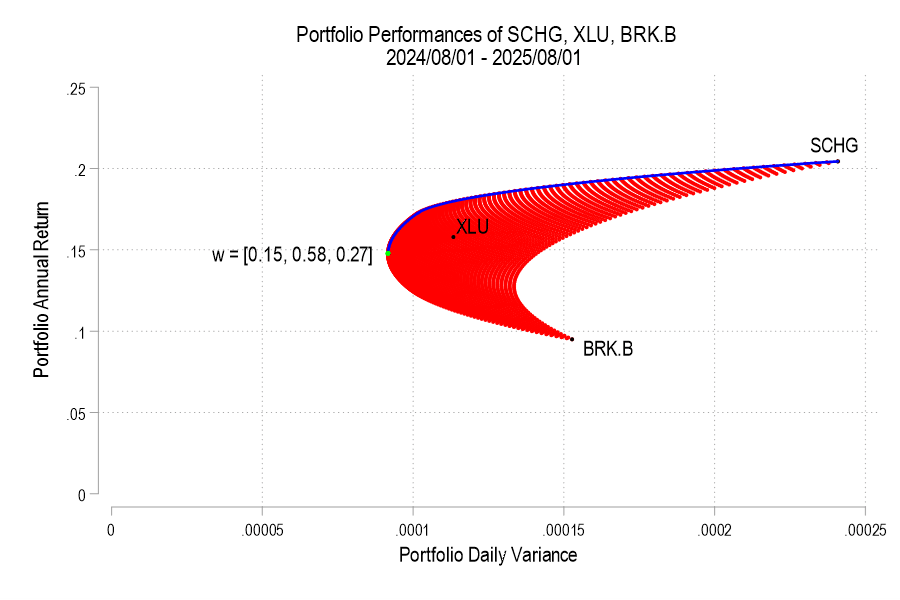
Previously, I plotted the possible portfolio variances and returns that can result from different asset weights. I also plotted the efficient frontier, which is the set of possible portfolios that minimize the variance for each portfolio return.* In this post, I elaborate more on the efficient frontier (EF).

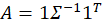
To begin, recall from the previous post the possible portfolio returns and variances.

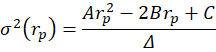
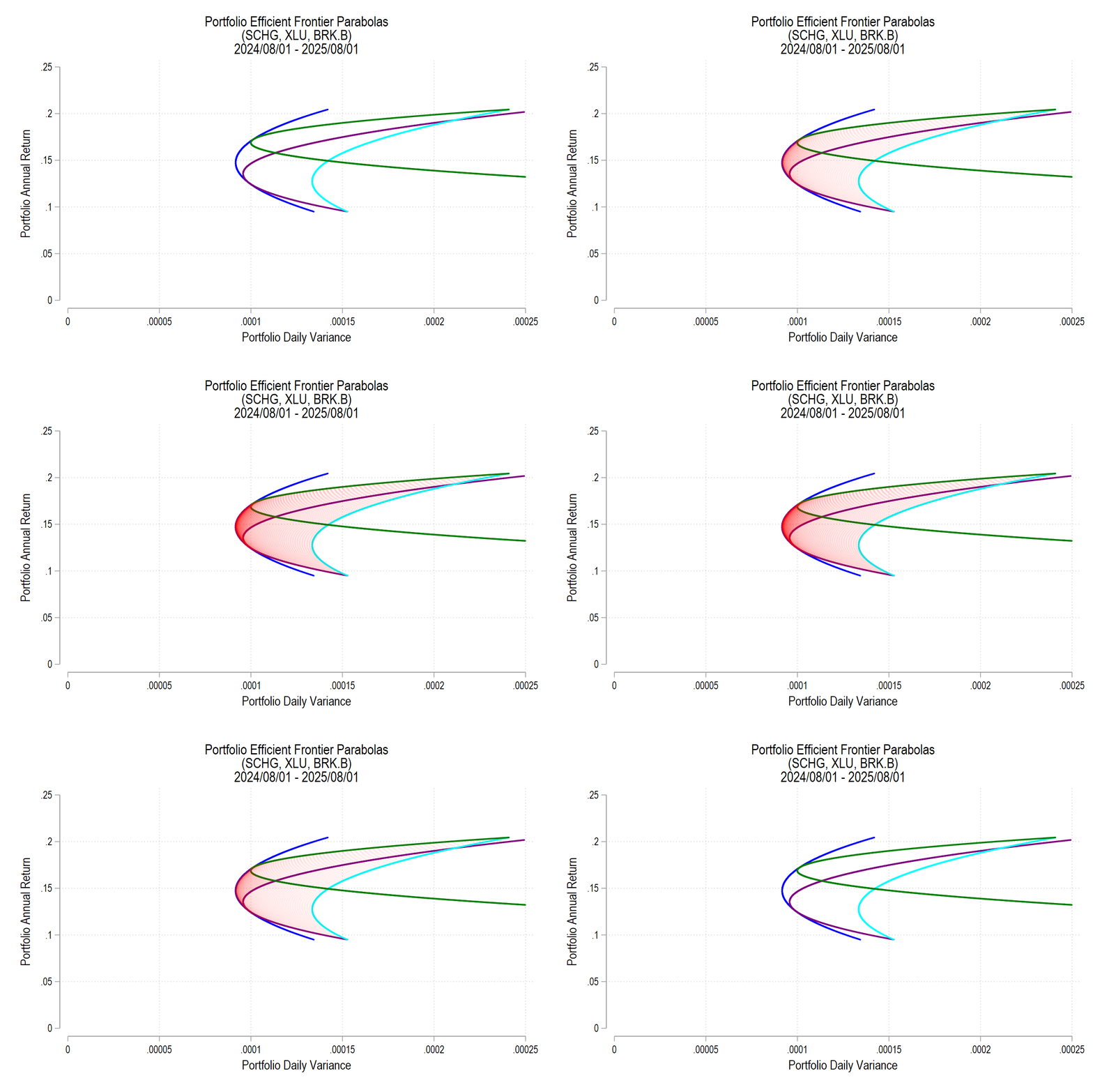
From the above the definitions we can see that the portfolio return depends on the asset weights linearly and that the variance depends on the asset weights quadratically because the two w terms are multiplied. Since the portfolio return can be expressed as a function of the weights, this implies that the variance is also a quadratic function of returns. Therefore, every possible portfolio return-variance pair lies on a parabola. So, it follows that every pair along the efficient frontier also lies on a parabola. Not every pair lies on the same parabola, however – the efficient frontier can be composed on multiple parabolas!

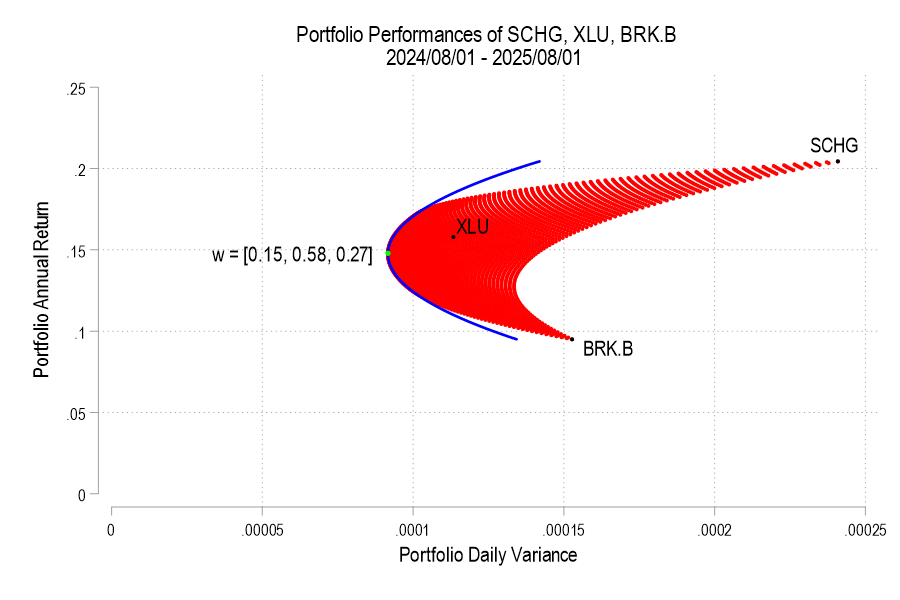
I’ll use the same 3 possible assets from the previous post, below is the image denoting the possible pairs, the EF set, and the variance-minimizing point.

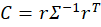
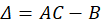
One way to find the EF is to calculate every possible portfolio variance-return pair and then note the greatest return at each variance. That’s a discrete iterative process and it definitely works. One drawback is that as the number of assets can increase the number of possible weight combinations to an intractable number that makes iterative calculations too time consuming. So, we can instead just calculate the frontier parabolas directly. Below is the equation for a frontier parabola and the corresponding graph.

Notice that the above efficient frontier doesn’t appear quite right. First, most obviously, the portion below the variance-minimizing return is inapplicable – I’ve left it to better illustrate the parabola. Near the variance-minimizing point, the frontier fits very nicely. But once the return increases beyond a certain level, the frontier departs from the set of possible portfolio pairs. What gives? The answer is that the parabola is unconstrained by the weights summing to zero. After all, a parabola exists at the entire domain, not just the ones that are feasible for a portfolio. The implication is that the blue curve that extends beyond the possible set includes negative weights for one or more of the assets. What to do?

As we deduced earlier, each pair corresponds to a parabola. So, we just need to find the other parabolas on the frontier. The parabola that we found above includes the covariance matrix of all three assets, even when their weights are negative. The remaining possible parabolas include the covariance matrices of each pair of assets, exhausting the non-singular asset portfolios. The result is a total of four parabolas, pictured below.

Continue reading

Looking Ahead: Post-Powell Interest Rates

Jerome Powell’s term as Fed Chair ends in late May 2026. President Trump has said that he will nominate a new chair and the US senate will confirm them. It may take multiple nominations, but that’s the process. The new chair doesn’t govern monetary and interest rate policy all by their lonesome, however. They have to get most of the FOMC on board in order to make interest rate decisions. We all know that the president wants lower interest rates and there is uncertainty about the political independence of the next chair. What will actually happen once Jerome is out and his replacement is in?

The treasury markets can give us a hint. The yields on government debt tend to follow the federal funds rate closely (see below). So, we can use some simple logic to forecast the currently expected rates during the new Fed Chair’s first several months.

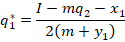
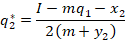
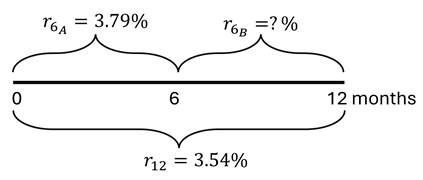
Here’s the logic. As of October 16, the yield on the 6-month treasury was 3.79% and the yield on the 1-year treasury was 3.54%. If the market expectations are accurate, then holding the 1-year treasury to maturity should yield the same as the 6-month treasury purchased today and then another one purchased six months from now. The below diagram and equation provide the intuition and math.

Since the federal funds rate and US treasury yields closely track one another, we can deduce that the interest rates are expected to fall after 6 months. Specifically, rates will fall by the difference in the 6-month rates, or about 49.9 basis points (0.499%).  This cut is an expected value of course. Given that the cut is between a half and a zero percent, we can back out the market expectation of for a 0.5% vs 0.0% cut where α is the probability of the half-point cut.* Formally:

Continue reading

Podcast on the Major Macro Events Since Y2K

The latest Macro Musings is an episode I could recommend to students in a macroeconomics class.

Jim Clouse on the Last 4 Decades at the Most Powerful Central Bank in the World

Since the great depression is over, what are the big events of the 21st century for macroeconomics?

9/11 and shoring up bank confidence subsequently

The Great Recession and preceding mortgage crisis

Covid and subsequent stimulus

This conversation is a tour of the trade offs under consideration at the Central Bank at these pivotal moments in the 21st century.

Beckworth: I think this is where it’s important to do the right counterfactual. What could have been could have been far worse, right? If there hadn’t been these interventions, so it’s easy to criticize from the outside, and there’s a lot of criticisms the Fed received at this time. Not to say we would have gone all the way to the Great Depression, but the fact that it was possible, right, this financial system was crashing. 

Does Trump Weaken the US Dollar?

Talk to some economists and they’ll tell you that exchange rates aren’t economically important. They say that exchange rates between countries are a reflection of supply and demand for one another’s stuff. So, at the macro, it’s a result and not a determinant of transnational economic activity.

For individual firms at the micro level, it’s the opposite. They don’t affect the exchange rate by their lonesome and are instead affected by it. If you have operations in a foreign country, then sudden changes to the exchange rate can cause your costs to be much higher or lower than you had anticipated. The same is true when you sell in a foreign country, but for revenues. This type of risk is called ‘exchange rate risk’ since it’s possible that none of the prices in either country changed and yet your investment returns change merely because of an appreciated currency.

Supply & Demand

Exchange rates are determined by supply and demand for currencies. Demand is driven by what people can do with a currency. If a country’s goods become more attractive, then demand for those goods rise and demand for the currency rises. After all, most retailers and wholesalers in the US require that you pay using US dollars. Importantly,  it’s not just manufacturing goods that drive demand for currency. Demand for services, real estate, and financial assets can also affect the supply and demand for currency. In fact, many foreigners  are specifically interested in stocks, bonds, US treasuries, and other investments. The more attractive all of those things are, the more demand there is for them.

Of course, the market for currency also includes suppliers. Who does that? Answer: Anyone who holds dollars and might buy something. Indeed, all buyers of goods or financial products are suppliers of their medium of exchange. In the US, we pay in dollars. Especially since 1972, suppliers have also included other central banks and governments. They treat the US currency as if it’s a reserve of value, such as gold, that can be depended upon if they need a valuable asset (hence the name, “Federal Reserve”). This is where the term ‘reserve currency’ comes from – not from the dollar-denominated prices of some internationally traded commodities. Though, that’s come to be an adopted meaning.  

Another major supplier of currency is the US central bank. It has the advantage of being able to print US dollars. But it doesn’t have an exchange rate policy. So, it’s not targeting a particular price of the US dollar versus any other currency. The Fed does engage in some international reserve lending, but it’s not for the purpose of supplying currency to foreign exchange markets.  

The US Exchange Rate in 2025

One of the reasons that the US has such popular financial assets is that we have highly developed financial markets and the rule of law. People trust that, regardless of the individual performance of an asset, the rules of the game are mostly known and evenly applied. For example, we have a process to follow when bond issuers default. So, our popularity is not merely because our assets have higher returns. Rather, US investment returns have dependably avoided political risk – relative to other countries anyway.

Continue reading

MapGDP to teach economic growth

Economist Craig Paulsson has made a simple game free to all.

When you go to MapGDP.com you will find a real picture from Google Maps and a simple question. Guess the GDP/capita in the country where this picture was taken.

Watch his YouTube introduction

See Craig’s announcement about the game on his Substack

Many economics teachers will at some point visit the topic of “what is GDP” or “economic growth.” This web game is great for both topics. I put the website on my classroom projector and called on students to take the guess. We then could do the reveal together. I rate this high value for low effort from a teacher’s perspective.  No login or account creation required.

If you are an EWED reader and not an econ teacher, you might have fun playing the game yourself. Almost as satisfying as Wordle…

Children Don’t Die Like They Used To

Academics generally agree on the changing patterns of mortality over time. Centuries ago, people died of many things. Most of those deaths were among children and they were often related to water-borne illness. A lot of that was resolved with sanitation infrastructure and water treatment. Then, communicable diseases were next. Vaccines, mostly introduced in the first half of the 20th century, prevented a lot of deaths.

Similarly, food borne illness killed a lot of people before refrigeration was popular. The milkman would deliver milk to a hatch on the side of your house and swap out the empty glass bottles with new ones full of milk. For clarity, it was not a refrigerated cavity. It was just a hole in the wall with a door on both the inside and outside of the house. A lot of babies died from drinking spoiled milk. 

Now, in higher income countries, we die of things that kill old people. These include cancer, falls that lead to infections, and the various diseases related to obesity. We’re able to die of these things because we won the battles against the big threats to children. 

What prompts such a dreary topic?

I was perusing the 1870 Census schedules and I stumbled upon some ‘Schedule 2s’. Most of us are familiar with schedule 1, which asks details about the residents living in a household. But schedule 2 asked about the deaths in the household over the past year.  Below is a scan from St. Paul, Minnesota.

Continue reading

What’s the Best Major to Prepare for Law School?

  • This is post coauthored with Jack Cavanaugh, Ave Maria University Graduate of 2025.

Say that you want to become a successful lawyer. What does that mean? One possible meaning is that you are well-compensated. Money is not everything, but it does give people more options for how to spend their time and resources. Law degrees are a type of graduate degree. So, what bachelor’s degree major should one choose in preparation for law school? We lack rich administrative data on college majors and LSAT scores.

Luckily, the 2023 American Community Survey (ACS) comes to the rescue. It has all of the typical demographic covariates, income, occupation, and college major. So, if we make the small leap that well-prepared law school students become high-performing lawyers who are ultimately paid more, then what college major puts you on the right path? What should your major be?

We don’t look at an exhaustive list. We place several occupations into bins and examine only a few alternative majors. Any unlisted major falls under ‘other’. Below are the raw average incomes by occupational category and college major. Note two majors in particular. First, Pre-law literally has the word ‘law’ in the name and is marketed as preparation for law school. However, it is the undergraduate major associated with the lowest paid lawyers. For that matter, Pre-law majors have the lowest pay no matter what their occupation is. Second, Economics majors are the most highly paid in all of the occupations.

Continue reading