Back in May 2024, I wrote about grocery prices in 2024 compared to 1980. Relative to average wage increases, almost everything was more affordable — the one exception was bacon.
Grocery prices have continued to climb since 2024, but so have wages. What does the comparison look like now? Well, I have good news for bacon lovers:
Figure 1
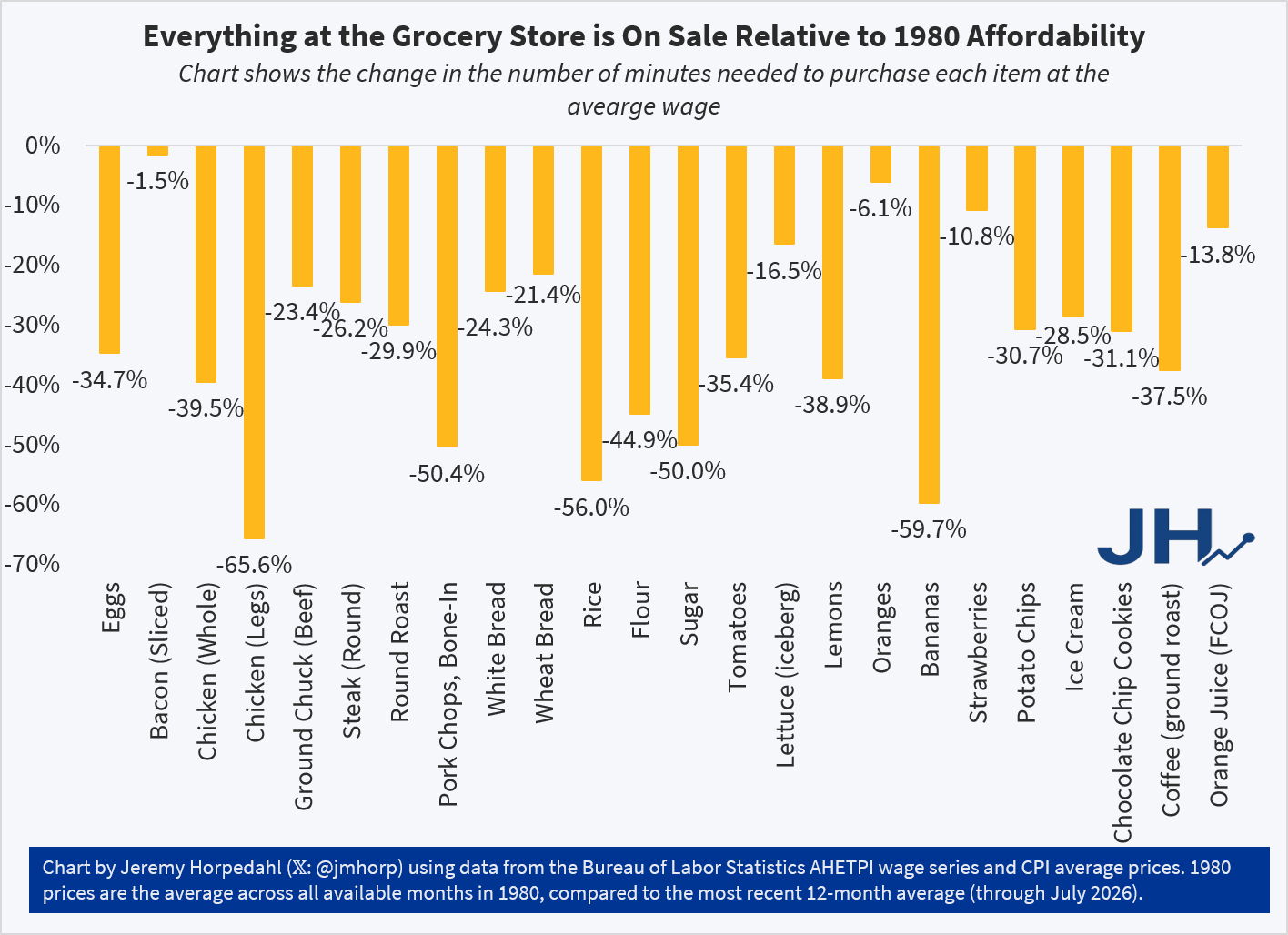
The chart shows the change in relative affordability, as measured by how many minutes of work at the average wage it would take to purchase the item (using consistent product sizes and weights). As I wrote in that 2024 post, these are not items that I cherry picked. These are all 24 grocery items where BLS has price data in both 1980 and 2026 (out of about 150 items total). Perhaps there is some survivorship or selection bias as to which items are available in both years, but looking at the list this seems like a pretty reasonable shopping cart for a typical consumer (well, maybe there aren’t buying all the meats every week, but probably every month). The prices are updated through July 2026, with the CPI data just released this morning.
While I have used average wages here, that isn’t a trick. We don’t have a median wage for 2026 yet, but using a measure of median earnings you can see that average wages and median weekly earnings increased at exactly the same rate since 1980.
But consumers probably aren’t thinking about prices relative to 1980. Their time horizon is likely shorter. What if we made the same comparison to 2026 using the 2019 prices, which is right before the pandemic and within most shopper’s recent memory:
Figure 2
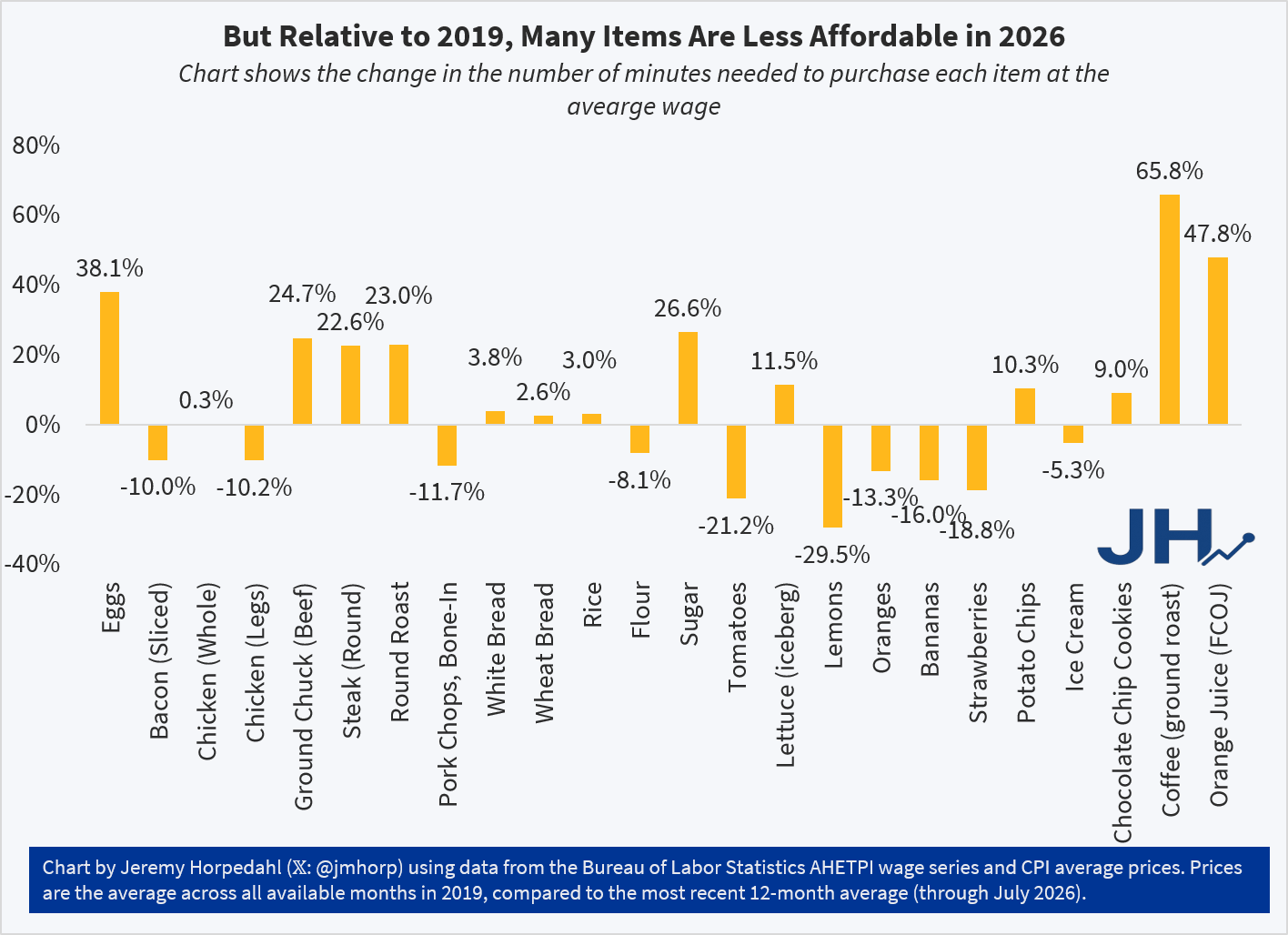
Relative to 2019, things do look quite as rosy. Some items are “on sale” in terms of affordability, but a lot of items aren’t, especially a lot of proteins. And no doubt many consumers will focus on the items that are less affordable, rather than those that are more affordable (and even for these items, the nominal price is higher, so consumers might still be frustrated).
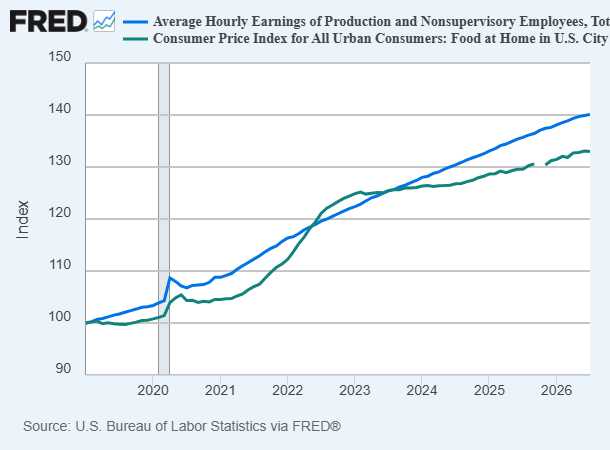
It is important to note that this basket of 24 items isn’t a perfect representation of all the items consumers purchase. Compared to the CPI “food at home” index, average wages have actually increased more since the beginning of 2019. But consumers are right to feel that beef and few other items are much less affordable than 2019, even if over the long run they are more affordable.
Figure 3


Jeremy, I ran across mention of a site that might be of interest to you: Data 4 The People https://www.data4thepeople.com/ . The author Eric Pachman describes some of the content here, https://www.youtube.com/watch?v=62OvNJfqvxY . He digs into publicly-available but complex datasets to produce useful information. Interesting observations about how medicaid-funded health care (esp senior care) has been the major section of job growth recently.
LikeLiked by 1 person