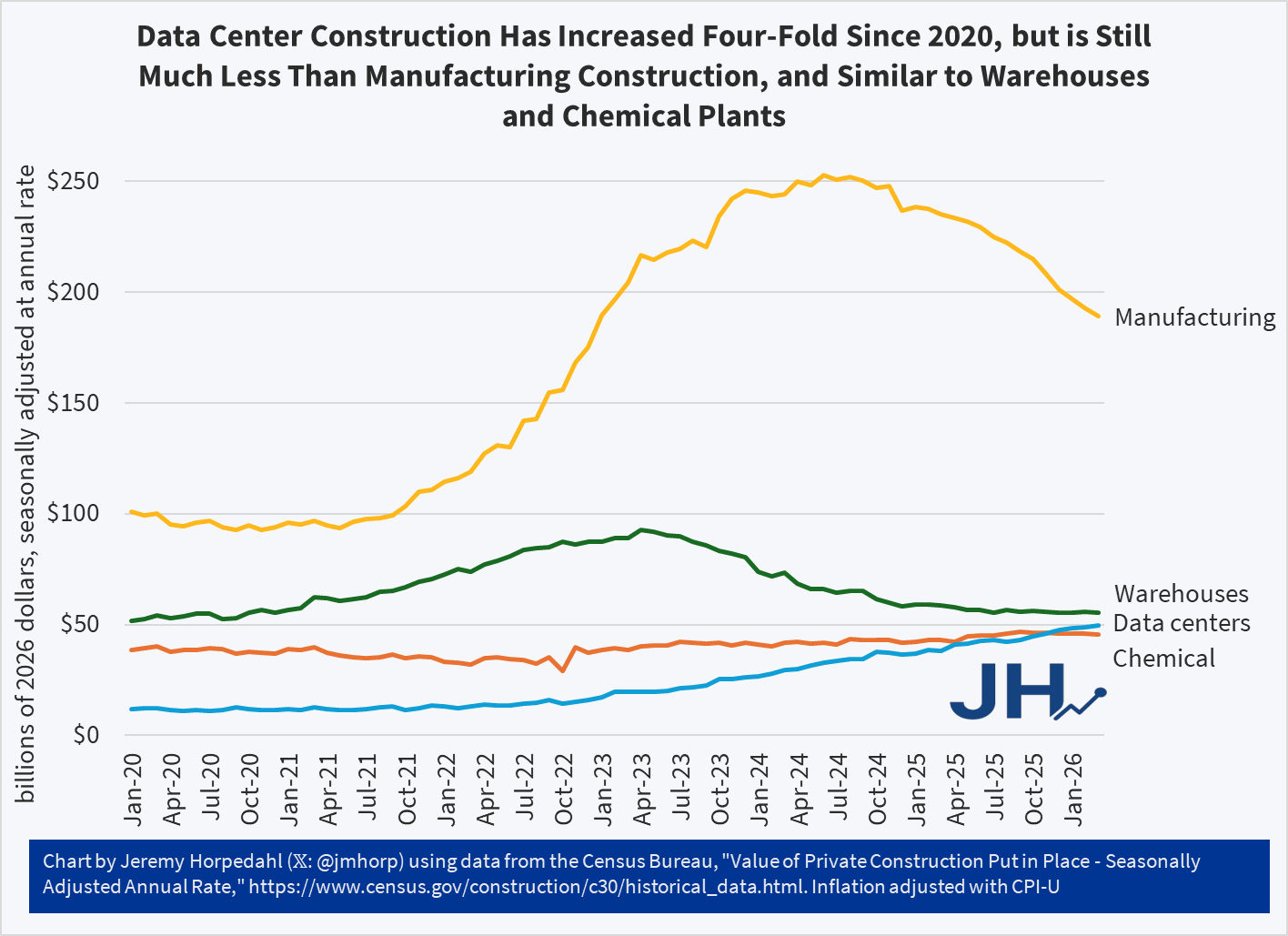
That turned out to be the commonality among the four papers I discussed at the Association for Public Policy Analysis and Management last weekend:
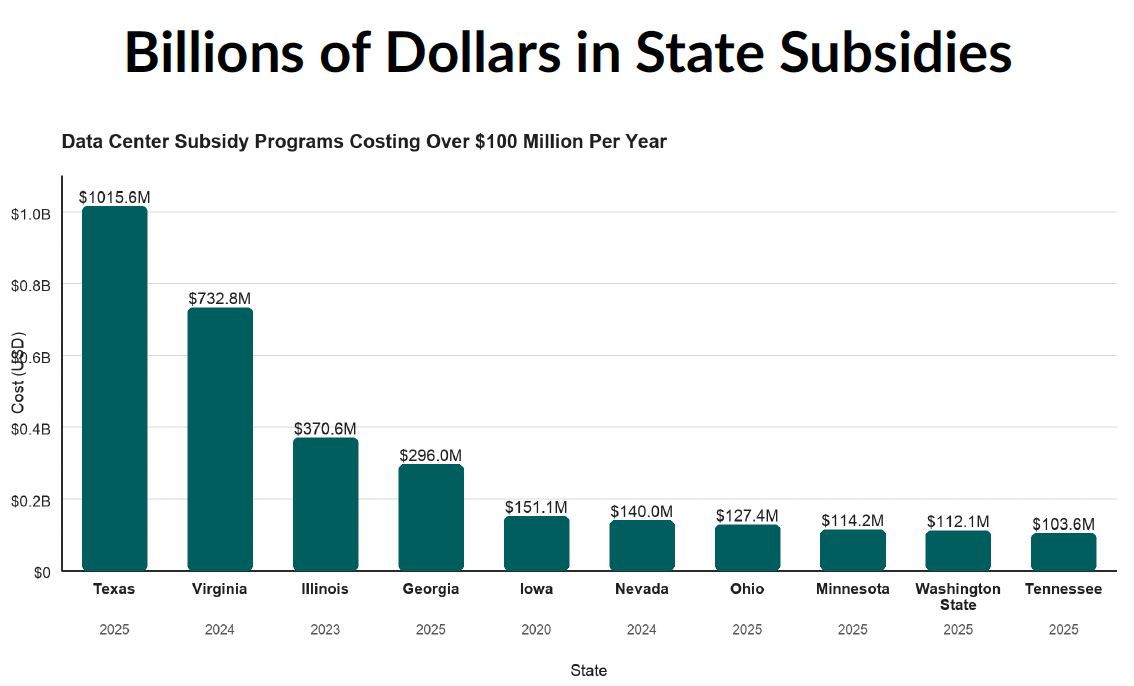
In “Subsidizing Data Centers”, Vijay Prakash found that US states subsidizing data centers saw no significant difference in unemployment (or electric prices) compared to those that didn’t.
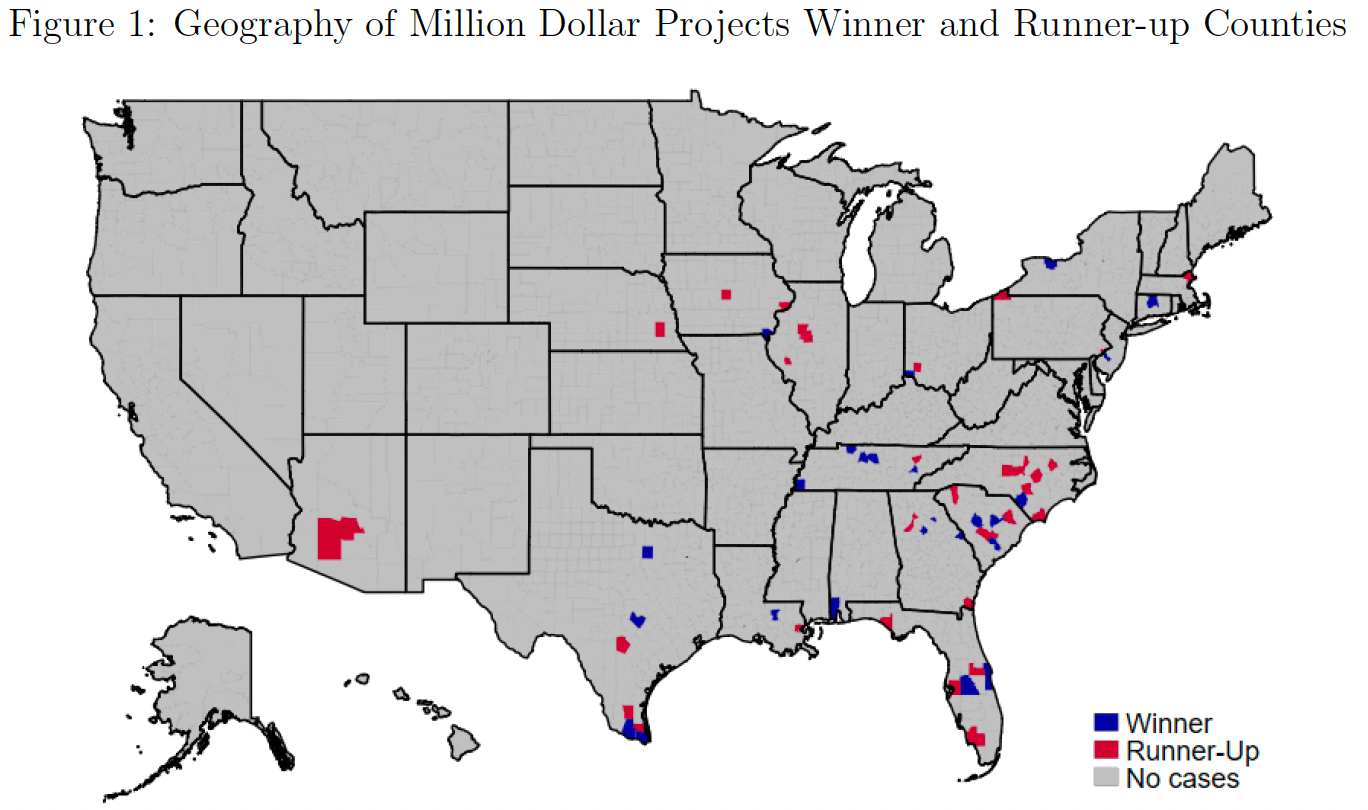
2. In “Spillover Effects of Million Dollar Projects on Wage Distribution and Skill Demand“, Alaa Abdelfattah (with Layla O’Kane) found that big new business projects (mean investment $333 million, mean subsidy $130 million) led to no increase in total job postings in the counties that ‘won’ the project relative to counties that were reportedly the ‘runner-up’.
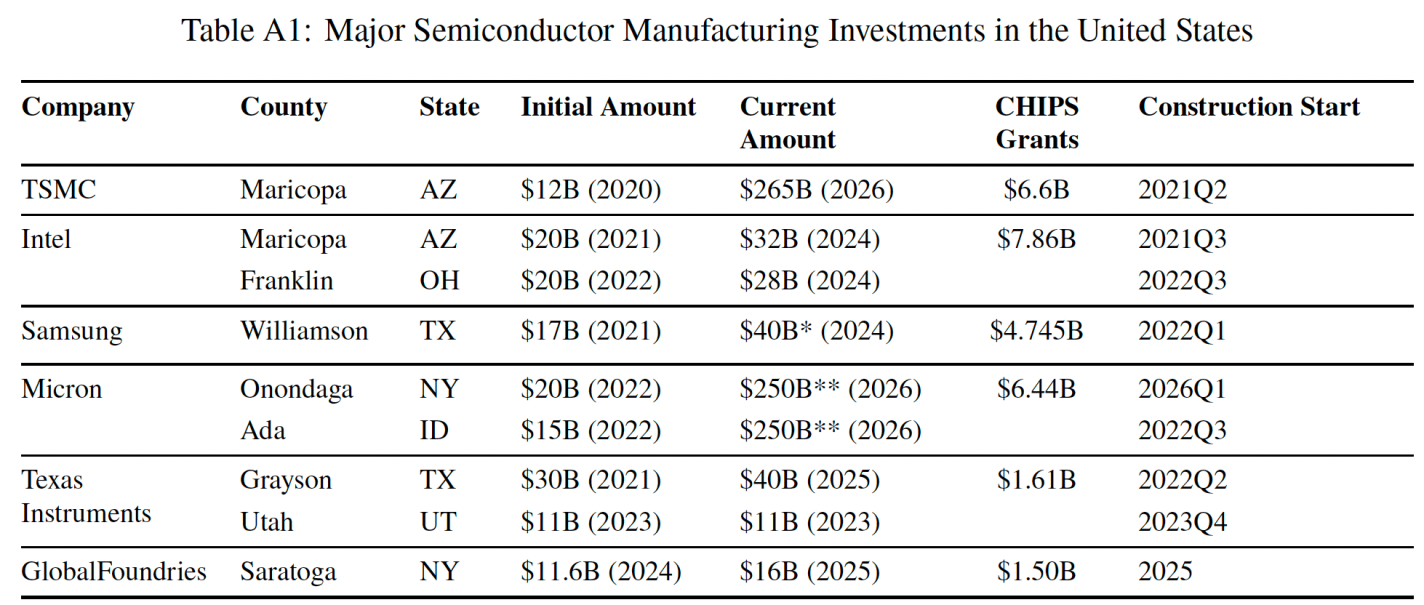
3. Of course, if you spend enough money, it is possible to bring jobs to an area. In “Where the CHIPS Fall: Local Labor Market Impacts of Semiconductor Mega-Investments in Maricopa County, Arizona“, Pinghui Wu (with Annie Liu) found that the billions spent on subsidies did bring jobs to Arizona- but at a cost of $136,000 to $190,000 per job-year.
4. Will the jobs remain once the subsidies are gone? They mostly didn’t in Puerto Rico. In “Corporate Tax Incentives Retraction: Evidence from Puerto Rico”, Dayanara M. Diaz Vargas found that the end of Section 936 tax credits in 2006 led to a 28% decline in manufacturing employment.
The results reminded me of subsidies for sports stadiums, which always promise to bring jobs and economic activity but rarely deliver: