Certificate of Need (CON) laws require healthcare providers to obtain state approval before opening new facilities, expanding existing facilities, or introducing certain healthcare services or equipment. We’ve covered them frequently here, and I’ve written several papers on them.
But my research evaluating the effects of CON on healthcare facilities, spending, and outcomes (along with everyone else’s) always had the drawback that we relied on fairly crude measures of CON- often just a binary measure of whether a state had any CON requirements at all. The problem with this is that different states have wildly different approaches to CON- some states like Vermont require CON for as many as 27 separate types of health facilities, services, or equipment, including major ones like hospitals, while other states like Ohio require CON for only a single type (nursing homes). Previous attempts to catalog this variation tended to produce single-year snapshots (e.g. Institute for Justice, Cicero, Mercatus, NCSL). These are helpful for policymakers wanting to see how their state compares to others, but not so useful to researchers trying to measure the effects of CON, who would typically prefer many years of historical data.
The dataset us CON researchers have always wanted is now here!
It tracks 31 different types of healthcare facilities, services, and equipment that are sometimes regulated by CON, showing which ones required a CON in each state in every year back to 1990 (going even further back for some states). This means our national panel has more than 55,000 data points.
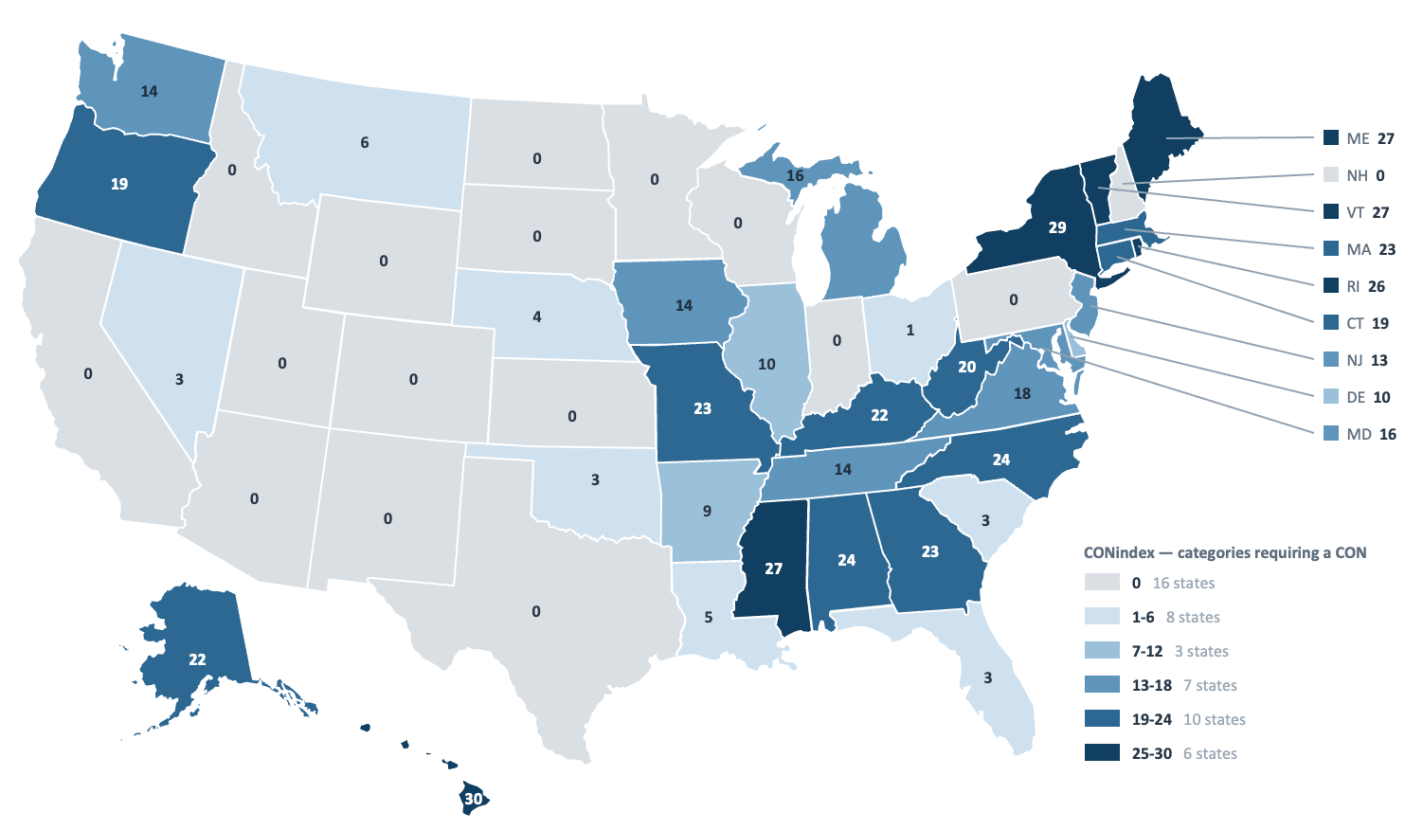
I’ve spent the last 2+ years working on this with a large team of coauthors (Sriparna Ghosh, Conor Norris, and Justin Leventhal) and research assistants, with support from Providence College and the Knee Regulatory Research Center at WVU. It involved reading decades of old state statutes on HeinOnline and Westlaw. We’ve released a paper, Certificate of Need: A New Comprehensive Panel, explaining the dataset in more detail and sharing ideas for how researchers could use it.
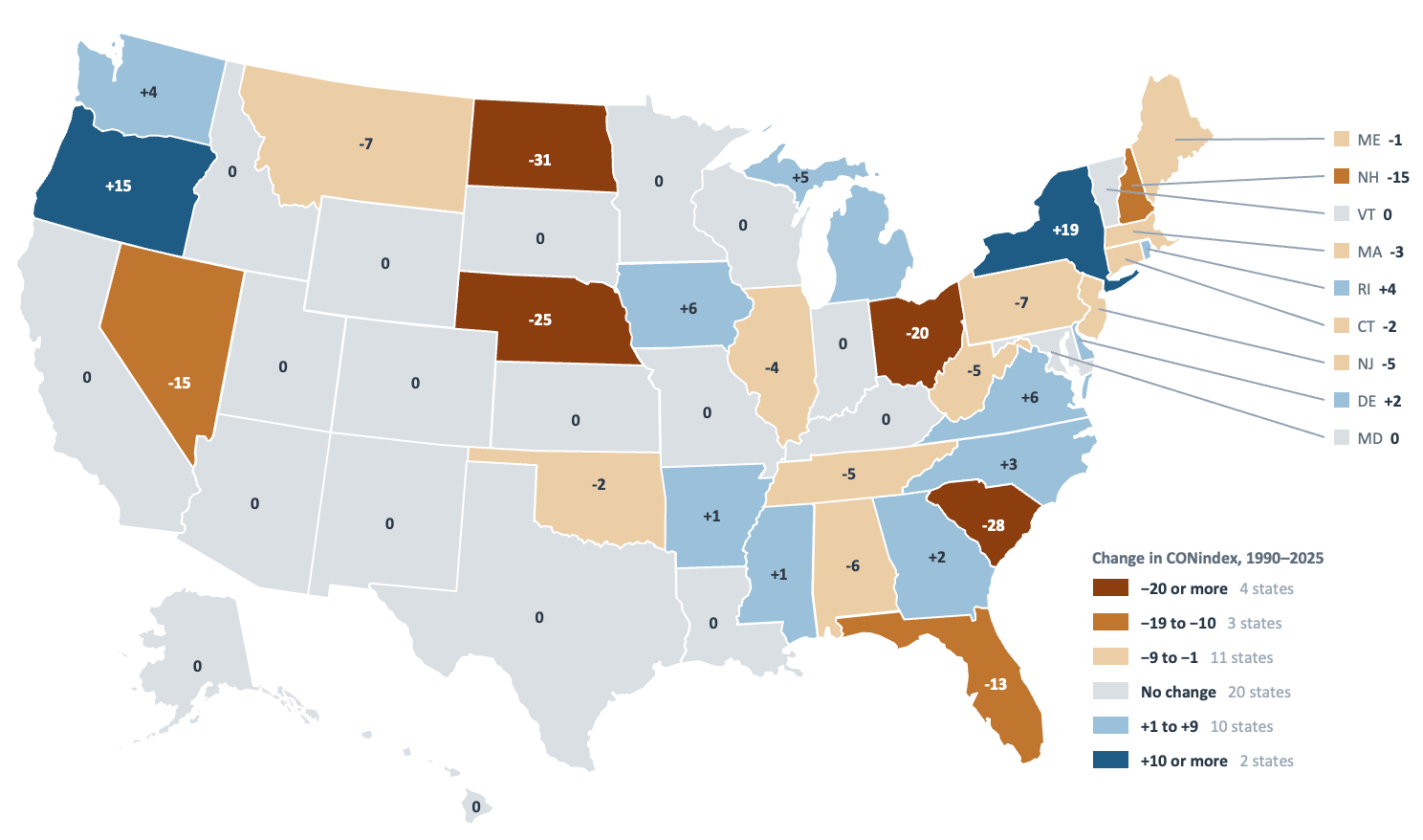
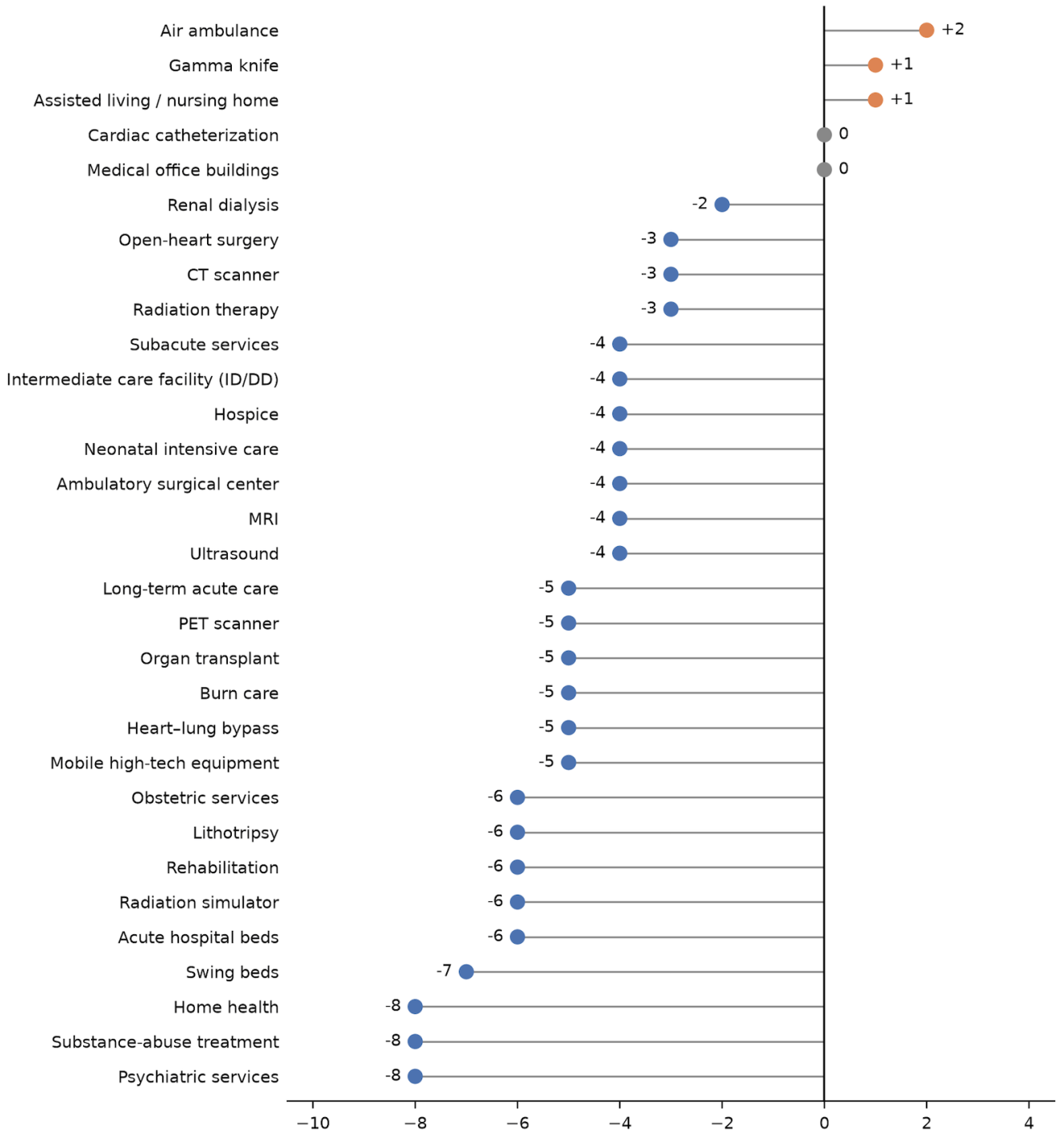
The dataset is public and free for everyone to use- we just ask that people cite us (though feel free to ask any of the dataset’s creators if you do want us as coauthors on your paper using the data). I’d love to hear your ideas for how you might use it, or how we can improve it- this is Version 1.0 but we plan to maintain and improve it going forward so that it can become the standard for the field.

