Adam Smith kicked off modern economics by asking what causes nations to become wealthy. We’ve spent centuries improving our answers to the question and we still have lots to learn, but I think Smith’s original answer holds up remarkably well:
Little else is requisite to carry a state to the highest degree of opulence from the lowest barbarism, but peace, easy taxes, and a tolerable administration of justice; all the rest being brought about by the natural course of things. All governments which thwart this natural course, which force things into another channel, or which endeavour to arrest the progress of society at a particular point, are unnatural, and to support themselves are obliged to be oppressive and tyrannical
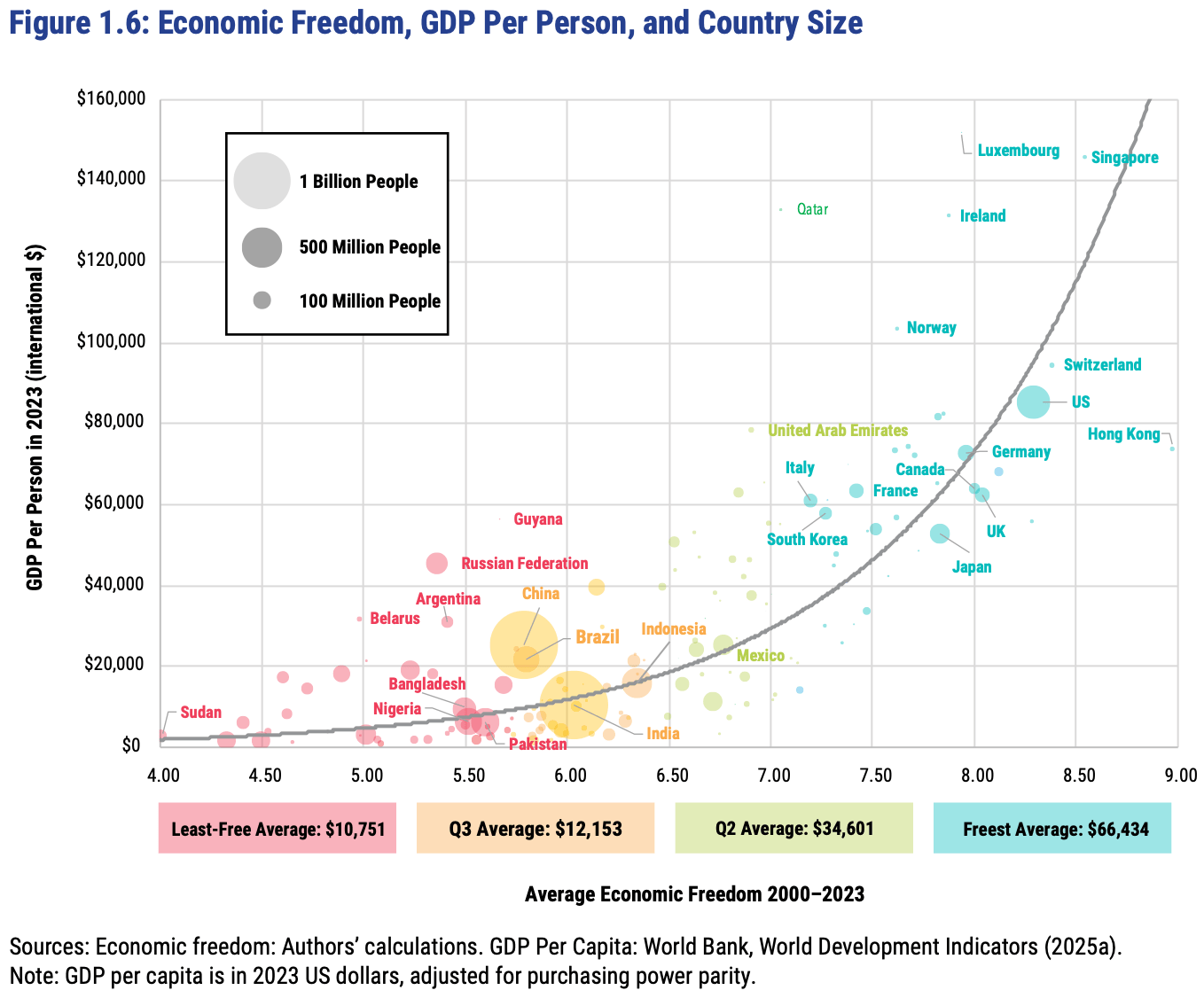
I was reminded of this by the latest Economic Freedom of the World report just released:
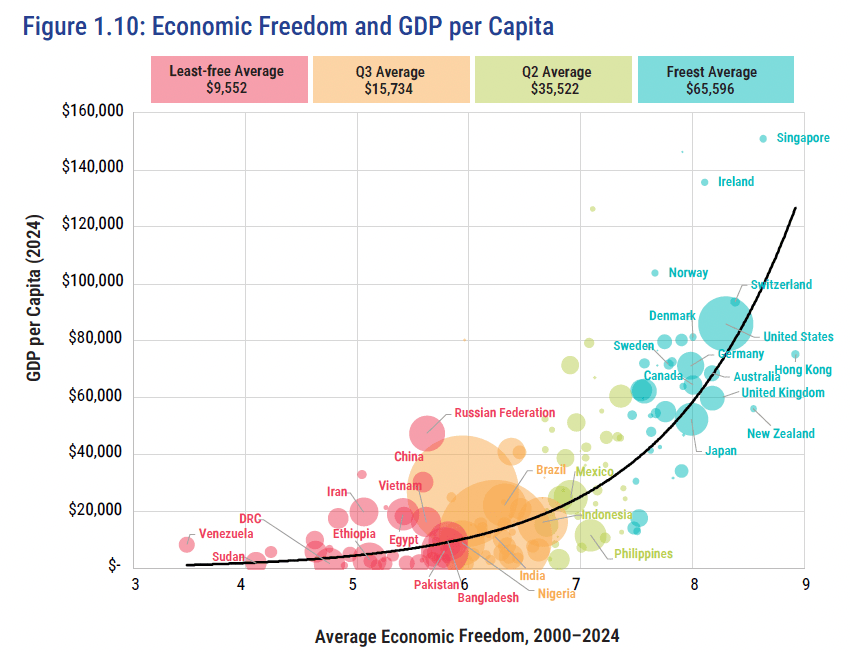
The overall correlation of GDP per capital and economic freedom is strong, but I find the extremes even more striking. Economic freedom is necessary for wealth: every country with a GDP per capita above $50,000 has above-average economic freedom (getting even close without high economic freedom requires having lots of oil). Economic freedom is sufficient: every country with an economic freedom rating over 8 has a GDP per capita over $50,000.
I periodically see someone claim that a country “did everything right” in terms of policy but still wound up poor, usually implying that the country is doomed by their geography or genes, or arguing that “neoliberal policy” failed. Whenever I check in on these countries, I inevitably find them to be far from “doing everything right”, with economic freedom scores typically far below 8.
It’s true that these are “just correlations” and that economic freedom alone isn’t a perfect predictor. It’s worth looking into the outliers and wondering- if a country is above the trend line without oil wealth (like China), what else are they doing right? If a country is well below the overall trend line (like Guatemala), does it mean they are have something else working against them to counteract the benefits of economic freedom? Or does it mean they are about to turn the corner and see high economic growth?
Overall though I don’t think it’s a big oversimplification to say that Adam Smith was right, and economic freedom is enough to bring prosperity. If you’re looking for economic growth, start with Smith’s peace, easy taxes, and tolerable administration of justice, or the Economic Freedom of the World’s small government, strong property rights and legal system, sound money, and freedom to trade at home and abroad.