2025 In Books

What I read in 2025:

Econ Books I Wrote Full Reviews Of:

The Little Book of Common Sense Investing: “John Bogle, the founder of Vanguard, wrote a short book in 2006 that explains his investment philosophy. I can sum it up at much less than book length: the best investment advice for almost everyone is to buy and hold a diversified, low-fee fund that tracks an index like the S&P 500.”

The Little Book that Beats the Market: “Greenblatt offers his own twist on value investing that emphasizes just two value metrics- earnings yield (basically P/E) and return on capital (return on assets). The idea is to blend them, finding the cheapest of the high-quality companies…. Greenblatt’s Little Book is a quick and easy way to learn a bit about value investing, but I think Bogle’s Little Book has the better advice.”

When Genius Failed: “Myron Scholes was on top of the world in 1997, having won the Nobel Prize in economics that year for his work in financial economics, work that he had applied in the real world in a wildly successful hedge fund, Long Term Capital Management. But just one year later, LTCM was saved from collapse only by a last-minute bailout that wiped out his equity (along with that of the other partners of the fund) and cast doubt on the value of his academic work…. The story is well-told, and the lessons are timeless”

The Art of Spending Money: “Its main point is that people tend to be happier spending money on things they value for their own sake- rather than things they buy to impress others, or piling up money as a yardstick to measure themselves against others (this is repeated with many variations). Overall it is well-written at the level of sentences and paragraphs with well-chosen stories and quotes, but I’m not sure what it all adds up to.”

Non-fiction I didn’t previously mention here:

The Napoleonic Wars: A Global History, Alexander Mikaberidze: Aims to educate us about the surprisingly major effects of the Napoleonic Wars outside of Europe. Succeeds wildly; I also learned a lot about the main European theatre. Hadn’t realized how poor British Russian relations were in this era, since they defeat Napoleon together in the end. But they were heading for war early on until a czar was assassinated, then actually went to war in the middle over Sweden and trade. Outside Europe, Britain briefly took Buenos Aires and Montevideo, and accidentally (?) captured Iceland, along with all the French and Dutch overseas colonies.

Talent: How to Identify Energizers, Creatives, and Winners Around the World, Tyler Cowen and Dan Gross: A business book that works best for someone who hires a lot. How to attract and retain diverse candidates, including but not limited to the most-discussed types of diversity. Tyler says that when he lived in Germany people often thought he was Turkish, and one told him to ‘get out of here, you Turk’.

Almost Human: The Astonishing Tale of Homo Naledi and the Discovery That Changed Our Human Story, Lee Berger and John Hawks: The story of how the authors excavated a cave in South Africa that held many remains from a previously unknown type of early human. Good storytelling, good explanations of what we know about early humans from other discoveries, and surprisingly frank discussions of the academic politics behind getting paleontology research funded.

The Ends of the World, Peter Brannen: The book explains Earth’s 5 previous mass extinctions and the geology / science behind how we found out what we know about them. Written explicitly about what all this means for current global warming; see my full review on that here.

Annals of the Former World, John McPhee: New Yorker writer follows geologists from New York to San Fransisco to learn about the land in between. Published as a series of 4 books (Basin and Range, In Suspect Terrain, Rising from the Plains, Assembling California), each one focusing on a different geologist and region. McPhee is known as an excellent stylist but the books are also quite substantive, I feel like I learned a lot.

Fiction

The Works of Dashiell Hammet: My friend Dashiell mentioned that this is who he was named after, and that Red Harvest was a good book of his to start with. He was right, and it lead me to read many others: The Thin Man (you may have heard of Hammet because of the movies adapted from this and The Maltese Falcon), Best Cases of the Continental Op, Honest Gain: Dicey Cases of the Continental Op. Almost every story has a twist more interesting than “the murderer isn’t who you suspected”.

Tress of the Emerald Sea, Brandon Sanderson. Sanderson is one of the most prolific authors of our time, so where do you start with him? He suggestsMistborn or Tress of the Emerald Sea, depending if they want something more heisty and actiony or something more whimsical.”

The Frugal Wizard’s Handbook for Surviving Medieval England, Brandon Sanderson: Sanderson doing his best impression of Terry Pratchett rewriting Mark Twain’s Connecticut Yankee in King Arthur’s Court, with shades of Scott Meyer’s Off to Be the Wizard.

Janissaries, Jerry Pournelle: What if instead of going to a more primitive world alone, you got sent there with an army?

The Narrow Road Between Desires, Patrick Rothfuss: Enough of an expansion of The Lightning Tree to be worth reading, but at this point anything Rothfuss does other than finally finish Doors of Stone can’t help but be disappointing.

Beguilement, Lois McMaster Bujold: Her Sci Fi works are great so I looked forward to her take on the Fantasy genre, but this turns out to be her take on the Romance genre.

Meta

This year I realized that Hoopla has a lot of books that Libby doesn’t, it is worth checking both apps for a book if you have access to libraries that offer both
Job Market Data is Back! Did All Job Growth Go to Native-Born Americans in the Private Sector?

BLS is slowly (actually, it probably feels very quick for those working on it!) catching up on data releases that were delayed during the federal government shutdown. This week, we saw the release of the November jobs report, which also includes data from October, even though there was no separate release for October. Well, kinda.

For the household survey (which is used to calculate the unemployment rate, among many other measures of the labor market), there is no October report. Because there is no data to be collected. Look at Table A in the employment situation report, and you will see no data in the column for October 2025. Look at the FRED page for the unemployment rate, and you will notice a gap in October. As I wrote a few weeks ago, this is not the end of the world, but it is rather sad for a gap to show up in a series that consistently ran for 933 months back to 1948.

So what is in the jobs report? Lots of new information. A few related areas that have gotten a lot of attention this week are the changes in federal government employment vs. private sector employment, and the changes in native-born vs. foreign-born employment.

Continue reading

The Fed Resumes Buying Treasuries: Is This the Start of, Ahem, QE?

In some quarters there is a sense that quantitative easing (QE), the massive purchase of Treasury and other bonds by the Fed, is something embarrassing or disreputable – – an admission of failure, or an enabling of profligate financial behaviors. For months, pundits have been smacking their lips in anticipation of QE-like Fed actions, so they could say, “I told you so”. In particular, folks have predicted that the Fed would try to disguise the QE-ness of their action by giving some other, more innocuous name.

Here is how liquidity analyst Michael Howell humorously put it on Dec 7:

All leave has been cancelled in the Fed’s Acronym Department. They are hurriedly working over-time, desperately trying to think up an anodyne name to dub (inevitable) future liquidity interventions in time for the upcoming FOMC meeting. They plainly cannot use the politically-charged ‘QE’. We favor the term ‘Not-QE, QE’, but odds are it will be dubbed something like ‘Bank Reverse Management Operations’ (BRMO) or ‘Treasury Market Liquidity Operations’ (TMLO). The Fed could take a leaf from China’s playbook, since her Central Bank the PBoC, now uses a long list of monetary acronyms, such as MTL, RRRs, RRPs and now ORRPs, probably to hide what policy makers are really doing.

And indeed, the Fed announced on Dec 10 that it would purchase $40 billion in T-bills in the very near term, with more purchases to follow.

But is this really (the unseemly) QE of years past? Cooler heads argue that no, it is not. Traditional QE has focused on longer-term securities (e.g. T-bonds or mortgage securities with maturities perhaps 5-10 years), in an effort to lower longer-term rates. Classically, QE was undertaken when the broader economy was in crisis, and short-term rates had already been lowered to near zero, so they could not be lowered much further.

But the current purchases are all very short-term (3 months or less). So, this is a swap of cash for almost-cash. Thus, I am on the side of those saying this is not quite QE. Almost, but not quite.

The reason given for undertaking these purchases is pretty straightforward, though it would take more time to explicate it that I want to take right now. I hope to return to this topic of system liquidity in a future post.Briefly, the whole financial system runs on constant refinancing/rolling over of debt. A key mechanism for this is the “repo” market for collateralized lending, and a key parameter for the health of that market is the level of “reserves” in the banking system. Those reserves, for various reasons, have been getting so low that the system is getting in danger of seizing up, like a machine with insufficient lubrication. These recent Fed purchases directly ease that situation. This management of short-term liquidity does differ from classic purchases of long-term securities.

The reason I am not comfortable saying robustly, “No, this is not all QE” is that the government has taken to funding its ginormous ongoing peacetime deficit with mainly short-term debt. It is that ginormous short-term debt issuance which has contributed to the liquidity squeeze. And so, these ultra-short term T-bill purchases are to some extent monetizing the deficit. Deficit monetization in theory differs from QE, at least in stated goals, but in practice the boundaries are blurry.

If you aspire to management, learn to spot half-assed AI workflow

First, yes, the commenter is correct, this is grim:

This is fucking grim. Somebody invented a white guy, an "IT professional" named Edward Crabtree, who stopped the Bondi shooting and spread it all over the internet, which was picked up by AI agents and slop aggregation sites.The real hero is a fruit stand owner named Ahmed el Ahmed.

Tim Onion (@bencollins.bsky.social) 2025-12-14T20:02:01.665Z

The tragedy of needlessly lost lives is, of course, bad enough to despair, but it’s made that much worse that false information created to ostensibly (and obviously) prevent a Muslim man from being credited with the kind of heroism normally reserved for films* is so casually distributed through major social media channels. Putting despair aside (easier said than done), I’m not interested in only shaming twitter et al for promulgating false narratives that always seem to conveniently fit into Grok’s preferred narratives of white/western supremacy. I’m more interested in thinking about how our processing of information will evolve.

There is always selective pressure in labor and life for those who better adapt to a changing technological and information landscape, and there’s no shortage of change happening right now. Some of it falls into classic “resist the propaganda” tropes. Don’t believe what you see on TV has evolved to don’t believe what you learn from the internet→ social media→AI→??? Once again, easier said than done, and I think it is more nuanced than that. It’s not just about information insulation and nihilism, it’s about cultivating the ability to better intuit when you are being misled.

Is there a subreddit? Of course there is a subreddit:

The comments are interesting because they are collectively sussing out specific, tangible clues that this is or isn’t AI. The convenient lack of license plates is both evidence of an error (if the state requires front license plates) and one of selective deception (the left car has their plate cropped out rather than blurred out). There is also the uncanny over-simplicity of the setting. No other people, debris, trash cans, mailboxes, etc. The absolute perfection of the cars outside of the region immediately surrounding the point of collision.

We have intuitive tools at our disposal, likely borne out of the same cogntive sources of the “uncanny valley” that haunts certain animation. We may have evolved to avoid predators that used mimicry to approach and infiltrate. These skills are ancient and innate, though. They are not inherently honed to combat AI-generated and distributed deception. We will have to evolve. And, as alluded to earlier, this is going to show up in far more than our politics.

There’s lots of hype around training students to work with AI. That’s all well and good, but I’m not sure how different those tools are than the ones that we honed to search with Google, to write and debug our own code, or to simply write effectively. What about the skills to evaluate and credit inputs? To discern the product of narrow expertise from distilled generalizations i.e. to discern new workflow and products from recycled “AI slop”. How much of a manager’s job is to simple assess whether the task was completed sufficiently or half-assed 70% of the way there? A lot of it? Most of it? The thing about half-assing it is that you are only incentivized to do it when avoiding 50% of the toil is worth the risk of getting caught. What happens when you can avoid 95% of the toil? Basic economics says you’re going to half-ass it a lot more unless the probability of getting caught or the punishment increases. What that means is that if management doesn’t get better at identifying 5%-assed AI slop from employees they’re going to have to start firing employees when they do get caught. In a world with high separation costs, that’s not an attractive option. Which means tilting the balance of decision-making back towards “actually doing the work” will fall to improved managerial oversight and monitoring. There’s no shortage of handwringing over escalating C-suite salaries. It will be interesting to how people respond to wage scales rebalancing towards middle management.

The most cliched thing to ask for in a job applicant has long been “attention to detail” or that they be “detail oriented”. I’m not sure if that is now obsolete or more important than ever. It’s not just about attention, per se. It’s evaluation, perhaps even cynicism. And it’s not because AI is evil or corrupt or even wrong. It’s just overconfident, and that overconfidence is catnip for anyone who wants to believe their work for the day is done at 9:05am. If you want to be in charge, you’re going to have to get really good at sussing out the little signs that what you’re looking at wasn’t produced for your task, but the average of all similar tasks. Can you look quickly and closely? You’re the boss, you’re busy, but so you better be good at it. The AI is in the details.


*And seriously, Ahmed al Ahmed is a hero. A movie hero. A crawling through the air ducts to fight the bad guys hero. Unarmed, he tackled a man actively firing a rifle at innocents and in the process saved a number of lives we will never know. He was shot twice. He’s real. I am in awe.

Updated List of Top posts for 2025

In August, I listed the Top EWED Posts of 2025.  Here are a few more highlights. This list is roughly based on web traffic, starting with the highest number of views for 2025, since the August list.  

  1. Our breakout post for the entire year is Jeremy Horpedahl with:

The Poverty Line is Not $140,000

It has been cited in the Washington Post and the Financial Times, and shared many times.

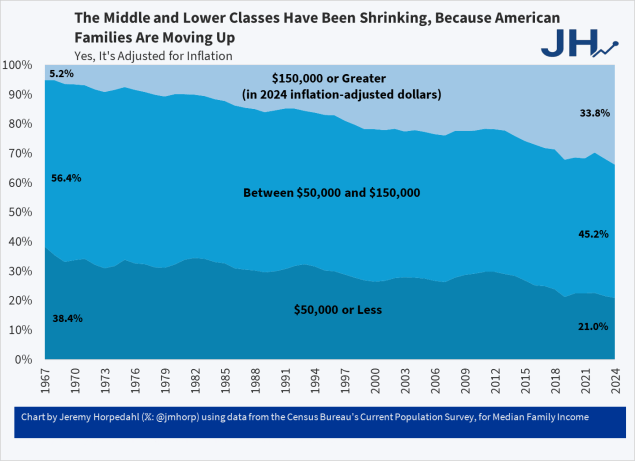
Mr. Green has understated typical family income by something like 70 percent. Knowing this fact alone would, I think, cause him to reconsider his entire essay. But it’s worse than that: he also overstates the amount of spending required to support a family!

Jeremy wrote a follow-up the next week: Poverty Lines Are Hard to Define, But Wherever You Set Them Americans Are Moving Up (And The “Valley of Death” is Less Important Than You Think)

2. James Bailey’s biggest hit this year is:

Writing Humanity’s Last Exam

What a great title!

3. Many have clicked on Jeremy’s Bad Claims About Food Stamps (SNAP)

On Twitter I joked that if it is true, you should just run all of GDP through SNAP and we could be 80% richer. But my joke isn’t quite fair, because it could be true at the margin, but the effects might dissipate at some point. At what point? Well, a key assumption by USDA’s model is that the recipients of SNAP benefits have a higher marginal propensity to consume than the average household…

4. Did you know that One-Third of US Families Earn Over $150,000

5. Have you wondered about: What is $300,000 from “The Gilded Age” Worth Today?

6. I rarely do this in top post roundups, but I’ll mention that Mike Makowsky’s post from 2022 generated a lot of interest this year, possibly because of the rise of interest in “agents”:  Why Agent-Based Modeling Never Happened in Economics

I, myself, am embarking on a research project about AI agents. More to come on that.

7. In case you struggle to accept that the world is getting better along at least some margins: The Growth of Family Income Isn’t Primarily Explained by the Rise of Dual-Income Families

8. Many people searched and found their answer from Scott Buchanan in: “Big Short” Michael Burry Closes Scion Hedge Fund: “Value” Approach Ceased to Add Value?

Funds are nearly always shut down because of underperformance, not overperformance.

9. Zachary Bartsch wrote: What is truth? The Bayesian Dawid-Skene Method

The Bayesian Dawid-Skene (henceforth DS) method helps to aggregate opinions and find the truth of a matter given very weak assumptions ex ante.

Is that what happens on a group blog? Trying to tie it all together.

10. A post from Zachary that I have shared with my students considering an economics major: What’s the Best Major to Prepare for Law School?

Money is not everything, but…

11. Not technically Jeremy’s top post, but I make this list and it made me laugh to see the title: Is Everyone Going to Europe This Summer?

Though don’t worry: not everyone went to Europe this summer, despite what social media might have you believe.

Just wait for my posts from Europe, people. I’ll get back there soon.

This cuts against the idea that all progress is just more people staring into their screens. Although, arguably, people travel for the social media engagement it generates. Sometimes I feel like my Facebook friends document their trips so thoroughly that I don’t even need to go.

12. I posted an update to our hallucinations result: Counting Hallucinations by Web-Enabled LLMs

13. Here is a take that could come back to make me look stupid in 10 years: Is AI learning just MOOCs again?

14. We have some readers who are also classroom teachers, so here is James: Why I Started Grading Attendance

15. I endorse this message from James: LinkedIn is OK, Actually

We are a little cringe here, too.

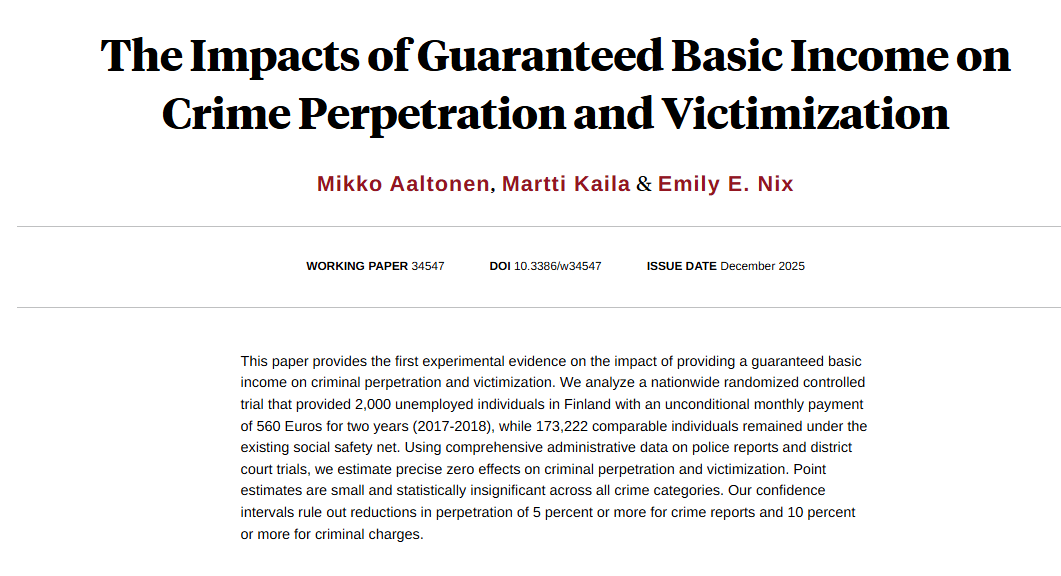
16. This post hasn’t had weeks to pick up a high views score, but Mike was one of the first to this paper, and I subsequently saw big accounts talking about it: Obviously baseline economic security matters, but…

If you asked me five years ago where a new UBI might, at the margin, have a zero effect, I would have picked a Nordic country, but still…

Our biggest source of web traffic is Google search. We get readers who click through links shared by our friends (thank you). And, something that’s way up in percentage terms is referral traffic from a certain “chatgpt.com” – 8 times more than in 2024.

Thanks to all the humans and others who read.

Do Tariffs Decrease Prices?

Much of what economics has to say about tariffs comes from microeconomic theory. But it’s mostly sectoral in nature. Trade theory has some insights. But the effects on the whole of an economy are either small, specific to undiversified economies, or make representative agent assumptions that avoid much detail. Given that the economics profession has repeatedly said that the Trump tariffs would contribute to inflation, it seems like we should look at the historical evidence.

Lay of the Land

Economists say things like ‘competition drives prices closer to marginal cost’. Whether the competitor lives abroad is irrelevant. More foreign competition means lower prices at home. But that’s a partial equilibrium story. It’s true for a particular type of good or sector. What happens to prices in the larger economy in seemingly unrelated industries? The vanilla thinking that it depends on various elasticities.

I think that the typical economist has a fuzzy idea that the general price level will be higher relative to personal incomes in some sort of real-wages and economic growth mental model. I don’t think that they’re wrong. But that model is a long-run model. As we’ve discovered, people want to know about inflation this month and this year, not the impact on real wages over a five-year period.

Part of the answer is technical. If domestic import prices go up, then we’ll sensibly see lower quantities purchased. The magnitude depends on the availability of substitutes. But what should happen to total import spending? Rarely do we talk about the expenditure elasticity of prices. Rarely do we get a simple ‘price shock’ in a subsector. It’s unclear that total spending on imports, such as on coffee, would rise or fall – not to mention the explicit tax increase. It’s possible that consumers spend more on imports due to higher prices, or less due to newly attractive substitutes. The reason that spending matters is that it drives prices in other parts of the economy.

For example, I argued previously that tariffs reduce dollars sent abroad (regardless of domestic consumer spending inclusive of tariffs) and that fewer dollars will return as asset purchases. I further argued that uncertainty makes our assets less attractive. That puts downward pressure on our asset prices. However, assets don’t show up in the CPI.

According to the above discussion, it’s unclear whether tariffs have a supply or demand impact on the economy. The microeconomics says that it’s a supply-side shock. But the domestic spending implications are a big question mark.

What is a Tariff Shock?

That’s the title of a recent working paper from the Federal Reserve Bank of San Francisco. It’s a fun paper and I won’t review the entirety. They start by summarizing historical documents and interpreting the motivation of tariffs going back to 1870. They argue that tariffs are generally not endogenous to good or bad moments in a business cycle and they’re usually perceived as permanent. The authors create an index  to measure tariff rates.

Here’s the fun part. They run an annual VAR of unemployment, inflation, and their measure of tariffs. Unemployment in negatively correlated with output and reflects the real side of the economy. Along with inflation, we have the axes of the Aggregate Supply & Aggregate Demand model. Tariffs provide the shock – but to supply or demand?.  Below are the IRF results:

Continue reading

Macroeconomic Policy In a Nutshell

What I’m telling my Intro Macro students on the last day of class, since we weren’t able to get through every chapter in the textbook:

A few of you might end up working in economic policy, or in highly macro-sensitive businesses like finance. For you, I recommend taking followup classes like Intermediate Macroeconomics or Money and Banking so you can understand the details. For everyone else, here are the very basics:

  1. In the long run, economic growth is what matters most. The difference between 2% and 3% real GDP growth per capita sounds small in a given year, but over your lifetime it is the difference between your country becoming 5 times better off vs 10 times better off.
  2. How to increase long-run economic growth? This is complicated and mostly not driven by traditional macroeconomic policy, but rather by having good culture, institutions, microeconomic policy, and luck.
  3. In the shorter run, you want to avoid recessions and bursts of inflation.
  4. High inflation means too many dollars chasing too few goods. To fix it, the federal government and the central bank need to stop printing so much money (the details can get very complicated here, but if we’re talking moderately high inflation like 5% the solution is probably the central bank raising interest rates, and if we’re talking very high inflation like 50% the solution is probably a big cut to government spending).
  5. If there is a recession (which will look to you like a big sudden increase in layoffs and bankruptcies), the solution is probably to reverse everything in the previous point. The government should make money ‘easier’ via the central bank lowering interest rates while the federal government spends more and taxes less.
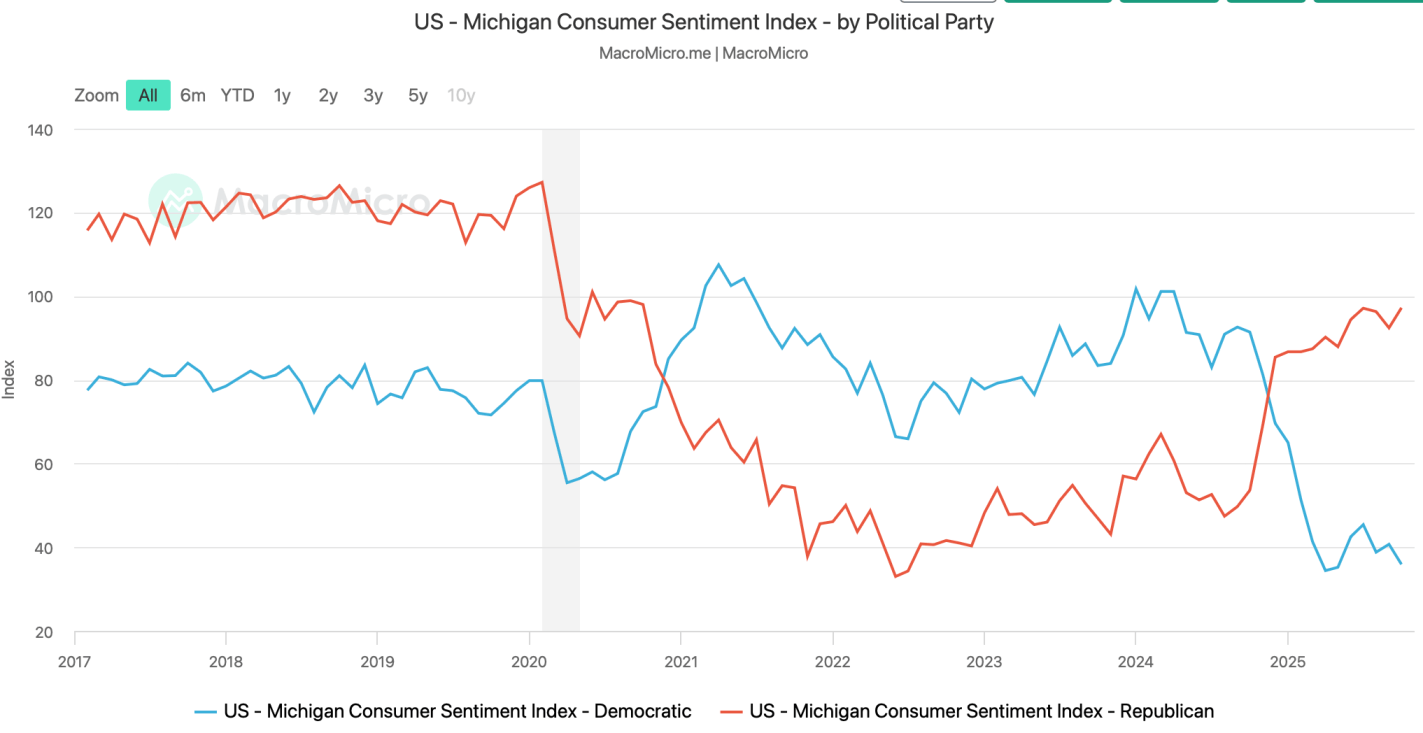
  6. If you don’t take more economics classes, you will likely hear about macro issues mainly through the news media and social media. You should be aware of their two main biases: negativity bias and political bias.
    • Negativity Bias: If It Bleeds, It Leads on the news. Partly this is because bad news tends to happen suddenly while good news happens slowly, so it doesn’t seem like news; partly it just seems to be what people want from the news and from social media.
    • Political Bias: People tend to seek out news and social media sources that match their current preferences. These sources can be misleading in consistent ways for ideological reasons, or in varying ways based on whether the political party they like is currently in power.
  7. There are different ways to measure each key macroeconomic variable. Think through them now and make a principled decision about which ones you think are the best measures, and track those. Otherwise, your media ecosystem will cherry-pick for you whichever measures currently make the economy look either the best or the worst, depending on what their biases or incentives dictate.
  8. There are good ways to keep learning about economics outside of formal courses and textbooks, I list a few here.

Google’s TPU Chips Threaten Nvidia’s Dominance in AI Computing

Here is a three-year chart of stock prices for Nvidia (NVDA), Alphabet/Google (GOOG), and the generic QQQ tech stock composite:

NVDA has been spectacular. If you had $20k in NVDA three years ago, it would have turned into nearly $200k. Sweet. Meanwhile, GOOG poked along at the general pace of QQQ.  Until…around Sept 1 (yellow line), GOOG started to pull away from QQQ, and has not looked back.

And in the past two months, GOOG stock has stomped all over NVDA, as shown in the six-month chart below. The two stocks were neck and neck in early October, then GOOG has surged way ahead. In the past month, GOOG is up sharply (red arrow), while NVDA is down significantly:

What is going on? It seems that the market is buying the narrative that Google’s Tensor Processing Unit (TPU) chips are a competitive threat to Nvidia’s GPUs. Last week, we published a tutorial on the technical details here. Briefly, Google’s TPUs are hardwired to perform key AI calculations, whereas Nvidia’s GPUs are more general-purpose. For a range of AI processing, the TPUs are faster and much more energy-efficient than the GPUs.

The greater flexibility of the Nvidia GPUs, and the programming community’s familiarity with Nvidia’s CUDA programming language, still gives Nvidia a bit of an edge in the AI training phase. But much of that edge fades for the inference (application) usages for AI. For the past few years, the big AI wannabes have focused madly on model training. But there must be a shift to inference (practical implementation) soon, for AI models to actually make money.

All this is a big potential headache for Nvidia. Because of their quasi-monopoly on AI compute, they have been able to charge a huge 75% gross profit margin on their chips. Their customers are naturally not thrilled with this, and have been making some efforts to devise alternatives. But it seems like Google, thanks to a big head start in this area, and very deep pockets, has actually equaled or even beaten Nvidia at its own game.

This explains much of the recent disparity in stock movements. It should be noted, however, that for a quirky business reason, Google is unlikely in the near term to displace Nvidia as the main go-to for AI compute power. The reason is this: most AI compute power is implemented in huge data/cloud centers. And Google is one of the three main cloud vendors, along with Microsoft and Amazon, with IBM and Oracle trailing behind. So, for Google to supply Microsoft and Amazon with its chips and accompanying know-how would be to enable its competitors to compete more strongly.

Also, AI users like say OpenAI would be reluctant to commit to usage in a Google-owned facility using Google chips, since then the user would be somewhat locked in and held hostage, since it would be expensive to switch to a different data center if Google tried to raise prices. On contrast, a user can readily move to a different data center for a better deal, if all the centers are using Nvidia chips.

For the present, then, Google is using its TPU technology primarily in-house. The company has a huge suite of AI-adjacent business lines, so its TPU capability does give it genuine advantages there. Reportedly, soul-searching continues in the Google C-suite about how to more broadly monetize its TPUs. It seems likely that they will find a way. 

As usual, nothing here constitutes advice to buy or sell any security.

Obviously baseline economic security matters, but…

There’s no getting around the fact that UBI experiments are not producing the kind of results many expected, myself very much included. Now, to be clear, this is in Finland, which has a quite robust social safety net, but precise zeros from a sample of 2,000 unemployed subjects is not something that can be ignored either. If you asked me five years ago where a new UBI might, at the margin, have a zero effect, I would have picked a Nordic country, but still…