“Boomers- live it up now at the expense of your kids, the government, charities, and your future selves.” That’s what I worried the popular book “Die With Zero” by Bill Perkins* might advocate based on its title and the brief descriptions I heard. After reading it, I’d say it’s at most 20% the book I worried about. A more accurate summary would be “planning ahead is great but it doesn’t always mean saving more” or even “here’s how to plan out your optimal consumption path like an economist”.
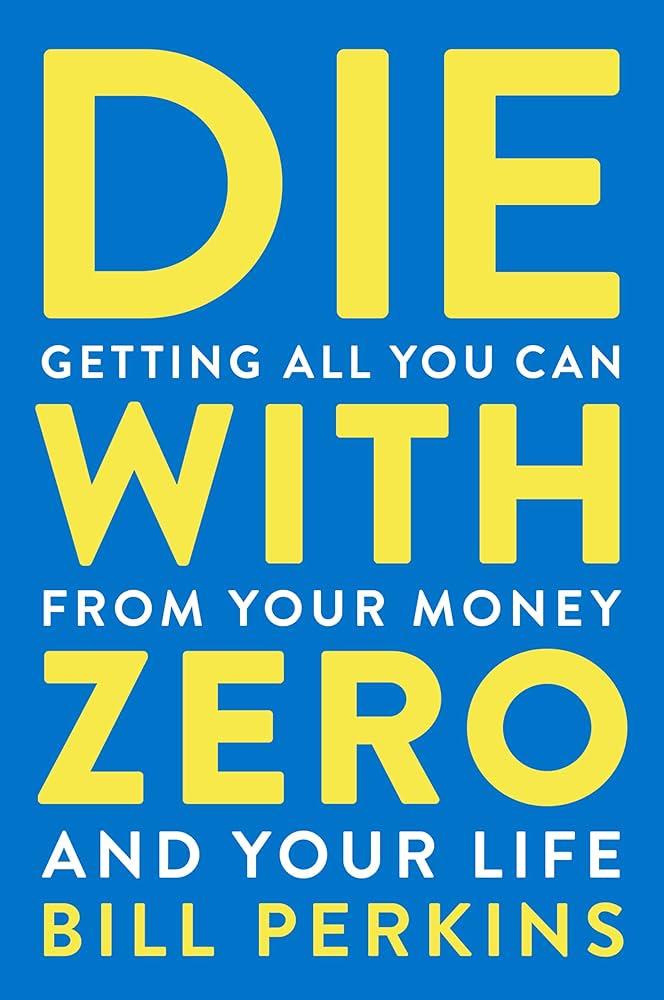
The core argument is that you’ll be happiest if you spend or dispose of all your money while you’re alive, then die right as you run out of money. He acknowledges that “dying with exactly zero is an impossible goal” because you don’t know when you’ll die, but he thinks most people could get much closer to zero than they do and would be better off for trying.
He then considers a variety of obvious objections.
Q: Isn’t the risk of running out of money early worse than the risk of not spending everything?
A: It’s a real risk, but one that can easily be eliminated with financial products like annuities and long-term care insurance.
R (My reaction): This is basically right. In fact, the best argument for his thesis he seems to miss is that there’s also always Social Security and Medicaid, so in America you’d never really hit zero; still less so in a country with a stronger welfare state.
Q: What about kids? Or charity?
A: Figure out how much you want them to have, then give it to them before they die. They’d rather have it sooner- right now the modal recipient of an inheritance is 60 years old, but money is more useful to people when they are younger, closer to 30.
R: True as far as it goes, but my guess is that most people would end up giving much less this way. Especially if they also listen to Perkins’ advice about working less. He mentions giving money away early but his heart doesn’t seem in it compared to planning out the optimal consumption path.
Highlights: Your ability to enjoy your wealth depends on your health, since many fun activities can’t be done when you are frail or sick. It seems obvious when you hear it, but the idea of measuring the marginal utility of wealth with respect to health is underrated even in health economics. The book does lots of good work with data on Americans’ finances; maybe the best argument for Perkins’ idea that many people over-save is that 1/3 of Americans end up increasing their wealth after retirement.
Lowlights: Graph of optimal net worth by age (page 166) contradicts graph of optimal spending by age (page 172). Arguing that John Arnold should have retired earlier than he did (age 38) because he already had more than enough money for himself, without considering how this would have made one of the world’s most innovative and effective charities much less effective. Arguing that Warren Buffett should have given his money away sooner because the charities would rather have it sooner- arguably this is true for most people, but definitely not for the one guy who really can beat the market and give much more later!
Do I recommend Die With Zero? It’s a quick and easy read that I enjoyed, but I don’t think it changes any of my financial plans. If we over-simplify its message to be “consume more now”, it’s a bad message for the typical American (who saves only 2.6% of their income), but perhaps a good message for the typical reader of personal finance books. As always it’s good to ask yourself “who is this for” and “should you reverse any advice you hear”.
“the people I’m writing for- people who are saving too much for their own good” -Die With Zero
“Objectivism might be a vicious cycle. The people who are already too selfish see an opportunity to be selfish with a halo. They join Objectivism, egg each other on, and become even more selfish still. Meanwhile, the people who could really have benefitted from Objectivism, the people who feel guilted into living for others all the time while ignoring their own needs, are off in some kind of effective charity group, egging each other on to be even more self-destructively altruistic….. Every piece of social commentary is most likely to go to the people who need it least.” – Scott Alexander
*Bill Perkins is the only name on the cover, but the Acknowledgements and the ending note that the book was co-written by Marina Krakovsky with some work done by economist Kay-Yut Chen.


Umm…it’s really hard to know how long you will live, and what your needs will be. In my extended family is someone who is over 95, physically healthy but in need of 24/7 memory care. That requires a LOT of savings to fund that care, way more than Social Security.
LikeLike