Whenever researchers are conducting studies using state- or county-level data, we usually want some standard demographic variables to serve as controls; things like the total population, average age, and gender and race breakdowns. If the dataset for our main variables of interest doesn’t already have this, we go looking for a new dataset of demographic controls to merge in; but it has always been surprisingly hard to find a clean, easy-to-use dataset for this. For states, I’ve found the University of Kentucky’s National Welfare Database to be the best bet. But what about counties?
I had no good answer, and the best suggestion I got from others was the CDC SEER data. As so often, the government collected this impressively comprehensive dataset, but only releases it in an unusable format- in this case only as txt files that look like this:
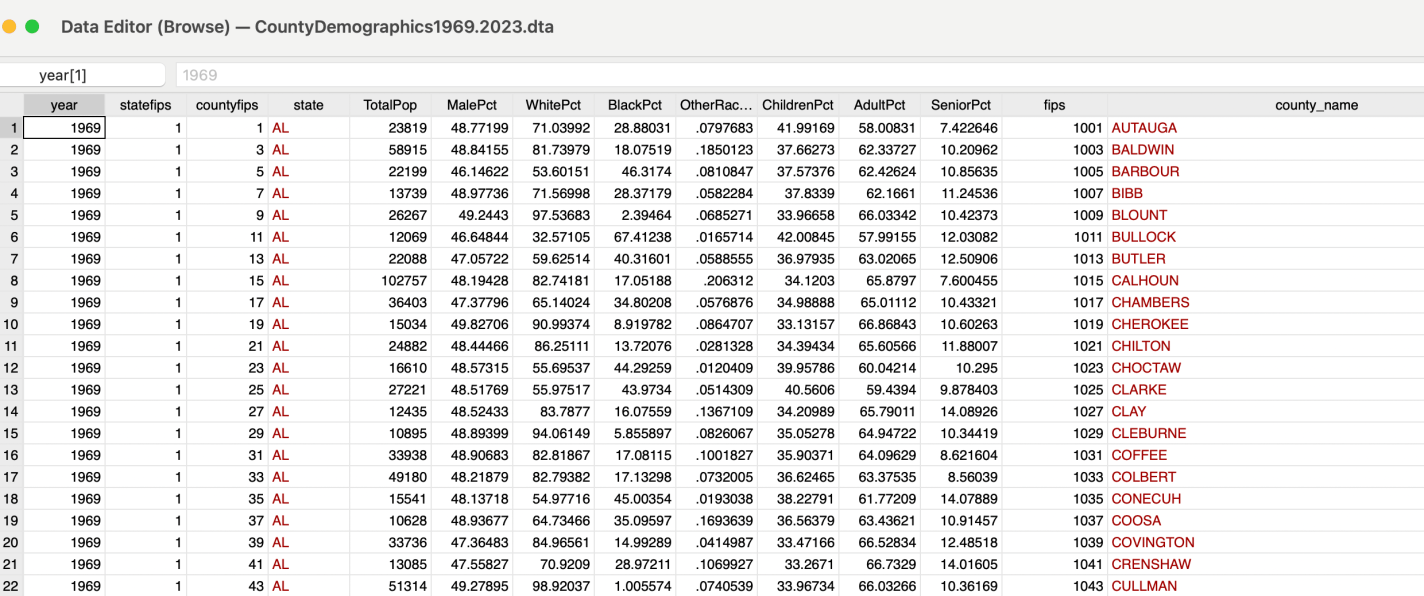
I cleaned and reformatted the CDC SEER data into a neat panel of county demographics that look like this:
I posted my code and data files (CSV, XLSX, and DTA) on OSF and my data page as usual. I also posted the data files on Kaggle, which seems to be more user-friendly and turns up better on searches; I welcome suggestions for any other data repositories or file formats you would like to see me post.
This chart shows the average number of hours worked in the US, by gender, for those in their prime working ages (25-54), from 1900 to 2023. It includes both paid market work and household production (which includes activities like cooking, cleaning, shopping, and taking care of children):
A few things to notice. First, there is no data for 2020, as the ATUS didn’t publish any tables due to incomplete data from the pandemic. And even if we had data, it would have been a huge outlier year.
More importantly, there is an obvious long-term trend of declining market work and rising household production for men, and the opposite for women. In 1900 women worked over 6 times as many hours in the household as they did in the market, but by 2023 they worked almost the exact same number of hours in each sector.
Male hours in market work declined by about 16 hours per week (using 10-year averages, as there is a slight business-cycle effect on hours), but the total number of hours they worked declined much more modestly, by about 3 hours per week (note: these numbers include all men, whether they are working or not). Women saw similar changes, but in the opposite direction, with total hours worked only falling by about 4 hours per week, even though hours working at home fell by almost 22 hours.
Americans do have more leisure time than in 1900, but not dramatically so: perhaps 3-4 hours per week. This is an improvement, but less of an improvement than you might suspect by looking at hours of market work alone.
Ramey and Francis do try to carefully distinguish between household production and leisure. For example, yardwork and changing diapers are household production, while gardening and playing with your children are leisure. For some respondents to surveys, they may feel differently about whether gardening is “really” work or not, and some may enjoy changing baby’s diapers, but in general their distinctions seem reasonable to me.
Finally, we can say pretty confidently with this data that women have almost always worked more hours than men — the one exception in the 20th century being WW2 — and the gender gap was about 4 hours per week in both the early 1900s and the most recent decade (though it did fluctuate in between).
This article was updated on March 1 with additional information on kava side effects.
This is a follow-up to my post last week, describing my visit to a shop purveying beverages laced with kava and with kratom, two substances I had not heard of previously. As a service to readers who may deal with someone who is using these materials, here is what I have found out about what they do to people.
Upfront disclaimer: I have no expertise in this area, these are just the observations of an amateur who has read a few articles. Do not make any decisions based on this article.
Primary Effects of Kava
Kava is made from the roots of a plant in the pepper family, which is native to the Pacific Islands. There are two main classes of kava plants. The “noble” cultivars are what has traditionally been used for human consumption, via water extraction of the roots to make a beverage. The non-noble (two-day or “tudei”) cultivars grow faster (so they are cheaper for production), but are more likely to have adverse side effects. Also, the above-ground parts of the plants are known to contain toxic alkaloids.
The Wikipedia summary of effects is, “Systematic reviews and meta-analyses conducted in the last decade have typically indicated a modest positive effect of kava on anxiety and generalized anxiety disorder, though the evidence is mixed and further research is frequently recommended.”
I found a 2020 memo by a FDA toxicologist, titled “Review of the published literature pertaining to the safety of Kava for use in conventional foods”, which covers both the positive effects and the extensive side-effects. The memo notes: “The major physiological action in humans is consistently reported as a pleasant, mild, centrally acting relaxant property which induces a generalized muscle relaxation and, ultimately, a deep natural sleep. A minor property of kava is its local anesthetic properties which are experienced as numbing of the mucous membranes of the mouth and tongue when the beverage is consumed.” That all sounds pretty nice.
The main active compounds in cava are called kavalactones. Known effects of the six major kavalactones are:
For the biochemists among us: “The psychotropic effects of kava are achieved by the modulation of gamma‐amino‐butyric acid (GABA) receptors. Although the exact mechanisms are not known, studies suggest that the effects are mediated via different mechanisms such as upregulation of GABA‐A receptor function, blockade of voltage‐gated sodium ion channels, enhanced ligand binding across GABA‐A receptor subtypes, and reduced excitatory neurotransmitter release.” GABA is the primary inhibitory neurotransmitter in the central nervous system, so it is commonly targeted by tranquilizers such as benzodiazepines (e.g. Valium). Hence, the calming effect. Research suggests that kava components also inhibit the re-uptake of norepinephrine (a chemical that makes you feel alert) and of dopamine (a feel-good hormone).
Side Effects of Kava
The most controversial issue is liver damage. There were a number of very severe cases (complete liver failure) in the late 1990s/early 2000s in Europe, which led to a ban of kava in a number of countries there starting around 2002. It was not banned in the U.S., but the FDA issued an advisory letter expressing concern about liver damage.
Kava advocates were unconvinced, and further research seems to indicate that nearly all of those liver damage cases were due to use of the non-noble cultivars and/or the use of stems instead of just the roots and/or the extraction being done with some alcoholic solvent rather than water (probably due to greedy/ignorant kava suppliers). Most European countries have relaxed their outright bans, although in many cases kava sales are still restricted or regulated. Because their main market got shut off due to the liver problems, Pacific island nations scrambled to rebuild kava credibility. They now try to ensure that only proper kava is exported to the West.
Kava advocates claim that if kava is extracted the traditional way from traditional cultivars, there are no appreciable severe bad side-effects. On the other hand, the 2020 FDA memo document claimed there was a wide range of serious adverse effects of kava use among traditional kava users in the eastern Pacific, especially liver damage, among heavy kava drinkers: “Several studies show a clear association of increased level of liver enzymes GGT, ALP, and moderate to heavy kava beverage consumption as shown in Table 2…..Hepatic injury due to traditional aqueous extracts of kava root was reported in a study of 27 heavy kava drinkers in New Caledonia (Russmann et al. 2003).”
On closer examination, however, it seems that the FDA document gave an overly negative view of kava liver effects. The Russman 2003 study did not actually show “heptatic injury” among the 27 heavy kava drinkers. All it showed was elevated levels of the liver-related enzymes. It is true that there were pretty consistent observations of elevated levels of enzymes such as GGT (gamma-glutamyl transpeptidase) and ALP (alanine aminotransferase) in blood samples. Most of the studies of Polynesian subjects cited in the FDA memo lacked controls, but Brown (2007) included kava users and nonusers in its survey of Tongans living in Hawaii. This study showed high levels of GGT and ALP among the kava users, yet without any clinical indications of liver malfunction. Also, other liver-related markers in the blood such as AST, ALT, bilirubin, and ferritin were normal in the kava users. The significance of the partial abnormalities in enzymes is not clear. My guess is that the liver is somewhat stressed but not to the point of malfunction.
So it seems true that moderate consumption of kava prepared the traditional way (water extraction from roots of noble cultivars) shows no general tendency for observable liver damage. That said, the elevated liver-related enzymes are grounds for at least a little caution, and there have been a (very) few cases of genuine liver damage from traditionally extracted kava. Russman (2003) reported two women in New Caledonia who developed symptoms of liver distress from kava; these symptoms resolved after cessation of kava use. And Becker (2019) documented the case of an otherwise healthy woman in Brazil who experienced complete liver failure following 52 days of using an approved kava pill at approved dosage; her life was saved by a liver transplant. However, people die every year from eating peanuts, so I don’t know how much to read into these isolated cases of liver damage from kava.
A common effect of kava use is dermatitis, presenting as dry skin, rashes, and eruptions. (This strikes me as an allergic-type reaction). Other common side-effects can be nausea and headaches. These effects typically resolve quickly if kava use is discontinued. In the plus column, there is some sketchy evidence for anti-cancer activity by kava. In general, cognition is not impaired.
I read about sixty reviews on Amazon from purchasers of kava root powders, and more discussions on Reddit. Most were quite happy with the kava products, but emphasized that preparing the drink from the root takes some time and effort to squeeze and then filter; the brew tastes terrible, like dirt (you have to gulp it down, not sip it), and some temporary nausea is common. However, there were a nontrivial minority that reported very ugly experiences, and one man who with his first dose went comatose and nearly died. The general opinion is that kava beverage made fresh (by you or at a kava bar) from the ground root is better than capsules or packaged drinks made from kava extracts.
The exact effects may depend on your genome – some folks may get whacked, while others escape unscathed. And there may be systemic differences between how Caucasians and Polynesians react to kava. Apparently you must chug it down on an empty stomach to get the full effects. It is best to drink it in multiple small increments, rather than one giant glass. Some users chase each “shell” with a swish of some other beverage to clear the taste out, and/or eat a tiny snack like a few chips to calm the queasy stomach.
Side effects seem to be greatly amplified when kava is consumed with other substances, especially alcohol. That makes chemical sense, since kava acts on many of the same metabolic pathways as alcohol and antianxiety meds like benzodiazepines and barbiturates. This is significant, since in the West kava is often consumed in a social context which includes alcohol.
For further reading on kava effects: see an objective 2022 review by Soarez, and many pro-kava articles such as this on the kava promotion site kavacoalition.org. That site includes testimonials of people using kava instead of opioids for coping with chronic pain from injuries. Although its main function is to reduce anxiety, that in turn may mitigate the sensations of pain. A number of participants in a Reddit thread stated that kava has helped them overcome alcoholism.
One source estimated that there are about 200 kava bars in the U.S., with about half of them in Florida. After a court battle with the state, a kava bar opened in Virginia in 2024. The state has so far has not approved serving of kratom.
My takeaway on kava: It seems to me to be somewhat similar to cannabis or alcohol – light, occasional use can give a good feeling, especially pleasant as a shared experience with friends. For some, it might be helpful in coping with pain. Unlike alcohol, there seems to be no obvious tendency towards addiction. However, as with alcohol and cannabis, there is some possibility of serious adverse effects, especially with heavy use and if it is consumed with other substances. Therefore, it would seem wise to start slow with kava and monitor your body’s reactions.
Also, it is essential to make sure you are getting kava made the right way, as discussed above. At a kava bar, you can talk with the server. If you are taking capsules, I’d suggest contacting the manufacturer. Or you can buy plain kava root, and steep your own brew.
Effects of Kratom
I will spend less time on kratom effects, since it acts largely like an opioid. Need we say more.
Kratom is extracted from the leaves of an evergreen plant native to southeast Asia. We discussed some of the varieties of kratom earlier. Quotations here are all from the Wikipedia article; they mesh with what I have read elsewhere.
The active compounds are a mix of dozens of alkaloid compounds. The key ones seem to interact with opioid receptors in the brain. But the interactions are complex and poorly-understood. On the plus side, “These compounds display functional selectivity and do not activate the β-arrestin pathway partly responsible for the respiratory depression, constipation, and sedation associated with traditional opioids.”
For recreational use, “At low doses, kratom produces euphoric effects comparable to those of coca. At higher doses, kratom produces opioid-like effects.” Much of kratom use is for more serious issues, such as managing chronic pain or helping with opioid withdrawal.
There are many documented adverse side effects, resulting in many visits to hospitals:
Common side-effects include appetite loss, erectile dysfunction, nausea and constipation. More severe side-effects may include respiratory depression (decreased breathing), seizure, psychosis, elevated heart rate and blood pressure, trouble sleeping, and, rarely, liver toxicity. Addiction is a possible risk with regular use: when use is stopped, withdrawal symptoms may occur. A number of deaths have been attributed to the use of kratom, both by itself and mixed with other substances.
…Long-term use of high doses of kratom may lead to development of tolerance, dependence, and withdrawal symptoms, including loss of appetite, weight loss, decreased libido, insomnia, muscle spasms, muscle and bone pain, increased yawning and/or sneezing, myoclonus, watery eyes, hot flashes, fever, diarrhea, restlessness, anger, and sadness. This may lead to resumption of use. Frequent use of high doses of kratom may cause tremors, anorexia, weight loss, seizures, psychosis and other mental health conditions.
Perhaps the biggest concern with kratom is the high propensity for addiction and the need to increase dosage to obtain the desired effects:
Kratom is a botanical with a known addiction liability and, in vulnerable individuals, dependence may develop rather quickly with tolerance noted at three months and four- to ten-fold dose escalations required within the first few weeks…Kratom addiction carries a relapse risk as high as 78% to 89% at three months post-cessation.
In 2017 the FDA stated that “There is no reliable evidence to support the use of kratom as a treatment for opioid use disorder; there are currently no FDA-approved therapeutic uses of kratom… and the FDA has evidence to show that there are significant safety issues associated with its use.”
Some advice here on Reddit on how with kratom “less is more” — due to complex biochemical interactions, upping your dose or making it more frequent can actually diminish the desired effects, and start down the road of diminishing returns and then using higher and higher doses. And this Reddit where users describe their problems with kratom addiction:
i suggest you stop while you are still able to walk away relatively unscathed. addiction is a very disgusting thing that can happen to a person. you will absolutely feel worse than you ever thought you could feel, save for losing a child or something insane happening IRL.
some drugs will actually cause a physical addiction, like kratom. this means your body adjusts to it & stops doing its job in order to let the drug do it. now when you stop using, your body & mind are without their own processes & they are also without the drug. this leaves you empty, sick, wide awake but exhausted, sweaty but cold, aching pain. for alcohol, withdrawal can actually lead to seizures, extreme hallucinations & delusions, & even will just straight up kill you bc you need a drink so bad.
My takeaway on kratom: This one seems like playing with fire, due to its addictive properties. Also, street doses of kratom are sometimes spiked with horrible drugs like fentanyl. Thus, I see little case for promoting it for recreational use, given that there are safer alternatives such as weed, booze, and kava. (And in general, there are more fruitful ways to rise above anxiety than drinking or smoking something – – change your thinking patterns, or even use flashing lights to put your brain into alpha waves. )
It is possible that kratom could be useful to someone dealing with chronic pain, as an alternative to opioids with their known addition danger. I have deep sympathy for anyone in that position. I would hope that they would work with a medical professional or at least a trustworthy friend to monitor their usage (keeping it low, no matter what), since in these matters it is easy to deceive oneself as to what is really going on.
ADDENDUM
In case someone is tempted to try kratom out of curiosity, I will share the cautionary observation an acquaintance emailed me after reading the original version of this article:
You know, I met some heroin addicts who said that they always told themselves they wouldn’t do it, they had seen it destroy people. But they ended up one day just caving to curiosity. One day, they just shrugged and said “screw it, I wanna see what this is about.” And their life was ruined by the immediate addiction. It’s a very sad story.
Institutional vandalism is neither privatization nor creative destruction. It’s just cruelty masquerading as genius that plans to simply plead the necessary risk of endeavor when exposed as gratuitous incompetence. We may, within 10 years, see a newer, better NIH (or, preferably, cluster of baby NIHs) rise from the ashes. We may see a revitalized NSF and a whole slew of new institutions funding educaton research domestically and supporting the broader world through American aid programs. Maybe, maybe not.
But make no mistake: this is not a controlled burn. There is no plan, other than perhaps the wholly articulated belief that destruction wrought from chaos is a plan. This is a series of forest fires set by gleefull children with matches, wholly unable to even comprehend the risks they are taking on behalf of everyone else. We’ll probably get through to the other side, but for those of us who have been thinking about tail risk for a decade of Trump, the number of standard deviations between us and the unthinkable keeps getting smaller.
2004: In September 2004, Ukrainian presidential candidate Viktor Yushchenko was poisoned while running against pro-Russian candidate Viktor Yanukovych. After a dinner meeting, Yushchenko fell severely ill and his face became dramatically disfigured with cysts and lesions (chloracne). Medical tests in Vienna confirmed extreme dioxin poisoning. https://www.bbc.com/news/av/world-europe-43611547 The American liberal mind struggles to understand the difficulty of using elections under these conditions.
2018: “On March 4, 2018, British authorities say Russian agents poisoned Sergei Skripal—a former Russian military intelligence officer and U.K. double agent—and his daughter using a Novichok nerve agent…. With the immediate attack area isolated and the cleanup underway, the nation was shocked once again when two British nationals were poisoned by the same nerve agent nearly three months later in the neighboring town of Amesbury. One of the two, Dawn Sturgess, fell ill within 15 minutes of contact with the agent and died just over a week later. ” https://mwi.westpoint.edu/modern-day-nerve-agent-attack-military-lessons-salisbury/
If you get news from the internet and social media, be aware that some online participants are paid trolls from foreign governments.
Another pillar of this strategy involves botnets: swarms of fake, automated accounts created and controlled by Russian agents. These botnets hijack trending algorithms on social media platforms and thereby expose Western audiences to particular messages. They often share precisely worded posts to ensure that certain phrases—such as #WelcomeRefugees or #EndNetZero—trend in people’s news feeds. And they incessantly ‘like’ and repost content from pro-Kremlin influencers and trolls.
The aim here is twofold. First, it is an attempt to expand the reach of what would otherwise remain fringe opinions. They expose ever more people to Russian propaganda, and help create an illusion of popularity that serves to normalise pro-Kremlin talking points. But this is not merely intended to convert people into passionate Putinistas. The second goal is to promote the most inflammatory and divisive voices on either side of a given political issue. This helps spread the distrust and disillusionment that are so corrosive to liberal democratic society—and which have reached record levels on social media.
I was on a panel of economists last night at an event titled “The Economic Consequences of President Trump”. We each gave a 5-minute summary from our area of expertise and then opened up the floor for questions. This is a truncated summary of my talk. Since the panel included an investor, two industry economists, and another macro economist, I wanted to discuss something that was distinct from their topics. I’ve published a paper and refereed many articles concerning economic policy uncertainty (EPU) and asset volatility. I wanted to look at the data concerning President Trump – especially in contrast to Presidents Obama and Biden.
EPU matters because uncertainty can cause firms and individuals to delay investment and hiring decisions. Greater uncertainty can also cause divergent views concerning forecasted firm profitability. The result is that asset prices tend to become more volatile when EPU rises. One difficulty is that uncertainty occurs in our heads and concerns our beliefs, making it hard to measure. We try to get at it by measuring how often news media articles include the terms related to uncertainty, policy, and the economy. Since news content tends to report what is interesting, relevant, or salient to customers, there’s good reason to think that the EPU index is a decent proxy.
Using the Obama years as a baseline, the figure below simply charts out EPU. It was relatively low during Trump’s first term and then it was higher during Biden’s term – even after accounting for the Covid spike. The sharp increase toward the end is after Trump won the 2024 election. The EPU series conflicts with my perception of social media and media generally. My experience was that the media was far more attentive to the uncertainty that Trump caused. But, it may just be that the media outlets had plenty to report on rather than it being particularly indicative of EPU. After all, if the president exercises his power, then there is a certain swift decisiveness to it.
But if we look at a couple of particular policy areas, Trump’s administration faired worse. Specifically, Trump caused a ruckus concerning trade policy and immigration. Remember when Biden continued the aggressive trade policy that Trump had adopted? That’s consistent with lower EPU. Similarly, Biden made the immigration process much easier and faster while Trump’s deportation haranguing results in a somewhat stochastic means by which people are deported. Again, that spike at the end is after Trump won the 2024 election.
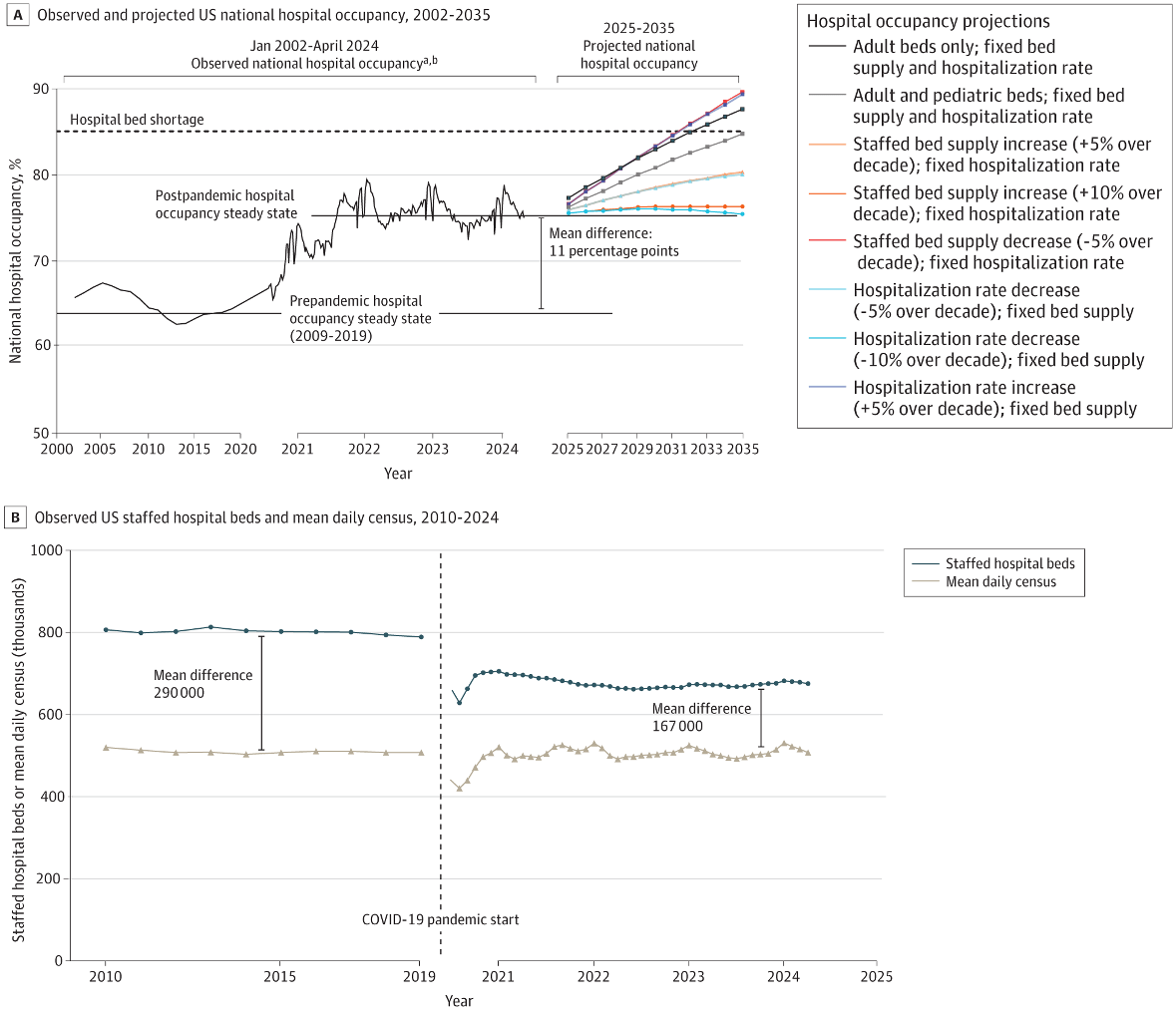
The average hospital is now 3/4 full- more full than during much of the worst of the Covid pandemic, and well above the 2/3 occupancy rate that prevailed during the 2010s. This is according to a study out yesterday in JAMA Open:
This seems to be due to a reduction in bed supply, rather than an increase in demand:
The number of staffed hospital beds declined from a prepandemic steady state of 802 000 (2009-2019 mean) to a post-PHE steady state of 674 000, whereas the mean daily census steady state remained at approximately 510 000
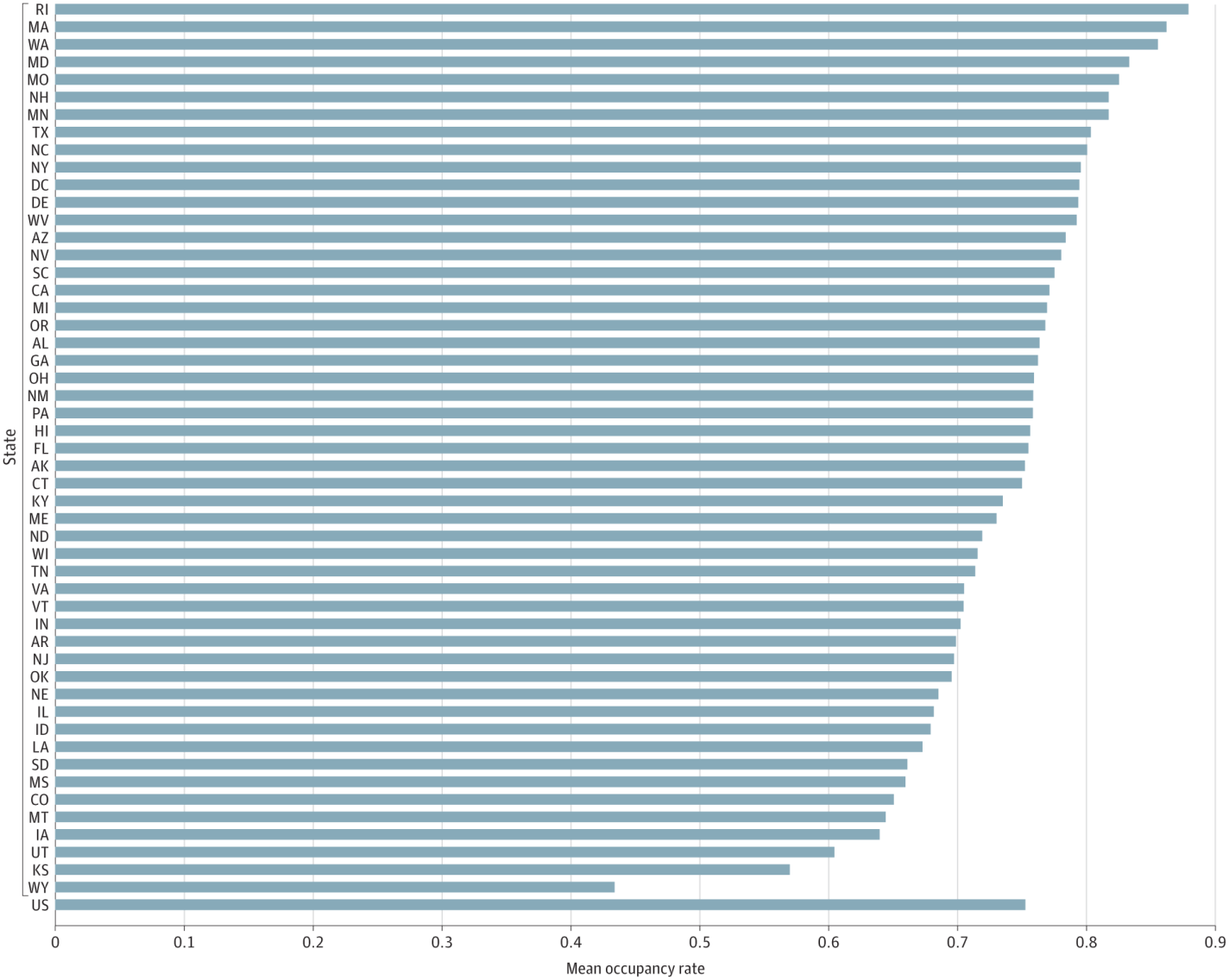
To me this is one more reason to reform Certificate of Need laws that put barriers in the way of hospitals opening or adding beds. Luckily I see a lot of momentum for CON reform this legislative season, including the highest-occupancy state, Rhode Island:
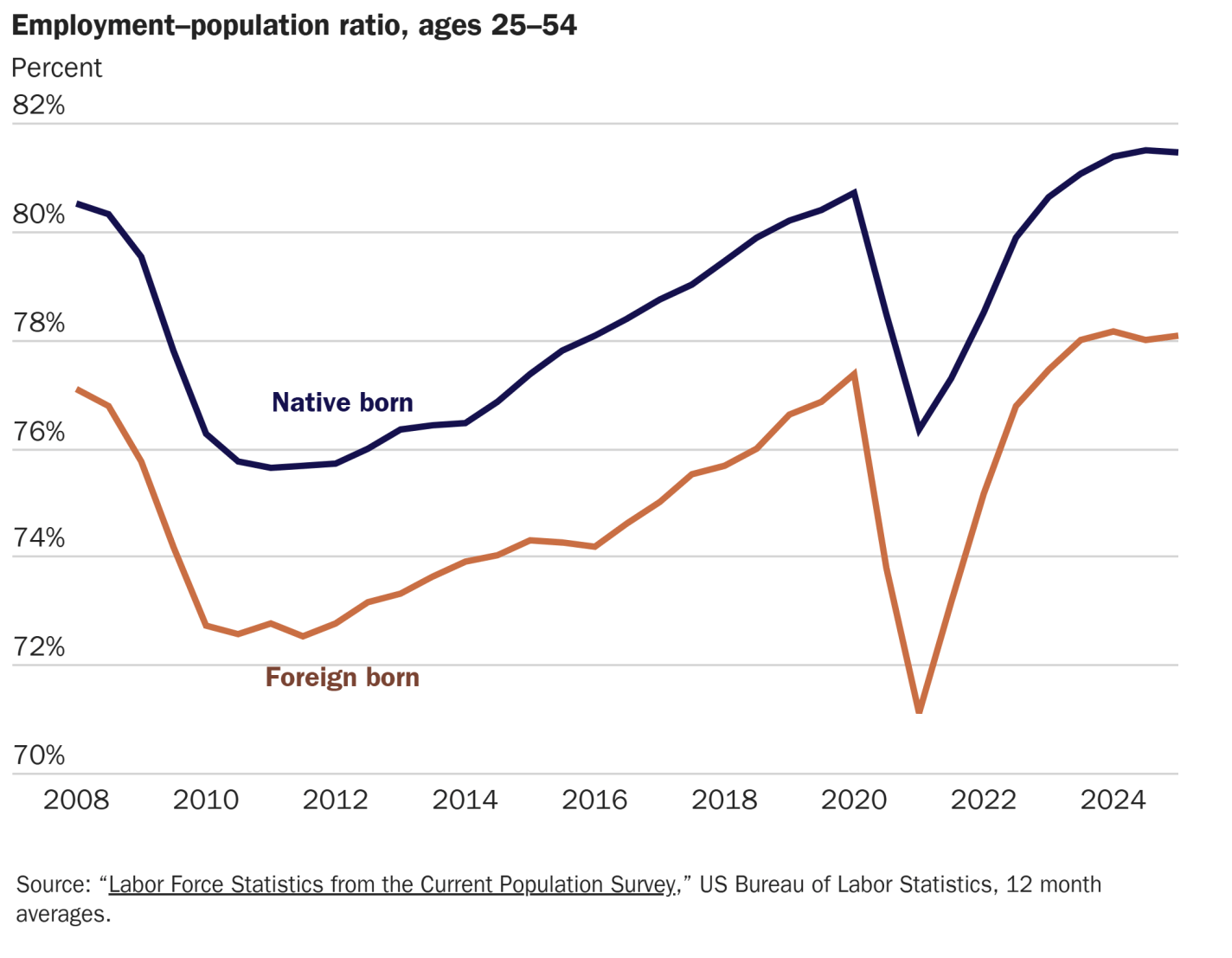
Are foreigners taking the jobs of native-born Americans? The fear that foreigners are displacing domestic workers has long been feared, and remains one of the major economic objections to immigration. And recently there seems to be some evidence this is happening in the US, with almost all net job creation in the US in the past 5 years going to foreigners, while native-born employment has been flat.
But this is not evidence that foreigners are taking our jobs, as I explain in my latest piece for the Cato Institute. The reason is simple: the native-born, working-age population hasn’t been growing. If we looking at the employment-rate of native-born Americans, it is higher than it has ever been, and higher than for the foreign-born population:
Last week I visited a family member in Saint Petersburg, Florida. We had a very nice time, walking around the pier area of the city and going out on his boat. Every day was the same weather: sunny, and a high of 80° F (in mid-February).
I was out walking in the neighborhood, and I saw signage for a shop that piqued my curiosity. It offered cannabis products, which I knew about, but also “kava” and “kratom”, and apparently “nitro”. When I came back to the house, I asked my host what kava was. He indicated it was some kind of recreational drug, whose use seemed to be expanding, at least in that area. I did a superficial check online, finding that kava is an extract from the roots of a plant native to some South Pacific islands, which is reputed to have anxiety-reducing and other feel-good properties.
A couple of days later I walked into the shop and introduced myself as an out-of-state tourist, who saw the sign out front and was curious. There were no other customers at the time, so the saleswoman patiently graciously answered my questions.
I started off asking about kava. But she indicated there was actually more interest in kratom. That is what she imbibes herself, although not frequently. Kratom is extracted from the leaves of an evergreen, Mitragyna speciosa, which is native to Southeast Asia. It seems to have stronger effects than kava, and a physician I spoke with felt that kratom was more likely to be addictive. (I plan to do a deeper dive into the pharmacology of kava and kratom in later articles on this blog).
I was told that kratom comes in three main types: red, green, and white. These are extracted at different stages of leaf maturity. Red is for pain relief, white is for energy, and green is in between. “Train wreck” has all three colors. The products in the shop with kratom, or kratom plus kava greatly outnumbered those with kava alone.
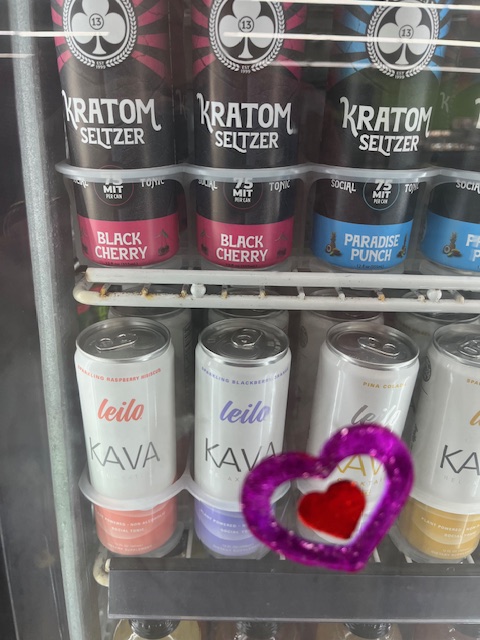
For pure kava, I would have to buy a can of soda (photo below) or buy a prepared drink at the bar.
While we were there, a customer came and ordered two drinks from the bar. He was a middle-aged, upstanding citizen, not some alienated youth covered in tattoos and body-piercings. He told us he has been using kratom for two weeks now, and it has helped him considerably. He said he suffers pain from arthritis and from operations, and that his alcohol use has gone way down since he started kratom. Normally, this man uses white kratom, but since the bar was out of the white extract, he walked out with two large cups of “train wreck”.
The shop also sells various cannabis related products. They mainly contain THCA, which is a legal and less potent version of THC, which is the most active ingredient in marijuana.
The sign out front offered mushrooms as well; I am not sure how “magic” they are. As for “nitro”, it turns out that that is not another psychotropic drug. It is just cold-brewed coffee infused with nitrogen gas, to give a somewhat creamy emulsion. Just another way for Americans to spend $6.00 on a cup of coffee.
I thought about buying and trying some kava or kratom drink, for the sake of science, but at my age I figured I needed to keep all my brain cells. I recalled that decades ago it was emphatically stated that marijuana (unlike alcohol) was not harmful, but now we know better. So, I thanked the clerk and walked out empty-handed.
POST-SCRIPT: See my follow-up article on effects of kava and kratom. Kava seems fairly safe and pleasant, maybe on a par with weed, but kratom functions largely like an opioid and should probably be avoided. Also, based on my additional reading, the kava beverages depicted above are likely to be ineffective; the way to go is to fresh-squeeze ground-up kava root in water. This can be done by you, or for you at a kava bar.
How bad are things? You know, in terms of our democracy and economy crumbling under the great wheel of history as the current administration tries to waddle us into fascist kakistrocracy. Are they bad? Maybe! Or maybe things are mostly fine and all we have to cope with is fear-peddling journalists and neurotic academics hyperventilating through what promises to be a four-year panic attack.
Well, Tyler is looking for market indicators. Signs that the market is internalizing the possibility of deteriorating government and political institutions into prices. That’s a really tall order, even more so than what it might seem to those of us who tend to rely on prices to reveal collective wisdom and the best underlying forecast. Prices reflect the expected benefits and the opportunity cost of an asset or choice in question. Opportunity cost can be explained in a number of ways, but they all boil down to the best outside option. It’s always going to be trickier to expect convenient and obvious price indicators for risk that is inescapable, where there is little in the way of an outside option. If you want a good forecast for avian flu, poultry and egg prices work pretty well, reflecting culled supply, reduced demand from a fearful public that thinks carnitas is sufficiently tasty, and the moves made by speculators who think that things are (or are not) going to get worse. So what are the analogous prices for those speculating that the center will or will not continue to hold in the Great American Project?
If you believe that the Trump administration is, in fact, trying to backdoor in an authoritarian revolution while walling off the largest economy from the rest of the world into a protectionist backwater, all while undermining the global reserve currency, what exactly is the outside option? Where can the money go? The people? The ideas? There are no doubt answers to those questions, but while most of the developed world is struggling with protectionist and authoritarian fevers, all while many entertain the prospect of a Russian invader who is already actively attacking a democratic nation, a host of obvious answers don’t rush to mind.
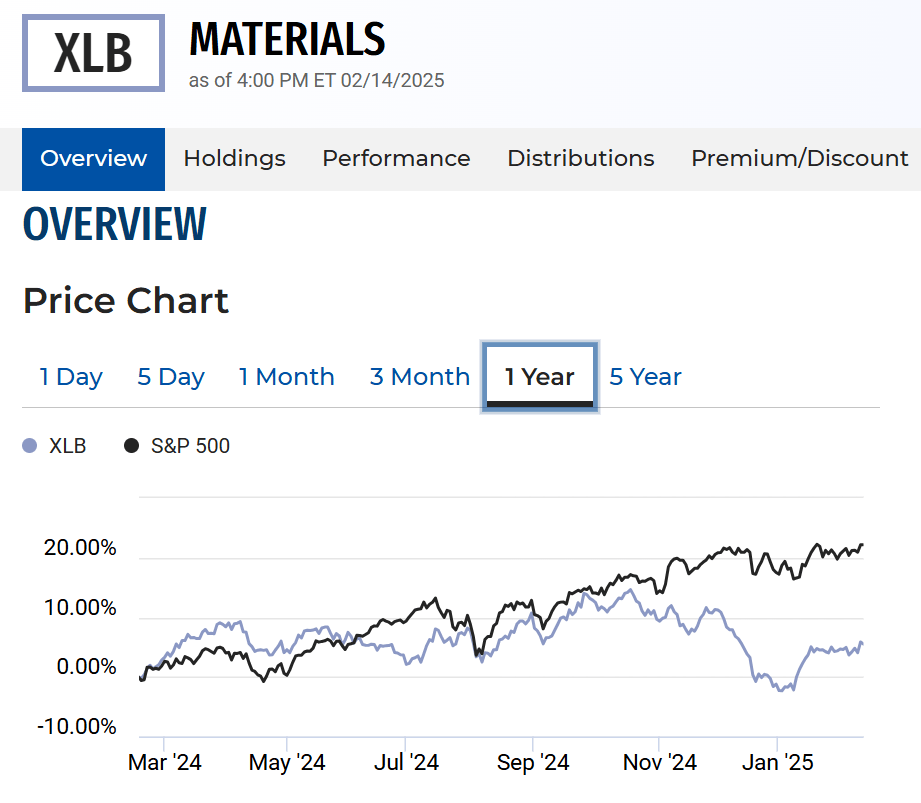
But let’s not punt entirely. Let’s get a little more micro. Is the market internalizing a more protectionist future for the US market and the global economy? Here’s the S&P 500 index for the “Materials” sector vs the entire S&P 500 over the last year:
Correlation is not causation, but the rapid drop off in the value of “chemicals, construction materials, containers and packaging, metals and mining, and paper and forest products” since what was effectively a coin-flip election is certainly convenient to the hypothesis that the market thinks materials previously circulating the global economy are not as likely to find their most valued uses under the Trump administration. If the market thinks we should take the threats of protectionism seriously, why shouldn’t we treat the administration’s threats to default on the debt similarly? Of weaponizing the DOJ against political opponents or ignoring court decisions? There’s not going to be a silver bullet composite price, but for each individual threat we should be looking for a relevant price.
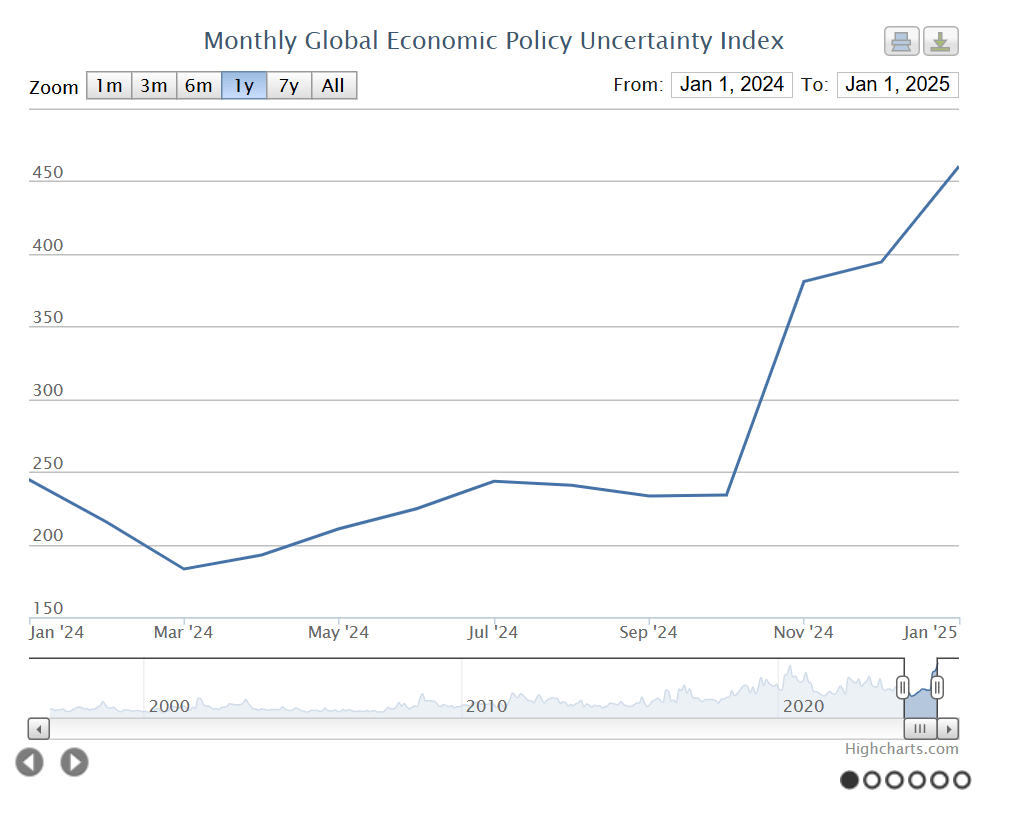
If we are going to accept the hypothesis that any one single price indicator is going to be hard to identify, how about a forecasting index? The folks beind the Policy Uncertainty Index have a measure that reflects the language used in a large variety of publications combined with professional forecasters to reveal not what the future of policy is likely to be, but how much disagreement there is about it. Again quite the increase in the aftermath of a coin-flip election, which is odd because you would expect their to be more uncertainty before a coin-flip election, not afterwards. Shouldn’t we know what we are getting to a greater degree now what we know who is holding the office? I mean, assuming we actually know who is wielding power and influence within the office…
So there are some metrics that point towards a more isolationist future characterized by less predictable government institutions. That’s not nothing. We should be careful not to expect the markets to hand us a forecast on a silver platter, however. In both 1962 and 1983, it’s entirely possibe that nuclear war was averted by Stanislav Petrov and Vasily Arkhipov, who respectively refused to launch missiles and report (erroneously indicated) US missile launches, as dictated by Soviet protocol. As chaos is injected into the US government, including those tasked with overseeing the nuclear arsenal, we should perhaps look to the past. What were the prices that revealed how close we were to history-forking events? Did any price reflect the ebbs and flows in that underlying risk, the changing cultures within the Soviet military and the growing and shrinking prospects of nuclear war? Or did prices instead remain largely untouched by such tides of history? Not to get melodramatically apocalyptic, but perhaps prices cannot accurately reflect the prospect of a world without connection to the markets of today. So it goes. There’s some risk you simply can’t diversify, insure, or reallocate against.