The American Community Survey (ACS) collects information on how many times people have been married. Using the 2024 ACS, we can see how that changes across ages. Getting married is what we call an absorbing state. Once you get married once, you’ll never be married zero times again. So long as people get married across the age distribution, the proportion of never married people falls.
The same is true for getting married a 2nd time. Then, you’ll never have been married once ever again. While the proportion of people never married must shrink over time, the proportion of people married once can rise. If a few people get married a 2nd time, but an even bigger number of people get marred for the first time, then the group of people married only once can grow. The ACS stops measuring once someone has been married three times – then it’s “three or more” times. That’s the universal absorbing state. Those people never go into another category.
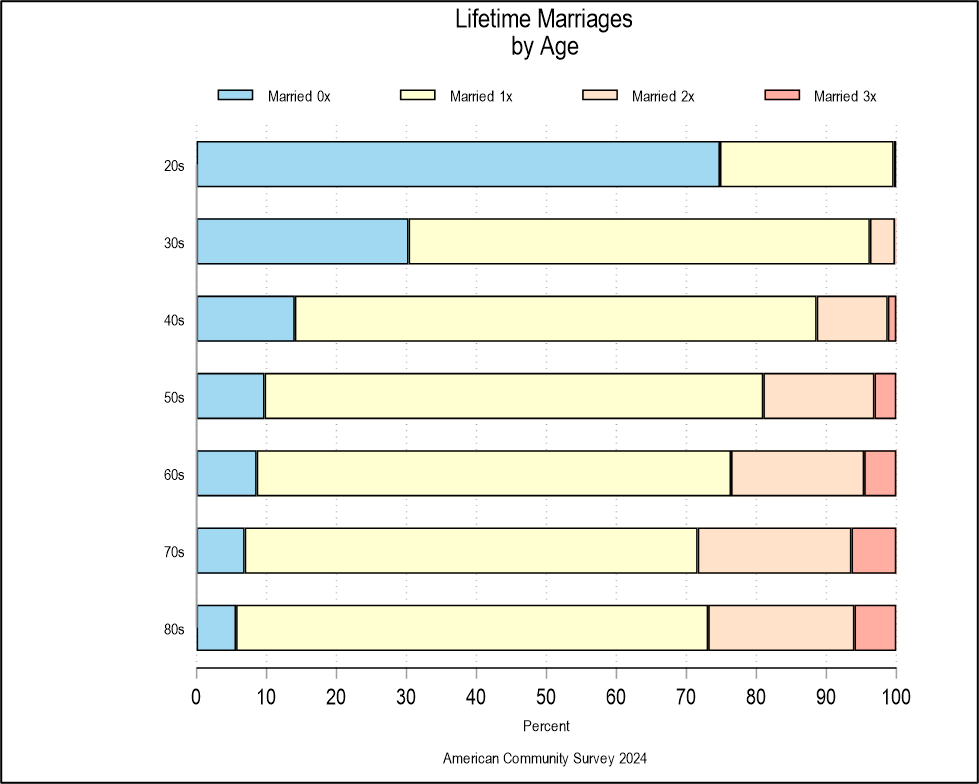
The chart shows the proportion of people by age and the number of times that they’ve been married. Importantly, this is the snapshot in 2024. So each age group is a cohort snapshot in time. That’s why the proportion of people in their 80s who’ve been married zero or one time is greater than people in their 70s. They’re a different cohort. When the now 80-year-olds were in their 70s, the sum of the yellow and blue bars were larger than for more recent 70-year-olds.
Continue reading
