Vaccine Lotteries: They Work!

To try and encourage vaccination during the on-going COVID pandemic, there have been many public and private incentives offered. For example, free doughnuts. Or offering $200 to state employees in Arkansas (taxable income, of course!).

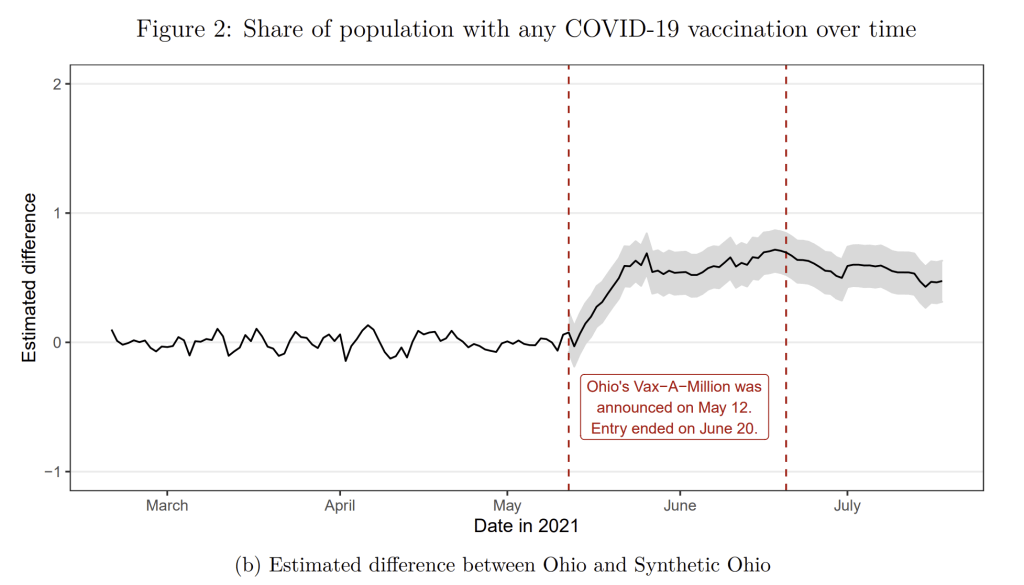
But when the governor of Ohio announced on May 12, 2021 that they would be offering a $1 million lottery prize, with 5 winners, it took the incentive game to a new level (college scholarships were also a prize for 5 winners under 18).

So do the lotteries “work”? Do they get more people vaccinated? And even if they do “work,” does it pass a cost benefit test? Many expressed concern that, even if more people get vaccinated, that this is a lot of money to spend in uncertain budget times.

A new working paper by Andrew Barber and Jeremy West attempts to answer these questions. And they do so using synthetic control, one of the better methods social scientists have for attempting to identify causal relationships (which can be tricky).

What do they find? First, vaccine lotteries do work! They estimate that vaccination rates increased by 1.5% in Ohio because of the lottery. This amount is above and beyond the increase that would have been expected without the lottery (by comparing Ohio to other states that didn’t use a lottery — this is what the synthetic control method does).

But does it pass a cost-benefit test?

Continue reading

Why is the COVID Delta Variant So Infectious?

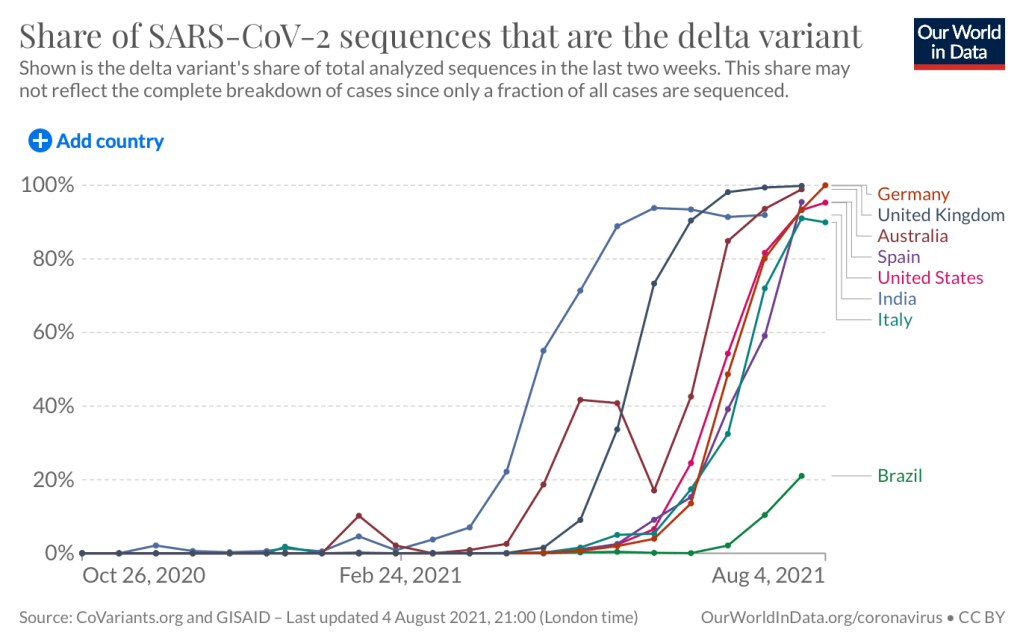
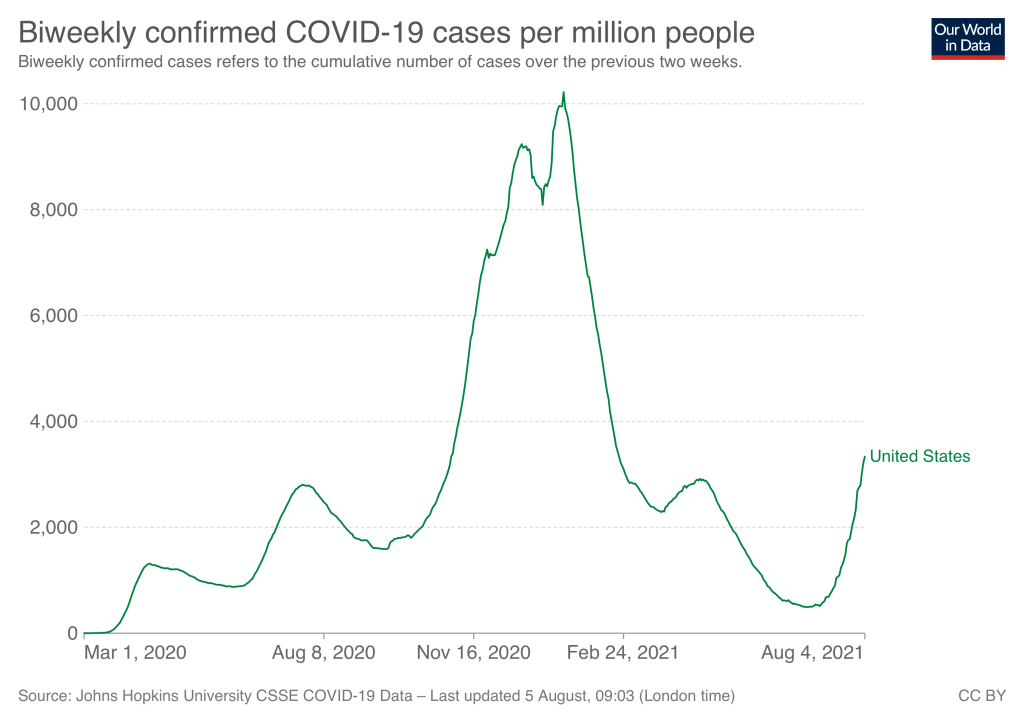
The “delta variant” of COVID-19 is far more virulent than the original strains, and is largely responsible for the recent surges in COVID cases in the U.S. and worldwide. Centers for Disease Control and Prevention Director Rochelle Walensky told the Senate on July 15  that the delta variant now makes up 83% of U.S. cases, up from 50% at the beginning of this month. It was first detected in India, then spread to the U.K. and the U.S., and around the world.

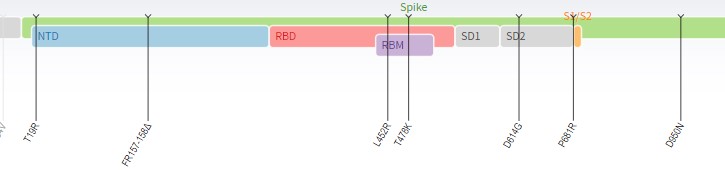
What is it that makes the delta variant so infectious? From a molecular point of view, here are the known functional mutations in the DNA that produces the “spike” proteins in the virus which bind to human cells:

Source: Stanford

Four of these mutations in particular are believed to contribute to the virulence of this strain, as discussed here. Among other things, they can cause the spike protein to bind more strongly to our cells, and inhibit our immune response. See here for 3-D model of the virus spike binding to human receptor, showing the locations of those mutated proteins.

As a result of those mutations the delta variant grows faster inside people’s respiratory tracts and reaches much higher levels. Per NPR,

On average, people infected with the delta variant had about 1,000 times more copies of the virus in their respiratory tracts than those infected with the original strain of the coronavirus, the study reported.

In addition, after someone catches the delta variant, the person likely becomes infectious sooner. On average, it took about four days for the delta variant to reach detectable levels inside a person, compared with six days for the original coronavirus variant.

… People who have contracted the delta variant are likely spreading the virus earlier in the course of their infection.

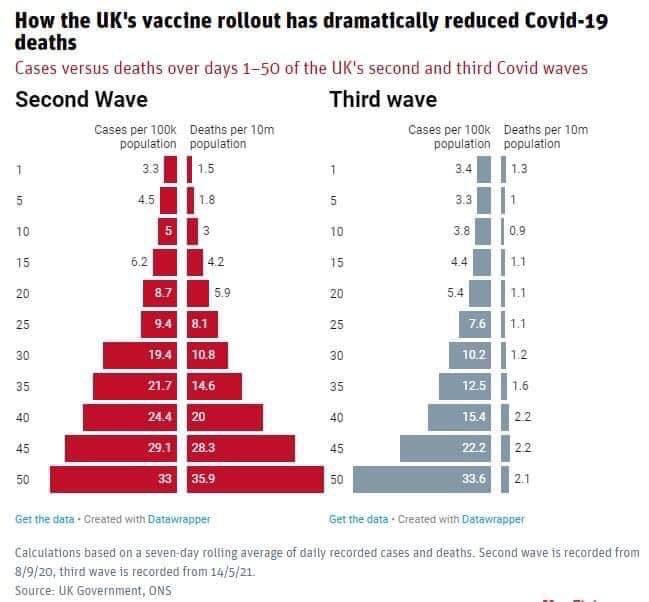
How can we stop it? It is pretty simple:  get vaccinated (or never be in a closed space with other unvaccinated humans). Vaccines don’t totally prevent you from getting COVID initially, so you might still have early symptoms and also be able to spread the virus to others for a few days. However, vaccines are highly effective in helping your immune system to quickly shut down any infection you do get before the symptoms get severe. This is true for all for essentially all strains of COVID, including delta.

Again per NPR,

Preliminary data shows that in some U.S. states, 99.5% of COVID-19 deaths in the past few months were among people who weren’t vaccinated, said CDC director Dr. Rochelle Walensky at a White House press conference in early July.

And 97% of those currently hospitalized with COVID-19 are unvaccinated, according to Walensky.

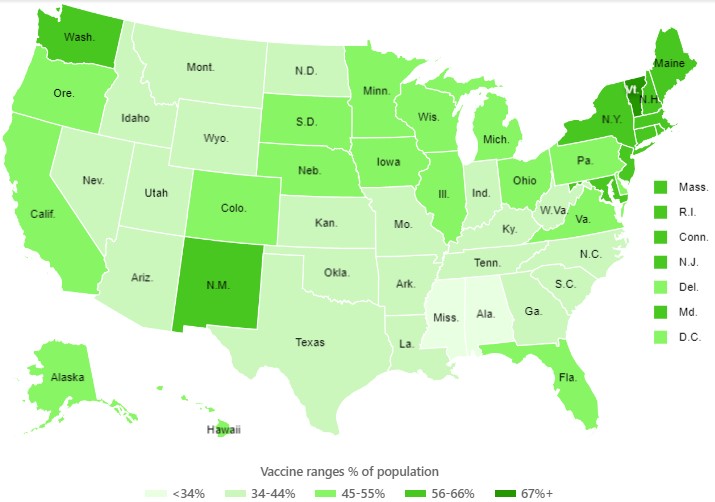
Just compare the two maps below of which American states have high/low vaccinations and high/low COVID incidence, and draw your own conclusions:

Percent Vaccinations. Image source: ABCnews

COVID Case Density. Image source: ABCnews

How to Talk to People (elderly and children)

This is a great Youtube video on how to talk to people with memory loss. It’s for family and caregivers. It’s a helpful free practical resource for an aging population. (40 minutes, but you can get a lot out of the first 20)

Even if you have good intentions, it is surprisingly easy to say something hurtful to another person. Ultimately, these scripts are shortcuts for what I think you would say if you had deep empathy and spent time getting to know the person you are speaking to. To save time, if you can find a good script writer, steal their lines. Economists speak of “money on the sidewalk”. Learning tricks that enable you to express what you actually mean to people seems like free money, speaking as a life-long awkward person.

On the other end of life, there is an Instagram account @biglittlefeelings with good tips for talking to toddlers. Here’s a video with Danny Silk on kids and and how they interpret attempts to control them.

Informational Diabetes

We all recognize that in the Internet Age, it is easy to communicate and to access information.

For the infovores, this is a cause for celebration.

Others worry that this leads to “information overload”, and to the spread of “disinformation” and “misinformation”. While this is clearly true, complaints about it typically seem to come from elites longing for the days when they had the only microphone, before the Revolt of the Public. Its hard to banish “misinformation” without screening out differences of opinion and correct contrarians even if you want to- and for some, such “collateral damage” would in fact be the main goal. But clearly something is wrong with the current information environment.

In a recent podcast appearance, Balaji Srinivasan used a metaphor I like better- Informational Diabetes:

Continue reading

COVID Deaths and Middle Age

We have known for a long time (basically since the start of the pandemic) that COVID primarily affects the elderly. Infection fatality rates are hard to calculate (since not all infections are reported), but most of the data suggest that the elderly are much more likely to die from COVID than other age groups.

For some, this has become one of the most important aspects of the pandemic. For example, Don Boudreaux emphasizes the age distribution of deaths many times in a recent episode of Econtalk, and he uses this point to argue that we addressed the pandemic incorrectly (to say the least). Boudreaux specifies that COVID is only deadly for those 70 and older. And while I won’t rehash the argument here, please also see my exchange with Bryan Caplan, where he argues that elderly lives are worth a lot less than younger lives (I disagree).

At first blush, the data seems to bear that out. The CDC reports that almost 80% of COVID-involved deaths were among those aged 65 and older (I will use the CDC’s definition of COVID-involved deaths throughout this post). In other words, of the currently reported almost 600,000 COVID deaths in the US, about 475,000 were 65 and older. Throw in the 50-64 age group, and you’ve now got 570,000 of the deaths (95% of the total).

But is this the right way to think about it? Remember, the elderly always account for a large share of deaths, around 75% in recent years. So it shouldn’t surprise us that most deaths from just about any disease are concentrated among the elderly.

Continue reading

Editing: You Figure It Out

If you want to change how a field works, you have a few options. You can do what you want to see more of, but you are only one person, and perhaps not the one best equipped to make things better. Or you can encourage others to work differently- but why would they listen to you?

Academics often serve as peer reviewers for the work of others. If a reviewer recommends that a paper be rejected, it usually is; if you recommend specific minor changes they usually get made. But you can’t really tell people that they should work on a totally different topic. Journal editors for the most part simply have a scaled-up version of the powers of peer reviewers to steer the field. But unlike reviewers, their positions are public and fairly long-lasting. This means they can credibly say “this is the sort of work I’d like to see more of- if you do this kind of work, there’s a good chance I’ll publish it”.

This is part of why I’ve been hoping to be a journal editor some day, and why I’m excited to be guest-editing for the first time: a special issue on Health Economics and Insurance for the Journal of Risk and Financial Management. The description notes:

Continue reading

Covid Pandemic Diary Part 2

I pick up from my previous post in May 2020.

That tweet from early May captures some of the joys and frustrations of working from home with small children. It was hard to get work done. My career suffered. At the same time, in my case, there were happy moments. My kids got more time with me and also with each other. One reason I didn’t go crazy is that we could get outside and the weather was decent throughout “lockdown”.

Something that happened quietly is that two-income parents hired private nannies and never mentioned it on social media. I know there are lots of families who did not do that and had a hellish year trying to parent while working from home. In my case, daycare was back open in June with extra health precautions.

Late Spring was a time when it seemed like the United States might be the worst-performing country. Certain parts of Asia were models of efficiency and cooperation, by comparison.

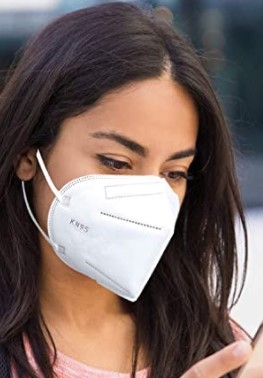
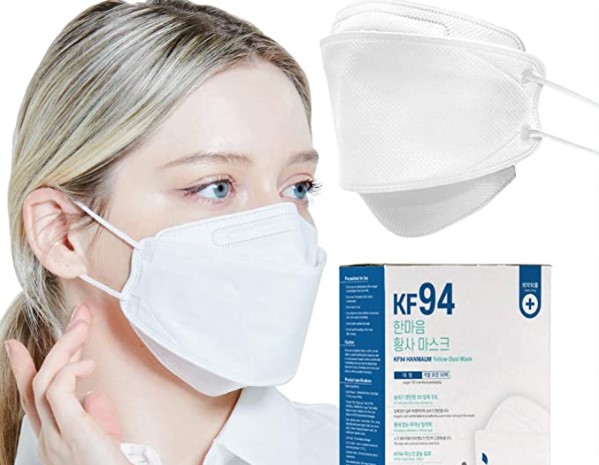
Late May is when I breathlessly tweeted that I had purchased a box of masks. Finally, the supply caught up with demand. Masks became plentiful and cheap. That helped us find ways to be together without such a high chance of spreading germs.

July 2020 – My public school system (which had gone virtual in the Spring) announced that elementary parents would have a choice of in-person (with masks) or virtual for the Fall. Our schools have been open all year (with masks) and no major outbreaks.

High school and middle school students did more forced remote days than elementary-aged kids. I really appreciated the creativity and flexibility. Remote school is harder on younger kids (and parents of younger kids).

I emailed my city representative to ask for a drive-through testing site in our city. He said he would bring it up at the council meeting that night. Within two weeks, they had done it! This was incredible. I did not expect that because of one request this would suddenly just happen. I suppose there were enough people who wanted it already. It probably helped that city council elections were right around the corner and he could take credit for doing something helpful. Twice in 2020, I used my city hotline to get an appointment for a Covid test.  

In August, my university got ready to bring students back for some in-person classes, while also offering remote options for every class. The campus sprouted one-way walking stickers and masks were required everywhere.

Economists moved conferences online. On September 10, 2020 I stayed up a little late to catch one of my Chinese colleagues presenting at the ESA worldwide virtual conference. My daughter didn’t want to stay in bed, so I let her stare at the Zoom meeting for a bit.

I have said nothing so far about politics in 2020, the year of politics. The televised debate between President Trump and now-President Biden in September of 2020 was a stressful event for me. If we can’t even speak to each other, then no amount of good ideas will help us solve problems. That sad moment in American history made me more determined to maintain this blog as a place to talk about ideas.

The Fall of 2020 was when intellectual soldiers like Alex Tabarrok were alerting us to the fact that we could have vaccines if the government would let us. I was following that news and doing some signal-boosting. Some of my friends on social media announced that they were participating in vaccine trials – thanks!

My university offered rapid tests to employees at the end of the Fall semester. It almost felt like a miracle to be able to just know in 15 minutes if I was carrying Covid or not (yes, I know about the false negatives).

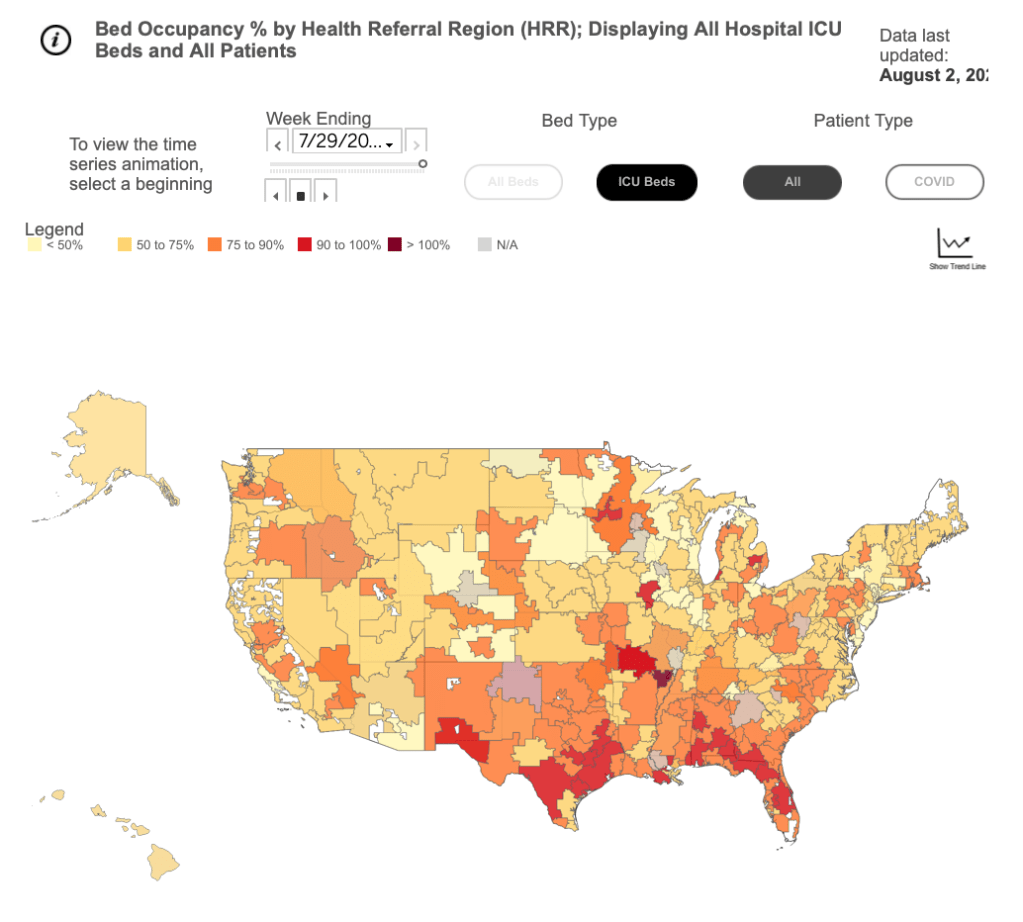
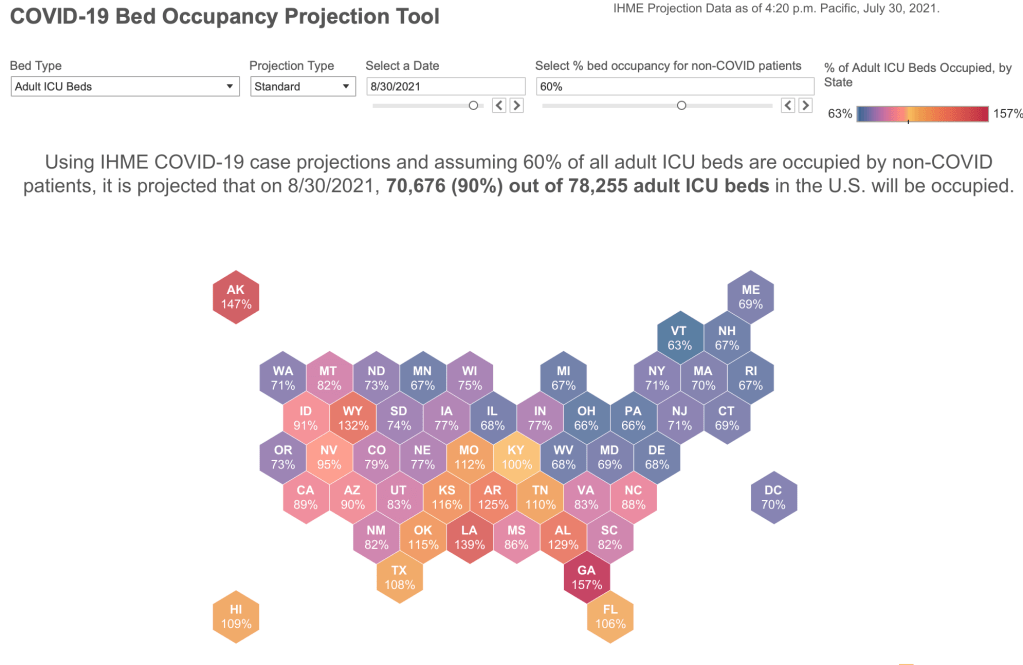
There were moments in peak-wave when local hospitals were full because of Covid. Alabama’s worst month as measured by deaths was January 2021. When Covid was spreading widely in December 2020, I believe a lot of people did not expect that vaccines would be available so soon in the future. On the margin, a few more people might have foregone holiday parties if they had known.

Vaccines became available to medical professionals around January 2021. That was exciting news, since we had all been feeling bad about the doctors and nurses treating infectious Covid patients.

Earlier than I expected, I was able to get the Pfizer vaccine because of my “educator” status in the state of Alabama. It is convenient that I live near UAB hospitals. They had the technology for cold storage and administering the Pfizer vaccine. It was a huge relief to get the vaccine while teaching in-person classes. Since I had been following vaccine news closely, it felt like a huge achievement.

There was a period of time when conversation among my neighbors and colleagues revolved around the vaccine. Water cooler talk was “which one did you get?” or “did you have side effects?”  People told stories about how a friend called to tell them that one place had extra doses at the end of the day. Even when it was technically reserved for old people only, some young people found connections. One of my students told me he wouldn’t be in class because he was going to drive 6 hours to another state to get a vaccine. I don’t want to make the system sound corrupt, because it largely was not. It’s just a fact that some places couldn’t distribute all of their doses to the people who were designated for them. It was better to get the leftovers into arms than waste them.

I treasured that energy, and I miss it. Now, in May 2021, after all the work that went into producing vaccines, Americans are refusing to show up for shots.

Covid Pandemic Diary Part 1

Last week on Twitter, a writer in France reached out for accurate information about what is going on the US right now with regard to vaccines.

This got me thinking about the value of narratives and true stories. I’m going to chronicle a few of the Covid events experienced by me personally. Myself and the adults in my family are fully vaccinated, so life is starting to feel normal again, even though I still wear masks in many public places. I’d like to write this down in case it is useful and so that I don’t forget it.

Continue reading

Old Lives Matter

Bryan Caplan has kindly responded to my latest blog post, which was in turn a response to his blog post on the relative value of human lives by age. Caplan has always been kind in his responses, even when responding to pesky graduate students — kind in both his approach and the time he dedicates to responding thoughtfully. So I appreciate his taking the time to respond to me, and I will offer a few more thoughts on the matter.

To briefly summarize: Caplan believes that young lives (10 year olds) are worth 100-1,000 as much as old lives (80 year olds). I contend that they are closer to roughly equally valued. My disagreement with Caplan can be broken down into two categories:

  • A. Caplan’s three reasons why young lives are worth more (a lot more!) than old lives. I didn’t respond to that directly, but I will do so here. I think Caplan is narrowing the goalposts.
  • B. A disagreement over the shape of the VSL curve over the lifetime, specifically whether an inverted-U-shaped curve makes sense. I’ll say more about this too, but Caplan doesn’t just have a beef with me, but with almost everyone in the VSL literature!

Let’s start with Caplan’s three reasons, which he calls “iron-clad”: young people have more years to live, those years are generally healthier, and young people will be missed more when they are gone. The first in undeniably true on average, the second is probably true almost all the time, and I’m not sure on the third, but I’m willing to admit it’s not a slam dunk either way.

So how can I disagree? These are only three things. There are many other considerations, and we can imagine other reasons that old lives are valued as much or more than younger lives! I’ll call mine 4-6 to go with Caplan’s 1-3:

  1. Old age spending is the largest component of public budgets in developed countries (and this is unlikely mostly due to rent seeking or the self interest of younger generations).
  2. The elderly possess wisdom which is highly valuable and that the young benefit from.
  3. The last years of your life are, on average, worth a lot more — you are usually very wealthy, have no employment obligations, you have grandchildren you love (without the responsibilities of parenting), and are (until the very end) generally healthy too.

Taken as a whole, I think these three reasons present a strong counterargument to Caplan’s three reasons. And I think we could certainly come up with more! My point being that Caplan has picked three areas where clearly young lives have the advantage, but ignored all the good reasons why old lives are more valuable. These is what I mean by we shouldn’t rely on our intuitions. Neither of our lists are exhaustive, but let me elaborate on a few of these.

Continue reading

Blood Clots for You and Me

On April 13, 2021, CDC and FDA recommended a pause in the use of Johnson & Johnson’s Janssen COVID-19 Vaccine. When I first heard that the FDA was pausing the J&J vaccine because of less than 10 blood clots out of millions of patients, I thought I’d really get to the bottom of blood clots and blog about it. Other people (some of them are the kind of doctor that helps people) have already done a pretty good job in the past few days.

First, it is a tragedy that the vaccine is not being give to every male over 50 who wants it. Doing so would free up many thousands of other types of vaccines for young women.

Continue reading