Axios Survey of Americans on AI Regulation

Axios just surveyed over 2,000 U.S. adults to find that “Americans rank the importance of regulating AI below government shutdowns, health care, gun reform…” Without pressure from the public to pass new legislation, Congress might do nothing for now, which will lead to the rapid advance of LLM chatbots into life and work.

The participants seem more worried about AI taking jobs than they are excited about AI making life better. There is some concern about misinformation.** So, they don’t think AI will have no impact on society, but they also don’t see enacting regulation as a top priority for government.

At my university, the policy realm I know best, we will probably not be “regulating” AI. We have had task forces talking about it, so it’s not because no one has considered it.

The Axios poll revealed gender gaps in attitudes toward AI. Women said they would be less permissive about kids using AI than men. Also, “Parents in urban areas were far more open to their children using AI than parents in the suburbs or rural areas.” Despite those gaps in what people say, I expect that the gaps in what their children are currently doing with technology are smaller. Experimental economists are suspicious of self-reported data.

**Our results did not change much when we ran the exact same prompts through GPT-4. A version of my paper on AI errors that I blogged about before is up on SSRN, but a new manuscript incorporating GPT-4 is under review: Buchanan, Joy, Stephen Hill, and Olga Shapoval (2023). “ChatGPT Hallucinates Nonexistent Citations: Evidence from Economics”. Working Paper.

Fear of the Unknown and Fear of the Known

Alfred Hitchcock’s ‘Psycho’ famously omits graphic violence. You never see the bad guy stab anyone – though it’s heavily implied. Some say that this accounts for the impact of the film. The most thrilling parts are left to the viewer’s imagination. And a person’s imagination can be pretty terrifying. The delight of the unseen was especially appropriate at a time of 13 inch televisions and black-and-white movies. If the graphics on the screen couldn’t carry the movie, then the graphics in a person’s mind would do the trick.

Fast forward to ‘Burn Notice’. I don’t watch this show, but my in-laws do. They have a huge TV with a super high resolution. The TV has a diagonal span that almost surpasses my height. I’m short, but not that short. This is a big TV.  I’ve only seen Burn Notice at their house. It strikes me as poorly acted, poorly written, and self-serious to the point of absurdity. I keep expecting that self-referential nod to the open secret that the show is ridiculous, but it never comes. It’s a bad show. From all that I can see in high definition, there’s nothing worth seeing.

What is so good that I watch? Although I’m seven years late, I’ve recently been watching Marvel’s Luke Cage. Being a superhero show, some of the standards are lowered. The script is weak at times, the acting is OK, and the plot has some credibility holes. But the point of the show is to explore a world in which superheroes exist, and one of them happens to live in Harlem. Luke Cage is part of the earlier Marvel cadre of post-acquisition-by-Disney shows that also includes Iron Fist, Daredevil, & Jessica Jones. These shows are less tongue-in-cheek and comedic than the later shows like Loki, Wandavision, or Moon Knight. I enjoy watching Luke Cage on a small 40 inch television, and occasionally on my phone.  

Then I stayed at an Airbnb last weekend that had a HUGE TV. This thing easily had a diagonal measure that surpassed my height. After getting the kids down and answering emails, I sat down to enjoy my current go-to show before hitting the hay. And dang it if I wasn’t distracted the entire time. On this massive screen I could see every pore on everyone’s face and every blank stare parading as acting. I could see each and every glare of poor lighting and every character’s ill-timed reply and change of expression.  Most of the show is one big charade.

Much to my dismay, I had discovered that I was watching ‘bad tv’. Let me be clear. I’m not supposed to watch bad tv. That’s the realm of those other people. But me? I have enlightened preferences and a refined pallet. I’m not a person who watches bad tv. But that grandiose self-conception has been dashed by this serendipitous visit to a nice Airbnb.

I’ve had some time to dwell on my new revelation and this is what I’ve settled on. First, I’m going to keep watching Luke Cage on my small TV and I’m going to enjoy it. There is little that I can do now about the nagging knowledge that, given a higher resolution, it’s not a good show. You can’t unknow things. Second, maybe Burn Notice isn’t a bad show. Maybe it’s just a bad show when I can see too much detail, such as on my in-law’s TV. Maybe I would enjoy it on a TV with lower resolution. Regardless, I’m not going to watch it.

Third, now I have a new margin of preference over shows and movies. Now I consider whether a show or movie would be helped or hurt by more visual detail. Quick-paced, big-budget action shows like Jack Ryan are probably better in greater detail. Game of Thrones is probably better as a 4k experience. But shows in which the comedy or the drama unfolds by virtue of the circumstances, rather than the visual spectacle, are probably best watched at a lower resolution. When the audience experience hinges on implications and connections that occur in the viewer’s mind, that’s probably a better show at a lower resolution. Luke Cage is a ‘good’ show in low-res. In high-res, I’m afraid that see too much.

When Hitchcock omitted visual detail, he leaned on the mind’s eye to fill in the gaps. He was guiding the brain toward conjuring the unnerving scenes that he could not as easily mimic on screen. Advances in home entertainment have moved the goalpost. A more detailed viewing experience changes the type of shows that we are willing to watch because we have a new criteria for fitness. The supply side response on the part of studios is that shows lacking visual stimulation will need to lean more on the mind’s eye and our interpretations of social interactions in order to for audiences to experience the best version of the show. Because the best version won’t be in front of us. We know too much.

Is the repair revolution coming?

Every sentence in this article is fascinating, since I have been writing about fast fashion.* Anything I put in quote form comes from The Guardian.

The word “revolution” in the title of this article is minor clickbait. Perhaps it would be more accurate to say: “Clothes repaired in workshop, 19 people employed” That wouldn’t get any clicks. However, I am an idealist, and I am going to stay a bit on board with the revolution. I, too, have pondered and grieved over the amount of waste heading into landfills. There could be some kind of revolution ahead, whether it is of the repair type or not.

The communal garden and bespoke textile art lend a creative startup feel, and the slogan “repair is the new cool” appears everywhere. But what’s happening here is far from ordinary startup stuff. At United Repair Centre (URC), newcomers to the Netherlands from across the world, many of them former refugees, are using their tailoring skills to mend clothes on behalf of some of the world’s biggest brands. 

Immigrants are sewing, but no Dickensian horrors here. This place “has a laid-back Dutch vibe.”

Ambrose, who greets me, mans the front desk. He’s a 20-year-old Palestinian fashion fan, who was born in Syria and lived in Abu Dhabi before moving to the Netherlands in May; he is working in parallel with studying for a fashion and design diploma. Ambrose started at URC in May and loves it: the way he gets to work in collaboration with the tailors, giving advice and learning from their years of experience. “It’s really easy, fun, chill … “

The verdict is in. Work is fun.

Repair might be cool, but is it new? Consider Jo March from “Little Women” who was an American bouncing around between rich and poor status in the 1860s. American GPD per capita in 1860s was less than $3,000. That would be considered very poor today. Since manufactured goods were expensive and Jo March had a low opportunity cost of time, she spent lots of time mending clothes. Her passion was writing but she had no choice – that was how she contributed to her household production. Very few families at that time, even in the upper class, could afford to regularly buy new clothes from a shop.

Don Boudreaux explained that even modern rich people “recycle” clothes when it’s in one’s selfish interest. Washing and “re-use” of clothes, typically, is beneficial enough to outweigh the cost of maintaining and storing them. Sometimes we go above and beyond by donating them or maintaining them specifically because we are trying not to “waste” something, but that comes at an individual cost to us.

The author of the article writes:

I take a taxi from the station to URC because I’m running late, but I’m taken aback when en route the driver points out the many conveniently located stations and tram stops I could use for my return journey.

This is a perfect encapsulation of why rich people do not repair clothes. They are zipping around to high-productivity work meetings. The opportunity cost of time has gone up. Taking the bus is costly in terms of time, the scarcest resource of the rich.

Where I see hope for the repair “revolution” is in artificial intelligence (AI). AI can make up for our scarce time and attention. If AI can make repairs less costly in terms of time, then rich people might do it. If it doesn’t make economic sense, then it won’t scale the way the author is hoping.

Currently, the “revolution” is employing 19 people full-time. By the year 2027, all they are hoping for is to expand to 140 tailors. Hardly a revolution on the jobs front. But that’s the hopeful scenario. If it’s labor-intensive, then it won’t work. (See my ADAMSMITHWORKS post on cloth production and labor.)

Is repair reaching a tipping point?

There’s one unlikely scenario in which expensive repairs will get paid for. What rich people resoundingly want is kitchen renovations and new clothes, partly because it confers status. Could it become cool to live with those outdated cabinets and wear that repaired Patagonia vest for the next two decades? … could it? Vision: “Wow. I see that you guys have outdated ugly countertops. Nice. You resisted the desire to renovate your kitchen even though it’s within your budget.”

Even changing status markers are unlikely to tip the scale in the case of broken equipment or torn clothes. AI might allow us to repair a refrigerator instead of trash it.

URC tracks repairs using software initially developed by Patagonia, which it has built on and uses for the other brands involved.

There it is. Software makes the dream work.

Shein and the like are out there, churning out, in dizzying volumes, fast fashion that can’t be repaired.

In my conversations with Americans, many do not know what “fast fashion” is. That’s fast fashion. The 19-140 tailors are currently no match for Shein.

There isn’t always much common language – operational manager Hans says they resort to Google Translate quite a bit – but there’s plenty of laughter.

The AI, again! We are living in the globalized AI-powered future.

Lastly, the article was brought to my attention on Twitter (X) by Bronwyn Williams and Anna Gat.

* I’m going to have a fashion article coming soon in this series: https://www.cato.org/defending-globalization

Video for new ChatGPT users

Have you not gotten around to trying ChatGPT for yourself yet?

Ethan and Lilach Mollick have released a series of YouTube videos that encapsulate some current insights, aimed at beginners, posted on Aug. 1, 2023. It covers ChatGPT, Bing, and Bard. Everyday free users are using these tools.

Practical AI for Instructors and Students Part 2: Large Language Models (LLMs)

If you are already using ChatGPT, then this video will probably feel too slow. However, they do have some tips that amateurs could learn from even if they have already experimented. E. Mollick says of LLMs “they are not sentient,” but it might be helpful to treat them as if they are. He also recommends thinking of ChatGPT like an “intern” which is also how Mike formulated his suggestion back in April.

  • I used GPT-3.5 a few times this week for routine work tasks. I am not a heavy user, but if any of our readers are still on the fence, I’d encourage you to watch this video and give it a try. Be a “complement” to ChatGPT.
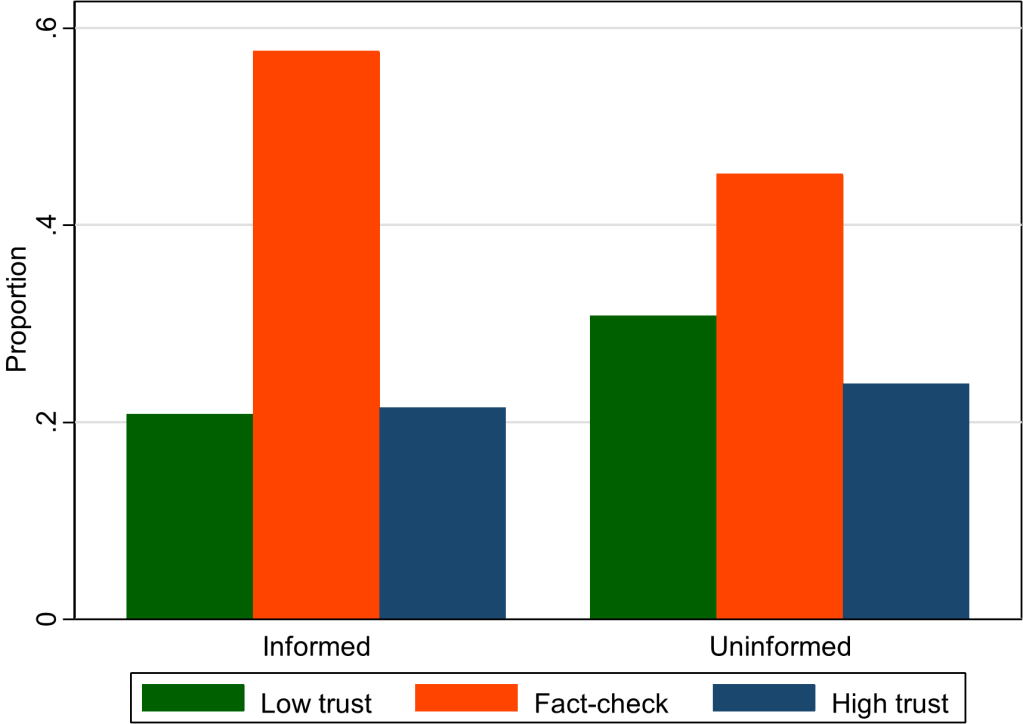
  • I’ll be posting new updates about my own ChatGPT research soon – the errors paper and also a new survey on trust in AI.
  • I hear regular complaints from my colleagues all over the country about poor attempts by college students to get GPT to do their course work. The experiment is being run.
  • Ethan Mollick has been a good Twitter(X) follow for the past year, if you want to keep up with the evolution and study of Large Language Models. https://twitter.com/emollick/status/1709379365883019525
  • Scott wrote this great recent tutorial on the theory behind the tools: Generative AI Nano-Tutorial
  • It was only back in December 2023 that I did a live ChatGPT demonstration in class, and figured that I was giving my students there first ever look at LLMs. Today, I’d assume that all my students have tried it for themselves.
  • In my paper on who will train for tech jobs, I conclude that the labor supply of programmers would increase if more people enjoyed the work. LLMs might make tech jobs less tedious and therefore more fun. If labor supply shifts out, then quantity should increase and wages should fall – good news for innovative businesses.

The Internet Knows EVERYTHING: Stopping My Car Alarm from Randomly Triggering

I have an oldish Honda that still runs smoothly. It is true that the cruise control does not work, and the left front fender is held on by a large binder clip, and I had to patch over a big rust hole in a rear wheel well, but as I said, it runs.

I sometimes park it down at the end of the street, under some shade trees, to get it out of the hot summer sun. A couple of times, for no reason, the antitheft system kicked on, so the car was honking and honking for hours on end because we didn’t hear it down there. Some neighbors down there finally figured out who it was and came and told us. They were nice about it, but I heard some other folks down there were pretty irritated.

That happened again two weeks ago, so I decided to keep it in front of our house all the time where we could keep an ear on it. Supposedly the alarm is triggered when the car thinks that a door or the trunk or the front hood has been opened without a legitimate unlocking by a key or a fob. Therefore, I opened and closed all four doors, and the trunk and the hood, and locked the car and hoped all will go well. But a few hours later there it was: honk, honk, honk….

As a temporary measure, I simply left it unlocked, so the system would not arm. But that’s not a long-term fix. So, I rolled up my sleeves and went to the internet to see what help I could find there. One common suggestion was to find the fuse that controls the alarm system and just pull it out of the fuse box. That would be great, but I checked multiple fuse diagrams for my model, and it does not seem to be a fuse that controls just the alarm system.

Other web sites mentioned that day sensor on the front hood latch is a common failure point. The sensor there can start giving spurious signals when it gets old. If you are sure that’s the problem, you can have a garage replace it for labor plus maybe 100 bucks for the replacement latch.

Alternatively, you can just pull apart the connector that connects the hood latch sensor to the alarm system. That connection is in plain sight near the latch. If the latch is the problem, disconnecting that sensor should make the alarm system think the latch is always firmly closed, so it will not trigger an armed system.

But what if the hood latch is not a problem? What if the problem is the common but elusive damage to wiring caused by rodents gnawing on the insulation which contains soybean derivatives??  After sifting through about 10 links that were thrown up by my DuckDuckGo search on the subject, I finally found a useful discussion on the “civicsforum.com”.

A certain “andrickjm” wrote that he had disconnected that wire junction, and his car alarm was still randomly going off. Some savant going by the moniker “ezone” wrote that what you needed to do then is to insert a little wire jumper between the two sockets of the connector that go to the alarm system. That will make the alarm system think the hood is always raised, never closed, and this will keep a system from ever arming.

So I cut a 1-inch piece of wire, stripped the insulation from the two ends, bent it into a U-shape, jammed the two bare wire ends into the two holes in the connector socket, and sealed it all up with duct tape.


The alarm has not sounded since. Victory at last, thanks to the distributed intelligence of the internet, resting on the efforts of millions of good-hearted souls who share their problems and solutions in all areas of life.

Solving the Participation Pickle with Pick.al

Joy: This post was written by my friend and fellow econ professor Cameron Hardwick.

One of my biggest ongoing teaching challenges is keeping students engaged during lectures.

Sure, there are ways to add interactivity here and there, but sometimes there’s just no way around an old-fashioned lecture.

There are a few ways of dealing with this, and I haven’t been satisfied with any.

  1. It’s their grade, if they zone out that’s on them. In terms of the incentives, sure, the externalities are all internalized. But as a macroeconomist, I also know: if time-inconsistency problems are hard for policymakers, how much more for students! We shouldn’t be surprised when students do poorly if the main feedback they get from paying attention or not comes a week later with the homework grade.
  2. Posing questions and waiting for answers. Either you get a minute of awkward silence, or you get the same two engaged students answering everything while everyone else keeps zoning out.
  3. Cold calling. I started doing this a few years into teaching. The advantage is that it keeps students on their toes and paying attention. But a few problems left me unsatisfied:
    1. “How about you in the red shirt”. Hard to catch a student’s attention that way, and in a class of 40 or more, learning names takes a good chunk of the semester.
    1. I had no systematic way of keeping track of participation. Every semester I’d look at the roster and still have a few names I couldn’t put a face to.
    1. Humans are really bad at making random choices! Much as I tried, I couldn’t guarantee I wasn’t biased toward or against (say) the corners of the room, or students whose names I knew.
  4. LMS software. These can offer a lot of great student participation tools. But students have to pay for them – which isn’t worth it if you’re just looking for one feature. On top of that, then you’re locked into an ecosystem.

So, I made an app myself. It does one thing and does it well.

Pick.al (pronounced Pickle) picks students at random from a roster and keeps track of participation points. I can now pose a question in class, ask “what do you think…”, pull out my phone and hit a button, and have a name.

I can also record the quality of their answers:

  • ✓: 1 point, good attempt! (Since this is for participation points, I record ✓ whether right or wrong, as long as they give it a good shot)
  • ?: 0.5 points, if they ask “wait, what was the question?”
  • ×: 0 points, if they’re not there or don’t respond at all.

There’s also a 1-5 scale option, for those who want a more fine-grained evaluation.

This has a lot of benefits in the classroom:

  • Since I can call on students by name, I learn names more quickly.
  • Pick.al chooses randomly from the pool of students who have been called on the least so far. So, I know my participation points are as fair as possible.
  • Students know they can get called on at any time, so they pay attention more in class, and then do better on the homeworks and tests.
  • Students appreciate being brought in more frequently. One noted on the evaluations the first semester I piloted it: “something specific I like is he got the class involved by calling people out which forced them to test their knowledge which is something teachers need to do more of.”

Using Pick.al is as simple as registering (with an email address or an OrcID), uploading a roster, and then hitting a button during class. You can also swipe through the history and edit or undo participation events, and go back in the admin interface and add, edit, and remove participation events after the fact if necessary.

Pick.al is secure and password-protected, and has a number of handy features:

  • You can set excused absences if a student lets you know beforehand, so their name doesn’t come up until a certain date.
  • You can select specific students from the roster in a sidebar, if you want to give credit to – say – a student who raises his hand unbidden.
  • If you’d like to use the classroom computer instead of pulling out a phone, you can use it with full keyboard navigation.
  • Scores can be downloaded as a CSV to be put in your own gradebook.
  • Private notes can be added to students to show up when their names are selected, e.g. “sits in the back corner”

If you use it and find a bug or have an idea that would make it more useful to you, feel free to let me know. It’s been a great tool in my own classes, and I hope it’ll be useful for other teachers to keep students engaged too.

Hand-in-Hand: Demand & Technology

In standard microeconomics, the long-run demand is unimportant for the market price of a good. Firm competition, entry, and exit causes economic profits to be zero and the price to be equal to firms’ identical minimum average cost. This unreasonably assumes that they have constant technology. That is, they have a constant mix of productive inputs and practices.

Just so we’re clear: time is passing such that firms can enter, exit, and adjust the price – but no productive innovation occurs. For the modeling, we freeze time for technology, but not for other variables. The model ceases to reflect reality on the margin of scale-induced innovation. The standard model assumes an optimal quantity of production for each firm and the only way for total output to change is for there to be more or fewer firms. The model precludes adopting any different technology because firms are already producing at the minimum average cost – if they could produce more cheaply, then they would.

Enter Scale

One of my favorite details about production was taught to me by Robin Hanson.* Namely, that the scale of production isn’t merely with the aid of more raw materials, labor, and capital. There are perfectly well-known existing technologies and methods that reduce the average cost – if the firm could produce a large enough quantity. This helps to illustrate what counts are technology. A firm can achieve lower average costs without inventing anything, and merely by adopting a superficially different production method.

Continue reading

OpenAI wants you to fool their AI

OpenAI created the popular Dall-E and ChatGPT AI models. They try to make their models “safe”, but many people make a hobby of breaking through any restrictions and getting ChatGPT to say things its not supposed to:

Source: Zack Witten

Now trying to fool OpenAI models can be more than a hobby. OpenAI just announced a call for experts to “Red Team” their models. They have already been doing all sorts of interesting adversarial tests internally:

Now they want all sorts of external experts to give it a try, including economists:

This seems like a good opportunity to me, both to work on important cutting-edge technology, and to at least arguably make AI safer for humanity. For a long time it seemed like you had to be a top-tier mathematician or machine learning programmer to have any chance of contributing to AI safety, but the field is now broadening dramatically as capable models start to be deployed widely. I plan to apply if I find any time to spare, perhaps some of you will too.

The models definitely still need work- this is what I got after prompting Dall-E 2 for “A poster saying “OpenAI wants you…. to fool their models” in the style of “Uncle Sam Wants You””

The Fermi Paradox: Where Are All Those Aliens?

Last week NASA’s independent study team released its highly anticipated report on UFOs.  A couple of takeaways: First, the term “UFO” has been replaced  in fed-speak by “UAP” (unidentified anomalous phenomena). Second, no hard evidence has emerged demonstrating an extra-terrestrial origin for UAPs, but, third, there is much that remains unexplained.

Believers in aliens are undeterred. Earlier this summer, former military intelligence officer David Grusch had made sensational claims in a congressional hearing that the U.S. government is concealing the fact that they are in possession of a “non-human spacecraft.”  The NASA director himself, Bill Nelson, holds that it is likely that intelligent life exists in other corners of the universe, given the staggering number of all the stars which likely have planets with water and moderate temperatures.

A famous conversation took place in 1950 amongst a group of top scientists at Los Alamos (think: Manhattan Project) over lunch. They had been chatting about the recent UFO reports and the possibility of faster-than-light travel. Suddenly Enrico Fermi blurted out something like, “But where is everybody?”

His point was that if (as many scientists believe) there is a reasonable chance that technically-advanced life-forms can evolve on other planets, then given the number of stars (~ 300 million) in our Milky Way galaxy and the time it has existed, it should have been all colonized many times over by now. Interstellar distances are large, but 13 billion years is a long time.  Earth should have received multiple visits from aliens. Yet, there is no evidence that this has occurred, not even one old alien probe circling the Sun. This apparent discrepancy is known as the Fermi paradox.

A variety of explanations have been advanced to explain it. To keep this post short, I will just list a few of these factors, pulled from a Wikipedia article:

Extraterrestrial life is rare or non-existent

Those who think that intelligent extraterrestrial life is (nearly) impossible argue that the conditions needed for the evolution of life—or at least the evolution of biological complexity—are rare or even unique to Earth.

It is possible that even if complex life is common, intelligence (and consequently civilizations) is not.

Periodic extinction by natural events [e.g., asteroid impacts or gamma ray bursts]

 Intelligent alien species have not developed advanced technologies [ e.g., if most planets which contain water are totally covered by water, many planets may harbor intelligent aquatic creatures like our dolphins and whales, but they would be unlikely to develop starship technology].

It is the nature of intelligent life to destroy itself [Sigh]

It is the nature of intelligent life to destroy other technically-advanced species [A prudent strategy to minimize threats; the result being a reduction in the number of starship civilizations].

And there are many other explanations proposed, including the “zoo hypothesis,” i.e., alien life intentionally avoids communication with Earth to allow for natural evolution and sociocultural development, and avoiding interplanetary contamination, similar to people observing animals at a zoo.

As a chemical engineer and amateur reader of the literature on the origins of life, I’d put my money on the first factor. We have reasonable evidence for tracing the evolution of today’s complex life-forms back to the original cells, but I think the odds for spontaneous generation of those RNA/DNA-replicating cells are infinitesimally  low.  Hopeful biochemists wave their hands like windmills proposing pathways for life to arise from non-living chemicals, but I have not seen anything that seems to pass the sniff test. It is a long way from a chemical soup to a self-replicating complex system. I would be surprised to find bacteria, much less star-travelling aliens, on many other planets in the galaxy.

Maybe that’s just me. But Joy Buchanan’s recent poll of authors on this blog suggest that we are collectively a skeptical lot.

Generative AI Nano-Tutorial

Everyone who has not been living under a rock this year has heard the buzz around ChatGPT and generative AI. However, not everyone may have clear definitions in mind, or understanding of how this stuff works.

Artificial intelligence (AI) has been around in one form or another for decades. Computers have long been used to analyze information and come up with actionable answers. Classically, computer output has been in the form of numbers or graphical representation of numbers. Or perhaps in the form of chess moves, beating all human opponents since about 2000.

Generative AI is able to “generate” a variety of novel content, such as images, video, music, speech, text, software code and product designs, with quality which is difficult to distinguish from human-produced content. This mimicry of human content creation is enabled by having the AI programs analyze reams and reams of existing content (“training data”), using enormous computing power.

I wanted to excerpt here a fine article I just saw which is informative on this subject. Among other things, it lists some examples of gen-AI products, and describes the “transformer” model that underpins many of these products. I skipped the section of the article that discusses the potential dangers of gen-AI (e.g., problems with false “hallucinations”), since that topic has been treated already in this blog.

Between this article and the Wikipedia article on Generative artificial intelligence , you should be able to hold your own, or at least ask intelligent questions, when the subject next comes up in your professional life (which it likely will, sooner or later).

One technical point for data nerds is the distinction between “generative” and “discriminative” approaches in modeling. This is not treated in the article below, but see here.

All text below the line of asterisks is from Generative AI Defined: How it Works, Benefits and Dangers, by Owen Hughes, Aug 7, 2023.

*******************************************************

What is generative AI in simple terms?

Generative AI is a type of artificial intelligence technology that broadly describes machine learning systems capable of generating text, images, code or other types of content, often in response to a prompt entered by a user.

Generative AI models are increasingly being incorporated into online tools and chatbots that allow users to type questions or instructions into an input field, upon which the AI model will generate a human-like response.

How does generative AI work?

Generative AI models use a complex computing process known as deep learning to analyze common patterns and arrangements in large sets of data and then use this information to create new, convincing outputs. The models do this by incorporating machine learning techniques known as neural networks, which are loosely inspired by the way the human brain processes and interprets information and then learns from it over time.

To give an example, by feeding a generative AI model vast amounts of fiction writing, over time the model would be capable of identifying and reproducing the elements of a story, such as plot structure, characters, themes, narrative devices and so on.

……

Examples of generative AI

…There are a variety of generative AI tools out there, though text and image generation models are arguably the most well-known. Generative AI models typically rely on a user feeding it a prompt that guides it towards producing a desired output, be it text, an image, a video or a piece of music, though this isn’t always the case.

Examples of generative AI models include:

  • ChatGPT: An AI language model developed by OpenAI that can answer questions and generate human-like responses from text prompts.
  • DALL-E 2: Another AI model by OpenAI that can create images and artwork from text prompts.
  • Google Bard: Google’s generative AI chatbot and rival to ChatGPT. It’s trained on the PaLM large language model and can answer questions and generate text from prompts.
  • Midjourney: Developed by San Francisco-based research lab Midjourney Inc., this gen AI model interprets text prompts to produce images and artwork, similar to DALL-E 2.
  • GitHub Copilot: An AI-powered coding tool that suggests code completions within the Visual Studio, Neovim and JetBrains development environments.
  • Llama 2: Meta’s open-source large language model can be used to create conversational AI models for chatbots and virtual assistants, similar to GPT-4.
  • xAI: After funding OpenAI, Elon Musk left the project in July 2023 and announced this new generative AI venture. Little is currently known about it.

Types of generative AI models

There are various types of generative AI models, each designed for specific challenges and tasks. These can broadly be categorized into the following types.

Transformer-based models

Transformer-based models are trained on large sets of data to understand the relationships between sequential information, such as words and sentences. Underpinned by deep learning, these AI models tend to be adept at NLP [natural language processing] and understanding the structure and context of language, making them well suited for text-generation tasks. ChatGPT-3 and Google Bard are examples of transformer-based generative AI models.

Generative adversarial networks

GANs are made up of two neural networks known as a generator and a discriminator, which essentially work against each other to create authentic-looking data. As the name implies, the generator’s role is to generate convincing output such as an image based on a prompt, while the discriminator works to evaluate the authenticity of said image. Over time, each component gets better at their respective roles, resulting in more convincing outputs. Both DALL-E and Midjourney are examples of GAN-based generative AI models…

Multimodal models

Multimodal models can understand and process multiple types of data simultaneously, such as text, images and audio, allowing them to create more sophisticated outputs. An example might be an AI model capable of generating an image based on a text prompt, as well as a text description of an image prompt. DALL-E 2 and OpenAI’s GPT-4 are examples of multimodal models.

What is ChatGPT?

ChatGPT is an AI chatbot developed by OpenAI. It’s a large language model that uses transformer architecture — specifically, the “generative pretrained transformer”, hence GPT — to understand and generate human-like text.

What is Google Bard?

Google Bard is another example of an LLM based on transformer architecture. Similar to ChatGPT, Bard is a generative AI chatbot that generates responses to user prompts.

Google launched Bard in the U.S. in March 2023 in response to OpenAI’s ChatGPT and Microsoft’s Copilot AI tool. In July 2023, Google Bard was launched in Europe and Brazil.

…….

Benefits of generative AI

For businesses, efficiency is arguably the most compelling benefit of generative AI because it can enable enterprises to automate specific tasks and focus their time, energy and resources on more important strategic objectives. This can result in lower labor costs, greater operational efficiency and new insights into how well certain business processes are — or are not — performing.

For professionals and content creators, generative AI tools can help with idea creation, content planning and scheduling, search engine optimization, marketing, audience engagement, research and editing and potentially more. Again, the key proposed advantage is efficiency because generative AI tools can help users reduce the time they spend on certain tasks so they can invest their energy elsewhere. That said, manual oversight and scrutiny of generative AI models remains highly important.

Use cases of generative AI

Generative AI has found a foothold in a number of industry sectors and is rapidly expanding throughout commercial and consumer markets. McKinsey estimates that, by 2030, activities that currently account for around 30% of U.S. work hours could be automated, prompted by the acceleration of generative AI.

In customer support, AI-driven chatbots and virtual assistants help businesses reduce response times and quickly deal with common customer queries, reducing the burden on staff. In software development, generative AI tools help developers code more cleanly and efficiently by reviewing code, highlighting bugs and suggesting potential fixes before they become bigger issues. Meanwhile, writers can use generative AI tools to plan, draft and review essays, articles and other written work — though often with mixed results.

The use of generative AI varies from industry to industry and is more established in some than in others. Current and proposed use cases include the following:

  • Healthcare: Generative AI is being explored as a tool for accelerating drug discovery, while tools such as AWS HealthScribe allow clinicians to transcribe patient consultations and upload important information into their electronic health record.
  • Digital marketing: Advertisers, salespeople and commerce teams can use generative AI to craft personalized campaigns and adapt content to consumers’ preferences, especially when combined with customer relationship management data.
  • Education: Some educational tools are beginning to incorporate generative AI to develop customized learning materials that cater to students’ individual learning styles.
  • Finance: Generative AI is one of the many tools within complex financial systems to analyze market patterns and anticipate stock market trends, and it’s used alongside other forecasting methods to assist financial analysts.
  • Environment: In environmental science, researchers use generative AI models to predict weather patterns and simulate the effects of climate change

….

Generative AI vs. machine learning

As described earlier, generative AI is a subfield of artificial intelligence. Generative AI models use machine learning techniques to process and generate data. Broadly, AI refers to the concept of computers capable of performing tasks that would otherwise require human intelligence, such as decision making and NLP.

Machine learning is the foundational component of AI and refers to the application of computer algorithms to data for the purposes of teaching a computer to perform a specific task. Machine learning is the process that enables AI systems to make informed decisions or predictions based on the patterns they have learned.

( Again, to make sure credit goes where it is due, the text below the line of asterisks above was excerpted from Generative AI Defined: How it Works, Benefits and Dangers, by Owen Hughes).