Welcome Back, Divided Government

Last week I predicted:

the midterm wipeout is coming.

I predicted a ‘moderate red wave’ here in 2022. I predict a blue wave for 2026 that is bigger than the red wave of 2022, though not a ‘mega tsunami‘

That post looks good now with the exception of those last five words- it was in fact a blue ‘mega tsunami’ by Kalshi’s definition (Democrats hold 240+ House and 54+ Senate seats).

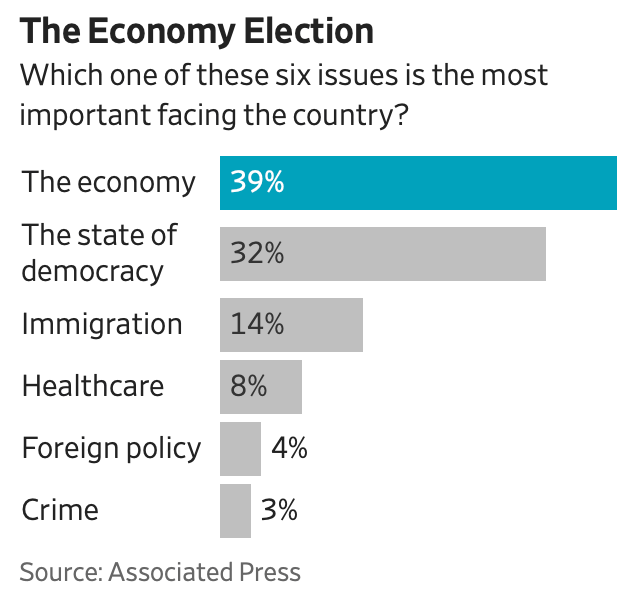
Polling from the WSJ backs up my assessment that this was mainly about the economy and prices:
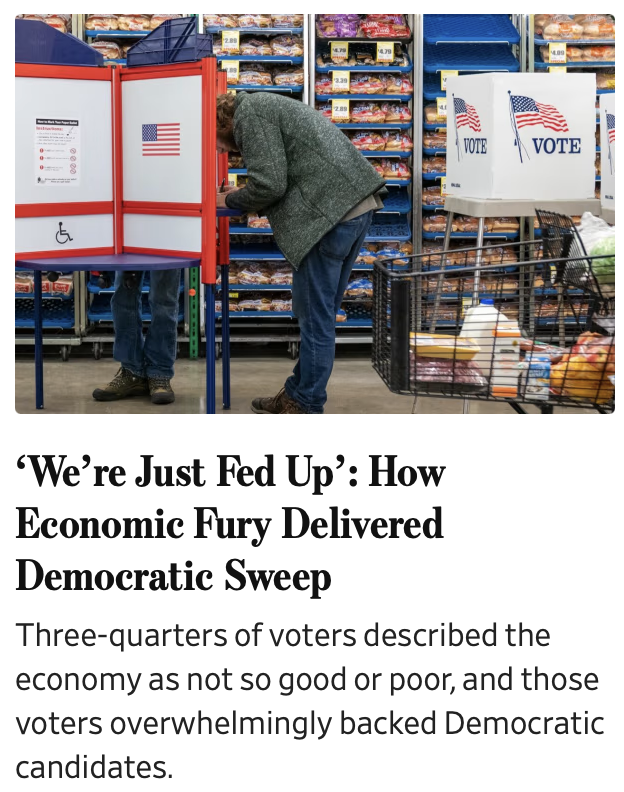
This comes after a longtime WSJ editorial writer hoped for a big Republican loss, something I’ve never seen from the WSJ before. But if they speak for the markets, it makes sense- US stocks opened up 2% the day after the election.

Crypto and gold prices are also up, an odd combination. Oil prices are down, perhaps seeing an end to the Iran war as more likely. Polymarket shows the odds of a US invasion of Iran this year down 5%. John Ossoff and Ron Desantis saw their odds of becoming President in 2028 rise at the expense of JD Vance and Gavin Newsom.

What will we see change on economic policy? Congress may lower tariffs and take back some of the tariff power they have long delegated to presidents. The Federal Reserve board will feel more free to raise interest rates if they think it is warranted. Many state-level results mean data centers will get harder to build, which will hurt the ‘picks and shovels’ companies literally building them but not necessarily the frontier labs who won’t be able to spend as much on racing ahead. NVDA and Micron stock is down while Google, Meta, Anthropic and OpenAI are up.

But the fact that President Trump still has veto power will limit how many big changes we’ll see over the next two years for anything that would require a new bill. Welcome back to divided government, to gridlock, and to checks and balances.
Midterms: It’s The Economy

This is my last post before the midterms Tuesday. What will they bring?

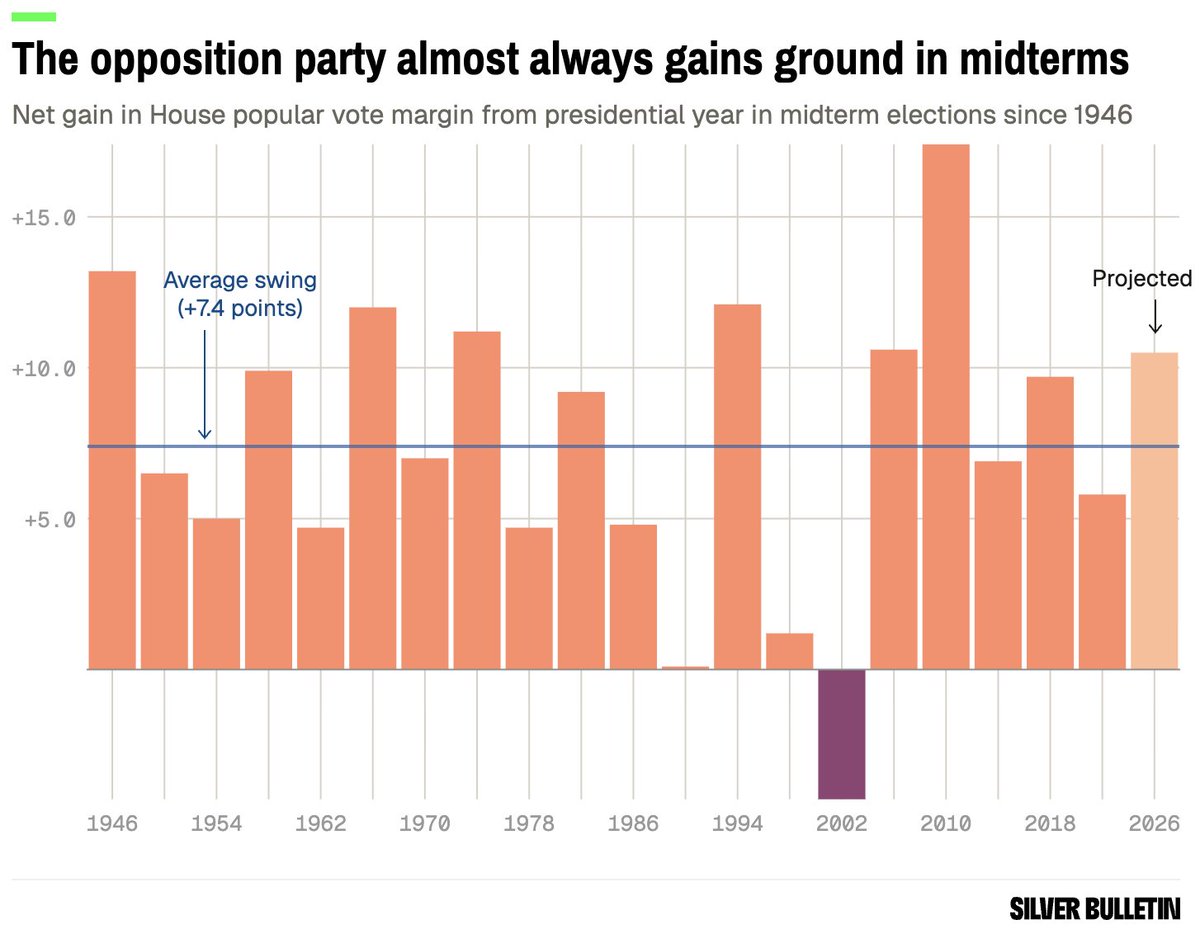
Midterm elections are usually bad for the President’s party:

I don’t think this year will be an exception to the rule. I see many indicators pointing in the same direction.

The largest US prediction market Kalshi currently gives Democrats a 91% chance to take the House and a 66% chance to take the Senate. The international Polymarket and play-money Manifold currently give slightly higher chances, 93/67 and 94/69. Forecaster Nate Silver is higher still at 95/76.

The best odds I’m seeing for Republicans among the models I have followed for years is Ray Fair giving Dems only a 60% chance to take the House (he doesn’t forecast the Senate). In Fair’s model, the economy is working in favor of Republicans; inflation is a negative for them but economic growth is a stronger positive (including the 3.4% Q3 GDP estimate just released today).

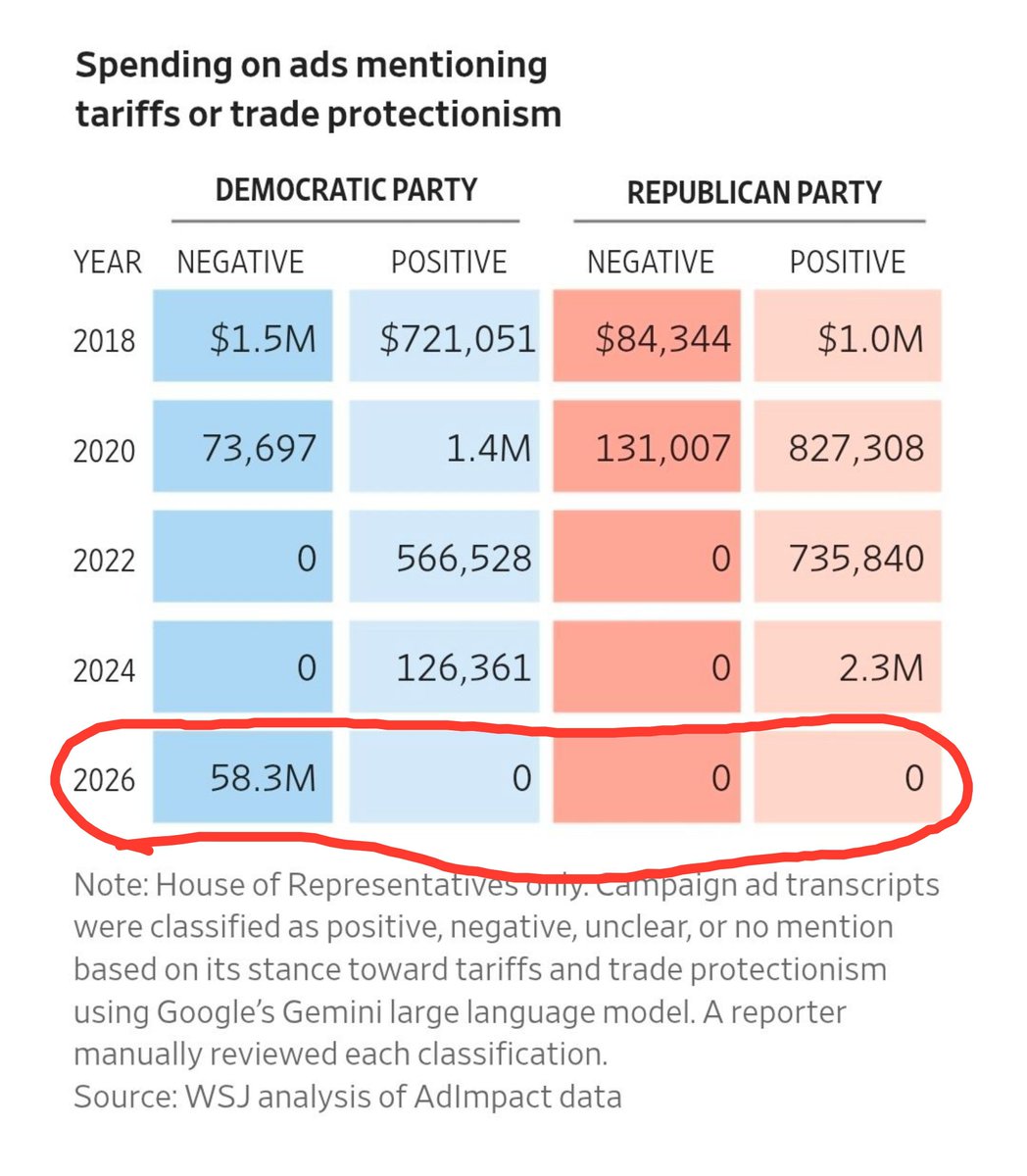
In practice though I think economic issues are working in favor of Democrats. The economy is good in many ways, like 4.2% unemployment- but most people aren’t happy about it. Consumer sentiment is at record lows. Economic growth is solid but largely driven by the AI boom, which gives people plenty to be nervous about. Inflation is only a bit high (3.4% vs a 2% target) but easy to tie to administration policies like tariffs, war, and pressuring the Fed to lower interest rates. Ad spending indicates that politicians on both sides think tariffs have gone from a minor issue that voters have mixed feelings about to a major issue that voters don’t like:

Gas prices have long been especially salient, and are currently high because of the Iran war. I said here in March:

if the US administration wants to avoid a midterm wipeout driven by high gas prices, I see only 3 options:

  1. Get lucky and see the Iranian regime fall quickly
  2. Negotiate an end to the war quickly (which might itself be unpopular if they can’t get a good deal) or just declare victory and go home (but its not clear whether Iran would re-open the strait now just because the US stopped bombing)
  3. Restrict Exports

But they took none of those three options, and now it seems the midterm wipeout is coming.

I predicted a ‘moderate red wave’ here in 2022. I predict a blue wave for 2026 that is bigger than the red wave of 2022, though not a ‘mega tsunami‘. The main things Republicans have going for them are the Senate map (Dems need to win in multiple 2024 red states to win) and the possibility that angry anti-incumbent voters will take down some Dems too.