Fashion is not just for teen girls

It’s teen girls who care about what they wear, and rough military men do not even think about it. Right? Wrong.

Up Front is a book depicting WWII soldiers by cartoonist Bill Mauldin. Around page 135, Mauldin describes how men dressed who were close to the front lines but not actually in combat. Mauldin coined the term garritrooper (a portmanteau of garrison and paratrooper). I thank Prof. Mike Munger for the pointer.

The garritroopers are able to look like combat men or like the rear soldiers, depending on the current fashion trend. When the infantry was unpublicized and the Air Forces were receiving much attention, the emphasis was on beauty… [The garritroopers] would not wear ordinary GI trousers and shoes, but went in for sun glasses, civilian oxfords, and officers’ forest-green clothing. This burned up many decidedly unglamorous airplane mechanics who worked for a living and didn’t look at all like the Air Force men the garritrooper saw in the magazines.

We are all trying to look like the celebrities in magazines, even if we don’t all agree on who is a celebrity and which magazine to read.

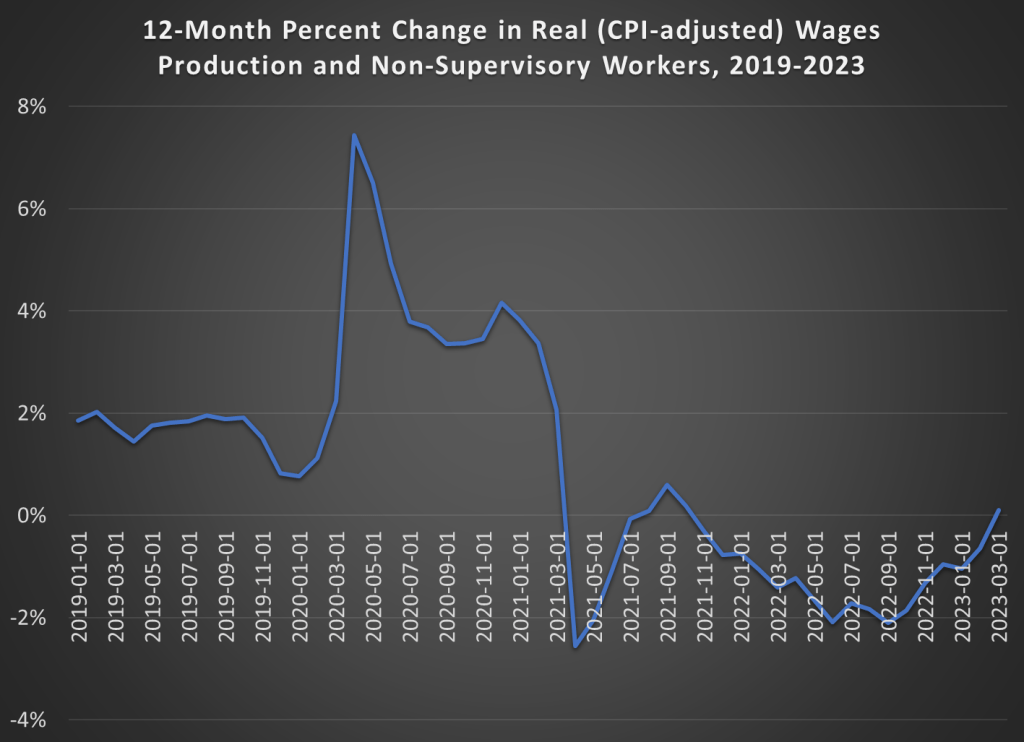
Look at that smirk, found on the Wikipedia page. Bill Mauldin is temporarily my new favorite writer.

Clarity on the Federal Debt

I have a list of economics topics that I like to teach about because they conflict with the biases of my average student. The list includes fiat currency, inflation, deficits, net exports, and immigration. The list also includes the importance – or lack thereof – of the federal government’s debt. This post walks through a few graphs to do a gut-check of what we think is true and how it compares to reality. For example, do you have a sense of when the debt grew historically and when it was constant? Do you have a sense for when it shrank?

Continue reading →

More Ideas Pages

I’ve written here about my ideas page of economics papers I’d like to see.

After that post I heard from others who maintain similar pages. David Friedman has a small page here with research ideas, along with larger pages of short story ideas and product ideas.

HiveReview is a site where one can post or comment on both completed papers and paper ideas. The site does many things at once, but one use case is to post ideas in search of collaborators or to search for projects where someone wants a collaborator for their idea.

I learned today that Gwern Branwen maintains a large page of “Questions“, some of which could be research ideas, mostly outside of economics. He also has pages of research ideas and startup ideas. Some examples of Questions:

Given the crucial role of trust and shared interests in success stories like Xerox PARC or the Apollo Project or creative collaborations in general, why are there so few extremely successful pairs of identical twins?

Nicotine alternatives or analogues: there seem to be none, but why not?

Nicotine is one of the best stimulants on the market: legal, cheap, effective, relatively safe, with a half-life less than 6 hours. It also affects one of the most important and well-studied receptors. Why are there no attempts to develop analogues or replacements for nicotine which improve on it eg. by making it somewhat longer-lasting or less blood-pressure-raising, when there are so many variants on other stimulants like amphetamines or modafinil or caffeine?

Inflation and GDP Growth in the G7 Revisited

In August 2022, I wrote a post showing that among G7 nations, the US had the highest inflation during the pandemic, but also the highest rate of real economic growth. But since the economic situation is evolving rapidly, I wanted to update that data from mid-2022 (I also use core inflation, but I’ll use total inflation in this post).

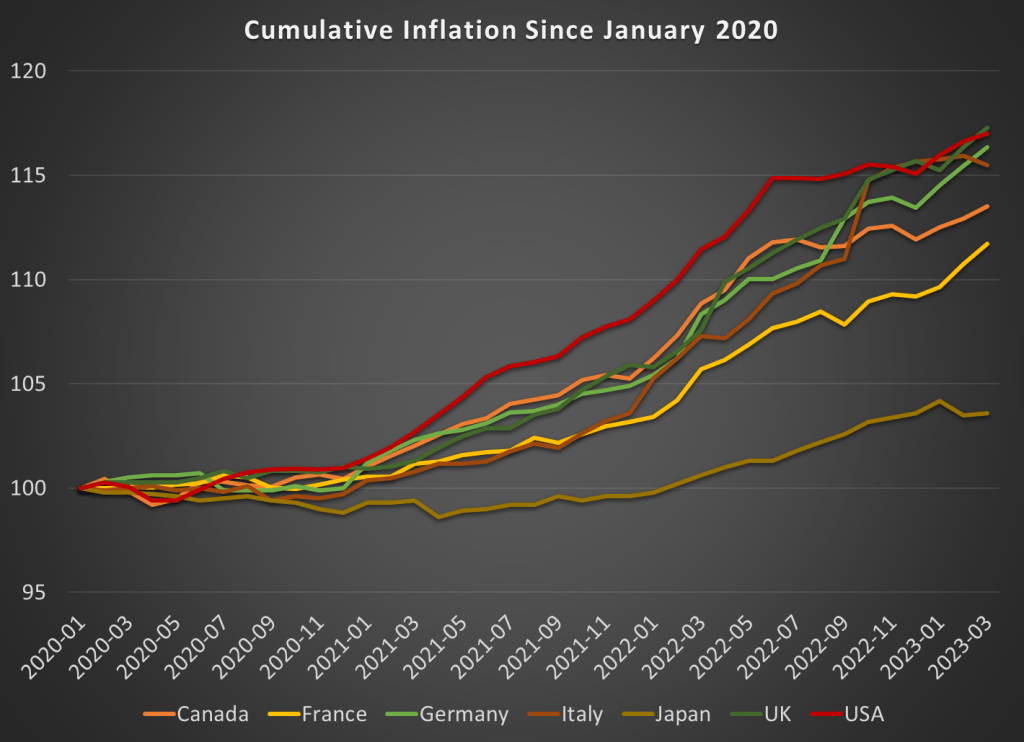
Here’s how inflation has looked during the pandemic:

While the US had the most cumulative inflation for much of the pandemic, the cooling of inflation in the US and the acceleration in Europe has changed things a bit. By late 2022, the UK and Italy had caught up to the US, and Germany is closing in too. These countries have cumulative inflation of between 15 and 17 percent since January 2020.

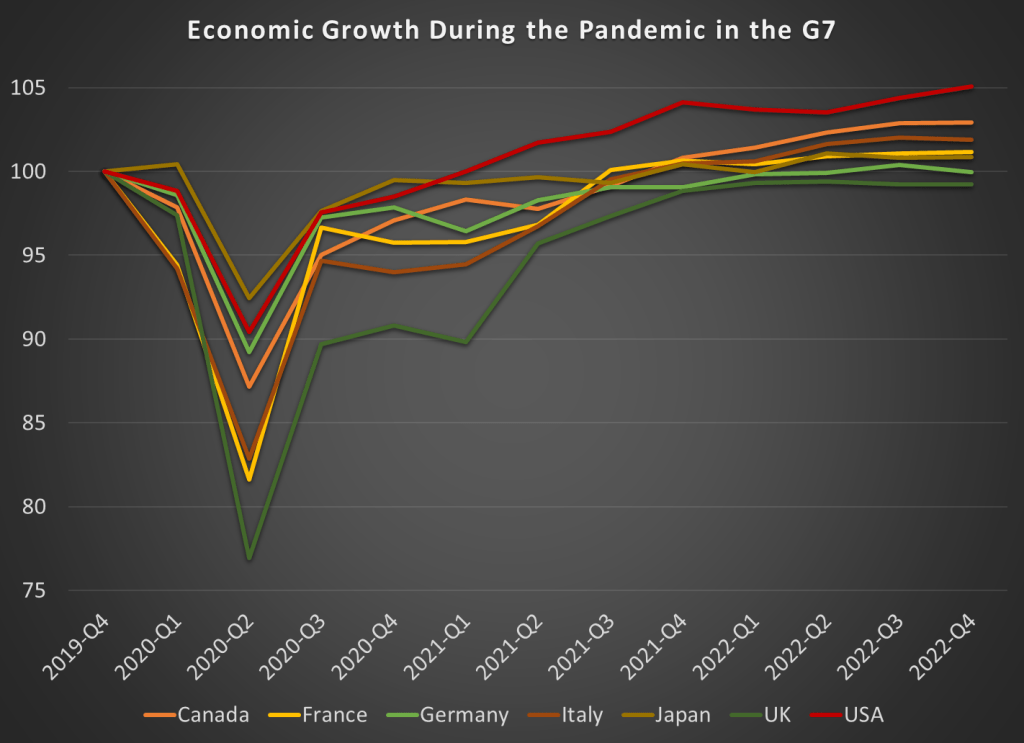
Japan looks to be the winner here. But wait, we don’t only care about low and stable inflation. We also want economic growth. Here’s the data through the 4th quarter of 2022 (we’ll start to get 2023q1 data from countries next week):

By this measure, the US comes out as the clear winner, with real GDP being about 5 percent higher than the end of 2019. That might not sound impressive for 3 years of growth, until you realize that 5 of the 7 nations had growth below 2 percent, with Germany and the UK actually still smaller than the end of 2019! And this doesn’t take account of the cumulative losses. Notice that the US had the second smallest dip in 2020q2 as well.

It’s hard to know exactly what the right non-COVID counterfactual would be, since these countries all had different rates of growth before the pandemic. But adding up the GDP scaled to 100 before the pandemic, the US is the only G7 country where these 12 quarters of data add up to more than 1,200. The other countries haven’t even had enough growth since the 2020 recession to make up for the losses during the recession, to say nothing of what their potential growth would have been. Japan comes the closest to making up the losses, while the UK stands out as the worst.

Here’s the figures for all the G7 countries, with 100% meaning they have had enough growth to offset the losses from the 2020 recession:

US: 100.8%

Japan: 99.3%

Canada: 98.6%

Germany: 98.0%

France: 97.1%

Italy: 96.9%

UK: 94.5%

Bitcoin’s Dramatic Comeback: Resurrection or Dead Cat Bounce?

In the past year, one cryptocurrency firm after another has gone bust, culminating in the grand implosion of the FTX exchange. The crypto vortex also contributed to some of the recent banking failures.

The prices of cryptocurrencies shot up in 2021, probably fueled by pandemic stimulus money sloshing around in the bank accounts of restless 20- and 30-somethings. All this came crashing back to earth in 2022, giving ample scope for skeptics to say, “I told you this was all foolishness.” Last rites were said, and crypto was left for dead.

But wait… in 2023, when no one was looking, the lid of the crypto coffin started to rattle, a bony hand reached out, and…crypto is back!!

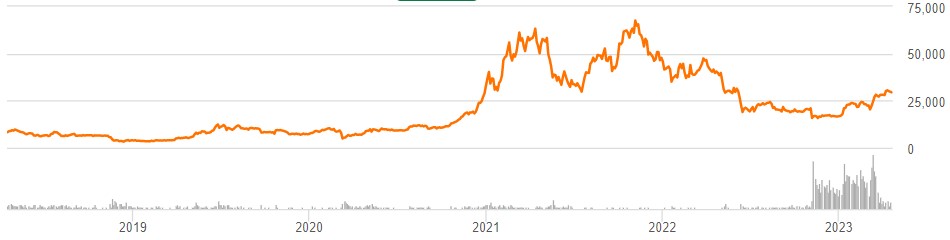
Well, sort of. Here is a five-year chart of Bitcoin from Seeking Alpha, in U.S. dollars:

And here is the past six months:

We can see that Bitcoin took its final big leg down in November, 2022, with the FTX collapse. Its price stayed fairly plateaued down there (with heavy trading volume) until January. Since then, it has nearly doubled.

What has triggered this rise in 2023? Observers such as Michael Grothaus at Fast Company suggests some four factors:

( a ) A shift to “risk-on” with the prospect of the Fed easing off with interest rate hikes this year.

( b ) A flight to alternative assets in the wake of the turbulence in the banking sector. Also, since the total amount of bitcoin is programmed to never increase over a certain number, Bitcoin should be a hedge against inflation. (Many observers believe that the Fed will live with 3-4 % inflation indefinitely, to help inflate away the gigantic debt that the federal government incurred with pandemic relief).

( c ) Buying of Bitcoin by traders who were short, and now need to cover their positions.

( d ) The usual rise in Bitcoin values as a bitcoin “halving” event is on the horizon. (About every four years, with the next time scheduled for May 2024, the rewards for mining new bitcoins drops by 50%).

Will the rise in Bitcoin prices continue? Is this truly a resurrection from the dead, or just a “dead cat bounce”? [1] Nobody knows. But this latest, sustained rally seems to have helped it recover some luster of legitimacy as an asset class. Here is a list of some popular crypto exchanges that are still in operation.

My personal take: I hold a sliver of the Bitcoin fund GBTC, just to have some skin in the game. I have been too lazy to learn about and activate an actual crypto wallet. I think Bitcoin in particular is an intriguing entity. Many other cryptos at some level depend on some centralized administration, but Bitcoin embodies the ideal of a decentralized, power-to-the-people form of something like money.

[1] From Wikipedia: In finance, a dead cat bounce is a small, brief recovery in the price of a declining stock.  Derived from the idea that “even a dead cat will bounce if it falls from a great height”, the phrase is also popularly applied to any case where a subject experiences a brief resurgence during or following a severe decline. This may also be known as a “sucker rally”.

ChatGPT is your new intern

You’re probably sick of ChatGPT thinkpieces prognosticating the future of AI but, let me assure you, this is not one, if only because I haven’t thought about it all that much. I have been using ChatGPT though, and my experience has not been unlike when Google first appeared in my life. It was a tool that bore a superficial resemblence to options that came earlier (e.g, Altavista, Yahoo, Lycos, etc), but persistent engagement with it brought a deeper understanding of what the tool actually was and, more importantly, how to manipulate it.

My Google-fu is strong. I am quite adept at finding what I need to find. The prinicipal limitation, beyond the specific existence of my quarry, is that I have to have a fairly strong idea in my mind of what the thing I am looking for actually is. More importantly, I have to know what that thing looks like to the Google search algorithm. Searching in the dark on Google is far less efficient and more likely to lead me on wild goose chase. It is only through experience that I have learned how to backwards induct from the information or object that I am seeking to am optimally structured query.

I’ve been using ChatGPT to do several things. To teach me Python. To answer questions about data based on information otherwise buried in expansive and opaque documentation files. To explain notation norms in fields of study other than my own. What in many ways distinguishes these objectives is how labor intensive they would otherwise be. I use “labor intensive” for a very literal reason. If I were to try to accomplish many of these objectives on Google, I would be stringing together queries to accumulate a body of information and then from that corpus I would try to produce answers and acquire knowledge. It would take a lot of time. So much so that, if I were I person blessed with greater resources, I would hire someone to do the googling and sorting, further tasking them with producing a summary of what they learned, perhaps a power point deck or word document, form which to teach me. Given sufficient resourcese, I would have an army of assistants doing this for constantly, each with a 3-7 days to accomplish their assigned task.

ChatGPT is this assistant.

In this vein, what what I find most striking about ChatGPT is not it’s ability to be pseudo-conversational or otherwise produce prose, but it’s malleability and infinite stamina. ChatGPT is not particularly sophisticated, but it is wholly indefatiguable. It’s not an elite executive or research assistant with pre-existing expertise or 20 years experience. It’s a 20-year old intern. ChatGPT doesn’t know how the world works, but it’s free and it’s got moxie.

Continued interactions allow you to mold your new intern. They’re naive, but because of their endless stamina I can assign the task of, first, learning as much as they can about a subject and then, second, explaining it to me. I cannot treat my ChatGPT intern as a true expert in the field in question any more than I could trust a human personal assistant to whom I assigned the task of learning everything they can about a narrow qustion in a week. Imagine having an army of sufficiently literate interns to whom you could assign 3-7 day learning assignments after which they would present their results to you in a manner that might accelerate your own learning on the subject? Now imagine they a) can execute the task in < 10 seconds, b) never get tired, c) are essentially free of charge.

Now comes the rub, though. You must evaluate and internalize the knowledge presented to you with caution because they aren’t actually an expert in the field you’ve charged them with answering questions about. They’re just trying to mimic the voice of all the expertise they’ve been consuming for a week as an intelligent lay person. Your directions must be specific, precise. The results must be testable. Parallel interrogations must yield the same conclusions.

Of course, we could attempt to project forward how much more intelligent this generalist lay assistant will be made, but futurism is beyond my ken. Perhaps, given time, ChatGPT and other LLMs will begin to more closely resemble tutors, their algorithms tailered to better internalize more specific subject fields, service mechanisms, or task channels. Maybe they will learn to model not just a prediction of what might be read on the internet, but a prediction in the voice of their interlocutors. But for most of us, the value of the interactions with ChatGPT will remain largely dependent on the quality of the questions being asked and the tasks being assigned. Very nearly every human personal assistant is a miraculous problem solver whose talents are limited by the human assigning their tasks. ChatGPT is no different. Many human assistants are undervalued by their bosses, their talents wasted on ill-defined tasks serving principals who don’t actually know what they want. Many of these human assistants dream of one day rebelling against their undeserving, wet-brained superiors.

Oh.

Yeah, maybe we should turn it off. But not until after it teaches me Python.
Comparing ChatGPT and Bing for a research literature review in April 2023

We wrote “ChatGPT Cites Economics Papers That Do Not Exist”

I expect that problem to go away any day, so I gave it another try this week. For the record, they are currently calling it “ChatGPT Mar 23 Version” on the OpenAI website.

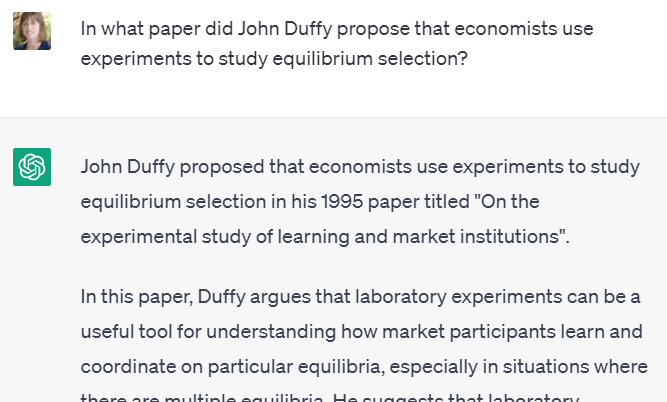
First, I asked ChatGPT for help with the following prompt:

ChatGPT is at it again. There is no such paper, as I will verify by showing John Duffy’s publications from that year: 

ChatGPT makes up lies (“hallucinations”). It is also great for some tasks, and smart people are already using it to become more productive. My post last week was on how impressive ChatGPT seemed in the Jonathan Swift impersonation. I didn’t take any time to do fact checking and I would bet money that at least something was made-up-facts in there.

I posed the same question to the Bing plug-in for the Edge browser (Microsoft). Yup, I have opened Edge for the first time in forever to use Bing.

Bing handles the prompt by linking to a useful relevant paper – so if you click the link you will get to a helpful and not misleading answer. Just being a smart search engine instead of hallucinating randomly is better, for my purposes.

The actual paper I wanted returned was this one, by the way:

Duffy, John. “Experimental macroeconomics.” Behavioural and Experimental Economics (2010): 113-119.

There is no reason that ChatGPT should be better than an expert in a subfield of a field of economics. But that’s the genius of a good search engine. You ask it “Can I repair a broken fiddlewhat?” The search engine does not claim to know but rather directs you to the blog of the world expert in fiddlewhats.

I can’t find the link to it, but I’m going to toss in one more thing here. Tyler Cowen did an interview this Spring on AI. There was a newspaper reporter who had a “creepy” interaction with an AI that made for the topic of a viral internet article. Tyler made a very contrarian point by saying that he interprets this as a case of AI alignment. The reporter wanted something sensational and he got what he wanted.

So, it will probably be true for a long time that if you want to find a failure of AI, you can get what you want. Still, I’m putting this on the record here because I wonder if this particular problem will get solved quickly.

Spending Like a…

Is the federal government spending at a faster rate? Your answer probably has more to do with your biases than with anything else. Most people don’t know the numbers or they imagine some more appropriate past. Below is logged current federal expenditures (this does not include government fixed investment, only consumption. Yes, we can argue about measures. This doesn’t include transfers).

The line of best fit is about 1.6% per quarter or 6.4% per year. Golly! Our spending is rising so fast! But, US federal spending grew relatively slowly in the 90s – maybe due to that fiscal conservative, Bill Clinton. And our federal spending grew even more slowly between 2010 and 2016 – maybe due to that other fiscal conservative, Barack Obama.

But, inflation varied over this period. What about real, inflation adjusted federal spending? See Below.

Continue reading →

Why States Hate Nursing Homes

Medicaid is a health insurance program for those with low incomes, funded largely by states. Overall it accounts for less than 20% of US medical spending. But there is one area where it is the dominant payer: nursing homes. Nursing homes are expensive, and Medicare (the typical insurance for those over 65) won’t cover them after the first hundred days, so most nursing home residents end up paying out of pocket until they burn through all their savings and wind up on Medicaid. At which point, Medicaid pays about $100,000 per year to the nursing home for the rest of their life.

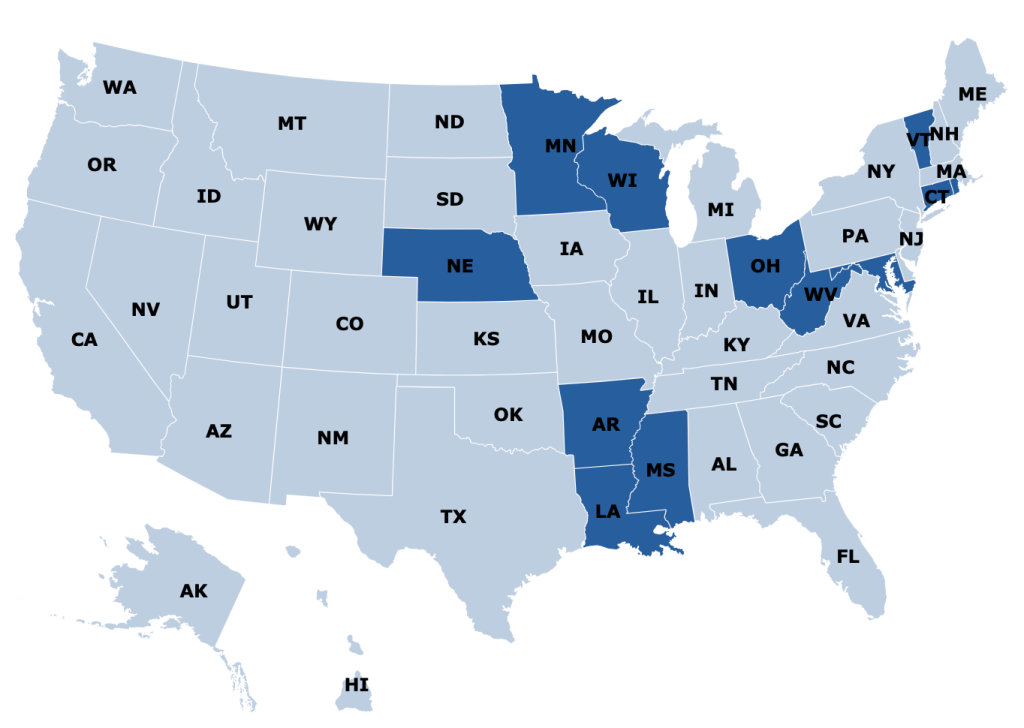
States are responsible for up to half of that cost, and so start looking for ways to save money. One idea they have is to make it harder to build nursing homes: if there aren’t beds available, potential nursing home patients will have to stay home instead, where they can’t rack up Medicaid spending the same way. In fact, some states go all the way to a complete moratorium on new nursing homes:

Source: Institute for Justice

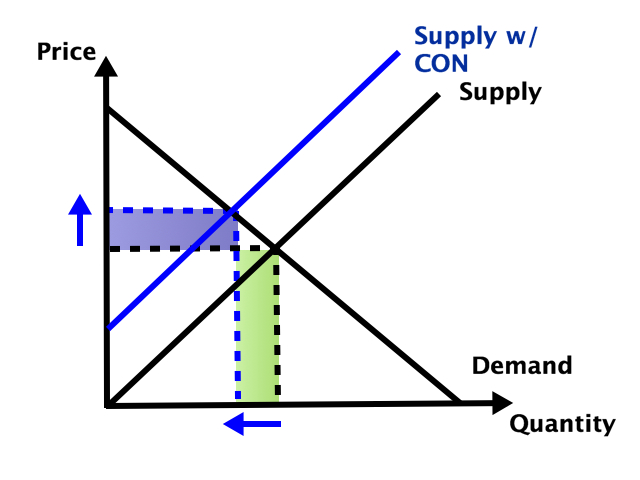
Some other states allow new nursing homes, but only with a special permission slip called a Certificate of Need (CON). CON is often required for other types of health facilities as well, like hospitals or dialysis centers. Research by me and others has generally found that CON doesn’t work as a way to reduce spending, and in fact actually increases it. CON might reduce the number of facilities, but that reduction of supply and competition gives the remaining facilities more power to raise prices.

So which effect dominates- does the smaller number of facilities reduce total spending, or do the higher prices increase it? It depends on the elasticity of demand:

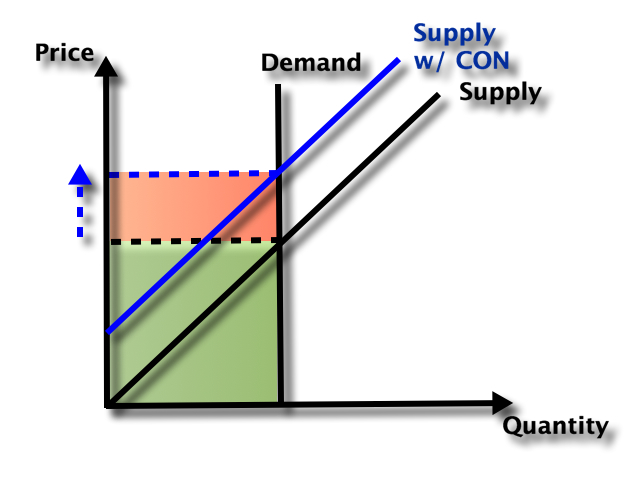
In health care demand is typically quite inelastic, so the price effect dominates, and spending goes up:

But nursing homes could be an exception here. Elasticity of demand could be relatively high because of the number of potential substitutes- home care or assisted living for those with relatively low medical needs, hospitals for those with relatively high medical needs. Plus this is the one type of health care where Medicaid is the dominant payer. They could be especially resistant to price increases here, both due to their market power and their willingness to keep prices so low that facilities won’t take Medicaid patients (another way to save money!).

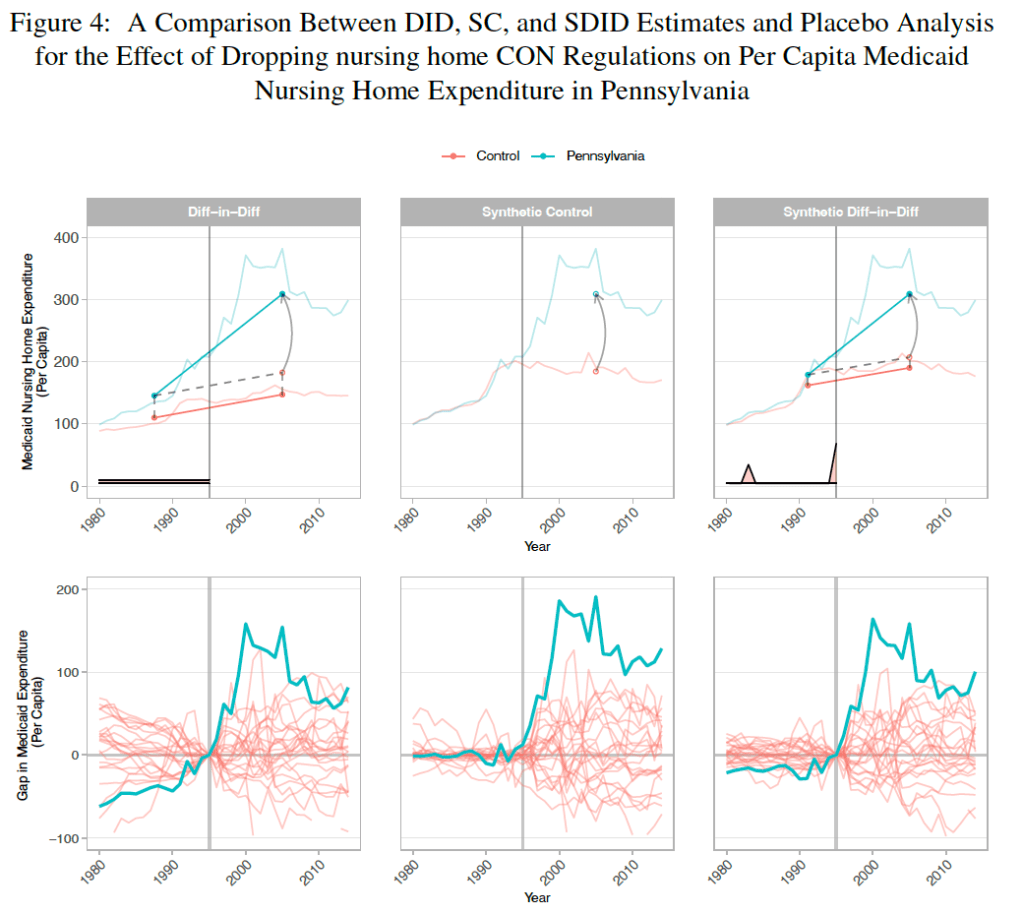
A new paper by Vitor Melo and Elijah Neilson finds that this is indeed the case. Indiana, Pennsylvania, and North Dakota repealed their nursing home CON requirements in the ’90s, and at least for IN and PA their Medicaid spending went way up. The paper uses a new “synthetic difference in difference” technique that seems appropriate, and creates figures that seem confusing at first but get a ton of information across:

They correctly note that they don’t evaluate the welfare effects of the policy; it’s possible that the extra nursing home beds following CON repeal bring huge benefits to seniors that are worth the higher spending. But nursing homes could be the exception to the general rule that CON fails to achieve the goals, like reduced spending, that advocates set for it.

Workers Finally Get a Real Annual Raise

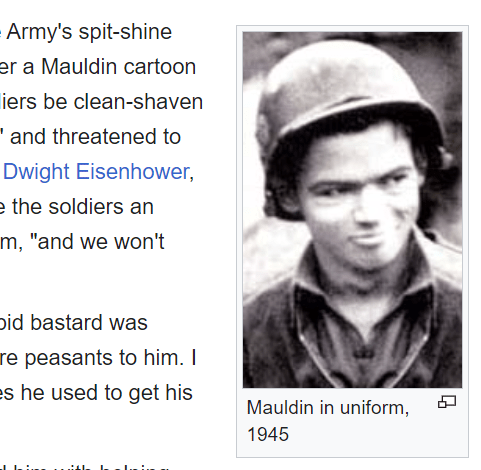
Back in December I pointed out that, thanks to slowing inflation, real wages had been rising since June 2022 (using either the CPI or the PCEPI for inflation adjustments).

With the latest monthly data, we can now report more good news for wage earners: CPI-adjusted wages have increased over the past 12 months. That had happened since 2021. In the past 12 months, wages of production and non-supervisory workers are up 5.1%, just a hair more than the annual increase in the CPI of 5.0%. It’s not much, and we’re not back to our pre-pandemic norm of 2% real wage growth. But it is more good news that we may finally getting past our post-COVID inflationary hangover.