The United States Has A Progressive Tax System

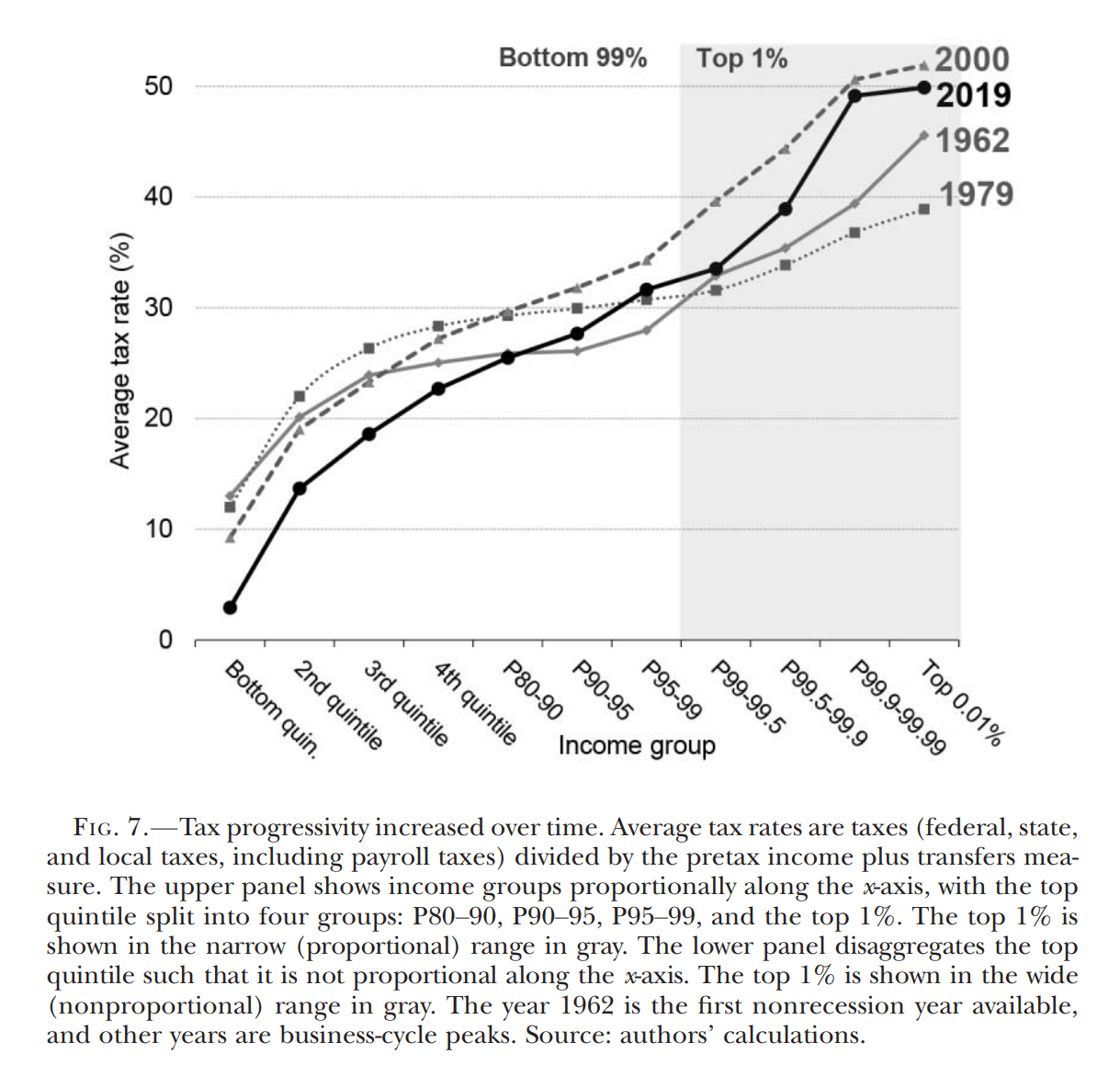
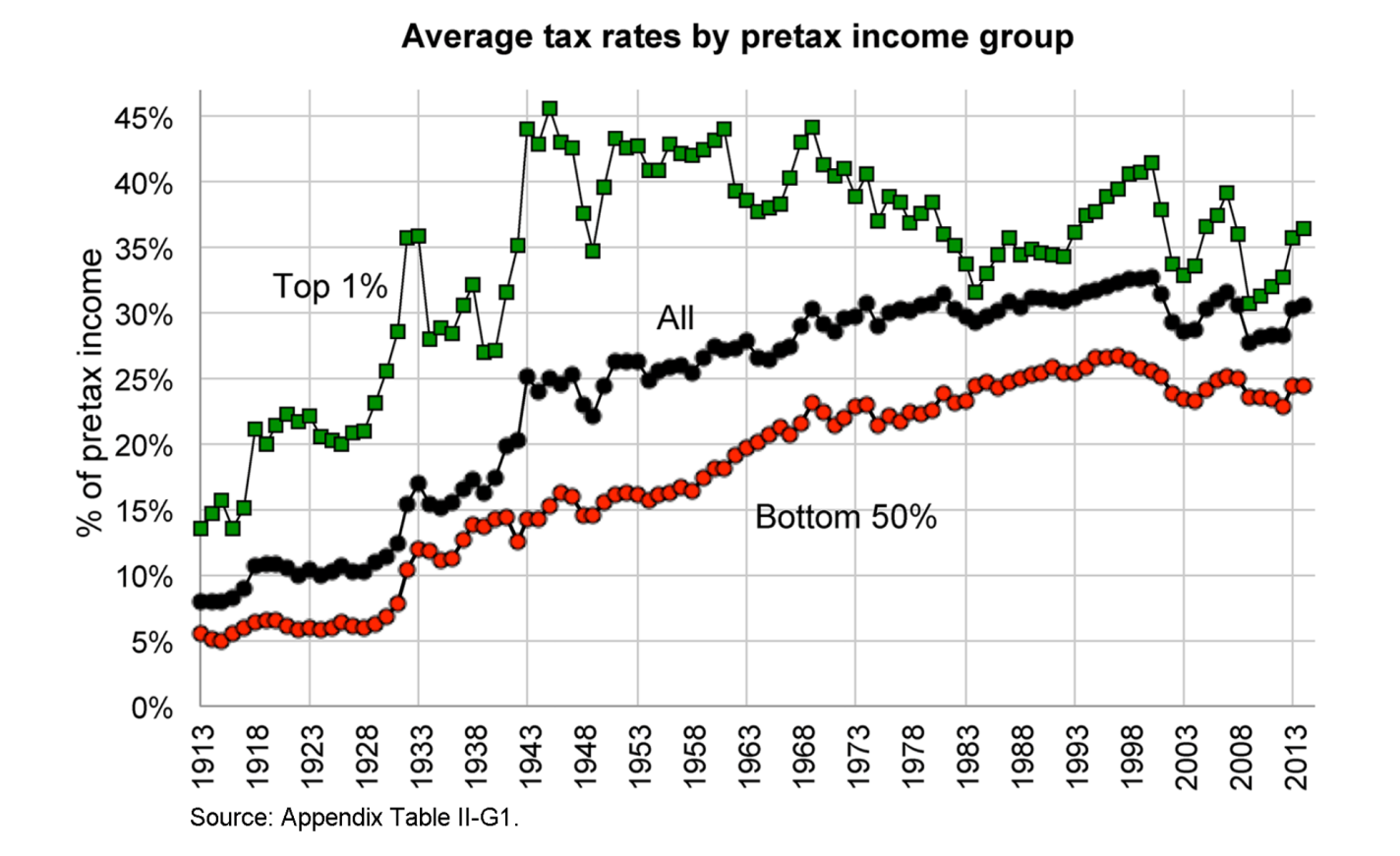
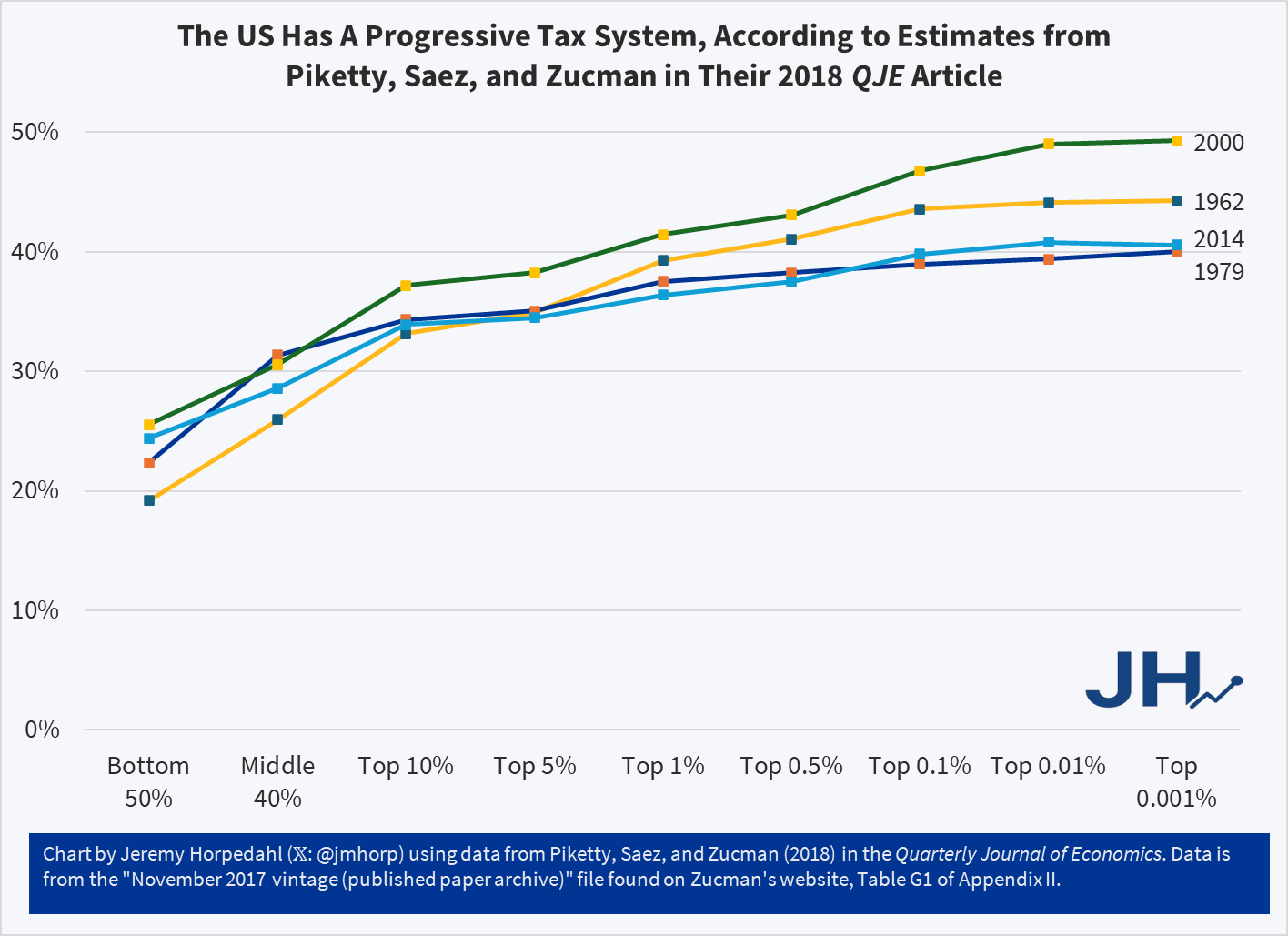
For Tax Day 2026, here are some estimates of how progressive the US tax system is, drawing primarily from published academic work. While there is disagreement about exactly how progressive the tax system is (and should be), these papers all agree that as income rises, average tax rates rise. These estimates attempt to include, as best as possible, all federal, state, and local taxes, and to take account of tax incidence.

From Auten and Splinter in the Journal of Political Economy:
Piketty, Saez, and Zucman in the Quarterly Journal of Economics (Figure IX):
And here is a chart that I created, which comes from the appendix data for PSZ (2018), which is roughly comparable to the Auten-Splinter chart above. Note that it isn’t perfectly comparable: the income groups on the x-axis aren’t exactly the same, and the latest year in PSZ is 2014 rather than 2019 (they do have estimates for later years in updates to the work, but I am trying to stick with the published academic work). But they are roughly comparable:
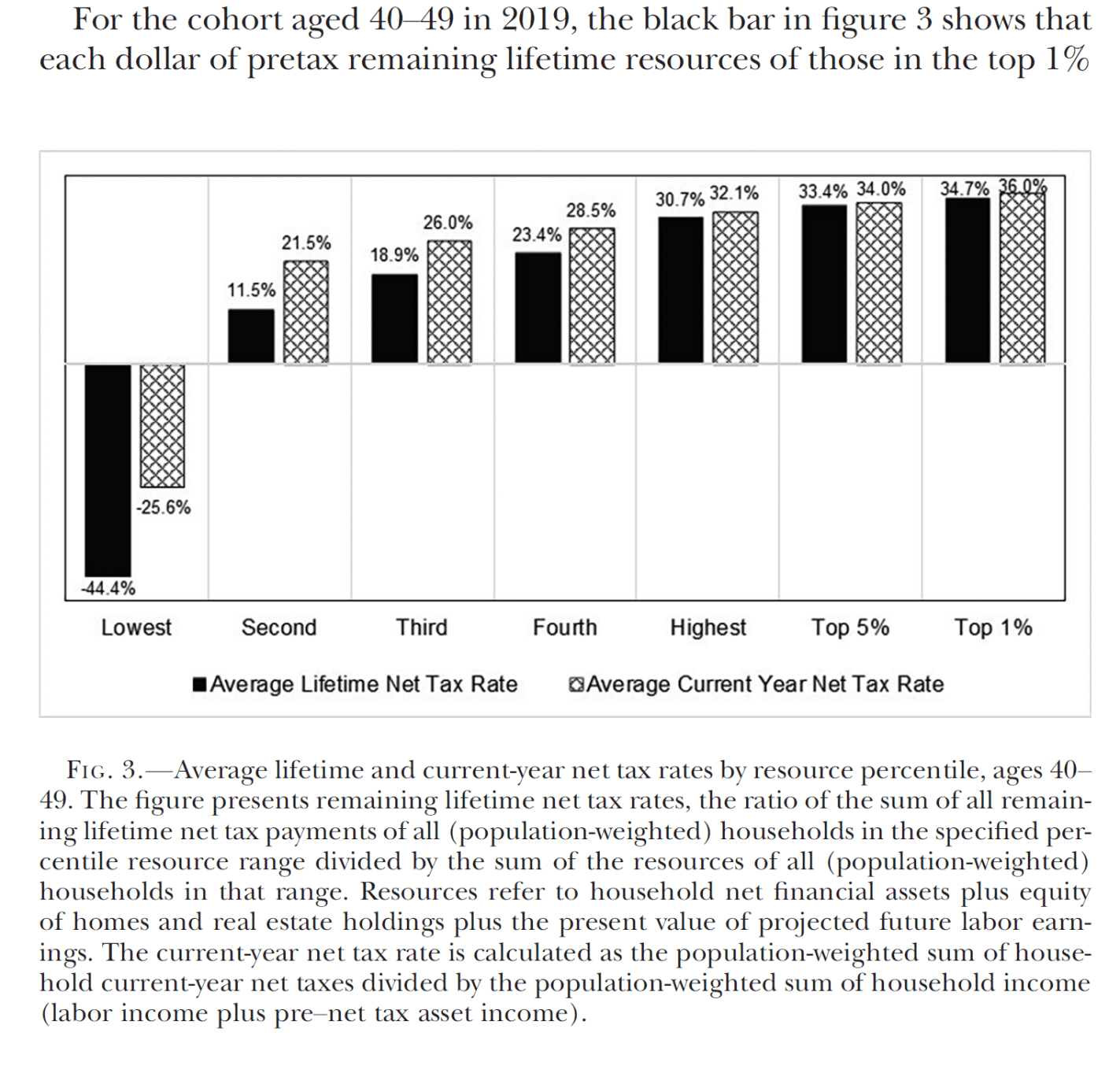
Auerbach, Kotlikoff, and Koehler in the Journal of Political Economy take the additional step of computing lifetime average tax rates, rather than for a single year, showing the US tax system is even more progressive when considered this way. Note: they also include the value of transfers, which makes these results not directly comparable to the papers above:
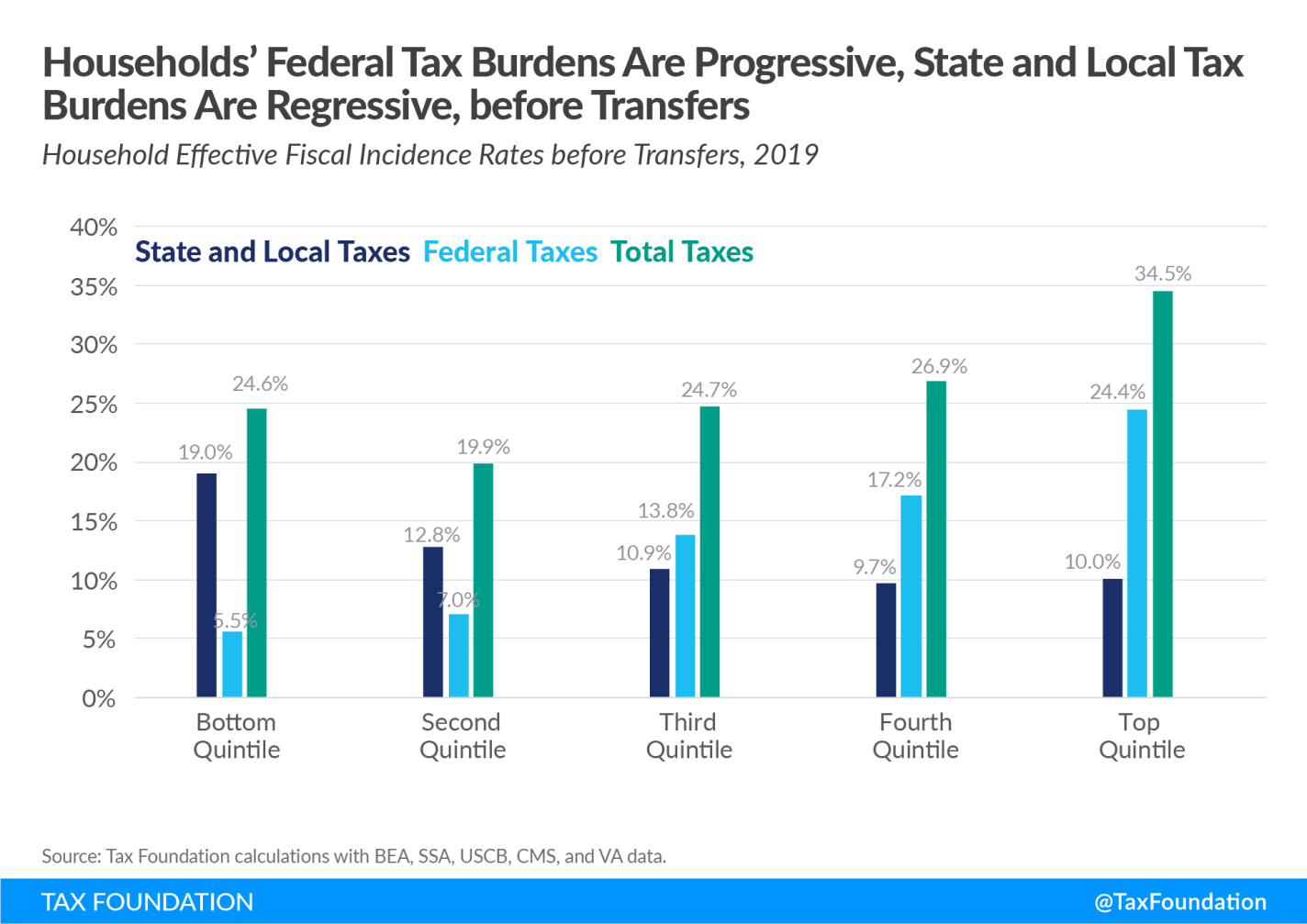
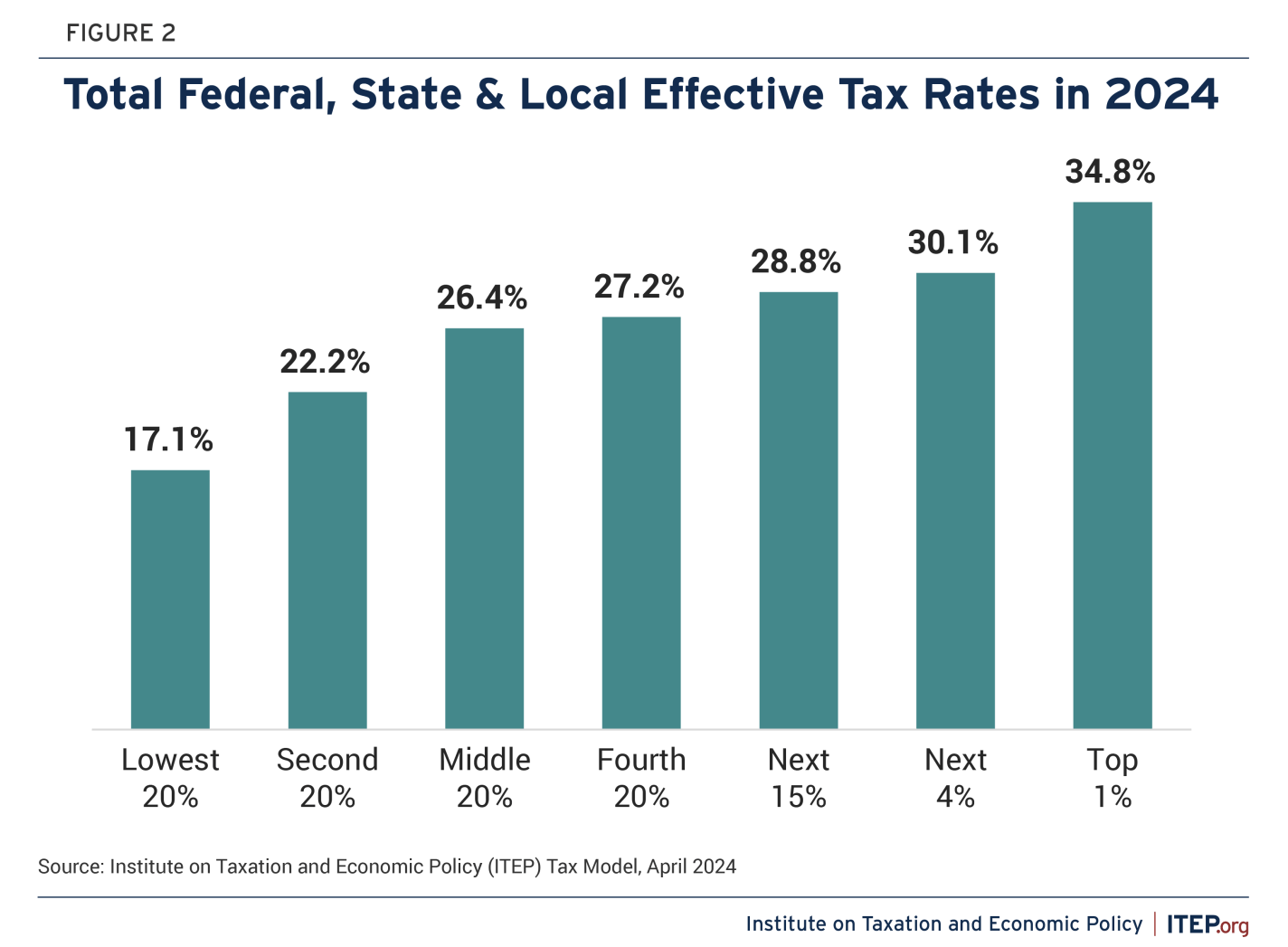
Finally, here are two estimates from think tanks that work on tax policy. Even though the Tax Foundation is considered more right-leaning and ITEP is considered more left-leaning, both agree that the overall US tax code is progressive.
Against Eugenics, on its Own Terms

Once upon a time, eugenics was all the rage. It was nascent during the reconstruction era and persisted into the 20th century. It grew out of biological evolutionary theory and emphasized reproductive fitness. In brief, the theory asserted that there are differences in individual fitness and that the more fit living things will survive better and reproduce, eventually becoming a greater part of the population. The ability to compile and evaluate statistics about various human measurements made inferences hard to resist. Of course, researchers were plagued by small sample size, omitted variable bias, and social biases of the day (for example, phrenology inferred fitness characteristics from skull shape).

People employing eugenic thinking, overwhelmingly, supported theories that their own type of person was among the more fit. Eugenicists didn’t promote theories of their own un-fitness. In the progressive era of the early 20th century, eugenics met the prevailing attitude that government could be employed to resolve social and economic ills. This era is when the income tax emerged, prohibition was enacted, the Federal Reserve was formed, and various labor regulations were enacted.

The result was that policy sometimes pursued greater ‘fitness’ among its populations. Rather than systematically encouraging the supposedly more fit with economic incentives, most policy was geared toward reducing the reproductive success of supposedly less fit people. These included forced sterilization, institutionalization, and economic exclusion. Besides rejecting basics individual human dignity, the harm was all the more tragic given that fitness was often poorly specified. That is, policy criteria weren’t dependably related to fitness. Fatal conceit, indeed!

One of my favorite ways to argue is to grant premises and then change details on the margin to see whether the conclusion changes. Let’s do that. Let’s grant that there are innate differences between people that are related to biological success. Since survivability is related to resource acquisition, let’s grant also that economic success overlaps at least somewhat.  Taking that as granted, does pursuit of the historical eugenic policy still follow?

It does not.

There are two mistakes that eugenicists and various sorts of racists and xenophobes made. They assert or imply 1) that fitness characteristics are stable and systematically identifiable, and 2) that policy needed to intentionally select for the fitness characteristics.

Continue reading