Older Workers Have Not Dropped Out of the Labor Force

A recent blog post from the St. Louis Fed claims that:

“Both younger and older workers withdrew from the labor force in large numbers during the pandemic: In fact, their participation rates plummeted. Yet, within two years, the younger workers had bounced back to their pre-pandemic participation rates. But the older workers have not.”

They include a chart which seems to back up that assertion:

However, if you look closely, you will see that the older workers’ age group is open-ended. It includes 55-year-olds, as well as 95-year-olds. Given that the US population is aging, this seems like a poor choice.

While not available currently in the FRED database, there is data from BLS available for older workers that is not open-ended. For example, we can look at workers ages 55-64, who are older but still young enough that they are mostly below traditional retirement age. I use that data and compare with the 25-54 age group (note: because the 55-64 data isn’t available seasonally adjusted, I use the non-adjusted data for both age groups, then use a 12-month average, so my chart doesn’t exactly replicate the chart above):

By using a closed-end age group for older workers, we see that labor force participation has not only recovered from the pandemic, but it exceeds the pre-pandemic peak for both prime-age and older workers, and had done so by the Spring of 2023. In fact, both are now about 1 percentage point above February 2020. If we want to go to the first decimal place, older workers have actually increased their labor force participation slightly more: 1.1 vs 0.9 percentage points. But these are close enough, given that this is survey data, to say the recovery has been roughly equal.

The St. Louis Fed blog concludes by saying that early workforce retirements “will continue to depress the labor force participation rate of workers aged 55 and older for the foreseeable future.” But it’s not true that the LFPR of older workers is depressed! Provided that we exclude those 65 and older.

Bears and Bulls Battle Over Nvidia Stock Price

Nvidia is a huge battleground stock – – some analysts predict its price will languish or crash, while others see it continuing its dramatic rise. It has become the world’s most valuable company by market capitalization.  Here I will summarize the arguments of one bear and one bull from the investing site Seeking Alpha.

In this corner…semi-bear Lawrence Fuller. I respect his opinions in general. While the macro prospects have turned him more cautious in the past few months, for the past three years or so he has been relentlessly and correctly bullish (again based on macro), when many other voices were muttering doom/gloom.  

Fuller’s article is titled Losing Speed On The AI Superhighway. This dramatic chart supports the case that NVDA is overvalued:

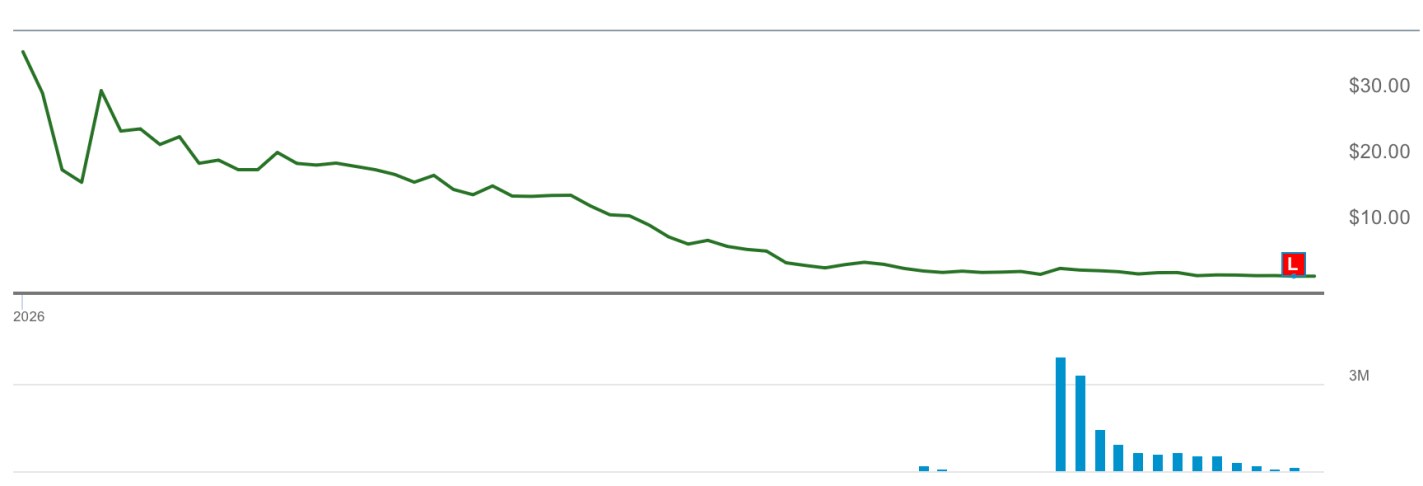
This chart shows that the stock value of Nvidia has soared past the value of the entire UK stock exchange or the entire value of US energy companies. Fuller reminds us of the parallel with Cisco in 2000. Back then, Cisco was a key supplier of gateway technology for all the companies scrambling to get into this hot new thing called the internet. Cisco valuation went to the moon, then crashed and burned when the mania around the internet subsided to a more sober set of applications. Cisco lost over 70% of its value in a year, and still has not regained the share price it had 25 years ago:

… [Nvidia] is riding a cycle in which investment becomes overinvestment, because that is what we do in every business cycle. It happened in the late 1990s and it will happen again this time.

…there are innumerable startups of all kinds, as well as existing companies, venturing into AI in a scramble to compete for any slice of market share. This is a huge source of Nvidia’s growth as the beating heart of the industry, similar to how Cisco Systems exploded during the internet infrastructure boom. Inevitably, there will be winners and losers. There will be far more losers than winners. When the losers go out of business or are acquired, Nvidia’s customer base will shrink and so will their revenue and earnings growth rates. That is what happened during the internet infrastructure booms of the late 1990s.

Fuller doesn’t quite say Nvidia is overvalued, just that it’s P/E is unlikely to expand further, hence any further stock price increases will have to be produced the old-fashioned way, by actual earnings growth. There are more bearish views than Fuller’s, I chose his because it was measured.

And on behalf of the bulls, here is noob Weebler Finance, telling us that Nvidia Will Never Be This Cheap Again: The AI Revolution Has Just Begun:

AI adoption isn’t happening in a single sequence; it’s actually unfolding across multiple industries and use cases simultaneously. Because of these parallel market build-outs, hyper-scalers, sovereign AI, enterprises, robotics, and physical AI are all independently contributing to the infrastructure surge.

…Overall, I believe there are clear signs that indicate current spending on AI infrastructure is similar to the early innings of prior technology buildouts like the internet or cloud computing. In both those cases, the first waves of investment were primarily about laying the foundation, while true value creation and exponential growth came years later as applications multiplied and usage scaled.

As a pure picks and shovels play, Nvidia stands to capture the lion’s share of this foundational build-out because its GPUs, networking systems, and software ecosystem have become the de facto standard for accelerated computing. Its GPUs lead in raw performance, energy efficiency, and scalability. We clearly see this with the GB300 delivering 50x per-token efficiency following its launch. Its networking stack has become indispensable, with the Spectrum-X Ethernet already hitting a $10b annualized run rate and NVLink enabling scaling beyond PCIe limits. Above all, Nvidia clearly shows a combined stack advantage, which positions it to become the dominant utility provider of AI compute.

… I believe that Nvidia at its current price of ~$182, is remarkably cheap given the value it offers. Add to this the strong secular tailwinds the company faces and its picks-and-shovels positioning, and the value proposition becomes all the more undeniable.

My view: Out of sheer FOMO, I hold a little NVDA stock directly, and much more by participating in various funds (e.g. QQQ, SPY), nearly all of which hold a bunch of NVDA.  I have hedged some by selling puts and covered calls that net me about 20% in twelve months, even if stock price does not go up.   Nvidia P/E (~ 40) is on the high side, but not really when considering the growth rate of the company. It seems to me that the bulk of the AI spend is by the four AI “hyperscalers” (Google, Meta, Amazon, Microsoft). They make bazillions of dollars on their regular (non-AI) businesses, and so they have plenty of money to burn in purchasing Nvidia chips. If they ever slow their spend, it’s time to reconsider Nvidia stock. But there should be plenty of warning of that, probably no near time crisis: last time I checked, Nvidia production was sold out for a full year ahead of time. I have no doubt that their sales revenue will continue to increase. But earnings will depend on how long they can continue to command their stupendous c. 50% net profit margin (if this were an oil company, imagine the howls of “price gouging”).

As usual, nothing here should be considered advice to buy or sell any security.

Sports observations (an intermittent series)

In no particular order:

$50k in cash compensation is always worth more to employees than $50k in water slides and sagely advice. College football programs that don’t have as many resources tied up in highly paid assistant coaches and non-pecuniary amenities have a short term advantage in the new NIL landscape. Programs will adjust over time, but a lot of that money is locked in for the next 3-5 years.

Referee review has been a mixed bag at best, and a net negative in soccer, but baseball pitching has advanced to the point where it is no longer about beating the batter so much as fooling the umpire. It’s not the raw velocity of pitches that is overwhelming the naked eye, it’s the amount that pitches are now breaking when they cross the plate combined with catchers’ acumen at “framing” pitches with small movements of the mitt. Batters are routinely striking out without ever facing a pitch in the strikezone. #RoboUmps

The English Premiere League has long been the perfect of example of bureaucratic and “focus group” failure. I could go on at length. Watching a handful of games this weekend, it is increasingly clear that they are comfortable letting their league turn into mid 1990’s NHL hockey, with clutching and grabbing replacing skill or, counter-intuitively, even effort. There will be much hand-wringing mid season as to why so many great players are injured, why the order of the league table mostly reflects injury luck, and why teams are overly dependent scoring on boring corner kicks and randomly alotted penalties rather than teamwork and skill. Sigh.

Speaking of the Premiere League, it’s also been interesting watching a sort of resource curse play out with Manchester City two years in a row. There are certain players that are truly one of a kind that every team should want, but few can afford. There is a catch though. When you have one of a kind players there is incentive to train for strategies and tactics that only work optimally with those specific players. If those players are unavailable, a team finds itself having to choose between tactics they can no longer execute optimally or a tactics they have not trained in extensively. Last year Manchester City lost the best midfielder in the world to season long injury, a player who by himself can execute the defensive and offensive duties of what would normally be two specialist players. Playing him by himself in a “single pivot” without defensive support lets you have a numerical advantage elsewhere. Forcing a more mortal human to take on that responsibility, however, proved quite risky. This year they are trying to play without their long time goalie who was, without hyperbole, the greatest passer of the ball to ever play in goal. Watching someone else try to do a job that literally only one human being has ever been able to do has been illustrative of the perils of becoming dependent on irreplicable assets.

Is AI learning just MOOCs again?

I created a provocative title for fun. Tyler pointed me to this podcast:

Joe Liemandt  – Building Alpha School, and The Future of Education (Apple podcast link)

I suppose I’m sold on their claim that most kids can learn basic facts and some academic skills from an iPad app. Listen all the way through if you are going to listen at all, because even some cracks in the tech product are revealed after the big pitch in the beginning.

I have been using Duolingo to review my high school French and Spanish. I think the few minutes a day I spend have helped drag some vocabulary back out of long-term storage. Although, as I recently heard a comedian say, “All my friends who have Duolingo are still speaking English to me.”

Folks should consider whether AI learning apps is just MOOCs again. Essentially, they need to get kids to watch (short, this time) videos of lecture content. MOOCs were longer lecture content videos. Maybe shorter is the key, combined with personalized feedback. Maybe not, for getting cheap effective comprehensive education that scales.

Last year I wrote Why Podcasts Succeeded in Gaining Influence Where MOOCs Failed

About half an hour in, Liemandt asserts that anyone in America would agree that kids learn life skills through “sports” not school. That’s an oversimplification, but I agree that sports ranks higher than “math class” for developing leadership ability.

Since they at Alpha School believe that have solved quickly learning facts, it’s interesting to hear how they do the rest of “education.” The school must fill enough time that the parents don’t have to see their kids half the day and also teach leadership/ communication/character. Alpha school is expensive ($40,000 a year) and there are many paid adults involved who are called “guides and coaches.”

The extracurriculars that Alpha school offers sounds a lot like what most kids can do in some form at a good public middle school or high school in America.  I wrote about the value of outside-class activities in college here: The Value of Student Organizations and On-Campus Education: Anecdotal Evidence from Tim Keller

My students at Samford are especially good at taking on leadership roles and creating a thriving community. Residential college provides a good testing ground for leadership and there are real “market tests” of success for things like sorority events, as the Alpha school encourages for older kids.

I applaud people trying to innovate. I think we’ll see more educational apps in schools, and that will be great. I’m not trying to dump on Alpha School. I just think the underperformance arc of MOOCs should temper our enthusiasm.

Can the President Fire a Member of the Federal Reserve Board of Governors?

That’s exactly what he tried to do this past Monday. Trump announced on social media that Lisa Cook, appointed by Biden in 2022, is now fired. Things are about to get awkward.

First, Trump can’t simply fire Fed governors willy-nilly. Remember when DOGE was involved in all of those federal workforce lay-offs earlier in the year? I know, it seems like forever ago. The US Supreme Court ruled on the legality of those firings, including some at government corporations and ‘independent agencies’. The idea behind such entities is that they are supposed to be politically insulated and less bound by the typical red tape of the government. But Trump’s administration argued that the separation from the rest of the executive branch is a fiction and that there is no one else in charge of them if not the president. The Supreme Court agreed with the administration, with one exception.

Continue reading

You Read It Here First

The subjects of two of our posts from 2023 are suddenly big stories.

First, here’s how I summed up New Orleans’ recovery from hurricane Katrina then:

Large institutions (university medical centers, the VA, the airport, museums, major hotels) have been driving this phase of the recovery. The neighborhoods are also recovering, but more slowly, particularly small business. Population is still well below 2005 levels. I generally think inequality has been overrated in national discussions of the last 15 years relative to concerns about poverty and overall prosperity, but even to me New Orleans is a strikingly unequal city; there’s so much wealth alongside so many people seeming to get very little benefit from it. The most persistent problems are the ones that remain from before Katrina: the roads, the schools, and the crime; taken together, the dysfunctional public sector.

The New York Times had a similar take yesterday:

Today, New Orleans is smaller, poorer and more unequal than before the storm. It hasn’t rebuilt a durable middle class, and lacks basic services and a major economic engine outside of its storied tourism industry…. New Orleans now ranks as the most income-unequal major city in America…. In areas that attracted investment — the French Quarter, the Bywater and the shiny biomedical corridor — there are few outward signs of the hurricane’s impact. But travel to places like Pontchartrain Park, Milneburg and New Orleans East that were once home to a vibrant Black middle class, and there are abandoned homes and broken streets — entire communities that never regained their pre-Katrina luster…. Meanwhile, basic city functions remain unreliable.

I wrote in 2023 about a then-new Philadelphia Fed working paper claiming that mortgage fraud is widespread:

The fraud is that investors are buying properties to flip or rent out, but claim they are buying them to live there in order to get cheaper mortgages…. One third of all investors is a lot of fraud!… such widespread fraud is concerning, and I hope lenders (especially the subsidized GSEs) find a way to crack down on it…. This mortgage fraud paper seems like a bombshell to me and I’m surprised it seems to have received no media attention; journalists take note. For everyone else, I suppose you read obscure econ blogs precisely to find out about the things that haven’t yet made the papers.

Well, that paper has now got its fair share of attention from the media and the GSEs. Bill Pulte, director of the Federal Housing Finance Agency and chairman of Fannie Mae and Freddie Mac, has been going after Biden-appointed Federal Reserve Governor Lisa Cook over allegations that she mis-stated her primary residence on a mortgage application:

Pulte has written many dozens of tweets about this, at least one of which cited the Philly Fed paper:

Now President Trump is trying to fire Cook. Federal Reserve Governors can only be fired “for cause” and none ever have been, but Trump is using this alleged mortgage fraud to try to make Cook the first.

The Trump administration seems to have made the same realization as Xi Jinping did back in 2012– that when corruption is sufficiently widespread, some of your political opponents have likely engaged in it and so can be legally targeted in an anti-corruption crackdown (while corruption by your friends is overlooked).

I’m one of a few people hoping for the Fed to be run the most competent technocrats with a minimum of political interference:

But I’m not expecting it.

Remember, you read it here first.

The American Middle Class Has Shrunk Because Families Have Been Moving Up

In 1967, about 56 percent of families in the US had incomes between $50,000 and $150,000, stated in 2023 inflation-adjusted dollars. In 2023, that number was down to 47 percent. So the American middle class shrunk, but why? (Note: you can do this analysis with different income thresholds for middle class, but the trends don’t change much.)

The data comes from the Census Bureau, specifically Table F-23 in the Historical Income Tables.

As you can see in the chart, the proportion of families that are in the high-income section, those with over $150,000 of annual income in 2023 dollars, grew from about 5 percent in 1967 to well over 30 percent in the most recent years. And the proportion that were lower income shrunk dramatically, almost being cut in half as a proportion, and perhaps surprisingly there are now more high-income families than low-income families (using these thresholds, which has been true since 2017). The number is even more striking when stated in absolute terms: in 1967 there were only about 2.4 million high-income households, while in 2023 there were 11 times as many — over 26 million.

Is this increase in family income caused by the rise of two-income households? To some extent, yes. Women have been gradually shifting their working hours from home production to market work, which will increase measured family income. However, this can’t fully explain the changes. For example, the female employment-population ratio peaked around 1999, then dropped, and now is back to about 1999 levels. Similarly, the proportion of women ages 25-54 working full-time was about 64 percent in 1999, almost exactly the same as 2023 (this chart uses the CPS ASEC, and the years are 1963-2023).

But since the late 1990s, the “moving up” trend has continued, with the proportion of high-income families rising by another 10 percentage points. Both the low-income and middle-income groups fell by about 5 percentage points. Certainly some of the trend in rising family income from the 1960s to the 1990s is due to increasing family participation in the paid workforce, but it can’t explain much since then. Instead, it is rising real incomes and wages for a large part of the workforce.

Government Makes Quasi-Nationalization Deal to Assure Supply of Critical Rare Earths for Defense 

If top government officials were regular readers of this blog, they would have been warned by a headline here more than two years ago, “China To Squeeze West by Restricting Export of Essential Rare Earths “.  For the last few years, the U.S. has been trying to limit Chinese access to the most powerful computing chips, which are largely made by American company Nvidia. But China has some high cards to play in this game. It produces some 90% of refined rare earths and rare earth products like magnets.  These super-powerful neodymium-containing magnets are utterly critical components in all kinds of high-tech products, including wind turbine generators and electric motors for electric vehicles and drones, and miscellaneous military hardware.

It has been painfully obvious at least since 2010, when China put the squeeze on Japan by unofficially slowing rare earth exports to Japan over a territorial dispute, that it was only a matter of time before China played that card again. But the West slumbered on. There is a reasonable amount of rare earth ores that are mined outside China, but nobody wanted to build and operate the expensive and environmentally messy processes to refine the rare earth minerals (carbonates, oxides, phosphates) into the pure metals. Unlike the esoteric and hard-to-imitate processing for cutting edge computing chips, anyone can gear up and start refining rare earth ores. It mainly just takes money, lots and lots of it, to build and operate all the processing equipment for the multiple steps involved*. There was little free market incentive for a Western company to invest in expensive processing, since China could readily bankrupt them by cutting prices as soon as they started up their shiny new process line. Reportedly, the Chinese used this tactic twice before (in 2002 and 2012) to kill nascent refining of the rare earth ores at Mountain Pass mine in California.

As of April of this year, in response to ongoing U.S. export restrictions on chips, China threw its latest rare earth card down on the table, requiring export licenses and imposing other restrictions that throttled rare earth exports. Western manufacturers were soon howling in pain. As of early June:

Global automakers are sounding the alarm on an impending shortage of rare earth magnets as China’s restrictions on the material vital for the automotive, defence and clean energy industries threaten production delays around the world.

German automakers became the latest to warn that China’s export restrictions threaten to shut down production and rattle their local economies, following a similar complaint from an Indian EV maker last week. U.S., Japanese and South Korean automakers warned President Donald Trump on May 9 car factories could close.

The Trump administration quickly caved on chips and in July permitted boatloads of high-end H20 Nvidia chips to ship to China, in return for resumption of rare earth exports from China. Score one for the CCP. As of mid-August, rare earth shipments had climbed back to around half of their pre-May levels, but China ominously warned Western companies against trying to stockpile any reserves of rare earths, or they would “face shortages” in the future.

After this ignominious face-slapping, the administration finally did something that should have been done years ago: they gave an American company a solid financial incentive to buckle down and do the dirty work of refining rare earth ores at large scale. The Defense Department inked a deal with MP Materials Corp, the current operator of the Mountain Pass mine and the modest refining operation there to quickly ramp up production:

The Department of Defense is investing capital in MP across several fronts. This includes a $400 million convertible preferred equity, struck at a fixed conversion price of $30.03. The government gets 10-year MP stock warrants also set for a $30.03 price. As planned, this would get the Department of Defense to about a 15% ownership position in MP Materials. In addition, the Department of Defense will lend MP Materials $150 million at a highly competitive interest rate to help the company expand its heavy rare earth element separation capabilities.

It’s not just a financing deal, however. This arrangement also provides a striking level of influence over pricing and profitability for MP Materials going forward.

For one thing, the Department of Defense will provide a price floor of $110 per kilogram for NdPr. NdPr is a product that is a combination of neodymium and praseodymium. This is a generous floor price…

The Department of Defense’s involvement now gives MP Materials the runway necessary to build what’s being dubbed the 10X magnet manufacturing expansion plant. The Department of Defense is committed to buying the output of this plant with a controlled cost-plus pricing structure. And there will be a profit split with the DoD getting a significant chunk of the upside above certain EBITDA thresholds.

This is being billed as a private-public partnership, but it is akin to nationalization. The government will be heavily involved in planning output and setting pricing here, as well as sharing in profits.  Fans of laissez-faire free markets may be understandably queasy over this arrangement, but national security considerations seem to make this necessary.

I predict that further “private-public” deals will be struck to subsidize Western production of vital materials. Let’s be clear: massive subsidies or similar incentives, in one form or another, will be needed. And this means that Americans will have to devote more resources to grinding out industrial materials, and less to consumer goods; hence, we will likely live in smaller houses, perhaps (gasp) lacking granite countertops and recessed lighting. Economics is all about trade-offs.

Due to its vast, lower-paid, hard-working and highly-capable workforce, the whole Chinese supply chain and production costs run far, far cheaper than anything in the West. We don’t have to produce 100% of what we use, even say 40% might be enough to keep from being helplessly squeezed by another nation. How to do this without descending into unproductive rent-seeking rip-offs will be a challenge.

Some other materials candidates:  China has as of December 2024 completely shut off exports to the U.S. of three key non-rare earth technical elements, gallium, germanium and antimony, so those might be a good place to start. China mines or refines between half and 90% of global supply of those minerals. Also, China has instituted export regulations of for more key metals (tungsten, tellurium, bismuth, indium and molybdenum-related products), so these may be further subjects for squeeze plays. Finally, “China is the world’s top graphite producer and exporter, and also refines more than 90% of the world’s graphite into a material that is used in virtually all EV batteries,” so that is yet another vital material where the West must decide how much it is worth to break its dependence on an unreliable trading partner.

Moderation as responsibility

I’ve been thinking a lot about the loneliness of moderates/centrists/whatever you want to call them, in no small part because that’s the camp in which I place myself. While it’s (perhaps undeservably) flattering to think of yourself as “practical” and “reasonable”, it’s not a fun identity. There’s no good art to fall back on when you need to fill in the missing parts of your personality. You are constantly disappointing the more vocal members of the chattering classes while simultaneously sharing their frustration with the fire-dog-meme “This is fine” folks who don’t seem constitutionally capable of noticing when the room is in fact actively on fire. It’s a tough political identity to pin down because it is, at least ostensibly, an identity defined by it’s relation to two polar extremes. Anarchists, socialists, liberals, conservatives, they have an easier time because they can start from first principles and work upwards. As society progresses, so does the middle. To define yourself as wherever the middle stands is to be plastic, externally shaped, even inauthentic. Such a positional identity may be safe, but it’s not especially useful.

I would like to suggestion a more useful lodestone for moderates: responsibility

You have social responsibility. As a moderate I am uncomfortable with the libertarian fetishism of individualism without an obligation to others. With all due deference to “Naked and Afraid”, we are primates, and as such we are just shambling hunks of nutrition for other species if left on our own. Individuals, wholly independent of others, are completely useless. You are useless on your own. All human achievement is predicated on coordination with others. Through families, communities, and states. Through exchange, markets, and firms. You need other people, whether you like them or not. Admitting you need others is not weakness.

You have personal responsibility. As a moderate I am often uncomfortable with the type of socialism that promises relief from the obligations of toil. That your comfort and care can be assured regardless of the efforts and investments you make for yourself. There is no life without toil. There is no life without risk. The only institutions that can wholly shelter you from toil and risk demand the enslavement of others. Sure, you can be a party elite, but you’re only going to be fed and sheltered because of those toiling in the gulag. Admitting that others have an obligation to action and self-care is not cruelty.

Which is all to say that moderates should be up in arms, protesting and raging alongside progressives, liberals, democrats, and (yes) classic conservatives. Not because the current administration has strayed too far down an abstract one-dimensional range of political positions. But because their destruction, grifting, and hate are in direct opposition to everything we hold dear. They accept no responsibility for their actions while acknowledging no responsibility for the welfare of others. They are the antithesis of responsible adults.

I’m not much of a political philosopher, but maybe if I get stuck in an airport long enough I’ll hammer out my own “Theory of Responsibility”. I mean, that’s how Rawls got his magnum opus done, right?

Students still need to learn principles

Sometimes I get weeks in the summer that are more research focused. This past week is very much a teaching and service focused week at my university. I haven’t had any time to ponder topics related to research or current events. So, I will share what I’ve been telling my fellow college educators. This will sound backward to some and like common sense to others. Feel free to comment with your thoughts.

College professors who teach 200-level or “principles” classes should not change all that much in response to AI. Students still need to know something. There need to be a few concepts and vocabulary words in their heads. For example, a person cannot use a calculator effectively if they do not know what a square root is at all.

I see highly trained mid-career professionals bragging about how they get ChatGPT to do their work. Can a 20-year-old do that if they don’t know what words to use in a prompt? How does vibe coding go for people who never learned to write out a single line of code? (not a question I have an expert answer to right now)

We should largely be sticking to the “old ways” and at least to some extent still require memorization. Having an exam on paper is a good way to ensure that the students can form coherent thoughts of their own, when possible.

Indeed, students might become AI jockeys when they get to the workplace. A 400-level class would be a good place for them to start heavily integrating AI tools to accomplish tasks and do projects. For anyone unfamiliar with American college categories, that would mean that an undergraduate might heavily use AI tools in their 4th and final year of study.

AI makes a great tutor for learning and enforcing principles, but it should not serve as a replacement test-taker. A human who cannot read and write will not be able to take full advantage of an intelligent machine in the next decade. Voice recognition is getting very good and the models are getting more agentic, so this might all change if we can keep the data centers on long enough. In the future, you might argue that having students write an exam answer by hand is as superfluous as teaching them to play the violin.

As of 2025, what you might see is some teachers who feel pressured to claim they are integrating AI more than they actually want to. A relative I talked to his summer in a corporate job told me that she feels intense pressure at work to be able to claim that she’s using AI. Anyone doesn’t have the appearance of embracing AI looks behind or expendable!